Difficult conversations: the best books to handle conflict with skill
This curriculum builds from the inside out: you first learn to understand your own reactions and the hidden structure of hard conversations, then develop skills in feedback and listening, then tackle the strategic complexity of negotiation, and finally integrate everything through advanced emotional intelligence. Each stage assumes fluency with the previous one, so the concepts compound rather than repeat.
Foundations: Understanding What's Really Happening
BeginnerUnderstand why difficult conversations feel so hard, what's actually going on beneath the surface, and develop a shared vocabulary for conflict, identity, and emotion.
▸ Study plan for this stage
Pace: 4–5 weeks, ~40–50 pages/day (approximately 280–350 pages total across both books)
- The three conversations framework: the What Happened conversation, the Feelings conversation, and the Identity conversation—and how they layer beneath every difficult interaction
- Internal vs. external: the distinction between what's said aloud and the internal stories, assumptions, and interpretations each party is constructing
- The role of identity in conflict: how threats to self-image (competence, trustworthiness, likeability, power) escalate conversations and trigger defensive reactions
- Emotional architecture: recognizing that feelings are data about what matters to us, not obstacles to overcome
- The mutual purpose principle: identifying shared goals and demonstrating genuine concern for the other person's interests, not just your own
- Dialogue as a path to safety: how creating psychological safety (through tone, body language, and genuine curiosity) allows both parties to lower defenses and speak honestly
- The gap between intent and impact: understanding that your good intentions don't erase the other person's experience of harm
- Contribution vs. blame: shifting from assigning fault to understanding how both parties contribute to the problem
- What are the three conversations, and why does Stone argue they all happen simultaneously in difficult interactions?
- How do your internal stories and assumptions shape the way you interpret the other person's behavior, and what's the risk of treating your story as fact?
- What does it mean that identity is at stake in difficult conversations, and how does a threat to identity change the dynamic?
- According to Patterson et al., what is mutual purpose, and why is establishing it early critical to moving from debate to dialogue?
- How does psychological safety relate to the willingness of both parties to speak honestly, and what are concrete ways to establish it?
- What is the difference between intent and impact, and why is acknowledging impact important even when your intentions were good?
- Identify a difficult conversation you've had or are anticipating. Map it across Stone's three conversations: What Happened (the facts you each dispute), Feelings (the emotions beneath the surface), and Identity (what's at stake for each of you). Write 1–2 sentences for each layer.
- Choose a recent conflict and write out your internal story about it—what you believe the other person intended, why they acted that way, what it means about them. Then list alternative interpretations that might also be true. Reflect on how your story shaped your response.
- In a low-stakes conversation this week, practice mutual purpose: before diving into disagreement, explicitly state what you care about for both of you (e.g., 'I want us both to feel heard and find a solution that works'). Notice how the tone shifts.
- Record yourself (audio or written reflection) describing a conflict from the other person's perspective as honestly as you can. What do you learn about their identity concerns, fears, or values that you hadn't fully considered?
- Practice the 'And' stance: take a position you hold strongly in a disagreement, then complete this sentence: 'I believe X, AND I'm also open to the possibility that...' Do this for 3–4 real or hypothetical conflicts.
- After reading about psychological safety, observe a conversation (in person or recorded) where one person seems defensive. Identify what was said or done that triggered the defensiveness, and brainstorm how it could have been reframed to feel safer.
Next up: This stage equips you with a diagnostic vocabulary and mental models for *why* conversations go wrong; the next stage will teach you *how* to navigate them—moving from understanding the problem to executing specific skills and techniques for staying in dialogue when emotions run high.
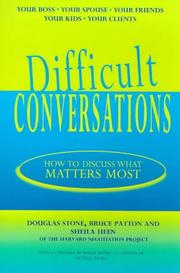
The essential starting point — it breaks every hard conversation into three hidden layers (what happened, feelings, identity) and gives you a clear map before you say a word. Read this first to build the core framework everything else builds on.
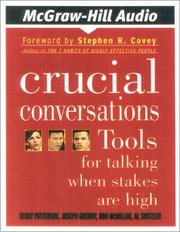
Complements the first book by focusing on high-stakes, real-time conversations and introducing practical tools like 'mutual purpose' and 'psychological safety.' Read it second to translate the framework into in-the-moment habits.
Listening & Feedback: The Relational Core
BeginnerMaster the art of truly hearing others and giving or receiving feedback without defensiveness — the two skills that keep you in relationship even when the truth is uncomfortable.
▸ Study plan for this stage
Pace: 4–5 weeks, ~25–30 pages/day. Week 1–2: "Thanks for the Feedback" (approx. 300 pages); Week 3–4: "Just Listen" (approx. 250 pages); Week 5: Review, synthesis, and integration exercises.
- The three types of feedback (appreciation, coaching, evaluation) and how to receive each without triggering defensiveness
- Understanding your feedback triggers: truth triggers, relationship triggers, and identity triggers that block receptivity
- The difference between listening to understand versus listening to respond, and how to shift your internal stance
- Tactical empathy: asking the right questions to genuinely understand the other person's perspective and emotional state
- The role of curiosity in feedback conversations: replacing judgment with genuine inquiry to stay in relationship
- How to give feedback that lands: framing, timing, and maintaining the other person's dignity throughout
- The neurobiology of defensiveness and how to recognize when you or the other person is shutting down
- Creating psychological safety: the conditions that allow people to be vulnerable and hear difficult truths
- What are the three types of feedback, and how does your typical reaction differ for each one?
- Identify your primary feedback triggers (truth, relationship, or identity). What patterns do you notice in how they show up in conversations?
- Describe the difference between listening to understand and listening to respond. How does this shift change what you hear?
- What is tactical empathy, and how does asking questions help you stay curious rather than defensive in a difficult conversation?
- How can you frame feedback to someone else in a way that preserves their dignity and keeps them open to hearing you?
- What signs indicate that you or the other person is becoming defensive, and what can you do in the moment to reset?
- Feedback trigger audit: Write down the last three pieces of feedback you received (positive or critical). For each, identify which trigger(s) activated—truth, relationship, or identity—and journal on why that trigger is sensitive for you.
- Active listening practice: In a low-stakes conversation (friend, family, or colleague), commit to listening to understand for 10 minutes without planning your response. Afterward, reflect on what you noticed about your impulse to interrupt, defend, or redirect.
- Tactical empathy role-play: With a partner, practice the 'looping for understanding' technique from 'Just Listen'—ask clarifying questions, paraphrase what you heard, and confirm you understand before responding. Record or note what shifts in the conversation.
- Feedback reframe exercise: Take a piece of critical feedback you've given (or want to give) to someone. Rewrite it three times: once as pure evaluation, once as coaching, and once as appreciation. Notice which version preserves the relationship best.
- Defensiveness detection: During your next three difficult conversations, pause midway and note: Are you or the other person becoming defensive? What triggered it? What question or curiosity could reset the conversation?
- Appreciation-first practice: Before giving any coaching or evaluative feedback this week, lead with genuine appreciation. Notice how this changes the other person's receptivity and your own emotional state.
Next up: By mastering how to truly listen and give feedback without triggering defensiveness, you've built the relational foundation needed to navigate the next stage—moving from understanding each other to aligning on solutions and action, even when stakes are high and disagreement is real.

Shifts the lens from giving to receiving feedback, which is where most people actually struggle. Reading it here deepens the identity layer introduced in Stage 1 and makes you a safer conversation partner.

A practical, neuroscience-grounded guide to making anyone feel heard — a prerequisite skill for every difficult conversation. It fills the gap between understanding a framework and actually connecting with another person.
Conflict & Emotion: Going Deeper Inside
IntermediateDevelop emotional intelligence and self-awareness so that your own triggers, ego, and fear stop derailing conversations before they can succeed.
▸ Study plan for this stage
Pace: 6–8 weeks, ~25–30 pages/day (approximately 3–4 weeks per book, allowing time for reflection and exercises between chapters)
- The five components of emotional intelligence: self-awareness, self-regulation, motivation, empathy, and social skills
- How emotional hijacking occurs in the brain and derails rational conversation
- The role of self-awareness in recognizing your own triggers, defensive patterns, and emotional reactivity
- The concept of 'being in the box' versus 'out of the box'—how self-deception and inward focus create conflict
- How shifting from self-betrayal to self-honesty transforms your internal state and opens dialogue
- The relationship between your internal emotional state and your ability to see others as people rather than objects
- Empathy as a bridge: understanding others' perspectives and needs as a prerequisite for difficult conversations
- How fear, ego, and self-protection mechanisms block authentic connection and problem-solving
- What are the five components of emotional intelligence, and how does each one contribute to your ability to navigate difficult conversations?
- What is emotional hijacking, and how does it prevent you from responding thoughtfully in high-stakes conversations?
- How does self-awareness help you identify your personal triggers and defensive patterns before they derail a conversation?
- What is the difference between 'being in the box' and 'out of the box,' and how does this internal shift change the way you relate to others in conflict?
- How does self-deception (self-betrayal) create a distorted view of others, and what is required to move from that state?
- What role does empathy play in difficult conversations, and how can you cultivate it even when you feel defensive or triggered?
- Emotional Audit: For one week, log moments when you felt triggered or defensive in a conversation. Note the emotion, what triggered it, your physical response, and how you reacted. Identify patterns in your triggers.
- Self-Awareness Journaling: After each chapter of Emotional Intelligence, write a reflection on which of the five EI components feels strongest for you and which feels weakest. Give a specific example from your own life.
- Empathy Mapping: Choose a recent difficult conversation or conflict. Map out the other person's perspective, needs, fears, and motivations as you understand them. Then ask yourself: Did I truly see them as a person, or was I 'in the box' seeing them as an obstacle?
- The Box Exercise: Identify a current relationship or situation where you feel justified in your position. Using The Anatomy of Peace framework, examine: What am I telling myself about this person? What self-betrayal led me to this story? What would it look like to get 'out of the box'?
- Trigger Response Practice: Pick one of your identified triggers. Practice a self-regulation technique (breathing, pause, reframing) before your next interaction. Reflect on whether it changed your response.
- Perspective Shift Conversation: Have a brief conversation with someone you trust about a minor disagreement. Consciously practice seeing them as a person with legitimate needs rather than as wrong or difficult. Afterward, journal on what shifted in you.
Next up: By developing emotional intelligence and moving from self-deception to self-honesty, you've built the internal foundation needed to actually listen and respond authentically—preparing you to learn the concrete communication skills and frameworks that turn this inner work into effective dialogue.

The canonical text on why emotions hijack reason and how to build the self-regulation and empathy that underpin every skill in this curriculum. Read it here, once you have conversational frameworks, so the science feels immediately applicable.

A narrative-driven exploration of how we unconsciously put ourselves in a 'box' and turn people into obstacles — a deeper look at the identity and conflict dynamics first raised in Stage 1.
Negotiation: Strategy Meets Honesty
IntermediateApply the emotional and relational skills you've built to structured negotiation — learning to pursue your interests without manipulation and reach durable agreements.
▸ Study plan for this stage
Pace: 6–8 weeks, ~25–30 pages/day. Start with "Getting to Yes" (3–4 weeks), then move to "Never Split the Difference" (3–4 weeks). Allow 1 week for integration exercises and real-world application.
- Principled negotiation: separating people from the problem and focusing on interests rather than positions (Fisher)
- BATNA (Best Alternative to Negotiated Agreement) as your anchor and source of leverage (Fisher)
- Generating options for mutual gain and expanding the pie before claiming value (Fisher)
- Tactical empathy and active listening: understanding the other party's emotional state and unstated concerns (Voss)
- The power of labeling emotions and mirroring to build rapport and defuse tension (Voss)
- Negotiation as information-gathering: using calibrated questions to uncover hidden interests and constraints (Voss)
- Anchoring and tactical concessions: how to move the negotiation in your favor without appearing manipulative (Voss)
- Building durable agreements by ensuring both parties feel heard, respected, and invested in the outcome
- What is the core difference between positional and interest-based negotiation, and why does Fisher argue that focusing on interests leads to better agreements?
- How does understanding your BATNA change your approach to a negotiation, and what role does it play in determining your walk-away point?
- What is tactical empathy (Voss), and how does it differ from simple sympathy or agreement?
- Explain the technique of labeling emotions in negotiation: what does it accomplish, and how do you do it without sounding manipulative?
- How can you use calibrated questions to gather information and shift the other party's thinking without directly challenging them?
- What is the relationship between Fisher's 'expanding the pie' and Voss's emphasis on understanding the other side's constraints and priorities?
- Map a real or hypothetical negotiation using Fisher's framework: identify the people involved, the problem, your interests (not positions), their likely interests, and your BATNA. Write a one-page analysis.
- Practice labeling emotions in a recorded conversation or role-play: listen for emotional cues and try naming them aloud (e.g., 'It sounds like you're frustrated that...'). Record yourself and review for authenticity.
- Conduct a mock negotiation with a partner where you use only calibrated questions (questions that start with 'how' or 'what') for the first 10 minutes. Reflect on what you learned without stating your position.
- Identify a past negotiation where you 'won' but the relationship suffered. Rewrite it using Fisher's principled approach and Voss's empathy techniques. What would you do differently?
- Practice mirroring: in a conversation, repeat the last 3 words of what someone says and pause. Notice how they naturally elaborate. Do this in 3 different conversations and journal the results.
- Create a negotiation playbook for a specific scenario you face (salary discussion, vendor contract, family decision). Include: your BATNA, your interests, their likely interests, 5 calibrated questions, and 2–3 options for mutual gain.
Next up: This stage equips you with both the principled foundation (Fisher) and the tactical toolkit (Voss) to navigate high-stakes conversations with honesty and strategic clarity, preparing you to handle complex multi-party dynamics and ethically challenging scenarios in the next stage.

The foundational text of principled negotiation, introducing interest-based bargaining over positional arguing. It's placed here because its concepts of 'separating people from the problem' now have deep emotional grounding from prior stages.
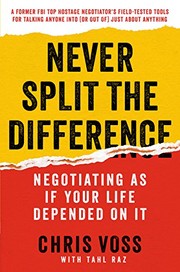
A former FBI hostage negotiator's field-tested toolkit — tactical empathy, mirroring, and calibrated questions. Read after Fisher to see how emotional attunement and strategy work together in high-pressure situations.
Mastery: Integration & Radical Honesty
ExpertSynthesize everything into a coherent personal practice — speaking with full honesty, holding complexity, and staying in genuine relationship even in the most charged conversations.
▸ Study plan for this stage
Pace: 8–10 weeks, ~25–30 pages/day (approximately 4–5 hours/week of reading and reflection)
- Nonviolent Communication (NVC) framework: observations, feelings, needs, and requests as the foundation for honest dialogue without blame or judgment
- Empathetic listening as a radical act: receiving others' observations, feelings, needs, and requests with genuine presence rather than defensiveness
- Self-empathy and internal honesty: using NVC to understand your own needs and emotions before speaking, enabling authentic expression
- Vulnerability as strength: Brené Brown's concept that showing up with honest emotion and imperfection deepens trust and connection in difficult moments
- Holding complexity and paradox: staying in genuine relationship while acknowledging conflicting needs, values, and truths without collapsing into either/or thinking
- Rumbling with discomfort: engaging directly with tension, shame, and disagreement rather than avoiding, people-pleasing, or shutting down
- Courageous speech: speaking your truth with clarity and care, even when it risks rejection or conflict, as an act of respect for the relationship
- How does the NVC framework (observations, feelings, needs, requests) differ from typical conflict communication, and why does this structure enable honesty without blame?
- What is the relationship between self-empathy and the ability to speak with radical honesty in difficult conversations?
- How does Brené Brown define vulnerability, and why does she argue it is essential to courageous leadership and authentic relationships?
- What does it mean to 'rumble' with discomfort, and how is this different from either avoiding conflict or approaching it aggressively?
- How can you hold both your own needs and another person's needs as valid simultaneously, even when they seem to conflict?
- What is the role of empathetic listening in transforming a conversation from adversarial to collaborative?
- NVC self-empathy practice: Identify a recent moment when you felt defensive or shut down. Translate your internal experience into observations, feelings, needs, and requests. Write or journal this without judgment.
- Empathetic listening role-play: Partner with someone and practice receiving their concern using only NVC language—reflect back their observations, feelings, and needs without offering solutions or defending yourself. Reverse roles.
- Real conversation audit: Record (with permission) or transcribe a difficult conversation you have. Identify moments where you blamed, judged, or made assumptions. Rewrite those moments using NVC language.
- Vulnerability mapping: Choose a relationship where you want more honesty. Identify one specific truth you've been holding back. Write out what you fear will happen if you share it, then practice stating it aloud using Brené Brown's framework: 'This is hard to say, and I'm saying it because I care about this relationship.'
- Rumbling practice: In your next disagreement, pause and name the discomfort aloud: 'I notice we're both uncomfortable here. I want to stay in this conversation.' Then use NVC to express your needs without attacking.
- Complexity holding exercise: Identify a relationship conflict where both people have legitimate needs. Write out both perspectives fully, honoring the truth in each. Practice speaking both truths in a single conversation without collapsing into either/or.
Next up: This stage equips you with both the linguistic tools (NVC) and the emotional courage (vulnerability) to speak and listen with radical honesty; the next stage will likely focus on sustaining this practice under real-world pressure, navigating systemic barriers, and extending these skills to group and organizational contexts.

A complete philosophy of honest, compassionate speech built on needs and observations rather than judgments. Placed last because its depth is only fully accessible once you have fluency in emotion, feedback, and conflict from all prior stages.

Closes the curriculum by integrating vulnerability, courage, and values into a leadership-level practice of difficult conversations — turning individual skill into a sustainable, values-driven way of engaging with others.
Discussion
Keep reading
Paths that share books, cover the same subject, or open a related topic.