Juvenile Justice: The Best Books on Youth Courts and Youth Prisons, in Order
The United States built a separate justice system for children on the theory that children are different, then spent the 1990s dismantling that theory and is now partly rebuilding it. This path starts inside the buildings — a year in a juvenile court, and the youth prisons themselves — then asks how children arrive there, then takes on the law and the reform argument, and finally places the whole thing inside the adult carceral system it feeds. It is a policy and reporting path, not a guide for families in the system.
Inside the system
BeginnerStart with two books of sustained on-the-ground reporting, because the abstractions are much easier to argue about once you have seen the rooms.
▸ Study plan for this stage
Pace: 4 weeks for about 780 pages. Edward Humes's No Matter How Loud I Shout (399 pages) takes two weeks at 30–40 pages a session; it follows seven cases through a year inside Los Angeles juvenile court and is easiest to hold if you read one case thread at a time and keep notes on who is who. Nell Bernste
- The procedural anatomy of a juvenile court — intake, detention hearing, petition, adjudication, disposition — and how it differs in name and substance from adult criminal process
- Parens patriae: the founding theory that the state acts as parent rather than prosecutor, and what remains of it in an actual courtroom
- Transfer and waiver to adult court as the decision that determines almost everything downstream
- The caseload constraint: what a public defender with hundreds of open files can and cannot do for any one child
- Bernstein's central claim — that the institutions themselves produce recidivism and harm, so reform of conditions cannot fix them, and closure is the only remedy
- Humes's counter-texture: individual judges and lawyers acting in good faith inside a system producing bad outcomes anyway
- The gap between the rehabilitative language of the statutes and the custodial reality of the facilities
- Walk one of Humes's seven cases from arrest to disposition: at which specific decision points could the outcome have changed, and who held each decision?
- Bernstein argues youth prisons cannot be reformed, only closed. What evidence does she rest that on, and what would count as a refutation?
- Humes and Bernstein see the same institutions and reach different conclusions about reform. Where does the difference come from — the evidence, the standpoint, or the decade?
- What does 'the child's best interest' actually mean operationally in the court Humes describes?
- Which of the professionals in Humes's book has the most discretion, and is it reviewable by anyone?
- Draw the flowchart of a juvenile case from Humes's account — every stage, every actor, every point of discretion — on one page, and keep it; you will annotate it in every later stage
- Take one of Humes's seven cases and write a one-page account of it from the prosecutor's point of view, then from the defender's, using only facts the book supplies
- List Bernstein's specific factual claims about what happens inside facilities and mark, for each, whether her source is litigation, official data, or interview — this is the habit the rest of the path requires
- Look up your own state's juvenile code online and find the transfer or waiver provision; compare its criteria with what Humes shows actually driving the decision in Los Angeles
- Write down, before going further, what you currently think the purpose of a juvenile justice system is; date it and set it aside
Next up: Having seen the courtroom and the facility, the next stage goes upstream to the schools, streets and developmental science that determine who arrives at either.
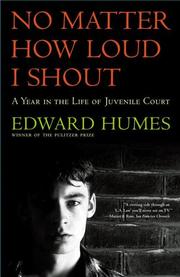
A year inside Los Angeles juvenile court, following seven cases and the judges and lawyers handling them. The standard first book on the subject and still the clearest account of how the court actually operates.
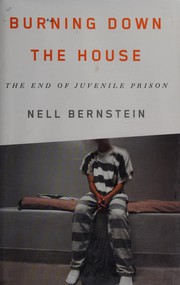
A reported case against youth incarceration itself, arguing that the institutions cause the harm they claim to prevent. Read second: Humes shows you the court, Bernstein shows you where it sends people.
How children arrive there
IntermediateUnderstand the pipeline — school discipline, policing and adolescent development — before arguing about sentencing.
▸ Study plan for this stage
Pace: 5 weeks for about 800 pages, and the reading is more demanding than stage one despite being shorter. Ann Arnett Ferguson's Bad Boys (296 pages) is an academic ethnography with a theoretical apparatus; give it two weeks and expect the framing chapters to be slower than the fieldwork. Victor M. Rios's
- The school-to-prison pipeline as a specific set of mechanisms — referral, suspension, expulsion, school policing — rather than a metaphor
- Ferguson's argument that punishment is identity-forming: children labelled as 'bound for jail' in elementary school come to understand themselves that way
- Adultification — the perception of Black children as older and more culpable than they are — and how Ferguson traces it in teachers' language
- Rios's 'youth control complex': schools, police, probation and community programmes operating as a single overlapping system of surveillance
- The insider-researcher position Rios occupies, and what it lets him see and what it may cost in distance
- Steinberg's core science: adolescence as a period of heightened plasticity, reward sensitivity and immature impulse control, with the socioemotional and cognitive control systems maturing on different timetables
- Why plasticity cuts both ways in Steinberg's argument — the same malleability that makes adolescents vulnerable makes intervention effective
- The distinction between a developmental explanation and an excuse, which every author in this stage has to manage
- What exactly does Ferguson observe teachers doing, and how does she get from those observations to a claim about identity formation?
- How does Rios's own history shape what he reports, and where in the book does he address that directly?
- State Steinberg's neuroscience claims precisely. Which are well-established and which are inferences about behaviour drawn from them?
- If adolescents are less culpable because of development, what follows for sentencing — and what does not follow?
- Ferguson studies elementary school and Rios studies teenagers. Do their accounts actually join up, or are they two separate arguments?
- Take your juvenile-case flowchart from stage one and extend it backwards: add every pre-arrest referral point Ferguson and Rios document, from a classroom removal onward
- Pull three specific incidents from Ferguson's fieldwork and write, for each, what a teacher would say happened and what she says happened; the gap is her method
- In Rios, count the distinct institutions that come into contact with a single boy in one of his case studies; that count is his 'youth control complex' made concrete
- Read the Supreme Court's opinion in Roper v. Simmons or Miller v. Alabama — both are freely available — and mark every passage that relies on a developmental claim; then find that claim in Steinberg
- Write down two policy proposals that follow from Steinberg's science and two that do not, and be explicit about which step of the argument stops each one
Next up: With the pipeline and the developmental science in hand, the next stage takes on the legal machinery those arguments are aimed at — and one case showing what happens when the machinery has no check on it.

An ethnography of a California elementary school documenting how Black boys are identified as troublemakers years before any contact with the justice system. The upstream end of the pipeline.
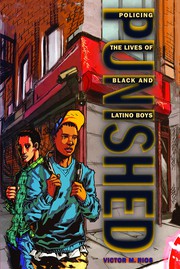
Three years following forty Black and Latino boys in Oakland, by a sociologist who was one of them. Pairs directly with Ferguson at the next age band.

The developmental-psychology case that adolescence is a period of heightened plasticity and poor impulse control. This is the science the Supreme Court's juvenile sentencing decisions lean on, so read it before the law stage.
The law and the reform argument
IntermediateTake on the legal machinery, the reform proposals, and what happens when the machinery is corrupt.
▸ Study plan for this stage
Pace: 6 weeks for about 1,100 pages, and this is the most uneven stage on the path. Elizabeth S. Scott's Rethinking Juvenile Justice (370 pages), written with Laurence Steinberg, is a scholarly legal-and-psychological monograph, not trade non-fiction: it argues in law-review register, cites cases and stud
- Scott and Steinberg's framework: children are less culpable, more amenable to change, and entitled to a system designed around both facts — the most influential single argument for keeping youth justice separate
- The constitutional line of cases the framework runs through, from In re Gault's due process rights to the Eighth Amendment juvenile sentencing decisions
- Prosecutorial discretion as the least-reviewed power in the system: charge selection, transfer decisions and plea leverage all sit with one office
- Bazelon's structural claim — that trials are rare and pleas are the system, so the charging decision is effectively the adjudication
- The right to counsel in juvenile proceedings as a formal guarantee that is routinely waived in practice, which is the precondition Kids for Cash exposed
- Privatised detention and the financial incentive to fill beds, as the mechanism in the Luzerne County case
- The difference between a corrupt actor and a corruptible design — Ecenbarger's book is about two judges, but the useful reading is about what allowed them
- How a reform argument built on science meets a system that runs on discretion, incentive and volume
- State Scott and Steinberg's proposed framework in three sentences. What would have to change in statute for it to be implemented?
- Bazelon says the prosecutor is the most powerful actor. Test that against Humes's Los Angeles court from stage one — does it hold there?
- What structural conditions made Luzerne County possible, and which of them still exist elsewhere?
- Scott and Steinberg argue in the register of law and science; Ecenbarger reports a crime. What can each kind of book establish that the other cannot?
- Where does the developmental argument have the least purchase — which offences or which defendants does it handle worst?
- Annotate your flowchart again, marking at each stage who holds the discretion and what, if anything, reviews it; the unreviewed points are Bazelon's thesis in diagram form
- Read In re Gault, which is short and freely available, then find in Kids for Cash the specific Gault rights that were not honoured in Luzerne County
- Take Scott and Steinberg's proposals one by one and check each against a real case from Humes: would it have changed the outcome, and at which stage?
- For each of Bazelon's two cases, write down every decision the prosecutor made and what the alternative would have been; this is the discretion made visible
- Find your own jurisdiction's published data on juvenile detention — most state agencies publish it — and see whether the facilities are publicly or privately operated
Next up: The final stage steps back from the juvenile system to the adult one that surrounds it, and to the structural accounts that explain why reforming one piece has proved so difficult.
Scott and Steinberg's developmental framework for juvenile law, and the most influential single argument for a distinct youth justice system. The scholarly counterpart to Age of Opportunity.
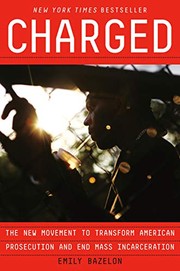
Reporting on prosecutorial discretion through two cases, one of them a young defendant. It identifies the actor with the most unreviewed power in the system, which most juvenile-justice books skip past.

The Luzerne County scandal, in which two Pennsylvania judges took millions to send children to private detention. Read it here as the extreme case that shows what the absence of counsel and review makes possible.
The wider system
IntermediatePlace youth incarceration inside the adult one, and read the structural accounts.
▸ Study plan for this stage
Pace: 7 weeks for about 1,340 pages, and the difficulty is front-loaded. William J. Stuntz's The Collapse of American Criminal Justice (432 pages) is the hardest book on this path — a legal-historical argument dense with doctrine and statistics, written for readers comfortable with constitutional criminal
- Stuntz's thesis: procedural rights expanded while substantive limits on criminal law collapsed, producing a system that is scrupulous about process and arbitrary about outcomes
- Local democratic control of criminal justice as Stuntz's lost variable — juries and neighbourhoods deciding, versus legislatures and prosecutors
- Forman's complication of the standard narrative: Black officials, police and community members in DC supported punitive policies for reasons Forman takes seriously rather than dismissing
- Why an all-or-nothing account of mass incarceration fails — Forman's decisions were made incrementally, each defensible on its own terms
- Wakefield and Wildeman's measured outcome: what parental incarceration does to children's behaviour, health and life chances, and how they attempt to separate effect from selection
- Incarceration as an intergenerational transmission mechanism, running in the opposite direction from the pipeline studied in stage two
- Stevenson's cases as the point where all of it lands on individuals — including the juvenile life-without-parole litigation that produced the Supreme Court decisions Steinberg's science informed
- The three registers now in view — doctrinal history, political history, quantitative estimate — and what each can and cannot establish
- Stuntz blames over-formalisation. How does that square with Kids for Cash, where the failure was too little process rather than too much?
- Forman shows Black officials backing punitive policy. What does that do to explanations of mass incarceration that rest solely on racial animus — and what does it leave intact?
- What exactly do Wakefield and Wildeman measure, what is their identification strategy, and where do they say their estimates are weakest?
- Stevenson is the lawyer in his own book. Where does that shape what you are told, and does it undermine anything?
- Taking all four stages together: which single change would you make first, and which author would object most strongly?
- Which of these authors would disagree most sharply with Bernstein from stage one, and on what grounds?
- Write Stuntz's thesis in one paragraph, then test it against your annotated flowchart: mark the points where his 'too much procedure, too little substance' description fits and where it does not
- In Forman, list the specific DC policy decisions he examines and, for each, write the argument its supporters made at the time — then write what it produced
- Read Wakefield and Wildeman's methods section closely enough to state what would have to be true for their estimates to be biased, and note whether they address it
- Find the Supreme Court's decision in Graham v. Florida or Miller v. Alabama and identify which of Stevenson's litigation and which of Steinberg's science each opinion relies on — this is the whole path connecting in one document
- Retrieve the note you wrote in stage one about the purpose of a juvenile justice system, and rewrite it now, marking each sentence with the author who changed your mind
- Draw up a two-column sheet listing every author on this path and the standpoint each writes from — journalist, ethnographer, psychologist, legal scholar, litigator, quantitative researcher — and note which of your conclusions rests on which kind of evidence
Next up: This closes the path: you have the courtroom and the facility, the pipeline and the science, the legal framework and its failure mode, and the adult system that surrounds all of it — with each author's position visible so you can weigh them yourself.

The argument that American criminal justice failed through procedural over-formalisation and the collapse of local democratic control. The most ambitious systemic account here and the hardest reading.

How Black officials in Washington DC supported the punitive policies that fell hardest on Black communities. It complicates the standard narrative rather than confirming it, which is why it belongs late.
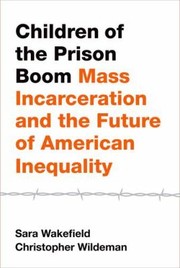
Wakefield and Wildeman's quantitative study of what mass incarceration did to the children of the incarcerated. Catalogued under its full subtitle. The other direction of the same relationship.
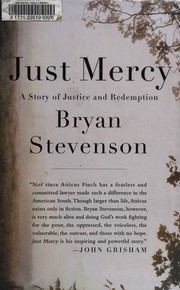
Stevenson's account of his legal practice, including the children sentenced to die in prison whose cases drove the Supreme Court litigation. Read last as the book that connects everything above to individual lives.
Discussion
Keep reading
Paths that share books, cover the same subject, or open a related topic.