Developmental Psychology: The Best Books on How Children's Minds Grow, in Order
Developmental psychology is the study of how thinking, language, memory and attachment actually change over childhood — which is a different thing from parenting advice, even though the two share a shelf in most bookshops. This path starts with the popular science on infant cognition, because the experimental results there are genuinely surprising and require no background; moves to attachment, which is the field's most consequential and most misused body of work; then goes back to Piaget and Vygotsky, whose frameworks the modern research is still arguing with; and finishes at textbook level and with adolescence, the stage the field neglected longest.
Start Here: What Babies Already Know
BeginnerSee the experimental methods that let researchers ask questions of people who cannot talk, and the results that overturned the idea of the infant mind as a blank slate.
▸ Study plan for this stage
Pace: 5 weeks. The Scientist in the Crib is around 280 pages of trade science with three authors sharing a voice; two weeks, and read the method descriptions rather than skipping to the conclusions. The Philosophical Baby is about 290 pages and is denser in argument than in evidence; two weeks. Einstein N
- The methods are the point of this stage: habituation, preferential looking and violation-of-expectation are the three tricks that let researchers ask questions of subjects who cannot answer, and every surprising result in these books rests on one of them.
- The 'theory theory' that gives The Scientist in the Crib its title — the claim that children hold implicit theories, generate predictions, and revise on evidence in a way formally like science rather than merely resembling it.
- Kuhl's perceptual narrowing: infants discriminate phonetic contrasts from every language early in the first year and lose the ones their language does not use by around twelve months, which makes language learning a case of loss as much as acquisition.
- Causal learning from statistical evidence — the blicket-detector work — showing that preschoolers infer causal structure from patterns of covariation rather than only from being told.
- False belief and theory of mind, and the reason the age at which children pass the task keeps moving depending on how the task is asked.
- Meltzoff's neonatal imitation findings are foundational to this literature and have also failed to replicate in the largest prospective study attempted, so treat that specific claim as contested rather than established, even though the wider infant-cognition picture is not.
- Gopnik's 'lantern versus spotlight' consciousness: the argument that young children have broader and less selective attention rather than merely weaker attention, and that this is a design feature of a learning organism.
- Hirsh-Pasek and Golinkoff are writing polemically against the enrichment industry, and their value here is showing the exact distance between what a study found and what a product claims it found.
- How does a habituation experiment work, and what inference does it license about what an infant knows?
- What does perceptual narrowing predict about an adult learning a second language, and what does the research actually support?
- What would count as evidence against the theory theory? Gopnik states the claim strongly enough to be testable — say how you would test it.
- Which specific findings in these books are contested rather than settled, and how do the authors signal the difference?
- Hirsh-Pasek and Golinkoff name products that misuse this research. What is the pattern in how the misuse happens?
- For three studies described in The Scientist in the Crib, write the method out yourself in a paragraph — what the infant saw, how long, what was measured — before reading the authors' interpretation. Then compare your inference with theirs.
- Track down the original paper behind one finding in The Philosophical Baby and read the abstract and method. Note the sample size. Trade science reports effects; the papers report how many babies.
- Take one claim from Einstein Never Used Flash Cards and find a currently marketed product making the version the authors object to. Write the two sentences side by side — the finding and the advertising copy.
- Design, on paper, a violation-of-expectation study for something you would like to know about infants. Getting the control condition right is the hard part, and doing it once shows you why these experiments took decades.
Next up: You now have the experimental picture of the infant mind; the next stage is the one body of developmental work with the widest reach outside the field, and the one most often stretched past its evidence.
Gopnik, Meltzoff and Kuhl's account of infant cognition research, organised around the argument that babies learn by something very like hypothesis testing. The best entry point in the field: no background assumed, and the studies it describes are the ones everything later cites.
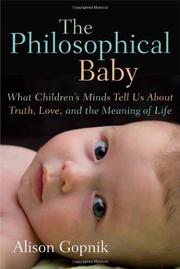
Gopnik alone, going further into consciousness, imagination and counterfactual thinking in young children. Read second — it assumes the experimental picture the first book builds and pushes it toward harder questions.

Hirsh-Pasek and Golinkoff on what the language and play research actually supports, written explicitly against the enrichment industry. Placed here because it is the clearest demonstration of the gap between the science and the products sold in its name.
Attachment
BeginnerLearn what attachment theory claims, what the Strange Situation measures, and where popular use of the theory outruns the evidence.
▸ Study plan for this stage
Pace: 7 weeks. Becoming Attached is long — around 500 pages — but it is narrative history and moves well; three weeks. A Secure Base is short, about 200 pages of lectures, and can be read in a week; it is Bowlby in his own words and is the primary source here, not a summary of current thinking. The Develo
- What the Strange Situation actually measures: an infant's strategy for using a caregiver on reunion after brief separations, classified as secure, avoidant or ambivalent — a twenty-minute laboratory procedure, not a measurement of love or of parental quality.
- The disorganised classification came later, from Main and Solomon rather than from Ainsworth, and is the category most strongly associated with adverse outcomes; it is also the one most often collapsed into the others in popular accounts.
- Bowlby is the historical source, not the current consensus. His maternal-deprivation claims were substantially revised after Rutter's reassessment, which separated deprivation from privation and showed that much of what Bowlby attributed to maternal absence was attributable to other things.
- The transmission gap: parental sensitivity predicts infant attachment classification, but far more weakly than the theory requires, and the gap between the two has not been closed. This is an acknowledged problem inside the field, not an outside criticism.
- Stability from infancy to adulthood is modest, and attachment classification is not a fixed trait; the popular use of 'attachment style' to explain adult romantic behaviour runs well ahead of what the longitudinal data supports.
- Distributions of the three classifications differ by country — the German and Japanese samples are the standard examples — which raises the question of whether the procedure measures the same thing everywhere.
- Temperament and genetics contribute to what the Strange Situation captures, which was disputed for years and is now part of the picture rather than an alternative to it.
- Siegel's interpersonal neurobiology is an integration attempt: it proposes a mechanism linking attachment to neural development, and it is best read as a framework being argued for rather than as a summary of established findings.
- Describe the Strange Situation procedure in order. What behaviour, at which moment, determines the classification?
- What did Rutter's reassessment change about Bowlby's maternal-deprivation claim, and what survived it?
- What is the transmission gap, and why is it a problem for the theory rather than merely for a study?
- How well does infant classification predict adult relationships, and what is the strongest evidence either way?
- Where in The Developing Mind does Siegel move from reporting findings to proposing a mechanism? Can you locate the transition?
- Which claims in A Secure Base does Karen's history show were later supported, and which were not?
- Read Karen's chapters on Ainsworth's Baltimore study first, then Bowlby's lectures, and mark every claim of Bowlby's that Karen reports as later revised. Keep the list; it is the difference between the theory as founded and the theory as it stands.
- Watch a published recording of the Strange Situation procedure and classify the infant yourself using Ainsworth's criteria as Karen describes them. Then read the researchers' classification. The exercise shows how much of the coding is judgement.
- Take one sentence about 'attachment styles' from a popular psychology article or a dating book and trace it back to what the research actually claims. The distance is usually large and is always instructive.
- In The Developing Mind, choose one chapter and separate its claims into three columns: established finding, plausible inference, and proposal. Siegel does not do this for you, and doing it is the only way to read the book responsibly.
Next up: Attachment is one framework the field argues with; the next stage is the two it was built on top of, read in the originals rather than in summary.
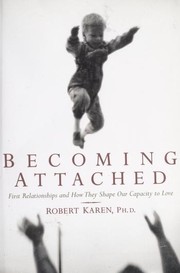
A journalist's history of the theory — Bowlby, Ainsworth, the institutional research, the controversies — and the most readable way in. Read it before Bowlby himself; it supplies the context that makes the primary work legible.

Bowlby's own late lectures, and the most accessible statement of the theory in his words. Short. Read after Karen so you can see which of Bowlby's claims later research supported and which it did not.
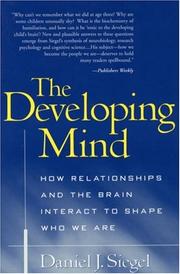
Siegel's synthesis of attachment research with neurobiology — the book that established interpersonal neurobiology as a framework. More speculative than the two before it; read it as an integration attempt rather than as settled findings.
The Founding Theorists
IntermediateRead the two frameworks the whole field is organised around — stages of cognitive development, and development as fundamentally social — in the originals.
▸ Study plan for this stage
Pace: 8 weeks, and the pages are misleading. The Psychology of the Child is short — under 200 pages — but it is Piaget compressing decades of his own studies, and it is much harder per page than anything in the first two stages; three weeks at a chapter every few days. Mind in Society is about 160 pages a
- Piaget's stages — sensorimotor, preoperational, concrete operational, formal operational — and the mechanism underneath them: assimilation, accommodation and equilibration as the engine that moves a child from one to the next.
- The classic phenomena Piaget discovered are robust; his ages and his stage boundaries are not. Object permanence and conservation both appear substantially earlier when the task is asked differently, which the infant research in stage one demonstrated directly.
- Piagetian egocentrism as an epistemic claim about coordinating perspectives rather than a moral one about selfishness — a distinction that is lost in almost every secondary account.
- Vygotsky's general genetic law: every higher mental function appears twice, first between people and then within the individual. This is the counterposition to Piaget's essentially solitary child, and it is the source of most of what schools call scaffolding.
- The zone of proximal development is defined by the difference between what a child can do alone and with help, and Vygotsky intended it partly as a critique of intelligence testing rather than as a teaching technique.
- 'Scaffolding' is not Vygotsky's word — it was coined by Wood, Bruner and Ross decades later — so a book claiming Vygotsky as the source of the term is repeating a citation error.
- Thought and Language's central claim is that speech and thought have separate developmental roots and converge, after which thought becomes verbal; egocentric speech is the observable point of convergence, and this is precisely where Vygotsky attacks Piaget's interpretation of the same data.
- Inner speech as internalised and abbreviated social speech, with its own syntax — the most specific and most testable thing in the book, and the part later research has engaged with most.
- State Piaget's mechanism of stage transition in your own words. What actually causes a child to move from preoperational to concrete operational thought?
- Which of Piaget's findings have survived and which of his ages have not? Give a specific example of each.
- Piaget and Vygotsky looked at the same phenomenon — a child talking to itself — and drew opposite conclusions. State both readings and say what evidence would distinguish them.
- What is the zone of proximal development a zone of, and what was Vygotsky arguing against when he proposed it?
- What does Vygotsky mean by mediation, and what work do tools and signs do in his account that they do not do in Piaget's?
- Given that Mind in Society is an edited compilation, what should you be careful about when quoting it?
- Run a conservation task with a child of five or six using Piaget's own procedure as The Psychology of the Child describes it, then run it again with the transformation done accidentally rather than deliberately. The difference in the answer is the single most informative hour available in this stage.
- Take one Piagetian claim and find the corresponding result in The Scientist in the Crib from stage one. Write the two side by side and state exactly what was revised — the phenomenon, the age, or the explanation.
- Locate Vygotsky's critique of Piaget's egocentric speech in Thought and Language and read the corresponding Piaget passage the same day. This is a direct disagreement between two primary sources and reading it in one sitting is worth more than any commentary on it.
- Take a real teaching interaction you can observe and describe it twice: once in Piagetian terms and once in Vygotskian terms. What each vocabulary makes invisible is the point of the exercise.
Next up: You have read the popular science and the founding theory; the next stage is where both get checked against the systematic literature, with the study designs stated rather than summarised.
Piaget and Inhelder's own compact summary of the stage theory, which is far more efficient than reading his individual studies. Read it knowing that the timings have been substantially revised downward by the infant research in stage one — the structure survived better than the ages did.
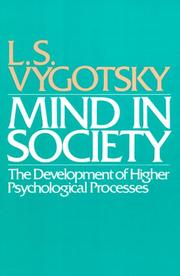
The posthumous collection that introduced the zone of proximal development and the claim that higher mental functions appear first between people and only then within the individual. The direct counterposition to Piaget, and the source of most classroom practice that calls itself scaffolding.

Vygotsky's book-length argument about how speech and thought develop separately and then converge, including his critique of Piaget's egocentric speech. Read last in this stage — it is the most demanding of the three and the most specific.
The Textbook Level
IntermediateGet systematic coverage — prenatal through adolescence, across cognition, language, emotion, morality and social development — with the study designs made explicit.
▸ Study plan for this stage
Pace: One semester, and read one of the two rather than both. How Children Develop is around 600 pages, organised by topic, and works at a chapter a week; Child Development is longer, around 700 pages, and organised chronologically by age. Neither assumes prior psychology, but both assume you will read th
- The difference between the popular and the textbook treatment is not tone but hedging: the textbooks report effect sizes, contested findings and failed replications that the trade books state as settled.
- The standard designs — cross-sectional, longitudinal, sequential and microgenetic — and what each can and cannot establish about change over time, which is the methodological core of the whole discipline.
- Cohort effects and the reason a cross-sectional difference between five- and ten-year-olds is not the same evidence as watching five-year-olds become ten.
- The nature-and-nurture question restated properly as interaction, gene-environment correlation and heritability within a population — none of which means what the ordinary use of 'genetic' implies.
- Domain coverage the earlier stages left out entirely: prenatal development and teratogens, motor development, moral reasoning after Kohlberg, peer relations, and the effects of poverty and adversity.
- The WEIRD sampling problem — the field's evidence base is drawn overwhelmingly from Western, educated, industrialised, rich and democratic populations, which the textbooks now flag and the founding theorists did not.
- Where each of the trade books from stage one sits in the literature: the textbooks cite the same studies, and reading the citation is the fastest way to see how much a popular account compressed.
- For a claim you accepted in stage one, what does the textbook say about its evidence base, and does the hedging change your view?
- What is a microgenetic design, and what question can it answer that a longitudinal study cannot?
- What does a heritability estimate of 0.5 for a developmental trait actually mean, and what does it not mean?
- How do the textbooks handle Piaget's stages — as a framework, as history, or as findings?
- Which topics does the textbook cover that no book in the first three stages mentioned at all?
- Take three specific claims from The Scientist in the Crib and find each one in the textbook's index. Compare the two treatments sentence by sentence and note what the trade book left out.
- For one chapter, read only the method boxes and write down what design each study used and what it therefore licenses. The designs, not the findings, are what this stage is for.
- Find the textbook's treatment of attachment and mark every qualification it adds to what you read in stage two. That list is roughly the distance between a theory as popularised and a theory as taught.
- Pick one topic covered in both textbooks — adolescence is a good choice — and read both treatments. The organisational difference between the topical and the chronological book is most visible on a topic that spans ages.
Next up: With the literature underneath you, the last stage extends past early childhood and asks what the research does and does not license anyone to tell parents.
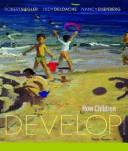
The standard undergraduate text, organised topically and unusually good at describing how each finding was actually measured. This is where the popular books above get checked against the literature.
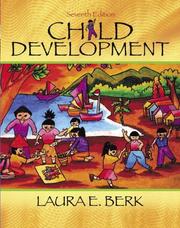
The main alternative text, organised chronologically by age rather than by topic, with more coverage of cultural and contextual influences. Use whichever organisation suits you; reading both is unnecessary.
Later Childhood, Adolescence, and What Follows From It
BeginnerExtend past infancy into the school years and the teenage brain, and see what the research does and does not license anyone to tell parents.
▸ Study plan for this stage
Pace: 6 weeks. Mind in the Making is around 400 pages organised as seven chapters, one per skill, each built on interviews with the researchers — three weeks, a skill every few days. The Gardener and the Carpenter is about 300 pages and is an argument rather than a survey; a week, and read it in as few si
- Galinsky's seven executive-function skills — focus and self-control, perspective taking, communicating, making connections, critical thinking, taking on challenges, and self-directed engaged learning — each traced back to the studies it came from, with the researchers interviewed on the record.
- Executive function as a construct: what the marshmallow test and its successors actually measured, and how much of the original delay-of-gratification result survived larger and better-controlled replication.
- Gopnik's central distinction: the carpenter model treats a child as material to be shaped toward a specification, the gardener model as an organism to be provided conditions. Her claim is that the evidence supports the second and that 'parenting' as a goal-directed activity is a recent invention.
- The evolutionary argument underneath it — human childhood is unusually long because variability and exploration are the product, which means a child's unpredictability is the point rather than a problem to be managed.
- The empirical claim behind Gopnik's polemic is narrow and worth stating precisely: within the normal range, specific parenting practices predict much less about outcomes than the parenting literature implies. It is not a claim that care does not matter.
- Steinberg's dual-systems model of adolescence: sensation-seeking rises sharply in early adolescence while the self-regulatory system matures years later, and the gap between the two curves is the explanation for adolescent risk-taking.
- Adolescence as a second window of heightened plasticity, with the practical consequences Steinberg draws — school start times and sleep, the design of interventions, and the legal treatment of juveniles.
- Steinberg is an expert witness as well as a researcher: his work has been cited in US Supreme Court decisions on juvenile sentencing, so read his policy chapters knowing he is an advocate in those arguments.
- Which of Galinsky's seven skills rests on the strongest evidence, and which on the weakest? She names the studies; check them.
- State Gopnik's argument in its narrow form. What exactly is she claiming parenting practices do not do?
- Does Gopnik's evidence support her conclusion, or does she extend beyond it? Point to where.
- What are the two systems in Steinberg's dual-systems model, and what does the gap between their developmental curves predict?
- What follows for law and schooling if adolescence is a plasticity window, and which of Steinberg's recommendations goes furthest beyond his data?
- Galinsky and Gopnik read the same literature and reach opposite conclusions about whether to give parents advice. Which one is right about what the research licenses?
- Take one of Galinsky's seven skills, find the study she credits it to, and read the abstract. Then write down what the study measured and what she recommends on the basis of it. The gap is either small or large, and either answer is worth having.
- Read The Gardener and the Carpenter immediately after Mind in the Making and write a page arguing Galinsky's reply. Gopnik names her opponents' position but does not steelman it; doing so is the best test of her case.
- Chart Steinberg's two developmental curves from his description and mark the age at which the gap is widest. Then check that age against the age-crime curve, which is public data. The prediction is falsifiable and you can check it in an hour.
- Take one policy Steinberg proposes — later school start times is the easiest — and find out what your local district actually does and what evidence it cites. This is the point in the path where the research meets an institution.
- Return to the textbook from stage four and read its adolescence chapter against Age of Opportunity. Note every claim Steinberg makes with more confidence than the textbook does.
Next up: You have infancy, attachment, the founding theories, the systematic literature and adolescence, which is the shape of the field; from here it divides into specialisms with their own literatures — language acquisition, developmental psychopathology, educational psychology, and developmental cognitive neuroscience — and any of them can be entered directly from here.
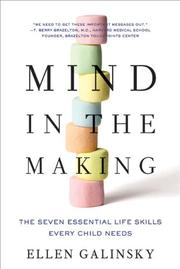
Organised around seven executive-function skills, each traced to the studies behind it, with interviews with the researchers. The most direct translation of the developmental literature into something usable.

Gopnik's argument that the whole model of parenting-as-shaping is unsupported by the developmental and evolutionary evidence. Read it after Galinsky as the deliberate counterweight — it is the strongest available case against turning this research into a method.

The leading adolescence researcher on why the teenage years are a second period of heightened brain plasticity, and what that implies for schools and the law. The right place to finish, because it covers the stage the rest of the field spent a century treating as an afterthought.
Discussion
Keep reading
Paths that share books, cover the same subject, or open a related topic.