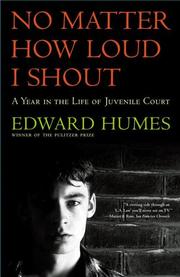
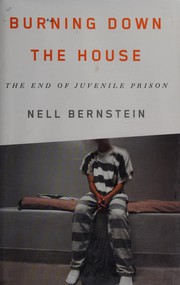
Begin with Edward Humes and No Matter How Loud I Shout, a year spent inside Los Angeles juvenile court following seven cases and the judges and lawyers handling them. Follow it with Nell Bernstein's Burning down the house, which makes the reported case against youth incarceration itself. Humes shows you the court; Bernstein shows you where it sends people.
That order is deliberate, and so is the rest. The United States built a separate justice system for children on the theory that children are different, spent the 1990s dismantling that theory, and is now partly rebuilding it — so the literature is an argument, not a settled account. Reading the on-the-ground reporting first gives you concrete rooms and cases to test the later claims against. One thing to say plainly at the start: this is a policy and reporting list. It is not legal advice and it is not a guide for a family with a child in the system, which needs a defence attorney and a local advocate, not a reading list.
How children arrive there
Ann Arnett Ferguson's Bad Boys is an ethnography of a California elementary school, documenting how Black boys are identified as troublemakers years before any contact with the justice system. Victor M. Rios's Punished follows forty Black and Latino boys in Oakland over three years, written by a sociologist who grew up in the same neighbourhood. They pair directly, at consecutive age bands.
Age of Opportunity is Laurence Steinberg's developmental-psychology case that adolescence is a period of heightened plasticity and poor impulse control. This is the research the Supreme Court's juvenile sentencing decisions have leaned on, so read it before the law stage. Note that it is one researcher's synthesis of a contested field, and that developmental findings are cited by advocates on more than one side of the sentencing argument.
The law, the reform argument, and what corruption looks like
Rethinking juvenile justice is Elizabeth Scott and Laurence Steinberg's developmental framework for juvenile law, and the scholarly counterpart to Steinberg's trade book. It is the most influential single argument for maintaining a distinct youth justice system.
Emily Bazelon's Charged reports on prosecutorial discretion through two cases, one of them a young defendant. Bazelon's contention is that the prosecutor holds the most unreviewed power in the system — an actor most juvenile-justice books skip past. Kids for cash is William Ecenbarger on the Luzerne County scandal, in which two Pennsylvania judges took millions in connection with sending children to private detention facilities. Read it here as the documented extreme case that shows what the absence of counsel and review makes possible.
The wider system
The Collapse of American Criminal Justice is William J. Stuntz's argument that American criminal justice failed through procedural over-formalisation and the collapse of local democratic control. It is the most ambitious systemic account here and the hardest reading on the list. James Forman's Locking up our own documents how Black officials in Washington DC supported punitive policies that fell hardest on Black communities — it complicates the standard narrative rather than confirming it, which is exactly why it belongs late rather than early.
Children Of The Prison Boom Mass Incarceration And The Future Of American Inequality is Sara Wakefield and Christopher Wildeman's quantitative study of what mass incarceration did to the children of incarcerated parents; it is catalogued under that full subtitle. It runs the relationship in the other direction from everything above.
Finish with Bryan Stevenson's Just Mercy (2014), his account of his own legal practice, including the children sentenced to die in prison whose cases drove the litigation that reached the Supreme Court. It connects the structural arguments back to named individuals.
One argument this list does not carry: the environmental-exposure research linking childhood lead levels to later offending. That belongs to a different literature — see environmental justice for the books that make it.
Follow the full ordered path here: Juvenile Justice and Youth Incarceration: The Best Books, in Order.
Ready to learn something deeply?
Build a reading path — free