Criminal Law and Procedure: The Best Books, in Order
Criminal law is two subjects taught as one: the substantive doctrine of what counts as a crime, and the procedural rules governing how the state may investigate and try it. This path takes the black-letter doctrine first, from the hornbooks that law students actually use, then the philosophical question of why punishment is justified at all, then the empirical literature on what the system does in practice — which diverges sharply from the doctrine — and finally the courtroom accounts that show the gap from the inside. It is an academic reading list, not legal advice, and the doctrine is American unless noted.
The Black-Letter Core
IntermediateGet the substantive doctrine — actus reus, mens rea, causation, defences — and the procedural framework of search, seizure, interrogation and trial rights, at the level a law student is expected to hold them.
▸ Study plan for this stage
Pace: 14-18 weeks. Read Dressler's Understanding Criminal Law (603 pp) straight through over five weeks, then Dressler and Michaels's Understanding Criminal Procedure (628 pp) over five. LaFave's Criminal Law (1046 pp) and LaFave, Israel and King's Criminal Procedure (1309 pp) are hornbooks - consulted, n
- Actus reus: the voluntary act requirement, omissions and the duty situations that create them, possession as an act
- Mens rea: the Model Penal Code's four culpability levels and how they map onto the common-law vocabulary of malice, general and specific intent
- Causation - but-for cause and the proximate-cause limits, intervening acts, and the thin-skull rule
- Homicide grades: premeditation, provocation and heat of passion, depraved-heart murder, and the felony murder rule with its limiting doctrines
- Inchoate liability: attempt and the competing tests for how far is far enough, conspiracy and its evidentiary consequences, solicitation
- Justification versus excuse - self-defence, necessity, duress, insanity - and why the distinction has consequences for third parties
- Fourth Amendment: what counts as a search, the warrant requirement and its exceptions, standing, and the exclusionary rule with its good-faith and attenuation limits
- Fifth and Sixth Amendment: Miranda's triggers and limits, the right to counsel and when it attaches, confrontation, and the jury trial right
- How do the Model Penal Code's four culpability levels map onto common-law mens rea terms, and where does the mapping fail?
- When does a defence justify conduct and when does it merely excuse the actor, and why does that matter to someone who helps them?
- What triggers Miranda, what does it not reach, and what happens to the physical fruits of an unwarned statement?
- Which warrant exceptions would cover a roadside vehicle stop, and how has that set narrowed?
- On current doctrine, what is the exclusionary rule for, and why does that characterisation limit its reach?
- Take Dressler's chapter on attempt and run one fact pattern through each of the competing tests - last act, dangerous proximity, substantial step - and note where the outcomes diverge
- Brief the leading case in each of Dressler and Michaels's Fourth Amendment chapters and arrange them on a timeline to see where the Court expanded and where it narrowed
- Whenever a Dressler passage feels compressed, look the same point up in the corresponding LaFave hornbook and write down what the footnotes and split-of-authority discussion add
- Write out the MPC culpability grid, then pull five offences from your own state's penal code and re-code their mental elements against it
- Take one suppression scenario and work it through the exclusionary rule and each of its exceptions in order, stating at each step who bears the burden
Next up: The doctrine tells you what the rules are; the next stage asks the question the hornbooks bracket - what any of this punishment is supposed to be for.
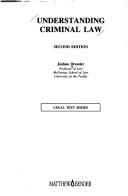
The standard treatise students actually read, and the clearest exposition of mens rea, the homicide grades, inchoate offences and the justification-versus-excuse distinction. Start here; it is written to be read straight through, which the casebooks are not.

Dressler and Michaels on the constitutional criminal procedure — the Fourth, Fifth and Sixth Amendments, exclusion, Miranda, right to counsel. Read it second, as the companion volume; the two together are the doctrinal spine of this path.
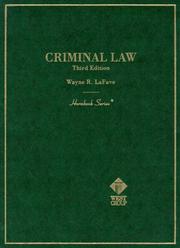
LaFave's hornbook, denser and more heavily footnoted than Dressler and the one practitioners cite. Use it as the reference you check rather than the book you read cover to cover.
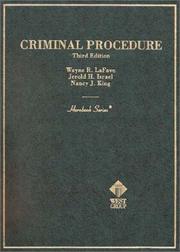
LaFave, Israel and King — the standard procedural hornbook and the abridgement of the multi-volume treatise. Same role as the above: the authority to consult when Dressler is too compressed.
Why Punish At All
IntermediateUnderstand the competing justifications for punishment — retributive, deterrent, incapacitative, expressive — and be able to identify which one a given doctrine actually rests on.
▸ Study plan for this stage
Pace: 8-10 weeks. Hart's Punishment and Responsibility (277 pp) is short and slow - analytic legal philosophy, argued essay by essay, and three weeks is not excessive. Ashworth and Horder's Principles of Criminal Law (512 pp) over four weeks: it is a full English criminal law text, included here as the co
- Hart's central separation: the general justifying aim of the practice of punishment versus the principles of distribution - who may be punished and how much
- Retributivism, deterrence, incapacitation and rehabilitation as competing aims, and the mixed theories that combine them
- Hart's account of excuses as protecting the individual's capacity to choose, rather than as concessions to sympathy
- Ashworth's principles - proportionality, fair labelling, maximum certainty, the presumption against strict liability - stated explicitly where the American texts leave them implicit
- The same conceptual architecture in a different constitutional setting, and what changes without a Bill of Rights
- Garland's readings: Durkheim on punishment as moral solidarity, Marx on class control, Foucault on discipline, Elias on the civilising process
- Punishment as an expressive and cultural institution rather than a policy instrument
- What does Hart mean when he says a mixed theory is not a compromise between retributivism and utilitarianism?
- Which justification does the felony murder rule actually rest on, and does it survive Hart's distribution constraints?
- Where does Ashworth's proportionality principle contradict standard American sentencing practice, and how does English law enforce it?
- What does Garland claim the justificatory debate cannot explain about actual penal practice?
- Which of Garland's four theorists best explains a sentencing practice you already know about, and what does that reading leave out?
- Take three doctrines from Dressler - felony murder, strict liability offences, habitual offender sentencing - and state under Hart's framework which question each is answering and whether it answers it
- Write out the elements of the same offence as Ashworth and Horder state them in English law and as Dressler states them in American law, then list every substantive difference
- Apply each of Garland's four theorists in turn to one contemporary sentencing practice and note the different account each generates
- Reconstruct Hart's argument on excuses in one page without using the word desert, and see whether it still works
Next up: With the doctrine and its justifications in hand, the next stage confronts the empirical literature showing that neither one describes what the system does most of the time.

The essays that reset the debate by separating the question of what justifies the practice of punishment from the question of how much any individual deserves. Short, and everything written since argues with it. Read it first here.
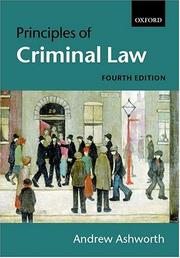
Ashworth and Horder on English criminal law, and included deliberately as the comparative case: same conceptual architecture, different constitutional setting, and far more explicit about the principles the American texts leave implicit.
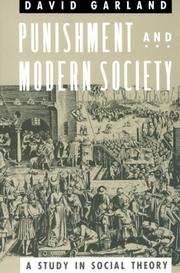
A sociologist reading Durkheim, Marx, Foucault and Elias on punishment as a social institution rather than a policy instrument. Read it third — it is the argument that the justificatory debate above is not the whole story.
What the System Actually Does
IntermediateConfront the empirical literature, and be able to explain why the doctrine of trial rights matters little in a system where almost every case is resolved by plea.
▸ Study plan for this stage
Pace: 8-10 weeks. Stuntz's The Collapse of American Criminal Justice (432 pp) over three weeks - it is a sustained argument by a Harvard criminal procedure scholar, not a survey, and should be read as advocacy for a thesis. Pfaff's Locked In (311 pp) over two weeks with attention to the charts; it is a cr
- Prosecutorial discretion as the operative power in the system, largely unreviewable in practice
- The disappearance of the trial: plea rates above ninety per cent, and what that does to the value of trial rights
- Stuntz's thesis - procedural rights expanded while substantive criminal law broadened, handing prosecutors leverage rather than defendants protection
- Pfaff's finding that filings per arrest, not sentence length, drug enforcement or private prisons, drove the growth in incarceration
- Mass incarceration as a state and county phenomenon rather than a federal one
- Friedman's long view: the historical contingency of institutions that look permanent - the police department, the penitentiary, plea bargaining, parole
- How an empirical claim about the system is tested, and what it means when a popular explanation does not survive the data
- How does a charging decision translate into a sentence outcome without any trial taking place?
- Which standard explanations for mass incarceration does Pfaff argue the data do not support, and what is his evidence in each case?
- Why does Stuntz think the expansion of constitutional criminal procedure made outcomes worse rather than better?
- Which features of today's system does Friedman show to be about fifty years old, and which are genuinely old?
- Where do Stuntz and Pfaff disagree, and what evidence would settle it?
- Chart Pfaff's four key series - arrests, felony filings, prison admissions, time served - and identify for yourself which one moves and when
- Test Stuntz's argument against stage one: list which of the Fourth, Fifth and Sixth Amendment rights you learned actually operate in a case resolved by plea, and which are dead letters
- Use Friedman to date five features of the current system - public defenders, plea bargaining, the municipal police department, the penitentiary, parole - and note what preceded each
- Take one widely repeated claim about why incarceration grew, find Pfaff's treatment of it, and write down the specific data point that decides the question
- Pull the actual plea rate and trial rate for one state's felony courts and compare it with the assumptions built into the trial-rights doctrine from stage one
Next up: The statistics establish that discretion, not doctrine, decides most cases; the last stage watches that happen in individual courtrooms.

The most important book here: Stuntz argues that constitutional procedural rights expanded while substantive criminal law broadened so far that prosecutors gained effectively unreviewable discretion, and that the trial disappeared as a result. Read it immediately after the doctrinal stage — it is the direct rebuttal to treating that doctrine as decisive.

A criminologist's data-driven argument that mass incarceration was driven mainly by prosecutorial charging decisions in state systems, not by the drug war, private prisons or long sentences. It contradicts several widely repeated explanations and shows its numbers; read it as the empirical check on the standard narrative.
The long view — colonial punishment through the twentieth century — which shows that most of what looks permanent in the system is about fifty years old. Read it last in this stage for the historical perspective the other two assume.
Inside the Courtroom
IntermediateSee how the doctrine and the data look at the level of a single case, and understand where discretion actually sits.
▸ Study plan for this stage
Pace: 6-7 weeks. Gideon's Trumpet (262 pp) in a few days - it is short and reads like reporting. Bach's Ordinary Injustice (320 pp) over a week and a half, Bazelon's Charged (448 pp) over two weeks, Stevenson's Just Mercy (352 pp) over two. Note who is speaking in each: Lewis and Bazelon are journalists r
- How a constitutional test case is actually built, from a handwritten prison petition to a Supreme Court holding
- The gap between a right recognised and a right funded: counsel guaranteed by Gideon and delivered by an overloaded public defender
- Bach's routine failure mode - a system in which everyone in the room adapts to the dysfunction and no one names it
- Plea bargaining as the system's actual operating mechanism, followed case by case in Bazelon
- Where discretion actually sits: charging, bail, plea offer, and the decision not to review
- Race, poverty and capital and juvenile sentencing as Stevenson documents them from inside the representation
- The difference between a systemic claim and a case narrative, and what each kind of evidence can establish
- What does Gideon's Trumpet show about how a criminal constitutional case reaches the Court that the doctrine itself does not?
- In each of Bach's four counties, which stage-one rule was formally satisfied while being substantively empty?
- Which of Bazelon's decision points were governed by law and which by an individual prosecutor's choice?
- Which of Pfaff's statistical claims do these narratives illustrate, and which do they leave untouched?
- What does a participant account like Stevenson's establish that a survey cannot, and what can it not establish?
- Read Gideon's Trumpet beside the right-to-counsel chapter of Dressler and Michaels and list what the doctrine omits about how the case came to exist
- For each of Bach's four counties, name the specific doctrinal protection that was nominally in place and describe how it failed in practice
- Take one of Bazelon's two cases and reconstruct the timeline of decision points, marking each as legally compelled or discretionary
- Go through Just Mercy marking each claim as documented case record, Stevenson's own observation, or argument, and see how the three are distributed
- Write one page reconciling Stuntz's structural thesis with what these four books show at the level of a single Tuesday morning docket
Next up: This is the end of the path; the natural continuation is the primary material these books work from - the leading opinions themselves, a state penal code, and the sentencing commission data that Pfaff and Stuntz argue over.
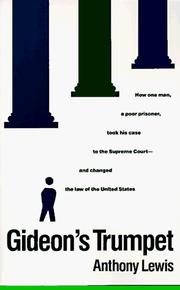
The story of Gideon v. Wainwright, from a prisoner's handwritten petition to the recognition of a right to counsel. Still the best introduction to how a constitutional criminal case is actually made, and short. Read it first here.
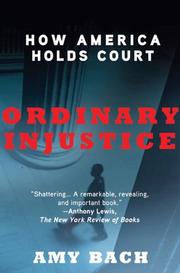
Four American counties where the system fails routinely and quietly — an overloaded public defender, a judge who does not notice, a prosecutor unchallenged. The book that shows what Stuntz's argument looks like on a Tuesday morning.
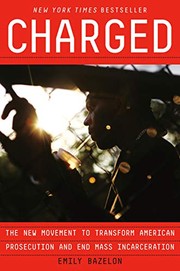
Prosecutorial discretion followed through two cases, and the clearest account of plea bargaining as the system's actual operating mechanism. The direct narrative counterpart to Pfaff's statistics.
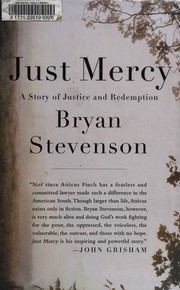
A defence lawyer's account of capital and juvenile cases in Alabama, centred on the wrongful conviction of Walter McMillian. Read it last: it is the strongest available argument that the discretionary failures documented above are not distributed randomly.
Discussion
Keep reading
Paths that share books, cover the same subject, or open a related topic.