James Baldwin Reading Order: Where to Start
This curriculum follows the learner's own prescribed arc — essays first, then novels, then late political writing — organized into four stages that build emotional and intellectual fluency with Baldwin's voice. Each stage deepens the reader's familiarity with his prose style, moral vision, and historical context before moving to more demanding or structurally complex works.
First Voice: The Essential Essays
BeginnerGet comfortable with Baldwin's distinctive essay voice — confessional, prophetic, and precise — and absorb his core arguments about race, identity, and America.
▸ Study plan for this stage
Pace: 6–8 weeks total: Weeks 1–4 for "Notes of a Native Son" (~20–25 pages/day, reading one essay per sitting and pausing to journal before moving on); Weeks 5–8 for "The Fire Next Time" (~15–20 pages/day, re-reading each section at least once given its density and rhetorical intensity).
- Baldwin's confessional 'I' — the use of personal experience as a lens for systemic critique, seen throughout the autobiographical essays in Notes of a Native Son
- The paradox of love and rage — Baldwin's argument that genuine love for America and for Black people requires unflinching confrontation with American racism, crystallized in the title essay 'Notes of a Native Son'
- The 'racial myth' and white innocence — Baldwin's diagnosis that white Americans sustain their identity through a willed ignorance of what racism costs Black Americans, developed in essays like 'Many Thousands Gone' and extended in The Fire Next Time
- Religion as both refuge and trap — the church as a site of community and transcendence but also of escapism and complicity, explored through Baldwin's teenage preaching years in 'Down at the Cross'
- The Negro as America's mirror — Baldwin's recurring claim that Black Americans, by surviving oppression, hold a truth about the nation that white Americans cannot afford to see
- Identity as perpetual negotiation — the idea that neither 'Black' nor 'American' is a fixed essence but a contested, ongoing construction, threaded through both books
- Prophetic rhetoric — Baldwin's deployment of biblical cadence, second-person address ('you'), and apocalyptic warning as political argument, especially in The Fire Next Time
- The relationship between the personal essay and the political manifesto — how Baldwin fuses memoir, criticism, and exhortation into a single form across both texts
- In the title essay 'Notes of a Native Son,' how does Baldwin use the simultaneous death of his father and the Harlem riot of 1943 to argue something larger about the inheritance of Black rage in America?
- What does Baldwin mean when he writes in 'Many Thousands Gone' that the 'Negro in America' is a social and not a personal or a simple historical invention — and why does he consider this distinction crucial?
- In 'Down at the Cross' (The Fire Next Time), Baldwin describes leaving the church and rejecting Elijah Muhammad's Nation of Islam. What does he find insufficient in both institutions, and what alternative does he propose?
- How does Baldwin's concept of 'white innocence' function as a form of power rather than simply ignorance? Use evidence from at least one essay in Notes of a Native Son and one section of The Fire Next Time.
- Baldwin addresses 'the relatively conscious whites and the relatively conscious blacks' at the close of The Fire Next Time. What does he ask of them, and why does he frame the stakes in apocalyptic terms?
- How does Baldwin's prose style — its sentence rhythms, its shifts between 'I' and 'we' and 'you' — itself enact his arguments? Choose one passage from each book and close-read the rhetoric.
- Essay-by-essay journal: After finishing each essay in Notes of a Native Son, write a 150–200 word response identifying (a) the central argument, (b) the most striking personal detail Baldwin uses, and (c) one question the essay leaves open for you. This builds the habit of reading Baldwin actively rather than passively.
- Rhetorical markup: Select any two consecutive pages from 'Down at the Cross' and annotate every rhetorical move — biblical allusion, direct address, irony, anaphora, shift in tone. Then write a one-paragraph explanation of how these devices serve Baldwin's argument.
- Parallel timeline: Build a simple two-column timeline placing key events from Baldwin's life (as revealed in both books) alongside major U.S. historical events (WWII, the 1943 Harlem riot, the Civil Rights movement's early years). Use this to see how Baldwin roots personal experience in historical context.
- Imitation paragraph: Choose a passage where Baldwin uses the second-person 'you' to implicate the reader (there are several in The Fire Next Time). Write your own 200-word paragraph on a contemporary issue using the same second-person, confessional-yet-accusatory voice. Compare your draft to Baldwin's — what does his version do that yours does not yet?
- Dialogue across the two books: Baldwin's thinking deepens from Notes of a Native Son (1955) to The Fire Next Time (1963). Write a one-page comparison tracing how his attitude toward white America shifts — or doesn't — between the two books, citing specific passages from each.
- Read-aloud session: Choose the final three pages of The Fire Next Time ('the relatively conscious whites and the relatively conscious blacks…'). Read them aloud, alone or with a partner. Notice where you naturally pause, speed up, or feel the emotional weight land. Write a brief reflection on how hearing the prose changes your understanding of its argument.
Next up: Mastering Baldwin's essay voice and core arguments here gives you the interpretive foundation to see how he translates the same ideas — racial identity, love, prophecy, and American self-deception — into the more layered, dramatic form of his fiction in the next stage.
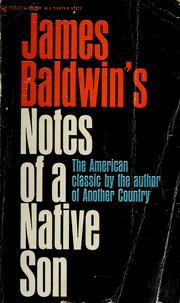
Baldwin's debut essay collection is the perfect entry point: the pieces are shorter, the autobiographical grounding makes them immediately accessible, and they introduce every major theme he will return to for the rest of his life.

Two long, electrifying essays written as letters — one to his nephew, one to the nation. Having read 'Notes of a Native Son' first, the reader is now ready for Baldwin's most concentrated and famous moral argument, delivered at full rhetorical power.
Deeper Into the Essays
BeginnerExpand the reader's grasp of Baldwin's range as an essayist — his literary criticism, his experience as a Black American in Europe, and his evolving analysis of white supremacy.
▸ Study plan for this stage
Pace: 6–8 weeks total: Weeks 1–3 on "Nobody Knows My Name" (~20–25 pages/day, reading 5 days/week); Weeks 4–8 on "The Price of the Ticket" (~25–30 pages/day, reading 5 days/week — it is a longer collected volume, so allow extra time to pause and journal between essays).
- The essay as personal testimony: Baldwin's use of the first-person 'I' as both individual witness and collective voice for Black Americans
- Literary criticism as social criticism: in 'Nobody Knows My Name,' Baldwin's assessments of writers like Richard Wright and Norman Mailer reveal how race shapes American literature and identity
- The Black American in Europe: Baldwin's Paris and European experiences as a lens for seeing American racism from the outside — exile as clarifying distance rather than escape
- The myth of American innocence: Baldwin's argument, developed across both books, that white Americans invest in a false self-image that requires the dehumanization of Black people
- White supremacy as a psychological and spiritual crisis: Baldwin's insistence that racism damages the oppressor's humanity as much as the oppressed's
- The evolution of Baldwin's political voice: tracing how his tone and analysis sharpen from the more personal-literary essays in 'Nobody Knows My Name' to the broader historical sweep collected in 'The Price of the Ticket'
- Integration vs. identity: Baldwin's complex, sometimes ambivalent stance on what integration means for Black selfhood and culture
- The function of the artist and the writer: Baldwin's belief, threaded through both books, that the writer's duty is to disturb the comfortable and bear witness to the truth
- In 'Nobody Knows My Name,' how does Baldwin use his time in Europe and his encounters with African writers to redefine what it means to be a Black American — and why does he ultimately insist he is not African?
- How does Baldwin's literary criticism of Richard Wright in 'Nobody Knows My Name' go beyond aesthetics to make a broader argument about protest literature and Black identity?
- Across the essays collected in 'The Price of the Ticket,' how does Baldwin's diagnosis of white supremacy evolve — what does he mean when he argues that white identity itself is a kind of lie or invention?
- What does Baldwin mean by 'the price of the ticket,' and how does that central metaphor illuminate the cost Black Americans pay to participate in American society?
- How do the two books together show Baldwin moving between the personal and the political? Where do you see the most striking examples of him fusing autobiography with social analysis?
- By the end of both books, what is Baldwin's vision — however tentative — for how Americans, white and Black, might move toward genuine freedom, and what obstacles does he see as most deeply entrenched?
- Annotated reading log: For every essay in both books, write 3–5 sentences summarizing Baldwin's central claim, one sentence identifying his rhetorical strategy (anecdote, irony, direct address, etc.), and one sentence recording your personal reaction. This builds close-reading habits and creates a reference map of the full arc.
- Comparative essay trace: Choose one theme — e.g., 'the cost of whiteness' or 'the Black artist's burden' — and find at least two passages from 'Nobody Knows My Name' and two from 'The Price of the Ticket' that address it. Write a one-page informal analysis of how Baldwin's treatment of that theme shifts or deepens across the two books.
- Voice imitation exercise: Select a paragraph from any essay in 'Nobody Knows My Name' that moves you. Rewrite it in your own voice about a social or personal injustice you have witnessed. Then write a short reflection on what was difficult to replicate — rhythm, moral weight, specificity — to internalize Baldwin's craft.
- Debate the critic: Baldwin's critique of Richard Wright in 'Nobody Knows My Name' is controversial. Research one brief counter-perspective (a review, a scholar's rebuttal) and write a half-page response defending or complicating Baldwin's position using evidence from the text.
- Timeline of the self: Create a simple visual or written timeline placing key autobiographical moments Baldwin references across both books (Harlem childhood, Paris years, return to America, civil rights encounters) alongside the historical events he invokes. Use this to see how his personal narrative is always braided with American history.
- Discussion or journal prompt — 'The price of your ticket': Baldwin asks what Americans have had to surrender — morally, spiritually, culturally — to belong. Write one full page answering: What does Baldwin suggest white Americans specifically have paid, and what does he suggest they have lost? Use at least two direct quotations from 'The Price of the Ticket' to anchor your answer.
Next up: Mastering Baldwin's essayistic range and his diagnosis of American racial psychology in these two books equips the reader to encounter his fiction and drama with a fully formed interpretive lens — understanding that his novels and plays are the same arguments rendered in character, scene, and story rather than direct address.
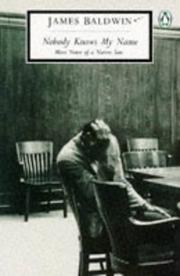
A natural follow-on to 'Notes of a Native Son,' this collection widens the lens to include Paris, the American South, and extended portraits of Richard Wright and Norman Mailer — building critical and cultural context.
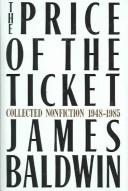
Baldwin's own collected nonfiction, spanning 1948–1985, allows the reader to see the full arc of his essay career in one volume and fills in any gaps before moving to the fiction.
The Novels: Love, Race, and the Body
IntermediateExperience Baldwin's fictional world — his exploration of sexuality, faith, family, and racial violence — armed with the moral and stylistic vocabulary built through the essays.
▸ Study plan for this stage
Pace: 8–10 weeks total: ~2.5 weeks per novel at roughly 20–25 pages/day. Suggested breakdown — Go Tell It on the Mountain (weeks 1–2.5, ~225 pages); Giovanni's Room (weeks 3–4.5, ~170 pages); Another Country (weeks 5–8, ~430 pages, ~25 pages/day). Reserve the final 1–2 weeks for comparative reflection, re
- The semi-autobiographical mode: how Baldwin transforms personal experience (Harlem childhood, stepfather's religion, his own sexuality) into fiction without reducing it to confession
- The Black church as both sanctuary and prison: in Go Tell It on the Mountain, the Pentecostal 'threshing floor' is simultaneously a site of genuine spiritual ecstasy and patriarchal, repressive control
- The body as contested terrain: Baldwin insists that sexuality, race, and identity are all lived in and through the body — desire cannot be separated from social power
- Whiteness as a constructed identity requiring Black subjugation: Giovanni's Room dramatizes this through an all-white cast, showing that the 'race problem' is fundamentally a white psychological problem
- The cost of self-deception and the ethics of love: across all three novels, characters who refuse to see themselves clearly — David in Giovanni's Room, Rufus in Another Country — destroy themselves and those around them
- Intersectionality avant la lettre: Another Country refuses to let race, gender, and sexuality be analyzed separately; they compound and inflect one another in every relationship
- Narrative time and memory: Go Tell It on the Mountain's 'The Prayers of the Saints' section uses deep flashback to show how the past colonizes the present; Baldwin's non-linear structures enact his argument that history is never over
- Grief, guilt, and interracial solidarity: Another Country asks whether genuine love across racial and sexual lines is possible in America, and at what price
- In Go Tell It on the Mountain, how does Gabriel Grimes's religious authority function as a mask for his cruelty and self-interest, and what does John's conversion on the threshing floor ultimately mean — liberation, entrapment, or something more ambiguous?
- Giovanni's Room contains no Black characters, yet Baldwin called it a book about race. How does the novel's exploration of David's shame about his desire illuminate the psychological mechanisms of racial self-hatred Baldwin described in his essays?
- How does Rufus Scott's suicide in the opening section of Another Country reframe everything that follows — in what sense is the entire novel an attempt by the surviving characters (and the reader) to understand what America did to him?
- Baldwin's prose style shifts markedly across these three novels — biblical cadences in Go Tell It on the Mountain, spare Jamesian sentences in Giovanni's Room, and a sprawling jazz-like structure in Another Country. How does each style serve the specific moral argument of its novel?
- What does Baldwin mean by 'love' in these novels? How does it differ from romance or sentiment, and why does he treat the failure of love as a political, not merely personal, catastrophe?
- Across all three novels, characters are trapped by identities — racial, sexual, religious — that were assigned to them by others. Which character do you think comes closest to achieving the self-knowledge Baldwin prizes, and what does that cost them?
- Close-reading journal: After finishing each novel, select one passage of roughly one page that you consider the moral or stylistic heart of the book. Write 300–400 words unpacking Baldwin's sentence-level choices — diction, rhythm, imagery, point of view — and connect them to the novel's central argument.
- Character genealogy map for Another Country: Draw a diagram of all the major characters (Rufus, Ida, Vivaldo, Eric, Cass, Richard, Yves) and map every relationship — romantic, sexual, racial, economic. Annotate each link with the power dynamic at play. Use this map to write a one-paragraph answer to: 'Who pays the highest price in this novel, and why?'
- Comparative essay (600–800 words): Both David in Giovanni's Room and Gabriel in Go Tell It on the Mountain are men who cannot accept what they truly are. Write a comparison of how their self-deception operates and what it costs the people who love them, drawing on at least two specific scenes from each novel.
- Sermon / prayer pastiche: Go Tell It on the Mountain is saturated with the King James Bible and Black Pentecostal oratory. Choose a secular, contemporary situation and write one paragraph (150–200 words) in Baldwin's biblical-cadence style from that novel. Then write the same content in the spare, cool style of Giovanni's Room. Reflect briefly on what each style reveals or conceals.
- Re-read the essays from the previous stage (e.g., 'Notes of a Native Son,' 'The Fire Next Time') alongside the novels. Keep a two-column log: on the left, record a claim or image from an essay; on the right, find its fictional counterpart in one of the three novels. Aim for at least 10 pairings. This builds the bridge between Baldwin's argumentative and imaginative modes.
- Socratic seminar preparation: Draft three discussion questions about Another Country that cannot be answered with a simple yes or no and that require evidence from the text. Then write a 200-word 'position statement' on one of them, as if you were opening a seminar discussion.
Next up: Mastering Baldwin's fictional techniques — his use of interiority, non-linear time, and the body as a site of political meaning — prepares the reader to engage his later, more explicitly polemical and experimental work (plays, later essays, and interviews) where these same ideas are tested against the specific crises of the Civil Rights era and beyond.
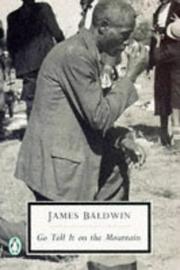
Baldwin's first novel is the most autobiographical and the most rooted in the Black church tradition he grew up in; reading it after the essays lets you recognize the lived experience behind the argument.

A spare, devastating novel about desire and self-deception set in Paris — a necessary companion to 'Go Tell It on the Mountain' that shows Baldwin's range and his willingness to center a story on white characters while keeping his moral framework intact.
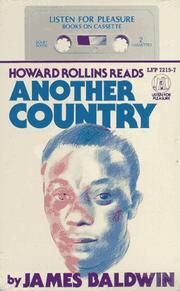
Baldwin's most ambitious and structurally complex novel, weaving together race, sexuality, and grief across a large cast in New York City; it rewards the reader who has already internalized his worldview through the earlier books.
Late Political Writing: Witness and Reckoning
ExpertEncounter Baldwin's final, most uncompromising political voice — his rage, his grief, and his refusal of false hope — as a culmination of everything the curriculum has built.
▸ Study plan for this stage
Pace: 6–7 weeks total: Weeks 1–4 for "No Name in the Street" (~20–25 pages/day, allowing time to sit with the dense, recursive prose); Weeks 5–7 for "The Evidence of Things Not Seen" (~15–20 pages/day, with deliberate pauses after each thematic section to process the legal and sociological arguments).
- The witness as political stance: Baldwin's deliberate positioning of himself as a first-person witness to history rather than a detached analyst, and why that choice is itself a moral argument
- Rage as epistemology: how Baldwin uses grief and fury not as emotional excess but as a way of knowing — a lens that cuts through official narratives and liberal optimism
- The betrayal of the Civil Rights Movement: Baldwin's unflinching autopsy of the 1960s in 'No Name in the Street,' tracing the assassinations of Malcolm X, Medgar Evers, and Martin Luther King Jr. as a systemic pattern, not isolated tragedies
- The carceral state and racial capitalism: in 'The Evidence of Things Not Seen,' Baldwin's use of the Atlanta Child Murders case to expose how the justice system manufactures guilt, particularly for Black men, and how poverty and race intersect in who becomes expendable
- Refusal of false hope and white innocence: Baldwin's rejection of the idea that America is capable of easy redemption, and his insistence that white Americans must confront — not be absolved of — their complicity
- Memory, time, and non-linearity: both books resist chronological narrative; understanding why Baldwin's recursive, circling structure is itself an argument about how trauma and history actually work
- The personal as historical archive: Baldwin's friendships, travels, and losses (Medgar, Malcolm, Martin, his friend Tony Maynard's imprisonment) function as primary historical evidence, collapsing the boundary between memoir and political essay
- Prophecy and its cost: Baldwin as a prophet-figure in the Black American literary tradition — what it means to have been right all along, and the exhaustion and isolation that accompany that clarity
- In 'No Name in the Street,' Baldwin describes the 1960s as a decade that 'defeated' him — what specific events and betrayals does he cite, and how does he distinguish his personal grief from his political analysis, or does he refuse that distinction entirely?
- How does Baldwin use the imprisonment of his friend Tony Maynard in 'No Name in the Street' as a microcosm for the broader argument about the American justice system? What does one man's case reveal about structural racism?
- In 'The Evidence of Things Not Seen,' Baldwin is explicitly skeptical of Wayne Williams's guilt — but his deeper argument is not really about Williams at all. What IS the book's central argument, and how does the Atlanta case serve as its vehicle?
- Both books are formally unconventional — digressive, recursive, and densely personal. How does Baldwin's refusal of linear argument in these late works differ from his earlier essay style (e.g., in 'The Fire Next Time'), and what does that formal shift communicate about his state of mind and political outlook by this stage of his life?
- Baldwin repeatedly implicates white liberal America as complicit in the violence he documents. How does his rhetoric toward white liberals in these two books compare, and does his tone shift between the early 1970s ('No Name in the Street') and the mid-1980s ('The Evidence of Things Not Seen')?
- What does Baldwin mean by 'witness' as a moral and political category? Drawing on both books, construct a definition of what it means, in Baldwin's terms, to bear witness — and what it costs the one who does it.
- **The Recursive Map:** As you read 'No Name in the Street,' chart every time Baldwin shifts between time periods or locations (e.g., Harlem in the 1940s → Paris in the 1950s → the American South in the 1960s). At the end, draw a visual map of these movements and write a one-paragraph argument for why this structure is NOT a flaw but a deliberate rhetorical strategy.
- **The Evidence Audit:** In 'The Evidence of Things Not Seen,' Baldwin makes a series of claims about the Atlanta justice system, media, and race. Make a two-column list: (1) claims Baldwin supports with specific evidence or reported fact, and (2) claims that rest on moral assertion or prophetic intuition. Then write a short reflection: does the second column weaken the book, or is that distinction
- **Witness Statement:** Write a 500-word personal essay in Baldwin's mode — use a specific, concrete personal memory (a news event you lived through, a moment of injustice you witnessed) as the entry point for a larger political argument. Do not use statistics or academic citations; rely entirely on the authority of witnessed experience.
- **Dialogue Across the Decade:** Select one core argument from 'No Name in the Street' (written ~1972) and find its echo or evolution in 'The Evidence of Things Not Seen' (written ~1985). Write a one-page 'conversation' between the two texts, as if Baldwin at 48 is speaking to Baldwin at 61 — where has his thinking hardened, where has it shifted, and what remains unresolved?
- **The Prophetic Tradition:** Research one other figure in the Black American prophetic tradition (Frederick Douglass, Ida B. Wells, or Toni Morrison are strong choices). Write a comparative paragraph: how does their mode of bearing witness to racial violence resemble or diverge from Baldwin's method in these two books?
- **Culminating Reflection:** Having completed both books and the broader curriculum, write a one-to-two page response to this question: Baldwin spent his career warning America. Reading these final political works, do you find his voice more or less persuasive than his earlier work — and what does your answer reveal about you as a reader?
Next up: By sitting with Baldwin's most uncompromising and exhausted political voice — his refusal of consolation, his insistence on witness over resolution — the reader is now prepared to encounter critical and biographical scholarship about Baldwin, which will contextualize these late works within his full legacy, the debates about his influence on subsequent writers and activists, and the question of wh
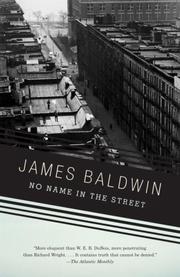
Written in the aftermath of the assassinations of Malcolm X, Medgar Evers, and Martin Luther King Jr., this is Baldwin's darkest and most politically explicit book — a bridge between the earlier essays and his final work.

Baldwin's meditation on the Atlanta child murders becomes a sweeping indictment of American justice and memory; it is demanding and elliptical, best read last when the reader is fully attuned to his late style.
Discussion
Keep reading
Paths that share books, cover the same subject, or open a related topic.