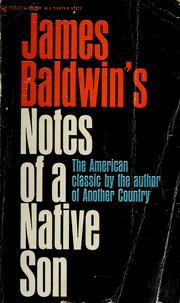
Start with Notes of a Native Son. It is Baldwin's first essay collection, published in 1955 when he was thirty, and it contains the title essay about his father's funeral and the Harlem riot of 1943 — probably the best single piece of prose he ever wrote. Ten essays, none long, each one a demonstration of the thing that makes him singular: an argument advanced through the writer's own implication in it.
Essays before novels, and this is not a close call. Baldwin is a very good novelist and one of the great essayists in American English, and the essays are also where he is most immediately readable — the sentences are long but the structure is clear, and each piece resolves. Readers who begin with the fiction sometimes meet the fever-pitch prose of Another Country first and never come back.
The essays, in order
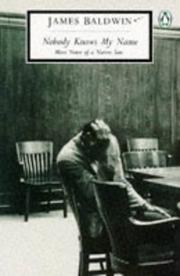
Notes of a Native Son, then Nobody Knows My Name, then The fire next time. That third one is the essential book. Two essays, barely a hundred pages, written in 1963: a letter to his nephew and a long account of a meeting with Elijah Muhammad that turns into the most rigorous thing anyone wrote about American race and religion in that decade. If you only ever read one Baldwin, read this one.
If you would rather buy once, The price of the ticket collects nearly all his nonfiction from 1948 to 1985 in a single volume, including everything named above. It is the better purchase for anyone who suspects they will want all of it.
The novels
Then the fiction, beginning with Go Tell It on the Mountain. It is a semi-autobiographical novel about a fourteen-year-old boy on the threshing floor of a Harlem storefront church, and the sermon-cadence of Baldwin's prose comes directly from what he is describing. It is his most formally controlled novel.
Giovanni's Room next — short, set in Paris, a white American narrator and a love affair between men, published in 1956 when doing so was a professional risk his publisher urged him not to take. It is the most conventionally beautiful book he wrote and the one most likely to be read in a sitting.
Then Another Country, the big, sprawling, deliberately overheated novel about a group of New York friends after a suicide. It is uneven and its ambition is enormous, and it has both his best writing and his loosest. Take it slowly.
The late work, and an honest warning
No Name in the Street was published in 1972 and reads as if written by a different, angrier man — Baldwin looking back at the assassinations of Medgar Evers, Malcolm X and Martin Luther King, and at his own role. Many readers find it the rawest thing he wrote. It is also less shapely than the earlier essays, and that is deliberate.
The evidence of things not seen, his 1985 account of the Atlanta child murders, is the hardest late book to recommend. It was criticised on publication for thin reporting and a wandering argument, and the criticism was not baseless. Read it if you want the full trajectory of his thinking; skip it without guilt if you do not.
Where to stop
After The fire next time and the three novels you have the writer. Everything else deepens rather than adds. If you continue, the natural next step is not more Baldwin but the writers in conversation with him — see Toni Morrison, whose eulogy for him is one of the best short things written about his prose.
Follow the full ordered path here: James Baldwin Reading Order: Where to Start.