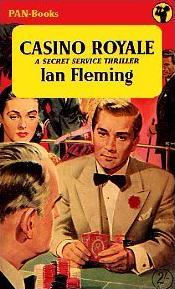
Start with Casino Royale. Fleming wrote fourteen Bond books in twelve years and wrote them in story order, so publication order and chronological order are effectively the same thing — there is no ordering puzzle here, only a quality curve. Casino Royale introduces Bond, Vesper and the wound that shapes every later book, and nothing precedes it.
Before you start, one warning that is worth more than any ordering advice. These novels carry the racism and misogyny of Britain in the 1950s, and it is not incidental. The treatment of Black Americans and Haitians in Live and let die is sustained and ugly, and casual contempt for women runs through all fourteen. Most readers take them as period documents, which is a reasonable way to read them, but you cannot read them without encountering this. Better to know now than to be ambushed in chapter four.
Start here: the first three
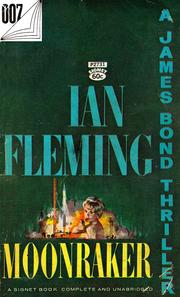
Casino Royale, Live and let die, Moonraker. Fleming's Bond is colder, more fallible and more frightened than the films' — he is beaten badly in the first book and never fully recovers from it. Moonraker is the most English of the fourteen, half of it a card game in a London club, and bears almost no relation to the film of the same name.
Fleming's real skill is texture: food, brands, cards, weather, the mechanics of a hotel room. If that pleasure works on you, the series works. If you are here for plot, it will disappoint.
The best of the run
From Russia, with love is widely considered the best of the fourteen and is structurally the boldest — Bond does not appear for the first third, and the opening belongs entirely to the people planning to kill him. That only works once you know him well enough to feel his absence, which is why it sits fifth rather than first. It ends on the series' one genuine cliffhanger, and the next novel must be read immediately.
That next novel is Dr. No, and here is a buying warning. Our catalogue's record for it is a three-book omnibus, Live and let Die/Diamonds are Forever/Dr No, which means the book you need arrives bundled with one you have already read and one you will read later. Read the Dr. No section at this point and leave the rest — reading straight through would put Diamonds Are Forever badly out of sequence, and buying the omnibus alongside the single volumes means paying twice for the same two novels.
Dr. No is the first full Fleming villain in the mode the films made famous. Goldfinger is the purest expression of that type and the closest the novels come to the films' register. It also contains some of the ugliest material in the series in its treatment of its main female character, which is worth naming rather than sliding past.
The Blofeld trilogy
Thunderball introduces SPECTRE and Blofeld and begins the only genuine multi-book arc Fleming wrote. On Her Majesty's Secret Service is the emotional centre of the series and the best-written of the late books; its ending is meaningless without Thunderball first. You Only Live Twice opens with Bond wrecked by that ending, which is the strongest structural argument in the whole sequence for reading in order. It is also the strangest book Fleming wrote — a Japanese travelogue, a poison garden, and a Bond who is barely functioning — and it divides readers sharply. Its account of Japan is fascinated rather than contemptuous, but it is still an outsider's 1964 view and it generalises freely.
The films scrambled this material badly, so expect the novels to contradict whatever you remember.
The completist tail
Diamonds are Forever is chronologically the fourth novel but one of the weakest, which is why it belongs here — skipping it early costs nothing and it reads better once you already like Fleming. For Your Eyes Only is five short stories rather than a novel, and several are among his sharpest work; the compression suits him. The Man with the Golden Gun was published after his death and is visibly unfinished: thin, fast, and lacking the texture that makes the good books good. Read it as an ending rather than as a book.
Fleming's second short-story collection, Octopussy and The Living Daylights, is not currently in our catalogue — a gap on our side rather than a break in the sequence.
Where to stop
Stop at the end of Fleming. The continuation novels by Kingsley Amis, John Gardner, Raymond Benson, Sebastian Faulks, William Boyd and Anthony Horowitz are a separate project by other hands. Having read the fourteen you have the entire original canon, which is a rare series where completion takes a few months rather than years.
More series reading orders on Discover.
Follow the full ordered path here: James Bond Reading Order: Publication or Chronological?.