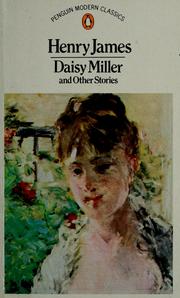
Start with Daisy Miller. It is eighty pages, the prose is clear, and it contains the situation James spent his life on: an American abroad, a European code nobody explains, and a social judgement that turns out to be lethal. You can read it in an evening and know immediately whether you want more.
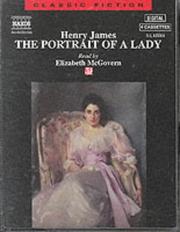
Then read The Portrait of a Lady, which is the real entry to major James and the book most readers who love him name first. Isabel Archer inherits money, chooses badly, and refuses the exit offered to her; it is the most emotionally legible of the big novels and the prose has not yet started to fold in on itself. Starting with a late novel instead — The Golden Bowl, say — is how people conclude that James is unreadable.
The early period
Daisy Miller and The American. Both are international-theme novels with visible plots and comparatively plain sentences. The American is the more conventional, with a wronged hero and a wicked family, and it is a good demonstration that James could write melodrama when he wanted to. Read them as the warm-up they are.
The middle period
The Portrait of a Lady first, then The Turn of the Screw, then What Maisie Knew.
The Turn of the Screw is a hundred pages and is the most argued-about ghost story in English: either the governess sees ghosts or she is destroying two children with her own hysteria, and James constructed the text so that both readings survive. It is the best short demonstration of what his ambiguity is for.
What Maisie Knew narrates a horrific divorce entirely through the perceptions of a child who does not understand what she is reporting. It is the hinge between the middle and late styles and it is where the difficulty begins.
The awkward age is the experiment: almost entirely dialogue, with the narration withdrawn on principle. It is fascinating and it is not fun. Skip it unless you have become a partisan.
The major phase, and the warning
The Wings of the Dove, The Ambassadors and The Golden Bowl were written within four years of each other and are the reason James has a reputation for difficulty. The late style defers its subject, qualifies every clause, and gives you dialogue in which nobody says what they mean because saying it would end the book. Sentences run half a page. You will reread paragraphs. This is not you failing; it is the design, and it rewards the effort more than almost anything else in the language.
Order matters here. James thought The Ambassadors his best, and it is the most controlled of the three — read it first. The Wings of the Dove is the most emotionally available, with the clearest plot engine. The Golden Bowl is the hardest and the strangest, and it should be last.
The apparatus
The art of the novel collects the prefaces James wrote for the New York Edition, and it is the founding document of English-language novel theory — free indirect style, the central consciousness, the difference between showing and telling all get argued out here. Read it after two or three novels. Oscar Cargill's The novels of Henry James is the older survey-style companion if you want a critic walking the whole bibliography with you.
Where to stop
Stopping after The Portrait of a Lady and The Turn of the Screw is completely respectable, and a great many well-read people have done exactly that. If you want the full writer, add one late novel — The Ambassadors — and see how it goes before committing to the others.
For American writers in an adjacent tradition, see James Baldwin.
Follow the full ordered path here: Henry James Reading Order: Where to Start.