Henry James Reading Order: Where to Start
This curriculum traces Henry James's artistic evolution across three distinct phases, moving from his confident early realism through the psychological complexity of his middle period to the notoriously dense, syntactically labyrinthine prose of the late "Major Phase." Because the learner begins at an expert level, the path skips introductory scaffolding and instead sequences the novels to build an increasingly refined sensitivity to James's expanding formal ambitions — his use of point of view, free indirect discourse, and the drama of consciousness — before culminating in the three late masterworks that demand everything the earlier novels have trained the reader to perceive.
Early James: Confidence and Clarity
IntermediateEstablish fluency with James's foundational themes — the American abroad, the corruption of innocence, the clash of Old World and New — in prose that is rich but still relatively transparent, building the thematic and moral vocabulary his later work assumes.
▸ Study plan for this stage
Pace: 10–12 weeks total: ~1 week for Daisy Miller (~110 pages, read in 2–3 sittings), ~3 weeks for The American (~380 pages, ~18 pages/day), ~6–7 weeks for The Portrait of a Lady (~640 pages, ~15–18 pages/day). Reserve the final week for review, re-reading key passages, and completing synthesis exercises.
- The International Theme: James's sustained contrast between American innocence/energy and European experience/corruption, dramatized through characters like Daisy Miller, Christopher Newman, and Isabel Archer navigating Old World social codes they only partially understand.
- Innocence as Vulnerability: James treats innocence not as simple virtue but as a double-edged quality — morally appealing yet dangerously naive. Daisy's social freedom, Newman's frank goodwill, and Isabel's idealism each carry the seeds of their own undoing.
- The Corruption of Innocence by Society: European (and Europeanized American) society functions as a corrupting or at least constraining force. The Europeanized Mrs. Costello, the aristocratic Bellegardes, and the scheming Madame Merle/Gilbert Osmond represent social systems that prey on openness.
- Freedom vs. Constraint — especially for Women: Isabel Archer's arc is the fullest early statement of a theme running through all three books: the tension between a character's desire for self-determination and the social, economic, and gendered structures that limit it.
- The Jamesian Observer: Even in these earlier works, James deploys a central consciousness — a character whose perceptions and misperceptions filter the narrative. Winterbourne in Daisy Miller, Newman in The American, and the close third-person focus on Isabel train the reader to question what the ob
- Moral Vocabulary — 'Fine' vs. 'Vulgar': James builds an ethical lexicon in which fineness of feeling, delicacy of perception, and disinterestedness are prized, while vulgarity, calculation, and bad faith are condemned. Learning to read his moral register is essential preparation for the later novels
- The Marriage Plot as Ethical Test: In all three books, marriage is not merely a romantic resolution but a moral crucible. Who proposes to whom, who accepts or refuses, and on what grounds — these are the novel's central ethical questions.
- Renunciation and Dignity: Each book ends not in triumph but in a form of dignified withdrawal or loss — Daisy's death, Newman's burning of the letter, Isabel's return to Rome. James establishes renunciation as a morally complex, even heroic, act.
- How does Daisy Miller function as a test case for the International Theme? What does Winterbourne's persistent misreading of Daisy reveal about his own limitations, and what does James want us to conclude about the society that judges her?
- Christopher Newman is described as a self-made American who believes goodness and money are sufficient passports anywhere. In what specific ways do the Bellegardes expose the limits of that belief, and is Newman's final renunciation a moral victory, a defeat, or something more ambiguous?
- Isabel Archer famously refuses Lord Warburton's proposal despite its obvious advantages. What does this refusal — and her subsequent acceptance of Osmond — reveal about her theory of freedom, and where does James suggest that theory goes wrong?
- Trace the role of a manipulative or socially corrupt secondary character across all three books (e.g., Mrs. Costello, Madame de Bellegarde, Madame Merle). How does James use these figures to embody the dangers of the Old World, and how do they differ from one another in method and menace?
- James's prose in these three works grows progressively denser and more psychologically interior from Daisy Miller to The Portrait of a Lady. Identify at least two specific passages where the narrative perspective shapes — or distorts — the reader's understanding of events. What does this suggest about James's evolving method?
- What does renunciation mean in each of the three books, and how does James frame it morally? Is it presented as weakness, wisdom, or something that resists easy categorization?
- **Close-Reading Journal (all three books):** After each reading session, copy out one passage of 5–10 lines that struck you as morally or stylistically significant. Write 2–3 sentences on (a) what James is doing technically and (b) what value or idea the passage encodes. By the end of the stage you will have a personal anthology of Jamesian prose to return to.
- **Character Comparison Chart:** Create a three-column table with Daisy Miller, Christopher Newman, and Isabel Archer as headers. For each, track: their theory of freedom, their fatal blind spot, the social force that defeats them, and the form their ending takes. Use this chart to write a 300-word synthesis paragraph on what James's 'innocent American' archetype actually looks like across the thre
- **The Observer Exercise (Daisy Miller):** Re-read the scene at the Colosseum entirely from Daisy's hypothetical point of view rather than Winterbourne's. Write one page in which Daisy narrates what she sees and feels. Then write a short paragraph reflecting on how James's choice of Winterbourne as observer changes the moral weight of the scene.
- **Moral Vocabulary Glossary:** As you read, compile a running list of evaluative words James uses repeatedly — 'fine,' 'vulgar,' 'innocent,' 'corrupt,' 'free,' 'conventional,' 'sincere,' 'calculating.' For each, note the context and the character being described. By the end of The Portrait of a Lady, you should have 15–20 entries. This glossary will be indispensable for the later, denser novels.
- **The Marriage Proposal Analysis (The Portrait of a Lady):** James gives Isabel at least three significant proposals or near-proposals (Warburton, Caspar Goodwood, Osmond). Write a 400-word comparative analysis of the three scenes: What does each man offer? What does Isabel's response reveal about her self-image at that moment? How does James's prose style shift between the scenes?
- **Thematic Bridge Essay:** After finishing all three books, write a 500-word essay answering: 'What has James established by the end of The Portrait of a Lady that he could not have established with Daisy Miller alone?' Focus on the increasing psychological complexity of the protagonist, the deepening moral ambiguity of the ending, and the shift from social observation to interior consciousness. T
Next up: The Portrait of a Lady's closing image — Isabel choosing conscience over escape, in an act whose full meaning the novel deliberately withholds — signals James's growing conviction that the most important drama is interior and irresolvable, a conviction that drives the radical formal experiments of the middle and late novels to come.
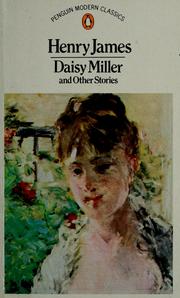
The perfect entry point even for experts: a crystalline novella that introduces the 'international theme' and James's central drama of the observed consciousness. Its brevity and clarity make it a useful calibration before longer works.

James's first sustained novel-length treatment of the American in Europe, establishing the moral innocence vs. aristocratic corruption dynamic that will recur throughout his career. Reading it here shows the theme in its most direct, unironic form.
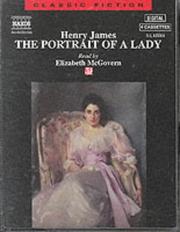
The masterpiece of the early phase and arguably James's most beloved novel. Isabel Archer's tragedy of consciousness and self-determination is the fullest expression of early James, and the famous 'vigil' chapter (ch. 42) is the first great demonstration of his interior method.
Middle James: Psychology and the Unspeakable
IntermediateTrack James's pivot toward psychological ambiguity, unreliable perception, and the unsaid — developing the reader's ear for what is withheld, implied, or distorted, which is essential preparation for the late style.
▸ Study plan for this stage
Pace: 10–12 weeks total, roughly 20–25 pages per day: ~2–3 weeks for The Turn of the Screw (short but demands slow, re-reading passes), ~3–4 weeks for What Maisie Knew (dense free indirect discourse; budget time for journaling), ~4–5 weeks for The Awkward Age (long, dialogue-heavy; read act-by-act as if s
- Unreliable narration and the limits of perception — The Turn of the Screw is the stage's master class: the governess's account can never be fully trusted, forcing the reader to hold two contradictory readings simultaneously.
- The unsaid and the withheld — James systematically removes explicit statement; meaning lives in gaps, hesitations, euphemism, and what characters conspicuously refuse to name (the ghosts' crimes, Maisie's full understanding, the 'impropriety' in The Awkward Age).
- Free indirect discourse as psychological instrument — In What Maisie Knew, James focalises through a child's consciousness without ever fully becoming that child; the gap between Maisie's perception and adult reality is the novel's engine.
- Innocence as epistemological position — All three books place a figure of apparent innocence (the governess, Maisie, Nanda) at the centre of corrupt adult worlds; James uses innocence not sentimentally but as a lens that distorts and reveals at once.
- The scenic method and dialogue as concealment — The Awkward Age is almost entirely scene and speech; characters talk around subjects, and meaning must be inferred from tone, interruption, and what is pointedly not said aloud.
- Psychological ambiguity vs. moral ambiguity — James refuses to separate the two: not knowing what happened (Turn of the Screw) and not knowing who is responsible (What Maisie Knew, The Awkward Age) are the same problem.
- The observer-participant tension — Each central consciousness is both inside and outside the action; their involvement compromises their reliability as witnesses, a technique James will push to its extreme in the late novels.
- Social form as repression — In all three books, the codes of polite society (propriety, 'the done thing', drawing-room decorum) function as the mechanism that makes things unspeakable, linking psychological ambiguity to social critique.
- In The Turn of the Screw, what specific textual evidence supports the 'apparitionist' reading (the ghosts are real) and the 'non-apparitionist' reading (the governess is deluded), and does James provide any detail that definitively closes either reading off?
- How does James use the gap between what Maisie perceives and what the reader infers in What Maisie Knew — can you identify three scenes where Maisie's reported understanding and the adult reality visible to the reader diverge most sharply?
- In The Awkward Age, how does the novel's almost exclusive reliance on dialogue and scene (rather than interior narration) change the reader's relationship to character interiority, compared to What Maisie Knew?
- Across all three books, what role does a socially marginal or powerless figure (a governess, a child, a young woman on the marriage market) play in exposing the corruption of the world around them — and what does James suggest about the cost of that exposure?
- How does James signal, through syntax and diction alone, that a character is withholding something? Identify at least two recurring stylistic markers across the three texts.
- By the end of The Awkward Age, what has actually been 'said' about Nanda's situation, and what has only been implied — and why does that distinction matter morally?
- Dual-column annotation for The Turn of the Screw: divide a notebook page into two columns labelled 'Evidence the governess is reliable' and 'Evidence she is not.' Populate both as you read, then write a one-page verdict — not resolving the ambiguity, but articulating precisely why it cannot be resolved.
- Free indirect discourse tracking in What Maisie Knew: choose any three consecutive chapters and mark every sentence where it is genuinely unclear whether the language belongs to Maisie's consciousness or to an authorial narrator. Write a short paragraph explaining what James gains by keeping that boundary porous.
- Rewrite a key scene from The Awkward Age (e.g., any scene between Mr. Longdon and Vanderbank) as a passage of conventional third-person narration with explicit interior access. Then compare your version to James's original and list what is lost — this makes the scenic method's deliberate withholding viscerally concrete.
- The 'unspeakable' inventory: after finishing each book, list every topic, event, or feeling that the characters never name directly. For each item, identify the social or psychological mechanism that makes it unspeakable and the textual clue (a euphemism, a silence, a subject-change) that signals its presence.
- Dialogue pressure test for The Awkward Age: select one extended conversation and read it aloud with a partner or record yourself reading both parts. Note every moment where a character's response does not directly answer the question asked — map the evasions and count how much of the scene's meaning is carried by non-answers.
- Cross-book synthesis essay (500–700 words): argue for or against the following proposition — 'In all three works, the central figure's innocence is itself a form of violence done to the adults around them.' Use specific scenes from each of the three books as evidence.
Next up: By learning to hear what James withholds and to distrust the perceiving consciousness, the reader has built exactly the interpretive patience and syntactic attunement that the late style — with its enormously extended sentences, multiply qualified perceptions, and near-total suppression of direct statement — will demand at every moment.
A masterclass in radical narrative unreliability. Reading it here trains the reader to distrust the perceiving consciousness — a skill the late novels require on every page.

James's most radical experiment in limited point of view before the Major Phase: a child's partial, innocent consciousness filters adult corruption she cannot name. It directly anticipates the oblique, circling syntax of the late work.

Written almost entirely in dialogue with minimal authorial intrusion, this novel forces the reader to do the interpretive work James will later embed in the prose itself. An essential bridge to the late style's demand for active co-creation.
The Major Phase: The Three Late Masterworks
ExpertEngage fully with James's most ambitious, difficult, and rewarding novels — the so-called Major Phase — where syntax, consciousness, and moral perception become inseparable, and where everything the earlier stages have built is put to its ultimate test.
▸ Study plan for this stage
Pace: 14–16 weeks total; roughly 4–5 weeks per novel. Target ~20–25 pages per day, but budget extra re-reading time — especially for The Golden Bowl. Suggested breakdown: Weeks 1–5: The Wings of the Dove (read once straight through, then revisit key scenes); Weeks 6–10: The Ambassadors (read with a notebo
- The Late Style: James's syntax as moral instrument — how subordinate clauses, qualifications, and indirection enact the difficulty of perception and judgment rather than merely describing it
- Central Consciousness and the Ficelle: the technical distinction between the registering mind (Milly Theale, Strether, Maggie Verver) and the informing characters who feed them information (e.g., Maria Gostrey in The Ambassadors), and how this shapes what the reader can and cannot know
- The Dove and the Predator — Sacrificial Innocence: in The Wings of the Dove, Milly Theale as the 'dove' whose wealth and dying become the moral test that exposes everyone around her; the novel's central question of whether love can survive the knowledge of its own mercenary origins
- Live All You Can — Strether's Awakening: in The Ambassadors, the famous garden speech as the thematic core; Strether's belated, disinterested education in Paris as a meditation on unlived life, vicarious experience, and the cost of renunciation
- The Golden Bowl's Two-Volume Architecture: Volume I (The Prince) vs. Volume II (The Princess) as two irreconcilable perspectives on the same adultery — James's most radical experiment in perspectival relativism and the ethics of knowledge withheld
- Moral Perception as Action: across all three novels, the act of seeing clearly — or choosing not to — is itself the primary ethical event; characters are judged not by what they do but by the quality of their consciousness
- Wealth, Aestheticism, and Corruption: the role of money and collecting (especially in The Wings of the Dove and The Golden Bowl) as a corrupting force that aestheticizes human beings, turning Milly and Amerigo into beautiful objects to be acquired
- The Unsaid and the Unshown: James's systematic use of ellipsis, scene-gaps, and reported rather than dramatized action — what is deliberately withheld from the reader and why, culminating in the ambiguous 'pagoda' passage and Maggie's final act in The Golden Bowl
- In The Wings of the Dove, does Merton Densher's final renunciation of Kate Croy's terms represent genuine moral growth, or is it merely another form of self-serving sentiment? What textual evidence supports your reading?
- How does James use Maria Gostrey as a ficelle in The Ambassadors — what information does she extract and relay, and how would the novel's epistemological structure collapse without her? Is she herself a fully realized consciousness or a technical device?
- Strether famously gains everything in terms of perception and renounces everything in terms of life. Is his final refusal of Mrs. Newsome's world — and of Maria Gostrey — a triumph of integrity or a failure of nerve? How does James frame this ambiguity?
- The Golden Bowl is narrated first through the Prince's consciousness, then through Maggie's. How does this structural shift change your moral sympathies, and does James intend the reader to ultimately side with Maggie's 'victory' or to remain unsettled by it?
- Across all three novels, James's characters frequently know — or suspect — more than they openly acknowledge. Identify one key moment in each novel where a character chooses strategic ignorance or deliberate non-confrontation, and analyze what James suggests this choice costs them.
- How does the image of the cracked golden bowl function as a symbol — what does it reveal about the novel's central relationships, and why does Maggie choose to suppress rather than deploy the knowledge it gives her?
- Sentence Dissection Log: Choose one dense paragraph from each novel (aim for the most syntactically complex passage you encounter) and diagram it — identify the main clause, every subordinate clause, and every qualification. Then write a one-sentence paraphrase. Compare the paraphrase to the original and articulate precisely what is lost: this is James's late style in action.
- Consciousness Mapping: For each novel, draw a diagram of the central consciousness's knowledge at three key moments (beginning, midpoint, end). Track what they know, what they suspect, what they refuse to know, and what the reader knows that they don't. This makes the epistemological architecture visible.
- The Unsaid Scene: Pick one major event in each novel that James deliberately keeps off the page (e.g., Milly's final interview with Densher in The Wings of the Dove; Charlotte and the Prince's affair in The Golden Bowl). Write a 1–2 page account of that scene in James's late style — then reflect on why James chose not to show it.
- Comparative Renunciation Essay: Write a 600–800 word comparative analysis of the three protagonists' final acts of renunciation or acceptance — Milly's death and bequest, Strether's refusal of Maria Gostrey, Maggie's silent 'victory.' Argue for a single through-line or a meaningful divergence across the three novels.
- Re-read the 'Live all you can' speech (The Ambassadors, Book Fifth, Chapter II) three times: once for content, once for tone, once for what Strether does NOT say. Write a journal entry from the perspective of Little Bilham hearing it — what does he actually understand Strether to mean?
- Annotated Re-read of the Pagoda Passage: Re-read the opening of Part Fourth of The Golden Bowl (Maggie's 'pagoda' metaphor). Annotate every image for its symbolic valence. Then write a half-page explanation of why James opens Maggie's volume with an architectural metaphor of enclosure — and what it predicts about her arc.
Next up: Mastering the Major Phase equips the reader with the interpretive stamina and stylistic sensitivity needed to engage James's critical writings, prefaces, and notebooks — where James himself anatomizes the very techniques encountered in these three novels, completing the circuit between the artist's theory and his supreme practice.

The first of the three late novels and the most emotionally devastating. Its portrait of Milly Theale — seen largely through others' eyes — makes the reader perform the very act of consciousness James is dramatizing. Begin here because its emotional stakes are the most immediately gripping.
James's own favorite among his novels, and the purest expression of his 'central consciousness' method. Strether's gradual, agonizing re-education in Paris is rendered entirely through his own evolving perception — the late style at its most controlled and philosophically rich.
The summit and the most demanding: two books, two consciousnesses, a moral universe of almost unbearable ambiguity. Having read the earlier phases, the reader can now appreciate how James has transformed the international theme and the drama of consciousness into something approaching a secular metaphysics.
Critical Illumination: Reading James on James
ExpertDeepen and consolidate the entire reading experience by engaging with James's own theoretical writings and the single most indispensable critical study, allowing the reader to re-read any of the novels with a fully equipped critical apparatus.
▸ Study plan for this stage
Pace: 8–10 weeks total: Weeks 1–4 on "The Art of the Novel" (~20–25 pages/day, including re-reading dense Prefaces slowly and annotating); Weeks 5–9 on "The Novels of Henry James" (~25–30 pages/day, pausing to revisit relevant James novels alongside Cargill's chapters); Week 10 reserved for synthesis, com
- The Preface as a critical genre: James's Prefaces in 'The Art of the Novel' are not mere introductions but constitute a sustained, self-contained theory of prose fiction — understanding them as such is the stage's foundation.
- Point of view and the Central Consciousness: James's doctrine that a novel must be filtered through a single, richly aware reflector ('the central intelligence') and why he considers this the supreme technical discipline.
- Scenic vs. Panoramic method: James's distinction between dramatized scenes (showing) and authorial summary (telling), and his strong preference for the former as the engine of fictional intensity.
- The Figure in the Carpet — form as organic totality: James's insistence that every element of a novel (image, dialogue, structure) must serve a unified 'figure,' and how the Prefaces teach the reader to look for that figure.
- Foreshortening and the economy of means: James's concept of achieving maximum effect through strategic compression and selection rather than exhaustive narration.
- Cargill's source-and-influence methodology: How 'The Novels of Henry James' situates each novel within James's biographical context, his literary debts (to Turgenev, Balzac, Hawthorne, etc.), and the critical reception history up to Cargill's writing.
- The relationship between James's theory and his practice: Using Cargill as a corrective and complement — where James's self-commentary in the Prefaces is idealized or selective, Cargill supplies historical and textual grounding.
- Building a personal critical apparatus: Synthesizing James's own vocabulary (register, treatment, the donnée, the germ) with Cargill's scholarly framework to produce an independent, portable method for re-reading any James novel.
- After reading the Prefaces in 'The Art of the Novel,' can you articulate in your own words James's concept of the 'central consciousness' and identify, for at least three novels you have read, who that consciousness is and what it costs the narrative to be confined to it?
- James repeatedly uses the terms 'donnée,' 'germ,' 'treatment,' and 'foreshortening' across the Prefaces — can you define each precisely and illustrate each with a specific example James himself provides?
- How does Cargill's account of a given novel (its sources, influences, and reception) either confirm, complicate, or contradict the account James gives of the same novel in its Preface?
- What is James's argument for the scenic method over panoramic summary, and can you find a passage in one of the novels you have previously read that exemplifies each mode?
- According to Cargill, which literary predecessors most decisively shaped James's novelistic technique, and what specific formal or thematic debts does Cargill identify?
- Having read both books, what would you now say is the single most important thing James believed a novelist must do — and do you agree with him?
- Preface Mapping: For each of the 18 Prefaces in 'The Art of the Novel,' write a 3–5 sentence summary identifying (a) the 'germ' or donnée James describes, (b) the central technical problem he says the novel posed, and (c) the solution he claims to have found. Keep these as a reference card set.
- Vocabulary Ledger: Maintain a running glossary of James's critical vocabulary as it appears in the Prefaces (donnée, germ, treatment, register, foreshortening, scenic method, central consciousness, ficelle, etc.), with a direct quotation illustrating each term and your own paraphrase.
- Theory-to-Text Drill: Choose one novel you read in an earlier stage of the curriculum. Re-read one chapter of it after finishing its corresponding Preface. Annotate the chapter margin with James's own terms wherever they apply — mark every scene vs. summary passage, every shift in the central consciousness, every moment of foreshortening.
- Cargill Dialogue Journal: As you read each chapter of 'The Novels of Henry James,' write a half-page 'dialogue' between Cargill and James: what does Cargill say about this novel that James does not say (or cannot say) in the Preface, and vice versa? Where do they productively disagree?
- The Donnée Exercise: Invent three brief 'germs' — one-sentence story ideas in the spirit of James's anecdotes in the Prefaces — and then write a short paragraph for each explaining, in Jamesian terms, what the 'treatment' problem would be and which point-of-view strategy you would choose.
- Capstone Re-Reading Essay: In Week 10, select any James novel from the curriculum and write a 1,000–1,500 word critical essay that deploys at least four terms from James's Prefaces and engages with at least one of Cargill's arguments about that novel. This essay is the proof-of-concept for your fully equipped critical apparatus.
Next up: By internalizing James's own theoretical vocabulary from "The Art of the Novel" and Cargill's comprehensive scholarly map from "The Novels of Henry James," the reader now possesses both the author's self-understanding and the critical tradition's consensus view — the ideal dual foundation for any subsequent stage focused on specialized topics, comparative study, or independent original criticism.
James's collected Prefaces to the New York Edition, in which he reflects on the composition and technique of his major works. Reading these after the novels transforms retrospective understanding — he names and theorizes exactly what the reader has been experiencing.
A rigorous, comprehensive critical survey that addresses each major novel in sequence, providing historical context, source study, and close reading. It rewards an expert reader who has now completed the primary texts and wants sustained scholarly engagement.
Discussion
Keep reading
Paths that share books, cover the same subject, or open a related topic.