Best Books to Learn Afrikaans, in Reading Order
This curriculum takes a complete beginner from zero Afrikaans to confident reading and cultural appreciation in four progressive stages. It begins with structured spoken and written foundations, moves through simplified grammar and pronunciation, builds reading fluency with graded texts, and culminates in authentic South African literature — each stage equipping the learner with exactly what the next demands.
First Steps: Core Beginner Course
BeginnerAcquire basic Afrikaans vocabulary, everyday phrases, and sentence patterns through a structured beginner course with audio support.
▸ Study plan for this stage
Pace: 8–10 weeks, ~15–20 pages/day with audio practice
- Afrikaans pronunciation and phonetic patterns (vowels, consonants, stress)
- Present tense verb conjugation and basic verb patterns (zijn, hebben, gaan)
- Noun gender and article usage (de/het distinction)
- Essential everyday vocabulary (greetings, numbers, days, common objects, family terms)
- Simple sentence construction and word order in statements and questions
- Personal pronouns and basic pronoun usage (ik, jy, hy, sy, ons, julle)
- Common prepositions and their usage in context
- Listening comprehension through audio dialogues and practical conversation patterns
- How do you pronounce Afrikaans vowels and consonants, and where does stress fall in common words?
- How do you conjugate regular and irregular verbs in the present tense, and what are the most common auxiliary verbs?
- What is the difference between 'de' and 'het' articles, and how do you determine which to use with a noun?
- Can you introduce yourself, ask basic questions, and hold a simple conversation using present tense and everyday vocabulary?
- How do you form questions in Afrikaans, and what is the typical word order in statements versus questions?
- What are the most common prepositions, and how do they function in simple sentences?
- Complete all pronunciation drills in Colloquial Afrikaans using the audio files; record yourself and compare to native speakers
- Work through every dialogue in the book, reading aloud multiple times, then listen to audio and repeat for intonation accuracy
- Create flashcards for all vocabulary presented in each unit and review daily using spaced repetition
- Conjugate 20 common verbs (zijn, hebben, gaan, doen, sê, hou, wil, kan) across all personal pronouns in present tense
- Write 10 simple sentences for each unit using new vocabulary and grammar patterns, then check against answer keys
- Practice forming questions by converting 15 given statements into yes/no and open-ended questions
- Do all written exercises and grammar activities in Colloquial Afrikaans, checking answers carefully
- Listen to each dialogue 3–5 times without the text, then with the text, focusing on comprehension and natural rhythm
Next up: This stage establishes the phonetic foundation, core vocabulary, and essential grammar structures needed to progress to intermediate conversational practice, where you'll expand sentence complexity, learn past tenses, and engage in longer dialogues.
A respected parallel beginner course that reinforces the same core vocabulary and structures through different dialogues and drills, solidifying what was introduced in Teach Yourself and filling any gaps.
Into the Literature: South African Readers and Writing
IntermediateRead authentic South African Afrikaans prose — from accessible modern fiction to a landmark novel — developing cultural literacy alongside advanced reading comprehension.
▸ Study plan for this stage
Pace: 14–18 weeks total: "Fiela se kind" — 4–5 weeks (~20–25 pages/day, ~320 pages); "Kringe in 'n bos" — 4–5 weeks (~20–25 pages/day, ~300 pages); "Disgrace" — 5–6 weeks (~12–15 pages/day, ~220 pages, slower pace to handle Coetzee's dense, literary Afrikaans/English interplay and thematic weight). Reserv
- Authentic Afrikaans prose registers: Matthee's lyrical, nature-saturated narrative voice in 'Fiela se kind' versus the more interior, philosophical register of Coetzee's 'Disgrace' — recognising how register signals character, class, and culture
- South African historical and cultural context: the 19th-century Knysna forest world of Matthee's novels (colonial land use, Coloured and white community tensions, the forest as character) versus post-apartheid disillusionment in Coetzee
- Identity, belonging, and displacement as literary themes: Benjamin/Lukas's contested identity in 'Fiela se kind', Saul se Buffel's bond with the forest in 'Kringe in 'n bos', and David Lurie's moral and social unravelling in 'Disgrace'
- Advanced Afrikaans vocabulary in context: archaic and regional Knysna dialect words in Matthee (e.g. terms for forest flora, fauna, and labour), and Coetzee's spare, precise modern Afrikaans-inflected diction
- Narrative structure and point of view: third-person limited omniscience in Matthee's character-driven storytelling versus Coetzee's close third-person that implicates the reader in Lurie's perspective
- Reading comprehension at paragraph and chapter level: tracking plot threads across long chapters, inferring motivation from subtext, and paraphrasing complex passages in your own Afrikaans words
- Cultural literacy — the Groot Karoo, the Outeniqua forest, and the Eastern Cape as symbolic landscapes: understanding how place shapes character and moral universe in all three books
- Intertextual and postcolonial reading: how 'Disgrace' speaks back to earlier South African narratives of land and belonging, and how Matthee's romanticisation of the forest can be read critically alongside it
- After reading 'Fiela se kind', can you explain in Afrikaans — in 3–4 sentences — why Benjamin's identity crisis is both a legal and a deeply personal conflict, and what Matthee suggests about the nature of belonging?
- How does Matthee use the Knysna forest as more than a setting in 'Kringe in 'n bos'? Identify at least two passages where the forest functions as a moral or spiritual force, and explain them in your own words.
- What narrative techniques does Matthee use across both her novels to build sympathy for marginalised characters (the Fielas, the forest people), and how do these techniques differ from Coetzee's approach in 'Disgrace'?
- In 'Disgrace', David Lurie undergoes a gradual, painful transformation. Trace three specific moments in the novel where his worldview shifts, and discuss what each moment reveals about post-apartheid South African society.
- Compare the treatment of land and ownership across all three books: who owns the land, who is displaced from it, and how does each author use this tension to drive their narrative?
- Having read all three books, how has your understanding of Afrikaans as a literary language evolved? What stylistic or vocabulary features mark each author's prose as distinctly their own?
- Vocabulary journal — per book: keep a running glossary of 10 unfamiliar words per reading session. For Matthee, focus on forest/nature terminology and archaic forms; for Coetzee, focus on abstract and philosophical vocabulary. At the end of each book, write 5 original Afrikaans sentences using words from your journal.
- Scene retelling: after each major plot turning point (e.g. Benjamin's removal in 'Fiela se kind', Saul's final confrontation with the forest in 'Kringe in 'n bos', Lurie's hearing in 'Disgrace'), write a 150–200 word Afrikaans summary of the scene from a different character's point of view.
- Close-reading annotation: select one page from each book that you find linguistically challenging. Annotate it fully — mark unknown words, identify sentence structure, note any figurative language — then write a one-paragraph English or Afrikaans commentary explaining what the passage contributes to the novel's themes.
- Comparative essay (end of stage): write a 400–600 word Afrikaans essay responding to the prompt: 'Hoe gebruik Matthee en Coetzee die Suid-Afrikaanse landskap om morele vrae te stel?' (How do Matthee and Coetzee use the South African landscape to pose moral questions?) Draw on specific scenes from all three books.
- Oral reading practice: read one page aloud from each book per week, recording yourself. Focus on prosody, sentence rhythm, and pronunciation of Matthee's longer, flowing sentences versus Coetzee's clipped, declarative style. Listen back and note where comprehension breaks down.
- Cultural research micro-project: for each book, spend 30–45 minutes researching one real-world context (e.g. the history of the Knysna forest elephants for Matthee; the post-apartheid Truth and Reconciliation Commission for Coetzee). Write a half-page note in Afrikaans connecting your research to a specific moment in the text.
Next up: Mastering the narrative complexity, cultural depth, and advanced vocabulary of these three landmark texts equips the reader to engage with more demanding Afrikaans literary criticism, poetry, and non-fiction — the natural next frontier for a reader moving from intermediate literary comprehension toward full advanced fluency.
One of the most beloved and widely read Afrikaans novels, written in clear, narrative prose. Its gripping story set in the Knysna forest makes it the ideal first full novel for a learner, and it is a canonical text of South African literature.
Matthee's companion forest novel deepens engagement with the same rich but accessible prose style, building on vocabulary and themes already encountered in Fiela se Kind and extending cultural understanding of the Cape region.
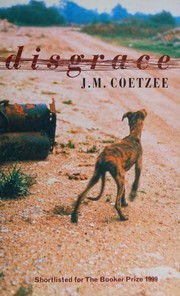
Though written in English by a Nobel laureate, this landmark South African novel is essential cultural context for any serious student of South African writing, and reading it alongside Afrikaans texts illuminates the bilingual literary landscape the learner has now entered.
Discussion
Keep reading
Paths that share books, cover the same subject, or open a related topic.