Best John Irving Books, in Reading Order
Irving writes the same handful of obsessions over and over — New England boarding schools, wrestling, Vienna, absent fathers, sudden violence — so the question is not where the story starts but which book converts you. This order opens with the two that convert almost everyone, moves through the big mid-career novels, then goes back to the thin early books and forward into the long late ones. Nothing here is a sequel to anything else; the sequence is about momentum, not continuity.
Start here: the two that convert people
BeginnerMeet the Irving machine — comedy running headlong into catastrophe — in the two novels that most readers finish and immediately want more of.
▸ Study plan for this stage
Pace: Six weeks for 1,112 pages: The World According to Garp 568 and A Prayer for Owen Meany 544. Both are long but neither is difficult, and 40 pages a sitting is sustainable. Give Garp three weeks and Owen Meany three; do not run them together, because both have endings that need a few days to settle.
- Say this before the first page: Irving's books contain a great deal of sex, and sudden, graphic violence that arrives without warning in the middle of comic scenes. Readers who come to him from the films are routinely blindsided — the adaptations soften or remove most of it. Garp in particular conta
- The recurring furniture — New England boarding schools, wrestling, Vienna, bears, absent or dead parents, writers who are the main character, prostitutes, sudden fatal accidents — is not a limitation. Irving reuses it deliberately, the way a composer reuses a key. Once you notice it you are reading
- The Irving machine is comedy running headlong into catastrophe, usually in the same paragraph. If you find yourself laughing immediately before something appalling, that is the effect working, not a tonal failure.
- Garp is a writer's life told at full length: his mother's polemical fame, his marriage, his children, his fiction, and a running argument about lust, violence against women and how a man can be decent inside his own appetites.
- Irving's method is to plot in advance and write the last sentence first, and Garp is where that shows most clearly. The novel signposts its catastrophes for hundreds of pages and they still land, which is a very unusual thing to bring off.
- The Under Toad — a child's mishearing of undertow, turned into a name for the dread that something is coming — is the single most useful concept for reading everything else on this path.
- A Prayer for Owen Meany is the more emotional of the two and the more tightly engineered. It takes Garp's coincidence-driven plotting and pushes it towards an explicit argument about faith: a boy who believes he is an instrument of God, and a narrator who spends a lifetime deciding whether he was ri
- Owen's dialogue is set in capital letters throughout, representing a damaged voice. It is jarring for twenty pages and then invisible, and it is the reason many readers remember him as vividly as they do.
- Owen Meany is also unusually structured: the narrator tells it from 1987 Toronto, bitter about American politics, and those framing sections are frequently skipped by readers who then miss what the book is arguing.
- Garp's fiction is quoted at length inside the novel. What do those stories do that the main narrative cannot?
- What is the novel's actual position on Jenny Fields and the movement that forms around her? Note that it is not simple.
- Where does the Under Toad first appear, and how many pages before the disaster does Irving warn you?
- In Owen Meany, list the events that only work if you accept the design. Does the novel earn them?
- Why does Irving set the narration in 1987 Toronto, and what does the political anger there have to do with Owen?
- Both books kill people abruptly in the middle of comic scenes. What is that juxtaposition for?
- In Garp, read the embedded story The Pension Grillparzer as a standalone before continuing. It is the best short thing Irving wrote and it tells you what the novel values.
- Keep a note of every accident and near-accident in Garp. The count is high and the pattern is the argument.
- In Owen Meany, mark the first mention of the armadillo, the shot and the dressmaker's dummy. All three are set up hundreds of pages early and paid off exactly.
- Do not skip the Toronto chapters. If they irritate you, read them as the narrator's argument with the reader rather than as digression.
- After both, write one sentence on what an Irving novel is. You will test it against nine more books.
Next up: Converted, you can now read the mid-career novels as variations on a method rather than as one writer repeating himself.

The breakout, and still the best single introduction: a writer's life told with wrestling, feminism, farce and a body count. If Irving is going to work for you, this is where you find out.

The other great entry point and the more emotional of the two. Read it second because it takes the coincidence-driven plotting of Garp and pushes it into something closer to faith.
The core: the big mid-career novels
BeginnerWork through the three long novels where Irving's themes are fully assembled, and start seeing the recurring furniture as deliberate rather than repetitive.
▸ Study plan for this stage
Pace: Eight to nine weeks for 1,640 pages: The Cider House Rules 598, The Hotel New Hampshire 450, A Widow for One Year 592. Cider House is the slowest of the three because it stops for argument; allow three and a half weeks. The Hotel New Hampshire is shorter and reads faster than any Irving novel. A Wid
- The Cider House Rules is his most openly argumentative book: an orphanage doctor in Maine who delivers babies and performs illegal abortions, and the orphan he trains to do both. Irving is arguing a position and he does not hide it.
- The abortion argument is made through Dr Larch's practice rather than through speeches, and the novel's method is to make the reader watch what the law actually costs specific women. Whether you agree or not, this is Irving's one thesis novel.
- It is also a deliberate Dickens pastiche — the orphanage reads Great Expectations and David Copperfield aloud — and knowing that explains its coincidences, its benefactors and its enormous cast.
- The migrant workers' section in the second half contains an incest subplot that arrives with no warning and is handled with none of the comedy elsewhere in the book. It is the section readers most often report being unprepared for.
- The Hotel New Hampshire is the strangest of the famous four: a family saga narrated by one of seven Berrys, running through two hotels, a stuffed dog, a woman who lives in a bear suit, and Vienna.
- It is also the most extreme in content of the four — a gang rape and its long aftermath, and an incestuous relationship between two of the siblings, both treated at length and neither played for shock. If any book on this path is going to catch you out, it is this one.
- 'Keep passing the open windows' is the family's phrase for not killing yourself, and it is the clearest statement of the Irving worldview: the world will maim you, the response is to keep going, and the comedy is part of the survival rather than a relief from it.
- A Widow for One Year is the best-written of the three: a novelist mother, a novelist daughter, a boy who becomes a writer, and three time periods separated by decades. The prose is more controlled than anything since Garp.
- Its first part was filmed on its own, and that adaptation covers roughly a third of the book. The novel's real subject — Ruth's adult life and what she does with her mother's abandonment — is entirely outside the film.
- In The Cider House Rules, what is Larch's justification and where does Homer's objection have the better argument?
- What does the Dickens frame get Irving that a straight realist orphanage novel would not?
- In The Hotel New Hampshire, is the family's insistence on comedy a defence, a delusion, or both?
- What is the bear doing in that novel, structurally? Irving uses bears repeatedly and this is the clearest case to analyse.
- In A Widow for One Year, what does the forty-year gap between parts one and two allow him to leave out?
- Ruth writes novels and so does her mother. What is Irving saying about fiction as a way of handling a death?
- Read the Cider House rules themselves — the posted list in the cider house — and note who wrote them and who is expected to obey. The title is the thesis in miniature.
- In The Hotel New Hampshire, keep a family tree from chapter one. Seven Berrys plus attachments is more than it sounds.
- Track the recurring items across all three books: the bear, the wrestler, the school, the dead child, the writer. Making the list is what turns repetition into pattern.
- Read the three parts of A Widow for One Year with a day's gap between each. The novel is built on the reader feeling the time pass.
- Pick the one of these three you would defend as his best and write two sentences saying why. Most readers pick a different book from the one they enjoyed most, which is itself interesting.
Next up: Having seen the machine at full scale, the early novels show you the parts before they were assembled.

The orphanage novel, and his most openly argumentative book. It follows naturally from Owen Meany's moral seriousness and shows Irving writing a thesis without abandoning the comedy.
The strangest of the famous four — a family saga that goes to Vienna and stays weird. Read after Cider House so you can see how far he will push a family before it breaks.
Three time periods, a writer mother and daughter, and the best prose he had written in a decade. It closes the mid-career run and is the bridge to the more diffuse late books.
The early books, once you are committed
IntermediateSee the raw materials before Irving found the scale that suited him — shorter, stranger, and much more visibly indebted to Vienna and to Günter Grass.
▸ Study plan for this stage
Pace: Four to five weeks for 955 pages: Setting Free the Bears 335, The Water-Method Man 370, The 158-Pound Marriage 250. All three are short by Irving standards and all three read faster than the mid-career books. Setting Free the Bears is the hardest going because of its embedded historical notebook; th
- These are the raw materials. Everything the famous novels do at 600 pages is here in cruder form at 300, and reading them after the big four is far more rewarding than reading them first.
- Setting Free the Bears is the first novel: two students, a motorcycle, a plan to release the animals from the Vienna zoo, and a notebook of Austrian history running from the 1930s through the war.
- The Vienna obsession is born here and never leaves him. Irving studied in Vienna as a student, and the city recurs in at least four of the books on this path — knowing where it came from makes the repetition legible.
- The debt to Günter Grass is open and acknowledged: the digressive historical interpolation, the grotesque comedy, the animals. Irving has always said Grass and Dickens are his two models, and the early books show the first one plainly.
- The Water-Method Man is his funniest book and his most formally playful — a hapless graduate student with a urinary complaint, a doomed translation of an invented Old Norse epic, a film being made about his life, and a chronology that jumps around at will.
- It works as a palate cleanser after the doorstops and is the one book here you could finish in a weekend. It also shows that the pathos in the later work is a choice, not an inability to stay light.
- The 158-Pound Marriage is the lean, cold outlier: two couples exchanging partners, narrated by a wrestler, with almost none of the warmth or the sprawl that defines him. It is short, controlled and slightly cruel.
- It is openly modelled on the European novel of adultery rather than on Dickens, and Irving has said he considers it his least characteristic book. Read last of the three, it is the most interesting precisely because you can see what he later chose not to be.
- Across all three, note what is missing: the enormous cast, the decades-long time span, the child killed in an accident. He had the obsessions from the start and not yet the scale.
- What does the historical notebook in Setting Free the Bears contribute, and would the novel survive without it?
- Where in the first novel can you already see Garp, twelve years early?
- The Water-Method Man plays games with chronology. Do the games serve the story or replace it?
- In The 158-Pound Marriage, why a wrestler as narrator, and what does the sport give Irving as a metaphor here that it does not give him elsewhere?
- Which of the three is the best novel, and which is the most useful for understanding him? They are probably not the same book.
- What did Irving gain when he moved to 600-page novels, and what did he lose?
- Read the notebook sections of Setting Free the Bears consecutively, then the present-day sections. Splitting them shows how young a writer's structural device this was.
- Read a summary of Grass's The Tin Drum, or its first chapter, alongside the early Irving. The influence is direct and unmistakable.
- In The Water-Method Man, keep a note of what year each chapter is in. The disorientation is deliberate and reconstructing the timeline afterwards is genuinely enjoyable.
- After The 158-Pound Marriage, list what an Irving novel usually has that this one lacks. That list is a definition of him arrived at by subtraction.
- Reread the first page of Garp immediately after finishing these three. The jump in confidence between 1974 and 1978 is one of the sharpest in modern American fiction.
Next up: Origins accounted for, the late novels are the same obsessions at maximum length, and worth judging on their own terms.
The first novel: a motorcycle trip, a zoo raid, and a wartime diary. Slight next to Garp, but it is where the Vienna obsession is born, so read it once you care about origins.
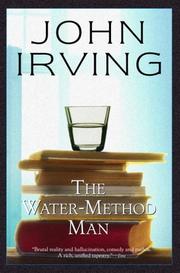
His funniest book and his most formally playful. A good palate cleanser after the mid-career doorstops, and short enough to be a single sitting.
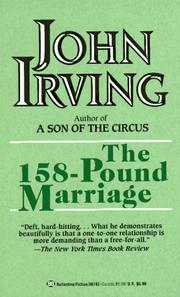
The lean, cold outlier — a wife-swap novel with almost none of the later warmth. Read last of the three: it is the least characteristic and the most interesting once you know what it is departing from.
The completist tail: late Irving
IntermediateFollow the later, longer novels and be able to judge for yourself where the sprawl becomes a problem and where it pays off.
▸ Study plan for this stage
Pace: Ten to twelve weeks. Until I Find You is 848 pages and the longest thing he wrote; give it a month and expect to want a break. Last Night in Twisted River is around 550 pages and the best-shaped of the late books, so three weeks. In One Person is 536 pages and reads quickly. Take a gap after Until I
- Until I Find You is the most divisive novel in his career: a boy dragged around Northern Europe by his mother in search of his organist father, a life in tattoo parlours and churches, and an adulthood as an actor.
- Its childhood section contains sustained sexual abuse of a young boy by adult women, presented in a register that many readers find unbearable and some find dishonest about what it is depicting. That is the substance of the divide over this book, and it is worth knowing before page one rather than d
- Irving wrote it in the first person and then rewrote the whole thing in the third — a widely reported fact about its composition — and the resulting distance from Jack Burns is either the book's discipline or its central flaw depending on who you ask.
- It is also the most autobiographical of his novels in its raw material, which is part of why the length and the fixation feel different from his usual sprawl.
- Last Night in Twisted River is the easier and better-shaped of the two long late books: a logging-camp accident in 1954, a cook and his son running from its consequences for fifty years, and a writer at the centre once again.
- Its most useful feature for a reader this far along is that it is openly about Irving's own method. The novelist character's beliefs about plot, endings and writing the last sentence first are Irving's own, stated in a novel.
- In One Person closes the path deliberately. All the oldest furniture is here — the New England academy, the wrestling room, the library, the missing father — repurposed for a bisexual narrator's life from the 1950s through the AIDS years.
- The librarian who shapes the narrator's adolescence is a transgender woman, written with real seriousness in 2012, and the novel's argument about desire that does not fit available categories is genuinely new territory for him rather than more of the same.
- The AIDS sections are the most sustained grief he has written and they are not comic at all. It is the one late book where the machine is switched off.
- Judge the sprawl for yourself here. The late novels are longer, looser and more discursive than the mid-career ones, and reasonable readers split on whether that is decline or expansion. Having read eleven books, you are entitled to a verdict.
- Does the third-person distance in Until I Find You protect the reader, protect the author, or evade the subject?
- What is Jack actually searching for, and does the novel let him find it?
- In Last Night in Twisted River, what does the fifty-year span buy that a tighter novel would not have?
- The writer character states Irving's own method openly. Is that generous to the reader or self-satisfied?
- In One Person reuses the school, the wrestling and the library. What is genuinely new, and what is habit?
- Across twelve books: are the recurring obsessions a subject or a limitation? Defend the answer with specific novels.
- Set a fixed daily page target for Until I Find You before you start. It is the book most readers abandon, and almost always from fatigue rather than dislike.
- In Last Night in Twisted River, mark every passage where the novelist character talks about writing. Reading them consecutively at the end is the closest thing to an Irving essay on craft.
- In One Person, track which of the recurring Irving elements appear and what each is now being used for. The list is the argument for the late work.
- Rank all twelve books on this path. Then look at where the three most famous ones landed — many readers find at least one of them displaced, which is what the completist tail is for.
- Finally, go back to the last page of The World According to Garp. Thirty-four years and eleven novels later, the closing paragraph reads as a description of the whole career.
Next up: With the early, mid and late work behind you, the remaining novels and the essays can be picked up in any order without a guide.
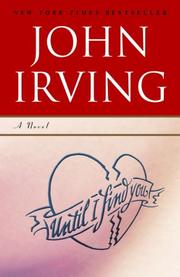
The longest and most divisive — tattoos, organs, and a search for a father across Northern Europe. Attempt it only once Irving's rhythms are second nature to you.
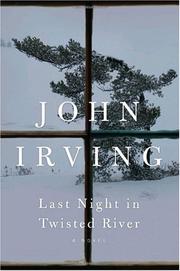
A logging-camp accident and fifty years of running from it, with a novelist at the centre again. The best-shaped of the late books and the easier of the two long ones.

A bisexual narrator, a New England school, and the AIDS years. It closes the path by showing the oldest Irving furniture — the school, the wrestling room, the library — repurposed for something genuinely new.
Discussion
Keep reading
Paths that share books, cover the same subject, or open a related topic.