Digital minimalism: reclaim your attention
This four-stage curriculum moves from visceral wake-up call to neuroscience to practical minimalist systems to long-term philosophical grounding. Each stage builds the vocabulary and motivation needed for the next, so the reader arrives at the advanced texts already equipped with both the science and the habits to apply them deeply.
Wake-Up Call — Understanding the Problem
BeginnerRecognize how smartphones and social media are engineered to hijack attention, and feel genuinely motivated to change.
▸ Study plan for this stage
Pace: 4–5 weeks total: Week 1–2 — "Hooked" by Nir Eyal (~25–30 pages/day, reading the full book in ~10 sittings); Week 3–4 — "Irresistible" by Adam L. Alter (~25–30 pages/day, reading the full book in ~12 sittings); Week 5 — review, reflection, and exercises.
- The Hook Model (Trigger → Action → Variable Reward → Investment): Eyal's four-step framework that explains how apps are deliberately engineered to form compulsive habits without requiring conscious user intent.
- External vs. Internal Triggers: External triggers (notifications, badges, emails) pull users in from outside; internal triggers (boredom, loneliness, anxiety) are the more powerful emotional cues that eventually make app use automatic — a core insight from Hooked.
- Variable Reward Schedules: Drawing on Skinnerian psychology, Eyal shows how unpredictable rewards (likes, new posts, messages) are far more addictive than predictable ones, making social feeds function like slot machines.
- The Investment Phase: Each action a user takes (posting, following, personalizing) loads the next trigger and increases switching costs, deepening the hook over time — Eyal's explanation of why quitting feels hard.
- Behavioral Addiction vs. Substance Addiction: Alter argues in Irresistible that behavioral addictions share the same neurological fingerprint as substance addictions, dismantling the myth that 'screen addiction' is just weak willpower.
- The Six Ingredients of Irresistible Experiences: Alter identifies compelling goals, feedback, progress, escalation, cliffhangers, and social interaction as the design elements that make games, social media, and streaming impossible to put down.
- The Role of Environment and Friction: Alter demonstrates that addiction is heavily situational — removing or adding small amounts of friction (distance, inconvenience, defaults) dramatically changes behavior, shifting responsibility from pure willpower to design.
- The Asymmetry of Insider Knowledge: Both books reveal that the engineers and executives who build these products often restrict their own children's use of them — a powerful motivational insight that the problem is intentional, not accidental.
- According to Eyal's Hook Model, what are the four stages a product must move a user through to create a lasting habit, and can you trace a specific app you use daily through each stage?
- What is the difference between an external and an internal trigger in Hooked, and why does Eyal consider internal triggers the ultimate goal of habit-forming product design?
- How does Alter's concept of behavioral addiction challenge the common assumption that only substances (drugs, alcohol) can be truly addictive, and what neurological evidence does he cite?
- Which of Alter's six ingredients of irresistible experiences do you find most present in the apps or platforms you use most — and why is that ingredient particularly effective on you personally?
- Both Eyal and Alter discuss the role of environment and friction in shaping behavior. How can the same design principles used to hook users also be reversed to help users disengage?
- After reading both books, how has your understanding of your own screen habits changed? Do you now see your usage as a personal failing, a design problem, or both — and what does each book say about that question?
- Hook Model Audit: Pick your three most-used apps and map each one through Eyal's four stages (Trigger → Action → Variable Reward → Investment) in writing. Be specific: name the exact internal trigger (e.g., 'I open Instagram when I feel bored waiting in line') and the exact variable reward (e.g., 'I never know if a new post will delight me or disappoint me').
- Screen-Time Baseline Journal: For one full week during your reading of Hooked, log every time you pick up your phone without a deliberate intention. Note the time, the trigger (internal or external), and how you felt before and after. This creates the honest self-portrait both books demand.
- The Slot Machine Test: Spend 10 minutes scrolling a social feed, then immediately write down: How many times did you feel a small 'hit' of reward? How many times were you disappointed? Reflect on how the ratio of hits to misses kept you going — connecting directly to Alter's variable reward research.
- Friction Experiment (from Alter): Choose one app you use compulsively and add one layer of friction for two weeks — delete it from your home screen, log out after each use, or move your phone to another room at night. Journal daily on whether the urge decreases, and what internal trigger was driving it.
- Insider Knowledge Reflection: Research (via a quick web search) two or three quotes from tech executives or engineers who limit their own or their children's technology use. Write a one-page response: Does knowing that the builders don't use their own products change your motivation to change? Connect your answer to specific passages from both Hooked and Irresistible.
- Design-Flip Exercise: Using Alter's six ingredients of irresistible experiences, redesign one feature of a social media app to make it less compelling rather than more. Sketch or write out your 'anti-addictive' version and explain which ingredient you targeted and why.
Next up: By finishing this stage, the reader has moved from passive user to informed critic — they understand the mechanics of the trap and feel motivated to escape it — which creates the perfect appetite for the next stage, where they will encounter concrete philosophies and strategies for intentionally redesigning their digital life.

Written by a former tech-industry insider, this book reveals exactly how apps are designed to create compulsive habits — reading it first gives you the 'enemy's playbook' and makes every later solution feel urgent and concrete.

Broadens the picture from apps to behavioral addiction in general, using accessible psychology research; it builds the scientific vocabulary (variable rewards, feedback loops) you'll need for the deeper neuroscience ahead.
The Science of Attention — What Distraction Does to Your Brain
BeginnerUnderstand the neuroscience and cognitive psychology behind focus, distraction, and why deep work feels so hard in a connected world.
▸ Study plan for this stage
Pace: 6–8 weeks total: Weeks 1–4 for "The Shallows" (~20–25 pages/day, 5 days/week), Weeks 5–8 for "Stolen Focus" (~20–25 pages/day, 5 days/week). Reserve one day per week for reflection, note review, and exercises. Both books are accessible for beginners and reward slow, deliberate reading.
- Neuroplasticity & the malleable brain: Carr's central argument that the internet is physically reshaping neural pathways, weakening circuits for deep reading and sustained thought
- The linear vs. hyperlinked mind: How the book trained humanity for deep, linear cognition and how hypertext and skimming culture erode that capacity
- Cognitive load & working memory limits: Why the brain has a finite bandwidth for processing information, and how constant switching and notifications overwhelm it
- The distraction economy: Hari's framing that attention loss is not a personal failing but a systemic, profit-driven extraction of human focus by tech platforms
- Flow states and their fragility: What deep concentration actually feels like neurologically, how long it takes to enter flow (~23 minutes), and how easily it is shattered
- Sleep, stress, and physical drivers of attention: Hari's evidence that diet, sleep deprivation, and chronic stress are underappreciated biological attackers of focus
- The myth of multitasking: Research showing that switching between tasks incurs a cognitive 'switching cost' that compounds across the day
- Surveillance capitalism as an attention model: How apps are engineered with feedback loops (variable reward, infinite scroll) specifically designed to colonize attention
- According to Carr in 'The Shallows,' what specific neurological mechanism explains why heavy internet use changes the brain's structure, and what historical analogy does he use to support this claim?
- How does Carr distinguish between the cognitive experience of reading a printed book versus navigating hyperlinked web content, and what does he say is lost in the transition?
- Hari identifies several 'causes' of the attention crisis in 'Stolen Focus' — name at least four and explain which he considers most systemic and why.
- What does the research Hari cites reveal about the average length of time a person can focus on a single screen task today compared to decades ago, and what does he argue drives that change?
- How do both authors — Carr through neuroscience and Hari through sociology — arrive at a similar conclusion about individual willpower being insufficient to solve the attention crisis?
- What is the 'switching cost' concept, and how does it connect Carr's neurological arguments to Hari's real-world observations about productivity and wellbeing?
- Attention audit journal (Week 1): For 5 consecutive days, log every time you switch tasks or check a device. At the end of each day, count the interruptions and note how you felt afterward. Compare your findings to Carr's and Hari's claims.
- Deep reading experiment (During 'The Shallows'): Read one chapter of the book in a single, phone-free, notification-free sitting. Then read a comparable amount of content via normal web browsing. Write a one-page comparison of your comprehension, retention, and mental state in each condition.
- Concept mapping: After finishing 'The Shallows,' draw a hand-written diagram linking neuroplasticity → reading habits → internet use → cognitive change. After finishing 'Stolen Focus,' extend the map to include Hari's systemic causes (tech design, sleep, stress, etc.).
- The 23-minute focus block challenge (During 'Stolen Focus'): Schedule one uninterrupted 23-minute work or study block daily for two weeks. Track how often you succeed, what broke your focus when you failed, and whether the blocks feel easier by week two.
- Author dialogue exercise: Write a 300–400 word imaginary conversation between Carr and Hari debating whether the root cause of the attention crisis is primarily neurological (Carr) or sociopolitical (Hari). Identify where they agree and where they diverge.
- Personal distraction audit & redesign: List your top three digital attention traps (e.g., social media, news, messaging). For each, identify which of Hari's 'causes' it maps to and one structural change (not just willpower) you could make to reduce its pull — drawing directly on solutions both authors propose.
Next up: Having established *why* the brain struggles with focus in a hyper-connected world, the reader is now primed to move from diagnosis to prescription — exploring the philosophy and practical frameworks of digital minimalism that offer deliberate, evidence-grounded responses to the crisis both Carr and Hari describe.
A Pulitzer-finalist examination of how internet use physically rewires the brain; it introduces neuroplasticity in plain language and establishes why the stakes of distraction are biological, not just behavioral.
Picks up where Carr leaves off by interviewing leading attention researchers worldwide, weaving personal narrative with systemic analysis — a perfect bridge between the science stage and the practical solutions ahead.
Practical Minimalism — Building New Systems
IntermediateApply concrete, proven frameworks to radically reduce digital noise, restructure technology use, and rebuild the capacity for deep focus.
▸ Study plan for this stage
Pace: 6–8 weeks total: Week 1–2 — "Digital Minimalism" (~25–30 pages/day, including 3–4 days for the 30-day digital declutter); Week 3–4 — "Deep Work" (~30 pages/day, with active rule-drafting alongside reading); Week 5–6 — "Indistractable" (~25 pages/day, with daily traction/distraction logging); Week 7–
- Digital Minimalism as a philosophy: intentionally using technology only when it serves your deeply held values (Newport's core thesis in Digital Minimalism)
- The 30-Day Digital Declutter: Newport's structured protocol for resetting your relationship with optional technologies by removing them entirely, then reintroducing only those that pass a strict value-alignment test
- Deep Work vs. Shallow Work: Newport's distinction between cognitively demanding, value-producing focus work and low-value, logistical, easily replicated tasks — and why the ratio between them defines professional output
- The Four Deep Work Rules: Work Deeply (scheduling and ritualizing focus), Embrace Boredom (training attention away from constant stimulation), Quit Social Media (applying the craftsman standard to digital tools), and Drain the Shallows (aggressively minimizing shallow obligations)
- Time-block planning and shutdown rituals: Newport's concrete scheduling tactics for protecting deep work hours and creating a hard psychological boundary at the end of the workday
- Eyal's Indistractable Model: the insight that all behavior — including distraction — is driven by the desire to escape internal discomfort, making internal triggers (not external apps) the root cause of distraction
- Traction vs. Distraction: Eyal's reframing that any action aligned with your intentions is 'traction' and any action that pulls you away is 'distraction,' regardless of whether it involves technology
- Identity-based commitment: Eyal's argument that labeling yourself 'indistractable' and using pre-commitments, pacts, and schedule templates are the final layer of defense against distraction after managing internal triggers and redesigning the external environment
- After completing Newport's 30-day digital declutter, what criteria should you use to decide whether to reintroduce a technology — and how does the 'any benefit' mindset differ from Newport's craftsman standard?
- Newport argues that the ability to do deep work is becoming both increasingly rare and increasingly valuable. What structural and cultural forces does he identify as eroding this capacity, and what does he propose to counteract them?
- Eyal claims that blaming smartphones and apps for distraction is an incomplete diagnosis. What does he argue is the true root cause, and how does this shift the locus of responsibility and the solution strategy?
- How do Newport's time-block planning and shutdown ritual complement each other as a system, and what psychological function does the shutdown ritual specifically serve?
- Eyal introduces the concept of 'schedule-syncing' with people in your life and workplace. How does this extend the Indistractable framework beyond individual willpower into a social and organizational design problem?
- Taken together, how do the three books form a coherent progression — from philosophy (Digital Minimalism) to professional practice (Deep Work) to psychological root causes (Indistractable) — and where do their prescriptions overlap or tension with each other?
- Conduct Newport's full 30-Day Digital Declutter as prescribed in Digital Minimalism: remove all optional technologies, fill the time with high-quality analog alternatives you pre-select, and keep a daily journal of discomfort, insights, and urges to document your baseline dependency levels.
- After the declutter, build a Personal Technology Policy document: for each technology you consider reintroducing, write one sentence stating the specific value it serves and at least two operating rules (e.g., 'Twitter: used only to share published work, never browsed; checked once on Friday for 15 minutes on desktop only').
- Design a Deep Work schedule using Newport's time-block method: divide every working hour into blocks on paper or a notebook (not a digital app), assign each block a task category, and track the ratio of deep-to-shallow hours for two full weeks. Adjust your calendar to protect at least one 90-minute uninterrupted deep block per day.
- Run Eyal's 10-day Internal Trigger Log: every time you reach for your phone or open a distracting tab, pause and write down the emotion or discomfort you were feeling in the moment (boredom, anxiety, loneliness, etc.). At the end of 10 days, identify your top two or three trigger patterns and design one specific 'surfing the urge' response for each.
- Create a 'Distraction-Free Environment Audit' combining all three books: (1) list every digital tool in your environment, (2) apply Newport's craftsman test to each, (3) apply Eyal's external trigger checklist (notifications, app placement, environmental cues) and remove or redesign anything that fails, then photograph your before/after phone home screen and workspace as accountability artifacts.
- Write a 500-word 'Attention Manifesto' that synthesizes your personal values (from Digital Minimalism), your professional deep work goals (from Deep Work), and your identified internal triggers (from Indistractable) into a single coherent document you can revisit monthly to evaluate whether your technology use remains aligned with your stated intentions.
Next up: By having dismantled digital noise, built deep work habits, and addressed the psychological roots of distraction, the reader is now equipped to move from personal systems into the broader cognitive and philosophical territory of how attention, meaning, and the mind itself are shaped — setting the stage for a deeper, more theoretical exploration of focus and human flourishing.
The canonical how-to text for this entire curriculum: Newport's 30-day digital declutter and philosophy of intentional technology use is the practical core the reader is now fully prepared to implement.
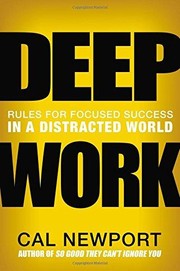
Read immediately after Digital Minimalism, this book shows what to do with the attention you've reclaimed — scheduling, rituals, and career strategies for sustained concentration that make the sacrifice feel worthwhile.
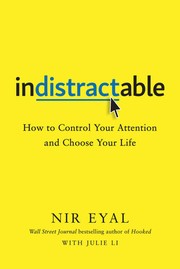
Eyal's follow-up to Hooked flips the lens to internal triggers and time-boxing techniques, adding a layer of psychological self-management that complements Newport's external-environment approach.
Deep Roots — Philosophy & the Long Game
ExpertDevelop a durable personal philosophy around attention, solitude, and a meaningful life that doesn't depend on external systems to stay focused.
▸ Study plan for this stage
Pace: 6–8 weeks total: ~3 weeks on "Flow" (~25–30 pages/day) and ~3 weeks on "Four Thousand Weeks" (~20–25 pages/day), with a final integration week for reflection and exercises. Read slowly and annotate — this stage rewards re-reading over speed.
- Flow as optimal experience: the state of total absorption that arises when challenge and skill are in precise balance, making attention itself the source of meaning (Csikszentmihalyi)
- Autotelic personality: the capacity to find intrinsic reward in an activity for its own sake, independent of external validation or outcome — the philosophical ideal of self-directed attention (Csikszentmihalyi)
- Psychic entropy vs. psychic negentropy: how undirected, distracted consciousness defaults to disorder and anxiety, while intentional focus creates internal order and well-being (Csikszentmihalyi)
- The self as a work of art: Csikszentmihalyi's argument that a unified, complex self is built through the deliberate investment of attention over a lifetime
- Radical finitude: Burkeman's central premise that humans have roughly 4,000 weeks alive, and that accepting — rather than escaping — this limit is the foundation of a meaningful life
- The efficiency trap: Burkeman's critique of productivity culture, showing how optimizing for 'doing more' is a denial of finitude that paradoxically deepens anxiety and distraction
- Choosing what to neglect: Burkeman's counter-intuitive argument that a meaningful life requires consciously deciding what NOT to do, making omission an act of philosophical courage
- Patience and presence as radical acts: Burkeman's case that tolerating discomfort, resisting the urge to escape the present moment, and embracing 'good enough' are the deepest forms of attention discipline
- According to Csikszentmihalyi, what precise conditions — internal and external — must be met for flow to occur, and why does distraction make those conditions structurally impossible?
- How does the concept of the 'autotelic self' in Flow serve as a philosophical alternative to relying on apps, rules, or external systems to stay focused?
- Burkeman argues that time-management culture is a form of denial — what exactly is being denied, and how does that denial produce more distraction rather than less?
- How do Csikszentmihalyi's 'psychic entropy' and Burkeman's 'efficiency trap' describe the same underlying problem from different angles — and what unified insight emerges when you read them together?
- What does Burkeman mean when he says that 'choosing what to neglect' is not a failure but a philosophical necessity, and how does this reframe the guilt many people feel about unfinished tasks?
- After reading both books, how would you articulate your own personal philosophy of attention in two or three sentences — one that doesn't depend on any tool, app, or productivity system to hold it together?
- Flow mapping: For one full week, keep a hourly log rating your challenge-to-skill ratio (1–5) and absorption level (1–5). At the end, identify which activities reliably produce flow and which reliably produce entropy — then restructure one recurring block of your day around the former.
- Autotelic audit: Choose one task you currently do for external reward (recognition, money, obligation) and deliberately reframe your internal goal for it. Practice doing it for three sessions with no external metric of success. Journal what shifts in your quality of attention.
- Finitude confrontation: Burkeman's core exercise — calculate your own 4,000 weeks, mark off the weeks already lived on a physical grid, and sit with it for 20 minutes without distraction. Write one page on what this makes non-negotiable in how you spend attention.
- Neglect list: Inspired by Burkeman, write a 'not-to-do' list of 5–10 things you will consciously and permanently deprioritize. For each item, write one sentence explaining the philosophical reason — not a productivity reason — for the omission.
- Solitude sessions: Once per week for the duration of this stage, take a 45–60 minute walk or sit with no phone, no audio, and no agenda. Afterward, free-write for 10 minutes on whatever arose. Track whether the quality of these sessions changes over the weeks.
- Personal philosophy statement: After finishing both books, write a 300–500 word 'attention manifesto' — your own durable philosophy of focus and time that references specific ideas from Flow and Four Thousand Weeks. Revise it once a week for the final two weeks until it feels genuinely yours, not borrowed.
Next up: By internalizing a philosophy of finitude, flow, and self-directed attention from these two books, the reader has built an inner foundation strong enough to critically evaluate — rather than passively adopt — any practical digital-minimalism strategy or tool they encounter next.
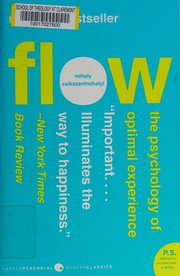
The foundational psychology of optimal experience explains why deep, uninterrupted engagement is the source of lasting happiness — giving the reader a positive vision to move toward, not just a problem to escape.

A philosophical reckoning with human finitude and the limits of productivity culture; read last, it reframes the entire curriculum as a question of what a well-lived life looks like, anchoring new habits in genuine values rather than willpower alone.
Discussion
Keep reading
Paths that share books, cover the same subject, or open a related topic.