Stock market investing: the best books, in the order that builds confidence
This curriculum takes a complete beginner from zero knowledge to confident, independent investor across four carefully sequenced stages. Each stage builds on the last — starting with mindset and market mechanics, moving through company valuation and portfolio construction, and finishing with advanced frameworks used by professional long-term investors.
Foundations: How Markets Work & The Investor's Mindset
BeginnerUnderstand what the stock market is, how it functions, and develop the psychological foundation needed to invest rationally and avoid common emotional traps.
▸ Study plan for this stage
Pace: 8–10 weeks, ~25–30 pages/day (mix of reading and reflection). Allocate roughly 3 weeks per book to allow time for digestion and exercises between titles.
- Stock market fundamentals: what stocks are, how exchanges work, and why companies issue equity
- Index funds and low-cost passive investing as the core strategy for most individual investors
- Market efficiency and the random walk hypothesis: why beating the market consistently is extremely difficult
- The role of time horizon and compound growth in long-term wealth building
- Behavioral finance: how cognitive biases (overconfidence, loss aversion, herd mentality) drive poor investment decisions
- The psychological difference between price and value, and why emotional detachment is critical to rational investing
- Risk tolerance and personal financial goals as the foundation for any investment plan
- The cost of active management, market timing, and frequent trading versus the power of buy-and-hold discipline
- What is an index fund, and why does Bogle argue it is the optimal choice for most individual investors?
- According to Malkiel's random walk hypothesis, why is it so difficult for active managers to consistently outperform the market?
- How do the concepts of price and value differ, and why is this distinction central to avoiding emotional investment mistakes?
- What are three cognitive biases or psychological traps that Housel identifies as obstacles to rational investing, and how can you guard against them?
- How does your personal time horizon and risk tolerance influence the type of investment strategy you should adopt?
- What is the relationship between costs (fees, taxes, trading expenses) and long-term investment returns, and why does Bogle emphasize this?
- Track your own emotional responses to market news for one week: write down when you feel fear, greed, or urgency to act, then reflect on how Housel's framework explains these reactions.
- Calculate the long-term impact of fees: compare the 30-year outcome of a 0.05% index fund versus a 1% actively managed fund using a compound interest calculator.
- Build a simple personal investment policy statement: define your time horizon, risk tolerance, target asset allocation, and rules for when (if ever) you will rebalance or trade.
- Research and compare three index funds (e.g., S&P 500 trackers) by their expense ratios, tracking error, and fund size; explain why low cost matters.
- Analyze a recent market correction or bull run: write a one-page reflection on what Malkiel's random walk theory and Housel's behavioral insights suggest about whether you should have acted differently.
- Create a personal 'bias journal': identify one cognitive bias from Housel's book that you recognize in your own thinking, document a past financial decision it influenced, and plan how you'll counteract it in the future.
Next up: This stage establishes that low-cost index investing is the rational foundation and that emotional discipline is the investor's greatest asset; the next stage will build on this by teaching you how to select specific investments, construct a diversified portfolio, and implement a systematic plan aligned with your goals.
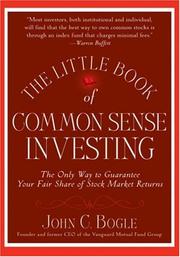
The perfect first book — Bogle, founder of Vanguard, explains in plain language why low-cost index funds beat most active strategies. It establishes the single most important baseline truth before any other concept is introduced.
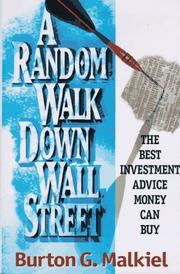
Builds on Bogle by explaining market efficiency, how prices are set, and why beating the market is so hard. It gives the beginner a realistic mental model of how markets actually behave.
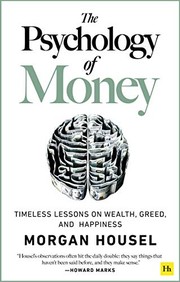
Addresses the behavioral and emotional side of investing that trips up most beginners. Reading this third ensures the learner has the right mindset before diving into stock-picking and analysis.
Core Principles: Value, Business Quality & Long-Term Thinking
BeginnerLearn how to think about a stock as ownership in a real business, understand the concept of intrinsic value, and absorb the timeless principles of long-term investing.
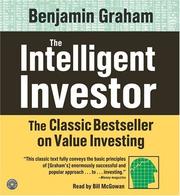
The foundational text of value investing, introducing margin of safety, Mr. Market, and the difference between investing and speculation. It is the essential bridge from market mechanics to evaluating individual companies.

Lynch makes company analysis approachable and fun, showing how everyday observations can surface great stock ideas. It follows Graham perfectly by translating abstract principles into a practical, story-driven method.
Going Deeper: Reading Financials & Valuing Companies
IntermediateRead and interpret financial statements, understand key valuation metrics, and develop a repeatable process for analyzing whether a stock is cheap or expensive.
▸ Study plan for this stage
Pace: 8–10 weeks, ~40–50 pages/day (including re-reading sections and working through examples)
- The three core financial statements (income statement, balance sheet, cash flow statement) and how they interconnect to tell a company's financial story
- How to read and interpret key line items: revenue, operating expenses, net income, assets, liabilities, equity, and operating cash flow
- Essential valuation metrics: earnings per share (EPS), price-to-earnings ratio (P/E), return on equity (ROE), and free cash flow
- The Magic Formula approach: combining ROE and earnings yield to identify undervalued, high-quality companies
- How to calculate and compare valuation metrics across companies and industries to determine relative cheapness
- The difference between accounting profits and actual cash generation, and why cash flow matters more than reported earnings
- How to spot red flags in financial statements (declining margins, rising debt, negative free cash flow) that signal trouble
- Building a repeatable, systematic process for screening and ranking stocks based on financial data
- What are the three core financial statements, and what does each one tell you about a company's financial health?
- How do you calculate free cash flow, and why is it a more reliable measure of profitability than net income?
- What is the Magic Formula, and how do ROE and earnings yield work together to identify undervalued stocks?
- How would you compare the valuation of two companies in the same industry using P/E ratios and ROE?
- What are common red flags in financial statements that suggest a company may be overvalued or in financial distress?
- Walk through the step-by-step process you would use to analyze a real stock and decide whether it is cheap or expensive
- Obtain the last three years of financial statements for a company you're interested in (via SEC filings, Yahoo Finance, or company websites). Map out the income statement, balance sheet, and cash flow statement side-by-side and trace how changes in one statement flow into the others.
- Calculate the following metrics for 5 companies in the same industry: P/E ratio, ROE, earnings yield, and free cash flow per share. Create a comparison table and rank them from cheapest to most expensive.
- Use the Magic Formula screening approach (as described in Greenblatt's book) to identify 10 stocks that rank highly on both ROE and earnings yield. Document your top 3 candidates and explain why they meet the criteria.
- Pick one 'expensive' stock (high P/E) and one 'cheap' stock (low P/E) from your industry comparison. Dig into their financial statements to understand *why* the market prices them differently—is it justified?
- Analyze the cash flow statement of a company showing strong net income but weak operating cash flow. Identify where the disconnect is and assess whether the earnings are sustainable.
- Create a one-page 'financial health scorecard' for a company, rating it on 6–8 key metrics (margins, ROE, debt levels, cash flow, etc.). Use this as a template for future stock analysis.
Next up: This stage equips you with the analytical tools and discipline to separate genuinely cheap stocks from value traps, setting the foundation for the next stage where you'll learn to manage risk, build a diversified portfolio, and execute trades with confidence.
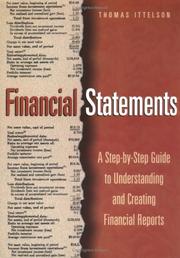
A visual, jargon-free guide to income statements, balance sheets, and cash flow statements — the three documents every investor must understand. It should be read before any quantitative valuation work.
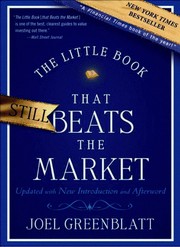
Introduces a simple, powerful valuation framework (earnings yield + return on capital) that ties financial statement knowledge directly to stock selection. It bridges accounting literacy and practical investing strategy.
Mastery: Portfolio Construction, Risk & Long-Term Wealth
ExpertSynthesize everything into a coherent, personalized long-term portfolio strategy — understanding diversification, risk management, asset allocation, and the habits of the world's greatest investors.
▸ Study plan for this stage
Pace: 8–10 weeks, ~40–50 pages/day with 2–3 reflection days per week. Fisher's book (~400 pages) takes 4–5 weeks; Bernstein's (~400 pages) takes 3–4 weeks, with 1–2 weeks for synthesis and portfolio design.
- Fisher's 15 Points: the qualitative framework for identifying exceptional growth companies and their management quality
- Scuttlebutt method: gathering competitive intelligence through direct conversations with customers, suppliers, and industry experts
- Diversification within quality: owning 10–15 best-of-breed companies rather than 50+ mediocre holdings
- Bernstein's Four Pillars: theory (asset pricing), history (market cycles and returns), psychology (behavioral biases), and business (understanding what you own)
- Asset allocation as the primary driver of returns: the strategic mix of stocks, bonds, and alternatives matters far more than stock-picking skill
- Risk management through rebalancing, time horizon alignment, and understanding your personal risk tolerance and financial goals
- The habits of great investors: patience, discipline, continuous learning, and emotional control during market cycles
- Long-term wealth building: how compounding, tax efficiency, and low costs compound over decades to create generational wealth
- What are Fisher's 15 Points, and how would you use them to evaluate whether a company qualifies as a potential long-term holding?
- Explain the scuttlebutt method: what is it, why does Fisher advocate for it, and how would you apply it to research a company in your target industry?
- How does Fisher's approach to diversification differ from the conventional wisdom of owning many stocks? What is his rationale?
- What are Bernstein's Four Pillars of investing, and how does each pillar inform your decision-making in portfolio construction?
- Why does Bernstein argue that asset allocation is more important than security selection, and what evidence does he provide?
- How would you construct a personalized asset allocation that reflects your age, income, risk tolerance, time horizon, and financial goals?
- What psychological biases does Bernstein identify, and how would you build safeguards into your portfolio strategy to counteract them?
- Synthesizing Fisher and Bernstein: how would you balance Fisher's emphasis on finding exceptional companies with Bernstein's emphasis on disciplined asset allocation?
- Complete Fisher's 15-Point checklist for 3–5 companies you're considering; document your findings and reasoning for each point
- Conduct scuttlebutt research on one company: interview or survey at least 5 people (customers, suppliers, former employees, or industry experts) and synthesize their insights into a one-page competitive assessment
- Build a detailed company profile for 2–3 potential core holdings, including management quality, competitive moat, growth runway, and valuation relative to intrinsic value
- Create a personal financial inventory: list your assets, liabilities, income, expenses, time horizon, and major financial goals (retirement, education, legacy)
- Design three asset allocation models (conservative, moderate, aggressive) appropriate for your situation, using Bernstein's framework; justify each allocation with specific reasoning
- Backtest your proposed allocation against historical market data (1980–2024) using a tool like Portfolio Labs or Vanguard's asset allocation calculator; analyze drawdowns and recovery periods
- Write a personal investment policy statement (3–5 pages) that documents your philosophy, asset allocation, rebalancing rules, and behavioral guardrails
- Simulate a market correction: choose a historical bear market (2000–2002, 2008–2009, 2020) and write out how your proposed portfolio would have performed and how you would have stayed disciplined
Next up: This stage equips you with both the qualitative tools to identify exceptional companies (Fisher) and the quantitative discipline to allocate capital wisely across asset classes (Bernstein), positioning you to execute a coherent, personalized long-term strategy that can now be stress-tested against real-world scenarios, tax implications, and life changes in the final mastery stage.
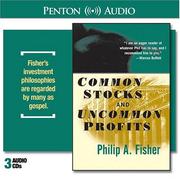
Fisher's qualitative 'scuttlebutt' approach to finding exceptional growth companies complements the quantitative methods learned earlier, rounding out the learner's analytical toolkit.

Covers theory, history, psychology, and business of investing in one rigorous volume — the ideal capstone for building and maintaining a diversified, risk-aware long-term portfolio with real confidence.
Discussion
Keep reading
Paths that share books, cover the same subject, or open a related topic.