Value investing, the Buffett way
This curriculum builds a rigorous, practitioner-grade understanding of value investing across four stages. Starting from the intellectual and philosophical foundations, it moves through financial statement analysis, advanced valuation and moat theory, and finally the psychological and temperamental mastery that separates great investors from the rest. Because the learner starts at an intermediate level, early-stage hand-holding is skipped in favor of canonical primary sources read in the order the field itself developed.
The Intellectual Foundation
IntermediateInternalize the core philosophy of value investing — margin of safety, Mr. Market, and the distinction between price and value — directly from the original masters.
▸ Study plan for this stage
Pace: 8–10 weeks total: Weeks 1–6 for "The Intelligent Investor" (~25–30 pages/day, focusing deeply on Chapters 1, 8, and 20), then Weeks 7–10 for "Common Stocks and Uncommon Profits" (~20 pages/day with reflective journaling after each chapter).
- Margin of Safety: Never pay more for a security than its intrinsic value, and always demand a discount large enough to absorb errors in your analysis (Graham's central thesis in The Intelligent Investor).
- Mr. Market Allegory: The market is a manic-depressive business partner whose daily price offers should be exploited, not followed — price is what you pay, value is what you get (Chapter 8, The Intelligent Investor).
- Price vs. Intrinsic Value: A stock's market price and its underlying business value are two distinct things; the investor's job is to identify and act on the gap between them.
- Defensive vs. Enterprising Investor: Graham's framework for matching investment strategy to temperament and effort level, establishing that discipline and process matter as much as intellect.
- The 'Scuttlebutt' Method: Fisher's qualitative research approach — gathering intelligence from competitors, suppliers, customers, and employees to assess a business's true competitive position (Common Stocks and Uncommon Profits).
- Fisher's 15 Points: A rigorous checklist for evaluating a company's long-term growth potential, management quality, R&D depth, and profit margins before buying.
- Concentrated, Long-Term Ownership: Fisher's conviction that owning a small number of truly outstanding businesses for many years outperforms diversification into mediocre ones.
- Complementary Philosophies: Graham provides the quantitative floor (what to pay) while Fisher provides the qualitative ceiling (what to own) — together they form the complete intellectual foundation of value investing.
- In your own words, explain the Mr. Market allegory from The Intelligent Investor. How should a rational investor use Mr. Market's behavior to their advantage rather than being led by it?
- What is the margin of safety, and why does Graham argue it is the central concept of sound investing? Give a concrete numerical example of how it applies to a stock purchase.
- How does Graham distinguish between an 'investor' and a 'speculator'? Why does this distinction matter for how you approach market volatility?
- What are Fisher's 15 Points, and which three do you personally consider most critical for evaluating a business? Justify your choices using Fisher's reasoning from Common Stocks and Uncommon Profits.
- How does Fisher's 'scuttlebutt' method work in practice, and what does it reveal that financial statements alone cannot? What are its limitations?
- Graham and Fisher appear to have different emphases — quantitative vs. qualitative. How are their philosophies actually complementary rather than contradictory? Where do they agree at the deepest level?
- Mr. Market Journal (ongoing, weeks 1–6): Each week, pick one well-known publicly traded company. Record its current stock price, then write a 1-paragraph estimate of its intrinsic value based on what you know. Note the gap. Practice articulating whether Mr. Market is being fearful, greedy, or rational — without acting on it yet.
- Margin of Safety Calculation: Choose 3 companies from different industries. Using only publicly available data (P/E ratios, book value, earnings yield), estimate a rough intrinsic value range and calculate what price would give you a 25%, 33%, and 50% margin of safety. Reflect on how rarely those prices are available.
- Fisher's 15-Point Scorecard: Select one company you find genuinely interesting. Work through all 15 of Fisher's points from Common Stocks and Uncommon Profits and score the company on each. Identify which points you cannot answer from public filings alone — those gaps are your 'scuttlebutt' research agenda.
- Scuttlebutt Mini-Exercise: For the same company you scored above, identify 3 non-financial sources of information (e.g., employee reviews on Glassdoor, customer forums, a competitor's earnings call transcript, a supplier's annual report). Write a 1-page memo on what you learned that the 10-K did not tell you.
- Investor vs. Speculator Self-Assessment: Re-read Graham's definitions in Chapter 1 of The Intelligent Investor, then honestly audit your own past financial decisions (or hypothetical ones). Label each as investor behavior or speculator behavior and write a brief reflection on what drove each choice.
- Synthesis Essay: Write a 500-word essay titled 'What Would Graham Buy That Fisher Would Also Approve Of?' Define the criteria each thinker would apply, find a real or historical stock that plausibly meets both sets of standards, and defend your choice using specific arguments from both books.
Next up: By internalizing Graham's price-discipline and Fisher's business-quality framework, the reader now has the philosophical vocabulary and analytical instincts needed to study how master practitioners — most notably Warren Buffett — synthesized and applied these exact principles to build real portfolios at scale.
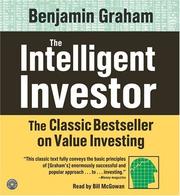
The bible of value investing. Start here to absorb the foundational concepts of margin of safety, defensive vs. enterprising investing, and Mr. Market before anything else — every subsequent book assumes this vocabulary.
Read immediately after Graham to understand the qualitative complement to Graham's quantitative framework; Fisher's 'scuttlebutt' method and focus on business quality directly influenced Buffett's evolution beyond pure Graham.
Reading the Financials
IntermediateDevelop the ability to read and critically analyze financial statements — income statements, balance sheets, and cash flow statements — as a value investor, not an accountant.
▸ Study plan for this stage
Pace: 10–12 weeks total. Week 1–3: Ittelson's "Financial Statements" (~20–25 pages/day, including re-reading the integrated business scenario chapters). Week 4–5: Graham's "The Interpretation of Financial Statements" (~15–20 pages/day — it's short but dense; read each chapter twice). Week 6–10: O'Glove's
- The three-statement system: how the income statement, balance sheet, and cash flow statement are structurally linked and tell one unified story (Ittelson's core thesis)
- Accounting as a narrative, not a scorecard: debits, credits, and accruals exist to match revenues with expenses — understanding *why* they exist prevents misreading them (Ittelson)
- Graham's value-investor lens: distinguishing between book value, earnings power, and market price — and why the gap between them is the investor's opportunity (Graham)
- The primacy of the balance sheet: Graham's insistence that asset quality and liability structure reveal more about a company's safety than its reported earnings
- Earnings per share skepticism: how EPS can be legally manipulated through share buybacks, one-time items, and accounting choices — and why Graham demands adjusted, normalized figures
- Revenue recognition red flags: O'Glove's framework for spotting premature or aggressive revenue booking by comparing revenue growth to receivables growth and cash collections
- The cash flow statement as a lie detector: O'Glove's central argument that operating cash flow vs. net income divergence is the single most important signal of earnings quality
- Reserves, footnotes, and off-balance-sheet items: O'Glove's toolkit for reading what management buries — inventory reserves, pension liabilities, and contingent obligations
- After reading Ittelson, can you trace a single business transaction — say, a credit sale — through all three financial statements and explain exactly how each statement changes?
- What does Graham mean when he says the balance sheet is more important than the income statement for a conservative investor, and which specific balance sheet ratios does he use to assess financial strength?
- How would Graham define 'satisfactory' earnings coverage of fixed charges, and why does he treat preferred dividends differently from bond interest in that calculation?
- According to O'Glove, what are the three main areas of a company's financials where earnings quality problems most commonly hide, and what specific data points signal trouble in each area?
- How do you calculate and interpret the relationship between net income and operating cash flow, and what does a persistent, widening gap tell you about a company's accounting choices?
- If a company's revenues are growing 20% year-over-year but accounts receivable are growing 40%, what does O'Glove's framework tell you to investigate, and what follow-up questions would you ask of the footnotes?
- Three-statement trace (Ittelson): Pick a small, simple public company (e.g., a single-product retailer). Using only its annual report, manually map 5 transactions from the income statement through to the balance sheet and cash flow statement, just as Ittelson does with his fictional company. Write a one-paragraph narrative explaining how the three statements connect.
- Graham ratio scorecard: Using Graham's criteria from 'The Interpretation of Financial Statements', build a simple spreadsheet template with his key ratios (current ratio, debt-to-equity, earnings coverage of fixed charges, price-to-book, price-to-earnings). Apply it to 3 companies in the same industry and rank them by Graham's standards of financial strength.
- Earnings quality audit (O'Glove): Download 5 years of 10-K filings for one company. Build a side-by-side table of net income vs. operating cash flow for each year. Calculate the ratio and chart the trend. Write a one-page memo on what the divergence (or convergence) tells you about the reliability of reported earnings.
- Receivables and revenue stress test (O'Glove): For the same company, plot revenue growth vs. accounts receivable growth year-over-year for 5 years. Then read the revenue recognition footnote in each 10-K. Write a paragraph explaining whether the footnote language changed and whether those changes correlate with the data anomalies.
- Footnote forensics: Choose a company that has restated earnings in the past decade. Pull the original 10-K and the restated filing. Using O'Glove's red-flag checklist, identify which footnotes contained the warning signs *before* the restatement. Write a brief post-mortem on what an alert reader could have caught.
- Integrated one-pager: After finishing all three books, pick one company you might actually want to invest in. Write a structured one-page financial analysis that uses Ittelson's three-statement framework as the skeleton, Graham's ratios as the safety checklist, and O'Glove's earnings quality tests as the integrity filter. This becomes your personal template for all future stock analysis.
Next up: Mastering the mechanics and integrity of financial statements gives you the factual foundation to move into business valuation — the next stage — where you will learn to translate these cleaned, quality-tested numbers into an estimate of what a business is actually worth.
A clear, visual primer on how the three financial statements connect and flow; builds the mechanical literacy needed before tackling more analytical texts.

Graham's own concise guide to reading financials through an investor's lens; pairs perfectly with Ittelson by immediately applying financial literacy to valuation judgment.
Teaches you to look past reported numbers and detect accounting manipulation or earnings distortion — a critical skill before moving to advanced valuation work.
Moats, Valuation & Business Analysis
ExpertLearn to identify durable competitive advantages (moats), estimate intrinsic value with rigor, and analyze businesses the way professional investors do.
▸ Study plan for this stage
Pace: 10–12 weeks total. "Security Analysis" is dense — allocate 6–7 weeks (~20–25 pages/day, focusing on Parts I–IV and VI; skim outdated regulatory sections). "The Little Book That Still Beats the Market" is short — 3–4 days of focused reading. "The Dhandho Investor" takes 1–2 weeks (~30 pages/day). Res
- Margin of Safety (Graham): buying securities at a significant discount to intrinsic value to protect against error and uncertainty, as rigorously defined in Security Analysis
- Intrinsic Value Estimation: Graham's multi-method approach to valuing stocks and bonds — earnings power, asset value, and dividend-based methods — and how to triangulate between them
- Mr. Market & Investor Psychology: the market as an irrational voting machine in the short run vs. a weighing machine in the long run, and how to exploit its mood swings rather than follow them
- Moat Identification: durable competitive advantages — cost advantages, switching costs, network effects, intangible assets — that protect a business's returns on capital over time
- Joel Greenblatt's Magic Formula: combining Return on Capital (quality proxy) and Earnings Yield (cheapness proxy) as a systematic, quantitative screen for good businesses at good prices
- Pabrai's Dhandho Framework: low-risk, high-uncertainty bets — 'Heads I win, tails I don't lose much' — and the art of cloning proven investment ideas from great investors
- Concentrated, High-Conviction Investing: why Pabrai and Graham both argue that over-diversification dilutes returns, and how to size positions when the odds are heavily in your favor
- Business Quality vs. Price: the interplay between the quality of a business (moat strength, ROIC) and the price paid, and why paying too much for a great business is still a mistake
- After reading Security Analysis, how would you estimate the intrinsic value of an industrial company using at least two of Graham's methods, and at what discount to that value would you buy?
- What distinguishes a business with a durable moat from one with a temporary competitive advantage, and which specific financial metrics in Security Analysis and Greenblatt's framework help you detect the difference?
- How does Greenblatt's Magic Formula operationalize the concept of 'a good business at a good price,' and what are its known limitations when applied to individual stock selection?
- Explain Pabrai's 'Dhandho' framework in your own words: what makes a bet low-risk and high-uncertainty, and how does this differ from conventional risk/reward thinking?
- How do Graham's margin of safety principle and Pabrai's 'heads I win, tails I don't lose much' philosophy reinforce each other, and where do they diverge in practice?
- If you screened 500 stocks using Greenblatt's Magic Formula and identified 10 candidates, how would you use the analytical frameworks from Security Analysis and The Dhandho Investor to narrow it down to 2–3 actionable ideas?
- Graham Valuation Drill: Pick one S&P 500 company and value it using three methods from Security Analysis — earnings power value, net asset value, and a dividend discount approach. Document your assumptions, triangulate a range, and set a buy price at a 30–40% margin of safety.
- Magic Formula Screen: Use a free screener (e.g., magicformulainvesting.com or finviz.com) to generate a list of 20 Magic Formula stocks. For each, calculate Return on Invested Capital and Earnings Yield manually from the financial statements to verify Greenblatt's ranking — note where the formula surprises you.
- Moat Scorecard: For 5 companies of your choice, build a one-page 'moat scorecard' rating each on the four moat sources (cost advantage, switching costs, network effects, intangible assets) on a 1–5 scale with evidence from annual reports. Identify which, if any, have a durable moat.
- Dhandho Cloning Exercise: Identify one investment idea currently held by a well-known value investor (via 13-F filings on SEC EDGAR or dataroma.com). Apply Pabrai's Dhandho checklist — downside protection, upside potential, certainty of the moat — and write a 1-page investment thesis either endorsing or rejecting the idea.
- Integrated Case Study: Choose one company that appears on your Magic Formula screen AND scores highly on your moat scorecard. Write a full 2–3 page investment memo combining Graham's valuation rigor, Greenblatt's quality/cheapness metrics, and Pabrai's risk/reward framing. Conclude with a buy, hold, or pass decision with a specific target price.
- Reflection Journal: After finishing all three books, write a 1-page synthesis answering: 'Where do Graham, Greenblatt, and Pabrai agree, and where do they conflict?' Focus specifically on their views on diversification, the role of qualitative vs. quantitative analysis, and acceptable margin of safety thresholds.
Next up: Mastering moat identification, intrinsic valuation, and business quality analysis here builds the analytical foundation needed to study portfolio construction, position sizing, and the behavioral/psychological discipline required to act on these insights at scale — the natural focus of a more advanced stage on investor psychology and portfolio management.
The deep technical companion to The Intelligent Investor; introduces systematic frameworks for valuing bonds, stocks, and distressed assets — essential for serious practitioners.
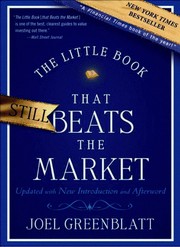
Distills return on capital and earnings yield into a powerful, intuitive framework for ranking business quality and cheapness — a bridge between Graham's theory and modern moat thinking.
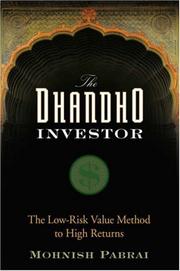
Applies value investing principles to concentrated, low-risk/high-reward bets; reinforces margin of safety thinking with vivid real-world case studies that solidify the prior two books.
Temperament, Judgment & Mastery
ExpertDevelop the psychological discipline, long-term thinking, and independent judgment that transform technical knowledge into genuine investing skill.
▸ Study plan for this stage
Pace: 6–8 weeks total: ~3 weeks on Poor Charlie's Almanack (~25–30 pages/day, allowing extra time for re-reading Munger's speeches/talks in full) and ~3 weeks on The Most Important Thing (~20 pages/day with deliberate pauses after each chapter to journal reactions and challenge Marks's assertions).
- Mental models & the latticework of multidisciplinary thinking (Munger): building a toolkit of frameworks from psychology, physics, biology, economics, and mathematics to avoid narrow, single-discipline reasoning
- Inversion as a core thinking tool (Munger): systematically asking 'What would cause failure?' before asking 'How do I succeed?' to eliminate errors rather than just pursue gains
- The psychology of human misjudgment (Munger): the 25 cognitive biases Munger catalogs — including incentive-caused bias, social proof, and commitment/consistency — and how they destroy investor judgment
- Second-level thinking (Marks): moving beyond the obvious consensus view to ask 'What does the market already believe, and why might reality differ?' as the only source of sustainable outperformance
- Risk as misunderstood probability, not volatility (Marks): distinguishing permanent loss of capital from price fluctuation, and understanding that risk is invisible in good times and only revealed by outcomes
- The role of market cycles and investor psychology (Marks): recognizing where we stand in the cycle by reading crowd sentiment, credit availability, and valuation extremes rather than macro forecasts
- Contrarianism grounded in independent judgment, not reflexive opposition (Marks): being willing to look wrong for extended periods and withstanding social/institutional pressure — the psychological cost of genuine conviction
- Mastery through lifelong learning and intellectual humility (Munger & Marks): both authors converge on the idea that sustained excellence requires continuous self-correction, voracious reading, and comfort with uncertainty
- After studying Munger's 25 causes of human misjudgment, can you identify at least five biases that have visibly distorted your own past investment decisions or judgments, and explain the specific mechanism by which each one operated?
- Marks argues that 'being right' and 'being contrarian' are not the same thing — what is the precise distinction he draws, and what does it imply about how you should form and hold a variant view?
- How does Munger's concept of a 'latticework of mental models' change the way you would approach analyzing a business compared to using only financial metrics? Give a concrete example using a real company.
- Marks devotes significant attention to the idea that risk cannot be measured after the fact by what actually happened — what does he mean, and how should an investor assess risk prospectively?
- Both Munger and Marks warn against the institutional imperative and the pressure to conform to consensus. What specific psychological and structural forces make independent judgment so difficult, and what habits do they each recommend to resist those forces?
- How do Munger's inversion principle and Marks's emphasis on 'knowing what you don't know' complement each other as a unified framework for navigating uncertainty in investing?
- Bias audit journal: After finishing Munger's psychology of misjudgment chapter, review 3–5 of your past investment decisions (or paper decisions) and write a one-page post-mortem for each, explicitly naming which of Munger's 25 biases were present and how they influenced the outcome.
- Mental model stress-test: Pick one company you know well and write a two-page analysis that deliberately draws on at least five disciplines (e.g., microeconomics, competitive biology, psychology, accounting, engineering/systems thinking) in the style Munger prescribes. Note which insights would have been invisible using only financial analysis.
- Second-level thinking drill: For five current market narratives or popular investment theses (from news or earnings calls), write out the first-level consensus view, then force yourself to articulate a rigorous second-level counter-thesis in Marks's framework — including what would have to be true for the consensus to be wrong.
- Risk vs. uncertainty mapping: Choose three investments (stocks, bonds, or real assets) and write a one-page memo for each distinguishing (a) measurable risks, (b) Knightian uncertainty, and (c) the specific permanent-loss scenarios Marks would flag — explicitly avoiding the shortcut of using beta or standard deviation as a proxy for risk.
- Inversion exercise: Take a goal you have as an investor (e.g., 'build a concentrated, high-conviction portfolio') and spend 30 minutes rigorously inverting it — listing every plausible way that exact approach could destroy capital. Then write a short memo on which failure modes change your strategy and which you can accept.
- Cycle positioning memo: Using Marks's cycle-reading checklist (sentiment, credit conditions, valuations, deal structures, investor behavior), write a current 1–2 page memo arguing where you believe we are in the market cycle today, citing specific observable evidence for each dimension. Revisit and grade this memo in six months.
Next up: By internalizing Munger's multidisciplinary rigor and Marks's probabilistic, cycle-aware humility, the reader has forged the psychological and philosophical foundation needed to apply advanced valuation and portfolio construction techniques with genuine discipline — setting the stage for any subsequent stage focused on putting capital to work at scale.
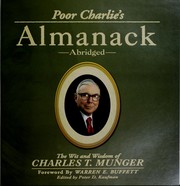
Munger's mental models and multidisciplinary thinking show how the world's greatest investing partnership thinks about business quality, moats, and human psychology — read after the technical work to see how it all integrates.

Marks distills decades of investment memos into a masterclass on second-level thinking, risk, and market cycles — the ideal capstone for understanding the temperamental edge that separates investors from speculators.
Discussion
Keep reading
Paths that share books, cover the same subject, or open a related topic.