Geriatric Medicine: The Best Books on Caring for Older Patients, in Order
Geriatrics is the branch of medicine that takes old age as a condition in its own right rather than as a collection of separate diseases, and it is chronically understaffed almost everywhere. This path is a field guide to what the specialty knows and where the system around it fails — it is not medical advice, and nothing here should be used to make decisions about a particular patient. It starts with the case for geriatrics as a specialty, then the experience of being old from people who are, then the institutions and their history, then dementia and family caregiving, which is where most of the actual work happens. The last stage is the clinical reference literature, for readers who want to see what the specialty's own textbooks say.
Why Old Age Is Its Own Specialty
BeginnerUnderstand what geriatric medicine claims to do differently — deprescribing, function over disease, goals of care — and why the rest of medicine so often gets old patients wrong.
▸ Study plan for this stage
Pace: 4-5 weeks. Louise Aronson's Elderhood is 464 pages and worth three of them; Atul Gawande's Being Mortal is 283 and reads in a week; Marc Agronin's How We Age is 318. All three are trade books written for a general reader, not clinical texts, and all three are built from patient cases — dying patient
- Geriatrics' central claim: treat function, not the disease list — an old patient's problem is usually the interaction of several conditions and their treatments
- Polypharmacy and deprescribing, and why stopping a drug is a clinical act that most specialties have no framework for
- The geriatric syndromes — falls, delirium, incontinence, frailty — as conditions with many causes rather than single diagnoses
- Goals-of-care conversations: Gawande's argument that the questions to ask are what the patient is willing to trade and what they will not give up
- Aronson's framing of elderhood as a life stage with its own physiology, not merely adulthood in decline
- Agronin's counterweight: measurable gains in old age — regulation, perspective, expertise — that a deficit model cannot see
- Why the specialty is understaffed almost everywhere, and how reimbursement structures produce that shortage
- What specifically does a geriatrician do in a first appointment that another physician would not?
- What is Gawande's account of why medicine defaults to intervention at the end of life, and where does he locate the failure — in doctors, institutions, or families?
- How does Aronson's own career, as she tells it, illustrate the profession's treatment of the specialty?
- Which of Agronin's claims about gains in later life rest on his clinical observation and which on published evidence?
- After all three, what would you say is the difference between a medical problem of old age and a social one?
- Find the clinic-visit scene in Being Mortal where Gawande shadows a geriatrician and list every question asked and every element of the physical examination; that list is a compact statement of what the specialty does differently.
- Take one case history from Elderhood and write out the problem list twice — once as an organ-system list, once as Aronson frames it functionally — and see what moves to the top.
- Read Agronin's chapters on his Miami nursing-home patients and note each place where a behaviour first read as pathology is later read as adaptation.
- Pick a real medication list of five or more drugs (a published example or a generic one) and try applying the deprescribing logic these books describe; then note every question you cannot answer without a clinician, which is the point of the exercise.
Next up: Three doctors have now described old age from the outside; the next stage hands the description to people living inside it.

A practising geriatrician's case that old age is a distinct life stage medicine has no adequate model for, combining case histories, history of the specialty and her own career. The most complete single book on the subject and the right first read.

The book that put this subject in front of a general readership: what medicine does to people at the end of life when nobody has asked them what they want. Read it second — Gawande covers less of the specialty than Aronson but states the central question more sharply, and his account of a geriatrician's clinic visit is the best short illustration of what the field does.

A geriatric psychiatrist on what he learned from his patients in a Miami nursing home, and the strongest counterweight here to a purely deficit-based view of ageing. Placed third because it takes the clinical framing of the first two books and complicates it.
The Lived Experience
BeginnerHear old age described from inside it, and separate what is medical from what is social.
▸ Study plan for this stage
Pace: 4-5 weeks, unevenly split. John Leland's Happiness Is a Choice You Make is 242 pages and reads in under a week. Simone de Beauvoir's The Coming of Age is 864 pages of history, anthropology and literary evidence — read it in sections over a month, or read Part One and the conclusion if you want the a
- The paradox of ageing: self-reported wellbeing in the very old is often higher than younger people predict, and Leland takes his own surprise as data
- Reporting versus advocacy — Leland is a New York Times journalist following six people for a year, not arguing a thesis about policy
- Beauvoir writing as an advocate and a philosopher, not a neutral surveyor: her claim is that a society's treatment of the old exposes what it actually believes about persons
- The distinction the stage exists to teach: which limitations of old age are medical and which are produced by housing, income, transport and family structure
- Selective optimisation — how the very old narrow their commitments rather than merely lose them
- The datedness problem: Beauvoir's ethnography and demography are from 1970 and should be read for the frame, not for facts about how anyone lives now
- What did Leland expect to find, and at what point in the year does he say he was wrong?
- For each of his six subjects, which of their difficulties would a doctor treat and which would only money, housing or company change?
- What is Beauvoir's central argument, stated in one sentence, and what evidence does she think supports it?
- Where is Beauvoir writing as a philosopher making a case rather than a scholar reporting findings, and does the book distinguish the two?
- Do Leland's findings undercut Beauvoir's bleakness, or are they answering different questions?
- Build a one-page profile of each of Leland's six subjects with three columns: medical problems, material circumstances, and relationships; then rank which column best predicts how each of them describes their year.
- Read Beauvoir's chapters on old age in pre-industrial societies and list the specific practices she cites, then check two of them against a current source — this makes the book's age concrete.
- Take Leland's title claim at face value and find the passages where his subjects contradict it; the book is more honest than its title.
- Write half a page setting Aronson's clinical account of a frail patient beside Leland's account of one of his subjects, and say what each frame cannot see. Mary Pipher's Another Country is the short modern companion if you want the adult-children side.
Next up: Both books keep running into institutions and payment systems, which is what the next stage is about.

A New York Times reporter followed six New Yorkers over eighty-five for a year. It is the best corrective on this path to the assumption that very old age is mainly loss — his subjects report higher wellbeing than he expected, and he takes that finding seriously rather than sentimentally.
Beauvoir's 1970 study of old age across history, anthropology and literature, written as the companion to The Second Sex. Long, bleak and still unmatched in ambition — she argues that a society's treatment of the old reveals what it actually believes about people. Read it for the frame, not for current facts. Mary Pipher's Another Country is the short modern counterpart, on the gap between old people and their adult children.
The System and Its History
IntermediateLearn how American elder care came to be organised the way it is, and what nursing homes are actually like as workplaces and institutions.
▸ Study plan for this stage
Pace: 5 weeks. Robert Butler's Why Survive? is 496 pages and reads as a 1975 political document; Thomas Gass's Nobody's Home is 220 pages and short enough for a weekend; Jane Gross's A Bittersweet Season is roughly 350 pages of reported detail about Medicare, Medicaid and assisted living. Butler and Gass
- Ageism as a named concept — Butler coined the term in this book and then founded the first American academic department of geriatrics
- Why Survive? as an advocacy document rather than a survey: Butler was arguing for policy he then went on to build
- The financing architecture Gross explains: what Medicare covers (acute care), what it does not (long-term custodial care), and how Medicaid becomes the default payer after spend-down
- Nursing homes as workplaces — staffing ratios, aide turnover, wages and the physical labour of the shift, which Gass reports from inside the job
- The gap between institutional policy and what happens on a floor at 3am, and why the aide's view is the one most books omit
- How the decisions actually get made in a family: under time pressure, with incomplete information, by whoever is nearest
- What did Butler identify in 1975 that has not changed, and what has? Name three of each.
- What exactly does Medicare pay for at the end of a hospital stay, and where does the family's own money start?
- From Gass, what does a nursing aide's shift consist of, and how many residents is one aide responsible for?
- What is Gross's account of the point at which a family loses the ability to choose rather than react?
- Butler is an advocate, Gross a reporter, Gass a participant. Which of the three do you trust most on the state of institutional care, and why?
- Make a timeline from Butler of the policy landscape he was attacking in 1975 and annotate each item with what exists now — Medicare hospice, the 1987 nursing-home reform act, current staffing rules.
- Using only Gross, write out the sequence of payers for a hypothetical person moving from hospital to rehabilitation to assisted living to a nursing home, and note where each transition costs the family money.
- Read Gass on a single shift and reconstruct it as a timetable, minute by minute, against the number of residents; the arithmetic is the argument.
- Look up the current inspection report for one nursing home in your area and read it with Gass's categories in mind — staffing, turnover, incident reports.
Next up: The condition that fills those institutions and consumes most family caregiving is dementia, which the next stage treats on its own.
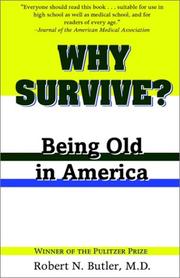
Butler coined the term ageism and won the Pulitzer for this 1975 indictment of how the United States treated its old people; he then founded the first department of geriatrics in an American medical school. Read it as the field's founding political document, and note how much of it has not dated.

An anthropologist took a job as a nursing home aide and wrote about the shift work — the staffing ratios, the turnover, the physical labour. The view from the bottom of the institution, and the necessary complement to books written by doctors and family members.

A journalist's account of managing her mother's last years, written as reporting rather than memoir: what Medicare and Medicaid do and do not cover, what assisted living costs, how the decisions actually get made. The most useful book here on the machinery.
Dementia and Caregiving
IntermediateCover the condition that dominates the specialty and the family labour it depends on, including the ethical questions nobody has settled.
▸ Study plan for this stage
Pace: 5-6 weeks. The 36-Hour Day is 387 pages and is a reference to work through rather than read straight — take the chapters relevant to whatever stage of illness concerns you. Tia Powell's Dementia Reimagined is 320 pages, Roz Chast's Can't We Talk About Something More Pleasant? is a 228-page graphic m
- The 36-Hour Day is the family-facing manual, in print since 1981 and revised repeatedly — practical guidance for caregivers, not a clinical text and not a source of medical decisions
- Behaviour as communication: the book's core method is to work backwards from a behaviour to the unmet need or environmental trigger
- Powell's history of the cure narrative — repeated drug failures, the amyloid programme, and the argument that research funding has crowded out care
- Advance planning for dementia specifically, where the person who would decide is the person losing capacity
- The money and the labour: who in a family actually does the caregiving, what it costs them in earnings and health, and how invisibly that transfer happens
- Butler's case: a pacemaker sustaining a life the patient no longer wanted, and a device that could not easily be turned off
- The difference between a treatment decision and a goals decision, and where each of these books locates it
- What does The 36-Hour Day advise when a person with dementia becomes agitated in the evening, and what is the reasoning behind it?
- What is Powell's evidence that the search for a cure has failed on its own terms, and what does she propose instead?
- In Chast's memoir, what practical decision does the family defer longest, and what forces it?
- How did Butler's father's pacemaker come to be implanted, who consented, and what happened when the family wanted it deactivated?
- Powell is a bioethicist arguing a position, Mace and Rabins are writing a manual, Chast and Butler are describing their own parents. What does each form let its author say that the others cannot?
- Take one problem from The 36-Hour Day — wandering, or refusal to bathe — and write out the book's full decision sequence, then read Chast's account of the same problem in her parents' apartment and note where a manual runs out.
- List every drug and every research programme Powell discusses, with its outcome, and see how much of the last thirty years the list covers.
- Read Chast's chapters on the money — the apartment, the assisted-living fees, the savings running down — and reconstruct the family's finances as a simple ledger.
- Trace the sequence of medical decisions in Knocking on Heaven's Door and mark, at each one, who was asked, what they were told, and what alternative existed. Butler's later The Art of Dying Well is the practical companion.
- Draft the questions you would want on record about your own care if you were later unable to answer them, using Powell's chapter on planning as the template.
Next up: Everything so far has been argument, memoir and reporting; the last stage shows what the specialty's own professional literature actually contains.
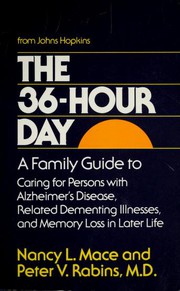
Mace and Peter Rabins's guide for families caring for someone with dementia, in print and revised since 1981 and still the standard reference. Practical rather than theoretical, and the book most caregivers are handed first — worth reading before the two that examine it.

A geriatric psychiatrist and bioethicist on the history of dementia, the repeated failure of the cure narrative, and what it would mean to plan for care instead. The most intellectually serious book on this path and the one that most directly challenges how research money is spent.
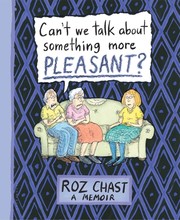
The New Yorker cartoonist's graphic memoir of her parents' last years — the refusals, the money, the Brooklyn apartment, the guilt. It says things about caring for elderly parents that prose books tend to soften, and it is very funny about all of it.

Butler's account of her father's pacemaker keeping him alive through years of decline, and her mother's decision to refuse surgery. The clearest case study of what Gawande argues in the abstract, and the right end to this stage. Her later book, The Art of Dying Well, is the practical companion.
The Clinical Reference
IntermediateSee what the specialty's own literature contains, and how differently it frames the same problems.
▸ Study plan for this stage
Pace: Ongoing rather than sequential — these are professional reference works, not books to read through. Hazzard's Geriatric Medicine and Gerontology runs to about 1,600 pages and is a textbook written for physicians and trainees, assuming medical training, clinical vocabulary and familiarity with readin
- The register shift: Hazzard's states what is known and how well it is known, with citations, and does not argue for the specialty the way Aronson and Butler do
- The biology of ageing as the textbook presents it — cellular senescence, homeostenosis, reduced physiological reserve
- The geriatric syndromes handled as clinical entities with workup algorithms rather than as themes
- Geriatric pharmacology: altered distribution and clearance in older adults, and the criteria lists (Beers and similar) that formalise deprescribing
- Validated assessment instruments — cognitive screens, functional and gait measures — and what a clinician does with a score
- The distance between a five-hundred-page argument about how old people should be treated and a two-page checklist that gets used
- Take a claim from Aronson or Gawande and find the corresponding chapter in Hazzard's — is the claim supported, qualified, or absent?
- What does the evidence base for a common geriatric intervention actually look like when the textbook summarises it: how large are the trials, and in whom?
- Which of the assessment instruments in Geriatrics at Your Fingertips appeared as scenes in the trade books, and did those scenes describe them accurately?
- Where does the textbook's account of dementia care diverge from Powell's account of the field?
- What in these two books would you never attempt to use yourself, and why?
- Choose one geriatric syndrome — falls — and read the Hazzard's chapter and the corresponding pages of Geriatrics at Your Fingertips together; write down what the handbook keeps and what it drops.
- Look up the pharmacology chapter for one drug class commonly deprescribed in older adults and compare its cautions to how deprescribing is described in Elderhood.
- Take the delirium workup as the textbook gives it and write it out as a flowchart, then find the delirium scene in one of the memoirs and mark where in that flowchart the real case sat.
Next up: That is the end of the path: you now know what the specialty claims, what it looks like from inside a family and a nursing home, and what its own literature says — which is the background for talking to a clinician, not a replacement for one.
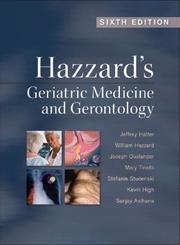
The standard textbook of the specialty, covering the biology of ageing, the geriatric syndromes, pharmacology in older adults and organ-system disease. A reference to consult rather than read, and the place to check what the evidence base behind any of the earlier books actually looks like.

The pocket clinical handbook clinicians actually carry — dosing, screening intervals, assessment instruments. Included as the honest last item: it shows the specialty as day-to-day practice, and it makes plain how much of the preceding argument reduces, at the bedside, to a set of checklists.
Discussion
Keep reading
Paths that share books, cover the same subject, or open a related topic.