Hospitals: The Best Books on How They Really Work, in Order
A hospital is three things at once — a clinical institution, a business, and a workplace — and almost every book about one of them is silent on the other two. This path deliberately reads all three. Start inside single hospitals with writers who spent a year there, then take the doctors' and nurses' accounts of what the work does to the people doing it, then the money and the history that explain why the building behaves the way it does, and finish with the failures and the computerisation that changed the job in the last decade.
Inside One Hospital
BeginnerSee a whole institution at close range through three long-form accounts of specific hospitals, before any argument about hospitals in general.
▸ Study plan for this stage
Pace: 5-6 weeks. God's Hotel is 402pp, Julie Salamon's Hospital 384pp and Brian Alexander's The Hospital 320pp — about 1,100 pages of narrative nonfiction, so 25-30pp a day is comfortable. Read them in this order: the almshouse, then the urban teaching hospital, then the failing community hospital. Note t
- The hospital as an institution with its own character, history and constraints, rather than as a backdrop for medical stories
- Slow medicine — Sweet's argument, drawn from Hildegard of Bingen and from years at Laguna Honda, that efficiency-driven care misses what patients need
- The almshouse tradition and what was lost when long-stay institutions were closed or converted
- The management corridor: administrators, budgets and staffing seen as a legitimate subject (Salamon's distinctive contribution)
- Serving a population that speaks dozens of languages, and interpretation as clinical infrastructure
- The community hospital's economics — payer mix, uncompensated care, and what happens to a town when its hospital cannot cover costs
- Immersive long-form reporting as a method: a year inside, and what access does and does not buy
- What does Sweet mean by slow medicine, and what would adopting it cost a modern hospital in measurable terms?
- What does Salamon see from the administrative side that a clinician-author would not?
- In Alexander's Bryan, Ohio, which specific financial pressures threaten the hospital, and are any of them within the hospital's control?
- All three authors had negotiated access. What might each institution have kept out of view?
- Taken together, what do these three hospitals have in common, and is it clinical, economic or cultural?
- Write a one-page profile of each hospital — size, population served, payer mix, ownership, financial position — from the books alone. Laying them side by side makes the institutional differences concrete before any argument about hospitals in general.
- Take one patient Sweet follows and trace what would have happened to them at a hospital run on the metrics Alexander describes. This is Sweet's argument tested rather than accepted.
- In Salamon's book, list every non-clinical role that turns out to affect patient care. It is a long list and it is the reason the book is placed here.
- Look up the current ownership and financial status of the actual hospital in Alexander's book. The follow-up is short and it sharpens the reading.
Next up: Having seen three institutions from the outside in, the next stage turns to the people whose working lives those institutions shape.
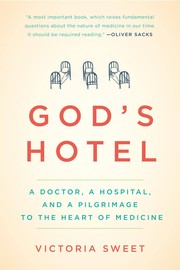
Sweet's years at Laguna Honda, America's last almshouse, and her case for slow medicine against efficiency-driven care. The best possible opening because it makes the institution itself, rather than any patient or doctor, the subject.

A journalist's year inside Maimonides Medical Center in Brooklyn, following administrators, surgeons and interpreters through a hospital serving dozens of languages. Distinct from Brian Alexander's similarly titled book below; read it second for the view from the management corridor.

Alexander's account of a struggling community hospital in Bryan, Ohio, and of what happens to a town when its hospital cannot cover its costs. Third because it is where the previous two books' institutional questions meet the balance sheet.
What the Work Does to Doctors
BeginnerUnderstand hospital medicine from the clinician's side — training, fallibility, hierarchy and the gap between protocol and practice.
▸ Study plan for this stage
Pace: 4-5 weeks. Complications 288pp, Better 281pp and The House of God 413pp. Gawande's two are essay collections and can be read a piece at a time; The House of God is a novel and is best read straight through. Read Complications before Better — the honesty about error comes first and the argument about
- Surgical fallibility: the gap between medical knowledge and its reliable application, which is Gawande's founding subject
- The learning curve — that trainees must practise on real patients, and how the profession handles that fact
- Diligence, doing right and ingenuity as Gawande's three headings in Better, and performance variation between equally trained clinicians
- Why the same knowledge produces different outcomes in different hospitals, which moves the question from individual to institution
- Residency as depicted in The House of God: hours, hierarchy, exhaustion, and the defensive humour that came with them
- The novel's slang and its rules, which entered the profession's own vocabulary and shaped how a generation talked about patients
- The distinction between an account written from inside training and one written with hindsight
- What does Gawande say about how surgeons learn, and what does the account imply for a patient choosing where to be operated on?
- In Better, what separates high-performing centres from average ones, and how much of it is transferable?
- How does Complications handle Gawande's own errors, and does the honesty change what you take from Better?
- What is The House of God actually depicting about 1970s internship, and which of those conditions have since changed?
- The novel is contested for its treatment of women and of elderly patients. What is the criticism, and does reading it as a period document answer it or evade it?
- Pick one essay in Complications and one in Better on related subjects and read them consecutively. The five-year shift from individual fallibility to institutional performance is visible in a single sitting.
- List the slang terms from The House of God that you have encountered elsewhere. The reach of a single novel into professional culture is startling once counted.
- Take Better's account of a high-performing centre and test it against the hospitals of the previous stage. Which of Sweet's, Salamon's or Alexander's institutions could adopt it, and what would stop the others?
- Note every instance in The House of God where the humour is a defence against something specific. Read that way, it stops being a comic novel and becomes an account of burnout.
Next up: The doctors' accounts leave out most of the people in the building, and the nursing books put back the twelve hours a day that hospital writing usually skips.

Gawande's first book, on surgical fallibility and uncertainty, written while he was still in training. Read it before Better; it establishes the honesty about error that his later work builds on.
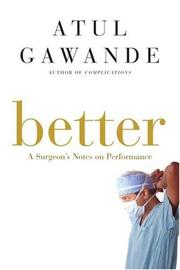
On performance — why some hospitals and surgeons get consistently better results from the same knowledge. The natural sequel, and the bridge from individual error to institutional quality.
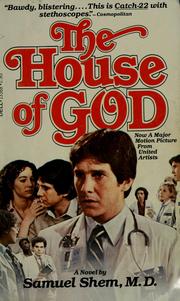
The 1978 novel of a medical internship that gave the profession half its slang and remains the most widely read account of what residency feels like. Fiction, and contested for its treatment of women and patients — read it as a period document about burnout rather than as reportage.
The Nurses, and the End of Life
IntermediateCorrect the doctor-centred view with the nursing perspective and with the intensive-care reality that most hospital writing avoids.
▸ Study plan for this stage
Pace: 4 weeks. The Shift is 264pp, Critical Care 214pp and Extreme Measures 352pp — about 830 pages and all readable. Read The Shift first even though Critical Care was written earlier; knowing the shape of the mature work makes the account of learning it sharper. All three books follow patients through d
- What a nurse actually does across a shift — the assessment, medication, coordination and physical work that most hospital books omit entirely
- The hour-by-hour structure of The Shift as a formal choice that makes the workload legible
- Nursing as continuous presence against medicine's intermittent decision-making, and the friction between the two
- Brown's route into nursing from an English PhD, which is why the books are written the way they are
- The first year: what a new nurse does not yet know, and how competence is actually acquired (Critical Care)
- The end-of-life conveyor belt — Zitter's term for how hospitals default to intervention absent a decision to stop
- Palliative care as a specialty and the institutional obstacles to invoking it in time
- Zitter is an advocate for changing how intensive care handles dying, and writes as one
- Reconstruct Brown's twelve hours: how much is direct patient care, how much documentation, how much coordination?
- Where in The Shift does a nursing judgement change a clinical outcome, and would a doctor-authored account have recorded it?
- What does Critical Care show about the first year that the mature account cannot?
- What does Zitter mean by the conveyor belt, and which institutional defaults keep it running?
- What would Zitter change about intensive care, and what is the strongest objection to her proposals?
- Diagram Brown's shift as a timeline with each patient as a row. The overlap is the book's real subject and it is almost impossible to hold in your head without drawing it.
- Read Critical Care immediately after The Shift and mark every point where the novice Brown does something the experienced Brown would do differently. The two books were written to be compared this way.
- For one patient in Extreme Measures, write out the sequence of decisions that led to the intervention Zitter questions, and identify where a different decision was available.
- Compare Zitter's account of an intensive care death with Sweet's account of a Laguna Honda death from stage one. Same event, two institutions, two philosophies of care.
Next up: Clinical and human accounts eventually run into the balance sheet, and the money is what determines which of these practices a hospital can afford to have.

One twelve-hour shift on an oncology ward, told hour by hour by a nurse who came to nursing from an English PhD. The clearest available answer to what nurses actually do all day, which most hospital books simply omit.
Brown's earlier book, on her first year as a nurse. Read it second: knowing the shape of the mature work from The Shift makes the account of learning it much sharper.

An intensive-care and palliative-care physician on what she calls the end-of-life conveyor belt, and on how hospitals default to intervention. The hardest book here and the one that most changes how you read the rest.
The Money and the System
IntermediateFollow the economics — billing, consolidation, pricing, the professional monopoly — that determine what a hospital can and cannot do.
▸ Study plan for this stage
Pace: 6-7 weeks. An American Sickness 419pp, The Price We Pay 278pp and The Social Transformation of American Medicine 514pp. Rosenthal and Makary are journalism and advocacy and read fast; Starr is a Pulitzer-winning academic history and is much slower — allow three to four weeks for it alone at 25pp a d
- Chargemaster pricing and the disconnection between list price, negotiated rate and cost
- Surprise and out-of-network billing, facility fees, and the hospital as a billing entity distinct from its clinicians
- Consolidation: hospital systems buying practices, and the pricing power that follows
- Non-profit status and community benefit obligations, and how loosely they constrain behaviour
- Professional sovereignty — how American physicians won cultural authority and economic power (Starr's central argument)
- How the hospital became the centre of medicine, which was not inevitable and happened within living institutional memory
- The shift of control from the profession to corporations and insurers, and where hospitals sit in that
- The difference between describing prices (Rosenthal, Makary) and explaining their institutional origin (Starr)
- How does a hospital bill get built, line by line, and which lines correspond to anything the patient chose?
- What is a facility fee, and why did it appear?
- Makary argues for price transparency. What would it plausibly fix, and what would it leave untouched?
- According to Starr, how did doctors achieve professional sovereignty, and what did they trade for it?
- Which of the abuses Rosenthal documents are traceable to the institutional history Starr describes, and which are recent inventions?
- Take a real hospital bill or explanation of benefits and work through it using Rosenthal's chapter structure. She organises the book so this is possible, and it is the most useful hour in the stage.
- Look up the community benefit filing of a non-profit hospital near you and compare what it reports against what Makary says such filings typically contain.
- Read Starr's account of how hospitals displaced the home and the doctor's office, then reread the opening of God's Hotel. Laguna Honda is a survival of the earlier arrangement and Starr explains why it is an anomaly.
- Trace one practice — say, the growth of specialty medicine — from Starr's history through to a specific billing pattern in Rosenthal. Connecting the two ends is what this stage is for.
Next up: Institutions with these incentives and these histories fail in characteristic ways, and the last stage looks at total failure and at the technology that changed the daily work.

A physician-turned-journalist's dissection of how American medical billing actually works, chapter by chapter through hospitals, insurers, drugs and devices. The essential orientation to the money.

Makary on price opacity, predatory billing and hospital consolidation, from a surgeon inside the system. Read it after Rosenthal, whose framework it fills in with cases.
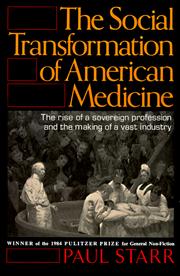
Starr's Pulitzer-winning history of how American doctors won professional sovereignty and how the hospital became the centre of medicine. Placed last in this stage because it explains the origin of nearly everything the two previous books complain about.
Failure, and the Computer
IntermediateExamine what happens when a hospital's systems break, and what the electronic record changed about the work itself.
▸ Study plan for this stage
Pace: 5-6 weeks. Five Days at Memorial is 584pp and is the longest book on the path — dense, heavily sourced investigative reconstruction, best taken at 25pp a day over three to four weeks. The Digital Doctor is 330pp and reads much faster. Fink's book reconstructs the deaths of patients at Memorial Medic
- Total systems failure: power, water, evacuation and communication all gone at once, and triage under those conditions
- Triage doctrine and how it inverts under scarcity — who is treated first when transport, not treatment, is the limiting resource
- Disaster planning, and the specific assumptions Memorial's plans made that turned out to be wrong
- The legal aftermath and the difference between what was established, what was alleged and what remains contested
- Computerised order entry and the electronic record: what they fixed and what they broke
- Alert fatigue, copy-forward notes, and the documented 39-fold paediatric overdose Wachter reconstructs in detail
- The clinician's attention moved from the patient to the screen, and the productivity and burnout consequences
- Why most of the earlier books on this path predate the daily texture of hospital work as it now is
- What failed first at Memorial, and how did each failure make the next one worse?
- How did triage decisions at Memorial differ from standard doctrine, and on what reasoning?
- What was established legally about the deaths at Memorial, and what was not?
- In Wachter's overdose case, how many separate systems had to fail for the error to reach the patient?
- Which of the problems Wachter identifies are inherent to computerisation and which are implementation failures?
- Build a timeline of Memorial's five days from Fink's account, marking each decision point and what was known at the time. Fink writes so that this is possible, and the reconstruction is the only way to judge the decisions fairly.
- Take Wachter's overdose case and diagram every point where the system could have caught the error. The count is the argument.
- Find your local hospital's published disaster plan and check it against the assumptions Fink shows failing at Memorial.
- Reread a scene of clinical work from Complications or The Shift and insert the electronic record as Wachter describes it. The change to the texture of the work is easier to feel than to state.
- Having finished the path, write a page on what a hospital is — clinical institution, business, workplace — and which of the five stages you would give someone who had time for only one.
Next up: This is the end of the path: the institution, the clinicians, the nurses, the money and the failures are all in place, and further reading is a matter of choosing which of the five to pursue.

Fink's reconstruction of Memorial Medical Center in New Orleans after Hurricane Katrina, and of the deaths and prosecutions that followed. The definitive account of a hospital as a system under total failure.

Wachter on what computerisation actually did to hospital medicine — the alert fatigue, the copy-forward note, the famous 39-fold overdose. Read it second because it explains the daily texture of hospital work as it is now, which most of the earlier books predate.
Discussion
Keep reading
Paths that share books, cover the same subject, or open a related topic.