Atul Gawande in Order: Which of His Four Books to Read First
Gawande has written four books, and most readers meet them backwards — through Being Mortal, which is the last, the most emotionally demanding, and the one that makes the least sense without the three that built up to it. This path reads them in publication order, which is also the order in which his argument develops from what goes wrong in an operating theatre to what medicine is for. It then opens out to the wider literature of doctors writing about their own trade, and finishes with the books about the system rather than the individual clinician.
Fallibility
BeginnerStart where he started — with the admission that surgery is a craft practised by fallible people, and that errors are structural rather than exceptional.
▸ Study plan for this stage
Pace: A week, or one long weekend if essays go down easily. Complications runs to under 300 pages in three loosely grouped parts, and every piece stands alone, so this is the one stage in the path you can genuinely read twenty minutes at a time. Slow down for the last third — the essays on diagnostic unce
- The learning curve as an ethical problem — surgical competence is acquired on real patients, and Gawande refuses to pretend any consent form makes that comfortable
- Error as structural rather than moral: bad outcomes come mostly from systems and ordinary human variability, not from bad doctors. This is the frame every later book in the path is built on
- The Morbidity and Mortality conference as medicine's confession ritual — what it corrects, and what Gawande says it reliably fails to catch
- The gap between what medicine collectively knows and what any individual clinician can actually execute on a given afternoon
- Diagnostic uncertainty as the substance of the job rather than an occasional lapse — the essays are structured to make you feel that instead of being told it
- Who decides: the question of autonomy versus clinical authority, raised through the patient who declines what the surgeon believes is necessary, and left deliberately unresolved
- Essay-as-argument — one case reported at length, the general claim placed at the end. Recognising the shape now makes The Checklist Manifesto's very different method legible later
- What is Gawande's answer to the learning-curve problem — does the book resolve it, or does it only refuse to look away from it?
- In the Morbidity and Mortality chapters, what does the ritual actually accomplish, and what does Gawande say it systematically misses?
- Which case in the book left you least confident that a better doctor would have got a better outcome, and what makes that case different from the others?
- How does Gawande frame decision authority between clinician and patient, and where does he admit discomfort with his own position?
- Why essays rather than one sustained argument? What can this form do that a thesis-driven book cannot?
- Pick three essays and write, for each, one sentence stating the general claim and one naming the case that carries it. You will see immediately which pieces are argument and which are reportage.
- Mark every passage where Gawande describes something he personally got wrong, and keep the list. It is the evidence base for the honesty everything later depends on, and you will want it when Do No Harm makes the same move far more brutally in stage four.
- Summarise the learning-curve argument in 200 words without using the word 'mistake'. The constraint forces you to state what he actually claims about how skill is acquired.
- Before starting the next stage, write down what you expect Gawande to propose as a fix for any of this. Keep it and check it against Better.
Next up: Complications establishes that error is normal and structural but says almost nothing about what to do with that fact, which is exactly the question Better opens with.

His first book, written during his surgical residency, and the right entry point because it establishes the honesty everything later depends on: how surgeons learn on patients, how often diagnoses are wrong, what uncertainty actually feels like from inside the gown. Essays rather than a single argument, so it is easy to read in pieces.
Performance
BeginnerFollow the turn from describing error to asking what measurably reduces it.
▸ Study plan for this stage
Pace: About two weeks. Better is essays in three parts — diligence, doing right, ingenuity — at around 270 pages; The Checklist Manifesto is shorter and moves fast. Read them in that order and close together. Checklist is an answer to a question Better asks and leaves hanging, and reading it on its own is
- Gawande's three-part scheme in Better — diligence, doing right, ingenuity — and the claim that most real improvement comes from the first, not the third
- Positive deviance: find the units already getting better outcomes under the same protocol and ask what they do differently. The cystic-fibrosis clinic chapter is the entire method in miniature
- The handwashing chapter as the model case — a known intervention, near-universal agreement, and persistent failure to execute. The gap between knowing and doing is the book's real subject
- The checklist argument proper: in complex work a short list of obvious-seeming items beats expertise alone, because expertise fails at the boring end rather than the hard end
- The aviation and construction analogies, and how much weight they can carry once moved into an operating theatre
- The evidence is genuinely contested. The original WHO surgical-checklist study reported striking reductions; a large 2014 Ontario population study found no significant improvement. Hold both rather than picking the one you prefer
- Measurement as the through-line of Better — much of the book is about what changes when outcomes are counted and published by name
- Why the uncomfortable chapters are there at all: execution by lethal injection, malpractice, what doctors are paid. Performance is not the same as virtue, and Gawande knows it
- What does positive deviance require in order to work at all, and what kind of problem is it useless against?
- The handwashing chapter and the checklist argument point at the same failure. State that failure in one sentence.
- Given that the trial evidence disagrees with itself, what would have to be true of a hospital for a checklist to change outcomes there — and what would make it pure box-ticking?
- Why does Gawande put the lethal-injection and malpractice chapters in a book about doing the job better? What would the book lose without them?
- Is The Checklist Manifesto a book about checklists, or a book about hierarchy and who is permitted to speak in a room? Argue it either way from the text.
- Build a checklist for something you already do competently and repeatedly, using Gawande's own constraints: under ten items, explicit pause points, only the things that get skipped when you are rushed. The instructive part is how hard it is to keep short.
- Write out in 200 words exactly what the better cystic-fibrosis clinic did differently, then mark which parts are transferable practice and which are one unusual person.
- Read the checklist chapters with the contested-evidence note beside you and list the claims that would still stand if the Ontario result turned out to be the right one. That list is the argument's durable core.
- Compare the first three pages of Complications with the first three of Better. Gawande's view of what a book is for changes in that gap, and you can date it precisely.
Next up: Better and Checklist are both about making medicine more effective, and Being Mortal is the book where Gawande turns around and asks what all that effectiveness is in service of.
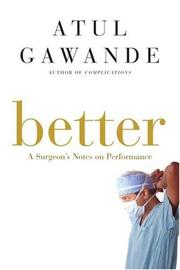
The bridge book: diligence, doing right, and ingenuity, illustrated with handwashing, battlefield medicine and cystic-fibrosis clinics that get different outcomes with the same protocol. It sets up the question the next book tries to answer.

The famous one outside medicine, arguing that a short checklist beats expertise alone in complex work, drawing on aviation and construction. Worth knowing the record: the WHO surgical checklist showed striking results in the original study, and a large 2014 Ontario population study found no significant improvement — the effect is contested and probably depends on whether the checklist changes team behaviour or is just ticked. Read it as a strong argument rather than a settled finding.
Mortality
IntermediateReach the book that reframes the whole project — from how medicine can do more to when it should stop.
▸ Study plan for this stage
Pace: Two to three weeks, and deliberately not faster. Around 280 pages, but it is the one book here that many readers cannot take in long sittings — the chapters on the conversations clinicians avoid, and on his own father's illness, land hard. If something comparable is happening in your own family whil
- The reframing that gives the whole path its shape: the first three books ask how medicine can do more, this one asks when doing more stops serving the person it is done to
- The history Gawande reconstructs — dying moved from home to hospital within about a generation, and that move changed who is in charge of it
- Assisted living as an idea, and what happened to it in practice: the original argument was about autonomy, and safety steadily reasserted itself
- Bill Thomas's nursing home with the dogs, cats and parakeets as a concrete demonstration of the book's claim that a life needs a reason and not only a duration
- The distance between what people say matters most to them and what a treatment plan is actually optimising for. Gawande's recurring question is what someone's minimum acceptable outcome is, and whether anyone ever asked
- Hospice presented as something other than giving up, including the finding that surprised Gawande himself about how it compared on survival
- The difficult conversation treated as a procedure with its own skill and its own failure modes, rather than as a matter of bedside temperament
- His father's illness as the book's method turned on the author, and why the argument is more persuasive for having cost him something
- What does Gawande say the modern hospital is optimised for, and where in the book does he show that optimisation working against the patient in front of it?
- Assisted living was designed as an argument about autonomy. What pulled it back toward the institution it was meant to replace?
- Why does Gawande present the hard conversation as a learnable procedure rather than as a personal quality? What follows from that framing?
- In the chapters on his father, what changes when the author is the family member rather than the clinician — does the book get better, or only harder?
- Having read Complications, Better and The Checklist Manifesto first, what does this book argue that none of those three could have?
- After the Bill Thomas chapter, write 200 words on what he actually changed and why the institution found it so hard to accept. Separate the animals from the argument.
- Keep a list of every conversation in the book that goes badly, and note in each case what the clinician was optimising for. That list is the closest thing the book has to a spine.
- Reread the last two pages of Complications immediately after finishing this. The distance between them is the entire path so far.
- Before starting the next stage, write down what you think separates a good death from a good ending to a book. When Breath Becomes Air is about to press on exactly that.
Next up: You have now read Gawande's full argument from the clinician's side of the bed, so the next stage hands the same material to a dying neurosurgeon, an unsparing British surgeon and a satirical novelist, to show how much of it was temperament.

Ageing, terminal illness, nursing homes and the conversations doctors avoid, including the death of his own father. It lands hardest here, at the end of the sequence, because the three earlier books have spent five hundred pages establishing what medicine can do — and this is the one that asks whether doing it is always the point. This is reflection on end-of-life care, not guidance for any particular decision.
The wider ward
IntermediateRead the other physician-writers Gawande is in conversation with, and see how differently the same material can be handled.
▸ Study plan for this stage
Pace: Three to four weeks for four books, only one of which is long. Read in the order listed: Kalanithi first, because When Breath Becomes Air is short and is the direct reply to Being Mortal; then Marsh; then Nuland; then Shem. The House of God is last on purpose — it is a satirical novel and it will re
- Kalanithi writes from both sides at once: he was a neurosurgeon roughly a year before he was a terminal patient, and neither position ever fully displaces the other in the prose
- Unfinished-ness as a property of the object — Kalanithi died before completing it and his wife's epilogue closes it. Read the seam rather than reading past it
- Marsh names the specific operations he ruined and the specific patients they belonged to, which is a far more exposed act than Gawande's generalised confession
- Nuland describes dying organ by organ — the biological reality Being Mortal mostly leaves out, and the book Gawande is answering
- The House of God as the genre's shadow: profane, cynical, fictional, and an honest record of what exhaustion does to compassion
- Temperament versus choice. The same material is handled calmly by Gawande, furiously by Marsh, coldly by Nuland and comically by Shem. This stage exists to make that a visible decision rather than an accident of personality
- The physician-writer's borrowed authority — each of these books draws credibility from the author's clinical standing, and each spends it on something different
- Kalanithi had read the literature on dying before he needed it. What can his book do that a lay patient's memoir could not, and what does that knowledge cost him as a narrator?
- Marsh names his own catastrophic errors and Gawande does not. What does each writer gain and lose by that choice?
- Nuland's account of dying is physiological and Gawande's is institutional. Which changed more about how you think about it, and why that one?
- The House of God is fiction and a polemic. Which of its claims survive being fiction, and which depend on it?
- After four books, what is the physician-memoir actually for — confession, argument, or a bid for the reader's trust?
- Take one clinical failure from Do No Harm and one from Complications, and rewrite each in the other author's voice, a paragraph apiece. This is an exercise about prose, and it is the fastest way to see the choice being made.
- Read Nuland on the failing heart, then reread Being Mortal's chapters on his father, and note every physiological fact Gawande quietly assumes you already know.
- Write 200 words identifying where When Breath Becomes Air stops being written by a doctor. There is a locatable point, and defending your choice is the work.
- Skim the last twenty pages of The House of God after the three memoirs, then say in two sentences what the satire is protecting.
Next up: Every book in this stage is about an individual clinician, so the last stage moves up a level to the consultation, the pricing and the machinery — which is where Gawande's own later work went.
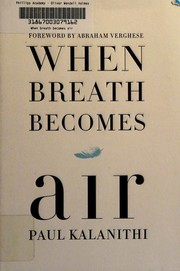
A neurosurgeon's memoir written while dying of lung cancer, unfinished at his death. It is the patient's side of Being Mortal written by someone who was on the other side a year earlier, and much shorter and more personal than anything Gawande wrote.
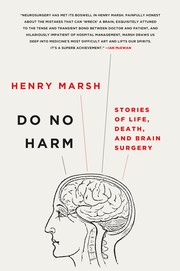
A British neurosurgeon on his own catastrophic mistakes, and considerably more unsparing than Complications — Marsh names the operations he ruined. Read the two together to see how much of Gawande's calm is temperament and how much is a choice about how to write.
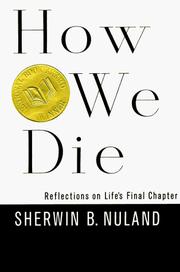
The 1994 National Book Award winner and the direct predecessor to Being Mortal, describing the biological reality of dying organ by organ. Colder and more clinical, and it is the book Gawande is answering.
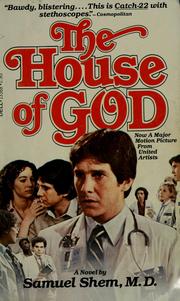
The 1978 satirical novel about a medical internship — profane, exhausted, and still the book residents pass to one another. Fiction and a polemic, not reportage, and included because it names the cynicism that Gawande's essays work against.
The system, not the surgeon
BeginnerMove from individual practice to the institutions and incentives that shape it, which is where Gawande's own later work went.
▸ Study plan for this stage
Pace: Roughly three weeks. Ofri first, because What Patients Say, What Doctors Hear is the closest to the ground; then Rosenthal; then Butler, which is the right closing book because it presses Being Mortal's argument further than Gawande does and from outside the profession. Read An American Sickness wit
- The consultation as a lossy channel: Ofri's subject is how much diagnostic information disappears between what a patient reports and what ends up recorded
- Interruption, time pressure and the structure of the clinical interview — the per-encounter counterpart to Gawande's institutional arguments
- Rosenthal's organising claim, that American healthcare prices are the product of specific historical decisions and incentives sector by sector rather than of cost. The book is explicitly a polemic about one country's system and makes no claim to neutrality; read it as the argument it is
- The device and billing chapters as the point where the clinical questions of the earlier stages collide with money
- Butler's case — a pacemaker that extended a life nobody had actually chosen to extend — and her argument that a decision can be made by default rather than by any person
- The gap between individual clinical virtue and system-level outcomes, which is why the path ends with two writers who are not practising doctors
- Outsider authority: Rosenthal and Butler stand outside the profession in different ways, and each has to earn the reader's trust by a different route than Gawande did
- Ofri argues the interview is where diagnosis is won or lost. What evidence does she bring, and what would it take to convince you otherwise?
- Rosenthal writes openly as an advocate. Which of her chapters would still stand if you rejected her policy conclusions entirely?
- Butler's family faced a decision that was never presented to them as a decision. How does she account for that, and what does she hold responsible?
- Butler and Rosenthal both go further than Gawande does. Where exactly does he stop short, and is that caution or evasion?
- Across all five stages, does the arc from one surgeon's fallibility to the system's incentives make Gawande's later health-systems work look like a change of subject or like a conclusion?
- Take one chapter of An American Sickness and split it into two columns: factual claims and policy conclusions. It is the most useful hour you can spend on a polemic, and it is a transferable habit.
- Write 200 words on what Ofri would say went wrong in one specific consultation described in Complications or Being Mortal. Name the book and the case.
- Reconstruct Butler's pacemaker sequence as a list of the moments at which somebody could have asked a different question. Do not settle who should have — the point is seeing how many moments there were.
- Close the path by rereading your notes from stage one, then writing one paragraph on what you now think Complications is about. The answer usually moves.
Next up: This is the end of the path, and the natural next step is Gawande's own New Yorker essays — The Cost Conundrum in particular, where the individual-clinician books and the systems books meet in about fifteen pages.

Ofri on the consultation itself — how much diagnostic information is lost in the gap between what patients report and what clinicians record. It is the granular counterpart to Gawande's institutional arguments.

A physician-turned-journalist on how American healthcare came to be priced the way it is. Explicitly a polemic about a single country's system and it makes no claim to neutrality — read it as the argument it is. It supplies the economic context that Gawande's New Yorker reporting, and later his health-systems work, kept running into.

A journalist's account of her parents' deaths and of how a pacemaker prolonged a life nobody had chosen to prolong. It presses the Being Mortal argument further than Gawande does and from outside the profession, which is why it closes the path.
Discussion
Keep reading
Paths that share books, cover the same subject, or open a related topic.