Alternative Medicine: The Best Books on What the Evidence Shows, in Order
This path is about how to assess evidence, not about choosing a therapy. Every book here is picked for what it does with trial data, and the ones written by advocates are labelled as such so you can read them against the sceptics rather than in place of them. Nothing on this list is medical advice, and no complementary therapy discussed here has been shown to substitute for treatment of a serious condition — if you are ill, this reading is a supplement to a clinician, not an alternative to one.
How to Read a Claim
BeginnerLearn what a fair test of a treatment looks like, why blinding and randomisation exist, and how trial results get distorted between the study and the headline.
▸ Study plan for this stage
Pace: Three to four weeks for about 805 pages. State the boundary of this reading before you start, because it governs how every book on the path should be used: nothing here is medical advice, and nothing here substitutes for treatment of a medical condition. These books are about how to evaluate a claim
- The fair test: randomisation, blinding, allocation concealment and an appropriate control, and what each one specifically prevents
- Regression to the mean, and why people tend to seek treatment when symptoms peak - the single most important reason ineffective treatments feel effective
- Publication bias and the file-drawer problem, and what a funnel plot shows
- Relative versus absolute risk, surrogate endpoints, and composite outcomes as the three commonest ways a real result is inflated in reporting
- Systematic review and meta-analysis as a method, and what makes one trustworthy
- The distinction between untested, tested-and-inconclusive, and tested-and-failed, which Singh and Ernst apply to acupuncture, homeopathy, chiropractic and herbal medicine in turn
- Ernst's position as the author: he spent decades running an academic research group on complementary medicine, so Trick or Treatment is an assessment from inside the field rather than a broadside from outside it
- The chain from study to press release to headline, and where distortion enters it
- What does blinding prevent that randomisation does not, and vice versa?
- Why does regression to the mean make almost any treatment look effective in an uncontrolled setting?
- How would you tell, from a published paper alone, whether its outcome measure was chosen before or after the data were seen?
- For each of Singh and Ernst's four therapies, what does the trial evidence actually show, and which of the three categories - untested, inconclusive, failed - does each fall into?
- Where in the chain from trial to headline does most distortion occur, and who introduces it?
- Take a health story from this week's news, find the underlying paper, and run Goldacre's own checks on it: what was the control, was it randomised and blinded, is the headline figure relative or absolute risk, was the outcome a real endpoint or a surrogate? Write the answers down. Repeat with three more stories over the stage.
- For one of the four therapies Singh and Ernst assess, look up the current Cochrane review on the same question and compare its conclusion with theirs. Note where the evidence has moved since 2008 and where it has not.
- Use the free full text of Testing Treatments to write a one-page definition of a fair test in your own words, then use that page to score the trial designs Singh and Ernst describe. Any trial that fails your own criteria should be one they also criticise; where you and they disagree, work out why.
- Find a published funnel plot for any treatment and read the asymmetry. Then find the corresponding claim as it was reported in a newspaper. The distance between the two is the subject of this stage.
Next up: The recurring finding across all four of Singh and Ernst's therapies is that weak trials come out positive and strong ones do not, which is a question about the placebo - the subject of the next stage.
The best general introduction to how health claims go wrong: regression to the mean, publication bias, surrogate outcomes, the difference between relative and absolute risk. Start here because it teaches the tools rather than adjudicating any particular therapy.

Written by clinicians and patient advocates specifically to explain why fair tests matter, and freely available in full online. Read it second as the methodological spine — it is short, dry and more careful than anything else on this list.
Singh and Ernst take four therapies — acupuncture, homeopathy, chiropractic and herbal medicine — and walk through the actual trial evidence for each. Ernst spent decades running a research group on complementary medicine, which makes this an assessment from inside the field rather than a broadside from outside it. Read it once you can evaluate the method they use.
The Placebo — the Mechanism Doing Most of the Work
BeginnerUnderstand what placebo effects actually are, what they can and cannot do, and why a treatment can be both experientially helpful and pharmacologically inert.
▸ Study plan for this stage
Pace: Three to four weeks for roughly 900 pages. Snake Oil Science first, about ten days - Bausell is a research methodologist and this is the most rigorous popular account of the placebo, so it does the explanatory work. Suggestible You (288 pp) follows in a week and is lighter reading, reported journali
- What a placebo response actually is - expectation, conditioning, natural history and reporting bias bundled together in an outcome measure
- Bausell's central mechanism: the reason weak trials favour complementary therapies and rigorous trials do not is that weak designs fail to control the components of placebo response
- The difference between subjective outcomes (pain, nausea, fatigue) where placebo responses are large, and objective outcomes (tumour size, mortality, lung function) where they are small or absent - which is the boundary Marchant and Bausell argue over
- Naloxone-reversible placebo analgesia as evidence that at least one placebo effect has an identifiable physiological pathway
- Nocebo effects, and why they are the ethical problem in informed consent rather than a curiosity
- Open-label placebo studies, and what they do and do not demonstrate
- How a treatment can be experientially helpful and pharmacologically inert at the same time, and why that is not a contradiction
- The distinction between a placebo response existing and a placebo being a therapy you can prescribe
- Break the placebo response into its components. Which of them does a randomised controlled trial actually control for, and which does it not?
- Why does Bausell predict that a therapy's trial results will get worse as the trials get better, and does the evidence in Trick or Treatment fit his prediction?
- Where exactly do Marchant and Bausell disagree - is it about the data, the outcome measures, or the conclusions to draw from them?
- What does the naloxone reversal experiment establish, and what does it not establish?
- If a placebo can reduce reported pain, on what grounds would you decline to prescribe one?
- Take Bausell's account of what makes a trial rigorous and score the specific acupuncture and homeopathy trials Singh and Ernst discuss against it. His prediction is that the score correlates inversely with the effect size; check whether it does on the trials you have.
- List every study Marchant relies on for a substantive claim in one chapter of Cure, then check whether Bausell discusses any of them. Where both authors use the same study and reach different conclusions, write out the reasoning of each in a paragraph. This is the single most useful exercise in the stage.
- Separate the claims in Cure into two columns: those resting on subjective outcomes and those resting on objective ones. The column that is nearly empty is the honest limit of the mind-body literature.
- Read Vance's account of the naloxone work in Suggestible You, then find the original paper and confirm what it measured. Reported science journalism compresses; identifying what got compressed is the skill.
Next up: With the general mechanism understood, the next stage watches the same method applied to specific therapies, specific industries and the institutions that regulate them.

A research methodologist's account, and the most rigorous popular treatment of why so many complementary therapies test positive in weak trials and negative in strong ones. Read it first here; it is the direct explanation for the pattern Trick or Treatment reports.

Reported science journalism on placebo, nocebo, hypnosis and false memory. Lighter than Bausell and useful for the physiological detail — the naloxone-reversible placebo analgesia work in particular.

The most sympathetic book on this list, and included deliberately. Marchant argues that mind-body effects are real, measurable and under-used, and she is more willing than Bausell to draw practical conclusions from them. Read her as an advocate whose evidence standards are nonetheless serious, and read her after Bausell so you can see exactly where the two diverge.
The Case Studies
IntermediateSee the general method applied to specific therapies and specific industries, and be able to distinguish a treatment that is unproven from one that has been tested and failed.
▸ Study plan for this stage
Pace: About four weeks for roughly 1,040 pages. Do You Believe in Magic? (322 pp) first, ten days - it covers vitamins and supplements, the category most people assume is harmless. Suckers (304 pp) follows in a week, for the institutional and commercial picture. Healing, Hype or Harm? (230 pp) is an edite
- The regulatory exemption for dietary supplements in the United States - the 1994 legislation that removed the requirement to demonstrate efficacy or safety before marketing - and its consequences
- Trials in which high-dose antioxidant supplementation performed worse than placebo, which is the specific evidence that 'it can't hurt' is false
- The two distinct harms: direct harm from a therapy, and indirect harm from substituting it for effective treatment
- The commercial and professional structure of the complementary medicine market that Shapiro describes - trade bodies, training institutions, regulatory status - which the trial-focused books ignore entirely
- Why the therapies must be assessed individually: Ernst's collection is explicit that some come off better than others, and treating them as one category is itself an error
- Regulation by professional recognition rather than by evidence, and what statutory registration of a practitioner does and does not certify
- Ernst's memoir as an account of institutional consequence - what happened to a research group that tested these therapies and published negative results - written by the person it happened to
- What does the American supplement regulatory regime actually require of a manufacturer before sale, and what does the label claim mean legally?
- Which antioxidant trials found harm, in what populations, and at what doses?
- Distinguish direct from indirect harm and give an example of each from Offit.
- From Shapiro, how is the British complementary medicine sector organised commercially and professionally, and what does statutory regulation of a practitioner group certify?
- Ernst's collection treats the therapies separately. Which come off best on the evidence, and which worst?
- A Scientist in Wonderland is a memoir by a participant. What claims in it would you want corroborated from another source, and which are simply his own experience?
- Pick three supplements sold in any pharmacy, read their packaging claims, and then find what regulatory standard those claims had to meet. Compare with what Offit says the trials show for the same compounds.
- Take the four therapies from Trick or Treatment and score each against the chapters in Healing, Hype or Harm?. Where Ernst's contributors are more or less favourable than Singh and Ernst were, identify what evidence changed the assessment.
- Using Shapiro, map the British institutional landscape for one therapy - who trains practitioners, who registers them, what the registration requires, who if anyone assesses efficacy. Then look up the current position and note what has changed since 2009.
- Read Ernst's memoir account of the dispute over his research group, then find one contemporaneous account from another party. Write a paragraph on which facts both sides agree on and which they do not. The exercise is about handling a participant's account, not about deciding who was right.
- List the cases in Offit where a patient was harmed by forgoing conventional treatment, and separate them from cases of direct toxicity. The two categories require different regulatory responses, and confusing them weakens the argument.
Next up: Everything so far has applied a standard to complementary therapies; the final stage applies exactly the same standard to conventional medicine, so the path cannot be mistaken for a defence of the pharmaceutical industry.

A paediatrician on the vitamin and supplement industry, its regulatory exemption in the United States, and the trials in which high-dose antioxidants performed worse than placebo. Read it first: it covers the category most people think is harmless.
A journalist's survey of the British complementary medicine market — its economics, its professional bodies and its regulatory position. Read it for the institutional picture the trial-focused books do not give.

Ernst as editor, with contributors examining specific claims and specific harms. Useful precisely because it does not treat all complementary therapies as equivalent; some come off better than others.

Ernst's memoir of running the world's first academic chair in complementary medicine and being pressured out of it. Read it last in this stage: it is the account of what happens institutionally when someone tests these therapies and publishes negative results.
The Same Standard, Applied to Conventional Medicine
IntermediateApply the evidence standards from stage one to mainstream medicine, and be able to explain why scepticism about complementary therapy does not amount to trust in the pharmaceutical industry.
▸ Study plan for this stage
Pace: About five weeks for roughly 1,325 pages. Bad Pharma (437 pp) first, two weeks - Goldacre turning the apparatus from stage one on drug companies. The Emperor's New Drugs (240 pp) follows in a week, and should be read as a live scientific dispute rather than a settled finding: Kirsch's meta-analysis
- Missing trials: unpublished negative results as the structural problem in drug evaluation, and why it is worse than any individual instance of misconduct
- The specific mechanisms Goldacre catalogues - ghostwriting, biased comparators, dosing designed to favour the sponsor's drug, seeding trials, and regulatory data that reviewers cannot see
- The Kirsch argument: drug-placebo differences on depression rating scales that are statistically significant but small relative to the clinical significance threshold, and the criticisms this has attracted
- Why a valid criticism of the evidence base for a drug is not the same as a claim that the drug does nothing, and how to hold that distinction
- Wootton's historical claim that medicine's authority long outran its efficacy, roughly until the 1860s, and what that implies about how professional confidence is calibrated
- The Brinkley case in Charlatan as the origin story of the American regulatory machinery that the rest of this path depends on
- The path's own conclusion: scepticism applied evenly is a method, not a position, and it does not resolve into trust in either camp
- What is publication bias in the pharmaceutical context, and what specific reforms does Goldacre propose to fix it? Which have since been implemented?
- State Kirsch's finding precisely, including what was measured and on what scale. Then state the two strongest published criticisms of it.
- Why does 'the average effect is small' not translate into advice for any individual patient?
- On what evidence does Wootton claim medicine did net harm before roughly 1865, and what would count against his argument?
- How did the Brinkley case change American medical regulation, and what does it suggest about how regulatory capacity gets built?
- Having read all four stages, what is your standard for accepting a treatment claim - and does it produce the same verdict for a herbal remedy and a licensed drug?
- Take one drug and check its trial record on a public registry: count registered trials, count published results, and identify the gap. This is Goldacre's central claim, and it is checkable in an afternoon.
- Read Kirsch's presentation of his meta-analysis, then find one published rebuttal and one published defence. Write half a page stating what all three agree on. The agreed ground is usually larger than the dispute, and locating it is the skill this book is here to teach.
- Apply the fair-test checklist you wrote in stage one to a recent trial of a licensed pharmaceutical rather than a complementary therapy. If the checklist produces a harsher verdict for the drug than for the alternative therapy, that is the finding the stage exists to produce.
- Take one pre-1865 treatment Wootton discusses - bloodletting, mercury, the standard fever regimen - and reconstruct why physicians believed it worked, using the placebo and regression-to-the-mean material from stage two. The same explanation applies to modern claims.
- Write a final page setting out how you would evaluate a treatment offered to you tomorrow, drawing on all four stages. Then note honestly which of these books you would need to reread to do it properly.
Next up: This closes the path: the reader now has one standard, applied evenly, and knows where the strongest arguments on each side actually sit.

Goldacre turning the same apparatus on drug companies: missing trials, ghostwriting, biased comparators, and the regulatory failures that allow them. This stage exists so the path cannot be read as a defence of conventional medicine, and this is the book that makes that argument.

Kirsch's meta-analysis of published and unpublished antidepressant trials, arguing that much of the measured benefit is placebo response. Contested, and widely criticised on its handling of clinical significance — read it as a live scientific dispute, not a settled finding, and note it concerns population averages rather than any individual's treatment.
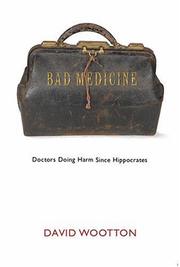
A historian's argument that medicine did more harm than good until roughly 1865, and that the profession's authority long outran its efficacy. It supplies the historical humility the rest of the path needs.
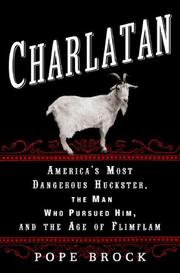
The story of John R. Brinkley, who transplanted goat glands into thousands of men in 1920s America, and of the doctor who pursued him. Read it last: it is entertaining, and it shows that the regulatory machinery this whole path relies on was itself built in response to fraud.
Discussion
Keep reading
Paths that share books, cover the same subject, or open a related topic.