Gabriel Garcia Marquez Reading Order: Where to Start
This curriculum guides you through García Márquez's work from his most accessible entry points to his densest and most celebrated fiction, finishing with his memoirs and later novels. Each stage builds your familiarity with his voice, his Magical Realist world, and the recurring themes of solitude, love, and Latin American history — so that by the time you reach One Hundred Years of Solitude, you are fully prepared to savour it.
First Steps: The Short Novel
BeginnerGet a feel for García Márquez's prose style, his blend of the everyday and the fantastical, and his Colombian coastal world — without being overwhelmed by length or complexity.
▸ Study plan for this stage
Pace: 4–5 weeks total. Week 1–2: Read "No One Writes to the Colonel and Other Short Stories" (~20–25 pages/day, reading the novella first, then 2–3 short stories per sitting). Week 3–4: Read "Chronicle of a Death Foretold" (~15–20 pages/day, slowly — this slim book rewards re-reading passages). Week 5: Re
- Magical realism as a mode: how García Márquez embeds the fantastical into everyday Colombian life without signaling surprise — notice how the Colonel's rooster and the townspeople's collective memory in Chronicle are treated as simply factual
- The weight of waiting and time: the Colonel has waited 15 years for his pension letter; Chronicle announces the murder on page one — both books are fundamentally about time suspended and fate deferred
- Collective vs. individual voice: Chronicle is narrated by a community ('everyone knew'), while the Colonel novella focuses on one man's stubborn interiority — compare how García Márquez uses 'we' versus close third-person
- Honor, machismo, and social codes: the Vicario brothers feel compelled to kill Santiago Nasar; the Colonel refuses to sell his rooster despite poverty — both protagonists are prisoners of a rigid social code
- The Colombian Caribbean coast as a character: the heat, the humidity, the perpetual October rains in the Colonel, the claustrophobic small-town geography in Chronicle — setting is never mere backdrop
- Circular and fragmented narrative structure: Chronicle begins with the ending and spirals inward; the Colonel's story loops through the same weekly ritual — García Márquez resists linear storytelling from the start
- Economy of prose: even in translation, notice the precise, unhurried sentences — García Márquez never over-explains the fantastical or the emotional
- Foreshadowing and dramatic irony: Chronicle makes dramatic irony its entire engine; the short stories use foreshadowing more subtly — identify both techniques as foundational García Márquez tools
- In 'No One Writes to the Colonel,' what does the rooster symbolize for the Colonel, and why does he refuse to sell it even as he and his wife face starvation? What does this reveal about dignity and hope in García Márquez's world?
- Chronicle of a Death Foretold tells you who is killed and who kills him on the very first page. How does García Márquez sustain tension throughout the novel despite this, and what does that technique say about fate versus free will?
- How does García Márquez portray the townspeople of Chronicle as collectively guilty? Who, if anyone, could have stopped Santiago Nasar's murder, and why didn't they?
- Choose one short story from the collection and identify a moment where something fantastical or improbable is described in a matter-of-fact tone. How does García Márquez's narrative voice make you accept it without question?
- Both books are set in small, insular communities on Colombia's Caribbean coast. How does the physical and social environment shape the characters' choices and fates in each book?
- Compare the endings of the two books. The Colonel ends on a single, famous word; Chronicle ends with a visceral, almost mythological death scene. What emotional and thematic note does each ending strike, and what do they have in common?
- **The Matter-of-Fact Fantastical Log:** As you read, keep a running list of every moment something strange, improbable, or magical is stated as plain fact. After finishing both books, write 2–3 sentences explaining what effect this technique has on you as a reader — this is your personal definition of magical realism.
- **Rewrite the Opening of Chronicle:** The novel's first paragraph is one of literature's most famous. After reading the whole book, rewrite that opening paragraph from the perspective of one of the Vicario brothers instead of the narrator. Notice what changes and what García Márquez's original choice accomplishes.
- **Map the Town:** Draw a rough sketch map of the unnamed town in Chronicle, placing key locations (the docks, the Nasar house, the Vicario house, the bishop's route, the milk shop). Use the text as your guide. This forces close reading and reveals how geography controls the murder's inevitability.
- **The Colonel's Week:** Create a simple timeline or chart of one week in the Colonel's life as depicted in the novella — what he does each day, what he hopes for, what he eats (or doesn't). Reflect in a short paragraph on how García Márquez uses repetitive routine to build both sympathy and quiet tragedy.
- **Sentence Imitation:** Pick one paragraph from either book that strikes you as particularly beautiful or strange. Copy it out by hand, then write your own paragraph imitating its structure and rhythm but set in a place you know personally. This trains your ear for García Márquez's prose music.
- **Thematic Bridge Journal:** After finishing both books, write a one-page reflection answering: 'What does García Márquez seem to believe about fate, community, and the individual?' Use at least one specific scene from each book as evidence. Save this journal entry — you will revisit these themes at greater scale in the next stage.
Next up: By mastering García Márquez's core techniques — magical realism, circular structure, collective voice, and the Caribbean coastal world — in these compact, accessible works, the reader is now equipped to encounter those same tools deployed at full, labyrinthine scale in his longer masterpieces.
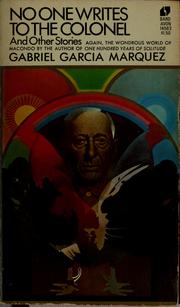
This slim, perfectly controlled novella is the ideal entry point: spare, darkly comic, and deeply human. It introduces his political world and his gift for making the mundane feel mythic, without the sprawling complexity of his longer works.

Another short novel, structured as a detective story told in reverse — gripping and easy to read quickly. It deepens your feel for his narrative voice, his obsession with fate and community, and his Caribbean village world before you enter Macondo.
The Heart of the Canon: Macondo
BeginnerRead the masterpiece with full preparation, understanding the Buendía family saga, the cyclical nature of time, and the full flowering of Magical Realism.
▸ Study plan for this stage
Pace: 6–8 weeks, ~15–20 pages/day — One Hundred Years of Solitude rewards slow, deliberate reading; plan for re-reading confusing passages and keeping a family-tree journal alongside the text
- The Buendía Family Saga: Track all seven generations of the Buendía family, noting how names (José Arcadio, Aureliano) repeat and how personality archetypes recur across generations
- Cyclical vs. Linear Time: Recognize how Rabassa's translation renders García Márquez's circular narrative structure, where the past, present, and future bleed into one another and history seems doomed to repeat
- Magical Realism in Full Bloom: Identify moments where the miraculous is presented with deadpan matter-of-factness — levitation, ghosts, yellow butterflies, a rain of yellow flowers — and analyze how this technique normalizes the supernatural
- Solitude as a Thematic Pillar: Examine how each Buendía character experiences a unique, self-imposed isolation and how solitude functions as both a curse and a defining trait of the family line
- Macondo as Mythic Space: Understand Macondo not just as a fictional Colombian village but as a stand-in for Latin America itself — its founding, its golden age, its exploitation by foreign banana companies, and its apocalyptic end
- The Role of Memory and Forgetting: Study the insomnia plague and other episodes of collective amnesia as metaphors for how communities and nations lose their historical identity
- Political and Colonial Allegory: Connect Colonel Aureliano Buendía's thirty-two failed uprisings and the United Fruit Company massacre to real Colombian and Latin American history
- Prophecy and Fate (Melquíades's Manuscripts): Understand how the framing device of the gypsy's parchments — decoded only at the novel's final moment — reinforces the theme that the family's fate was always already written
- Can you sketch the Buendía family tree from memory, identifying at least four generations and explaining how the repeated names signal repeated destinies?
- How does Gregory Rabassa's English translation preserve García Márquez's signature narrative voice — the tone of a calm, omniscient chronicler reporting miracles as ordinary news — and can you cite two or three specific passages that exemplify this?
- In what ways does Macondo's arc — from utopian founding to banana-boom exploitation to apocalyptic erasure — function as an allegory for Latin American colonial and post-colonial history?
- How does the novel use cyclical time rather than linear time, and what is the effect of the reader learning on the final page that everything was prophesied from the beginning?
- Choose one Buendía character and trace how the theme of solitude shapes every major decision they make throughout the novel.
- What is the significance of the insomnia plague and the labeling of objects, and how does this episode connect to the novel's broader meditation on memory, language, and identity?
- Build a Living Family Tree: From page one, maintain a hand-drawn or digital Buendía family tree. Update it with each new character, noting their defining trait, their form of solitude, and any supernatural event associated with them. Revisit and correct it as the novel loops back on itself.
- Magical vs. Mundane Log: Keep a two-column reading journal. In the left column, record every supernatural or miraculous event. In the right column, note the exact narrative tone used to describe it. At the end, write a one-page reflection on how García Márquez (and Rabassa's translation) makes the magical feel mundane.
- Timeline Mapping Exercise: Create a chronological timeline of Macondo's history alongside a real timeline of Colombian/Latin American history (banana boom, civil wars, U.S. corporate intervention). Draw connecting lines between fictional events and their real-world parallels to ground the allegory.
- Solitude Character Study: Choose one character (e.g., Úrsula, Colonel Aureliano Buendía, or Rebeca) and write a 400–600 word character portrait focused exclusively on how solitude defines them — their relationships, their obsessions, and their ultimate fate.
- First-and-Last-Page Close Reading: Read the novel's opening sentence and its final paragraph side by side. Write a short essay (300–500 words) analyzing how the ending reframes everything that came before it, paying special attention to Melquíades's manuscripts and the concept of a fate that was always already written.
- Translate the Voice: Select one magical-realist passage of roughly half a page. Rewrite it in a flat, journalistic style, stripping out all wonder. Then rewrite it again in an overtly fantastical, genre-horror style. Compare all three versions and write a paragraph explaining what García Márquez's middle register achieves that the other two cannot.
Next up: Mastering the Buendía saga and the full grammar of Magical Realism in One Hundred Years of Solitude gives the reader the thematic and stylistic fluency needed to explore García Márquez's other major works — shorter novels, story collections, and journalism — where the same techniques operate in tighter, more varied forms.

Now that you know his voice and world, this is the right moment for the great novel. The two earlier novellas have tuned your ear to his rhythms and themes, making the Buendía family's century-long saga feel navigable and overwhelming in all the right ways.
Deeper Into the World: Stories and a Dark Novel
IntermediateExplore the full range of García Márquez's imagination through his short stories and his most politically savage novel, seeing how his themes operate at different scales.
▸ Study plan for this stage
Pace: 10–13 weeks total: ~2–3 weeks for "Leaf Storm and Other Stories" (~20–25 pages/day), ~4–5 weeks for "Collected Stories" (~15–20 pages/day, pausing to re-read favorites), and ~4–5 weeks for "The Autumn of the Patriarch" (~10–15 pages/day, given its dense, demanding prose).
- Magical realism at varying scales: how García Márquez deploys the supernatural differently in a compact short story versus a sprawling novel
- The founding myth and collective memory: 'Leaf Storm' introduces Macondo's origin and the idea that a community's identity is built on contested, layered remembrance
- The solitary narrator and unreliable witness: multiple first-person voices in 'Leaf Storm' and the stories reveal how subjectivity distorts shared history
- Political violence and the anatomy of dictatorship: 'The Autumn of the Patriarch' dissects absolute power through a deliberately suffocating, run-on prose style that formally mirrors the dictator's all-consuming presence
- The single-sentence, stream-of-consciousness paragraph: García Márquez's most radical formal experiment in 'The Autumn of the Patriarch' — understanding how punctuation, rhythm, and shifting pronouns carry meaning
- Recurring motifs across scales: solitude, decay, the Caribbean landscape, the banana company's shadow, and cyclical time appear in the stories and explode into the novel
- The short story as laboratory: the 'Collected Stories' show García Márquez testing voices, tones, and moral registers — from Kafkaesque absurdism to tender realism — before committing them to longer forms
- Satire and moral outrage: 'The Autumn of the Patriarch' is García Márquez's most overtly political book — tracing how satire, grotesque imagery, and black humor become instruments of condemnation
- In 'Leaf Storm,' three narrators recount the same event from different generational perspectives. How do their accounts diverge, and what does that divergence say about how Macondo constructs its own history?
- Choose two stories from the 'Collected Stories' that seem stylistically opposite (e.g., one absurdist, one naturalistic). What underlying thematic preoccupations do they nonetheless share, and what does that reveal about García Márquez's core concerns?
- How does the prose style of 'The Autumn of the Patriarch' — its near-absence of paragraph breaks, its shifting 'we' narrator, its run-on sentences — function as a political statement about life under dictatorship?
- The Patriarch lives to an almost mythological old age and yet is utterly alone. How does 'The Autumn of the Patriarch' reframe the theme of solitude that appears more quietly in the short stories?
- García Márquez draws on real Latin American dictators for 'The Autumn of the Patriarch' but keeps the Patriarch nameless and the country unspecified. What is gained — and what is risked — by that universalizing choice?
- Across all three books in this stage, how does García Márquez use physical decay — rotting bodies, crumbling houses, decomposing power — as a moral and political metaphor?
- Narrative voice map for 'Leaf Storm': draw a simple diagram showing the three narrators (the grandfather, the mother, the boy), note what each one knows and withholds, and write a one-paragraph summary of the event from a hypothetical fourth, omniscient narrator — then reflect on what is lost.
- Short story comparison matrix: after finishing 'Collected Stories,' build a table with columns for Title, Narrative Mode, Supernatural Element (if any), Central Emotion, and Political Subtext. Fill it in for at least eight stories. Look for clusters and outliers — these patterns reveal García Márquez's range.
- Sentence dissection in 'The Autumn of the Patriarch': select any single page-long sentence, copy it out by hand, and mark every shift in subject, tense, or narrative voice with a different color. Write a short note on how the sentence's structure mirrors the content it describes.
- Dictator research dossier: identify two or three real Latin American dictators (e.g., Juan Vicente Gómez, Marcos Pérez Jiménez, Rafael Trujillo) whose traits scholars link to the Patriarch. Write a one-page comparison noting which details García Márquez kept, which he exaggerated, and which he invented — and why those choices sharpen the satire.
- Motif tracking journal: keep a running log as you read all three books, recording every appearance of a specific motif you choose (e.g., the smell of decay, the sea, waiting, birds). At the end of the stage, write a 300-word reflection on how the motif evolves from the intimate scale of a short story to the totalizing scale of the novel.
- Imitation exercise: write a one-page scene in the style of 'The Autumn of the Patriarch' — one unbroken paragraph, shifting pronouns, no dialogue tags — depicting a mundane modern event (a city council meeting, a corporate boardroom). Then rewrite the same scene as a García Márquez short story with conventional paragraphing. Reflect on what each form emphasizes.
Next up: By mastering García Márquez's short forms and his most formally extreme novel, the reader has now internalized the full toolkit — magical realism, cyclical time, political allegory, and radical prose style — that makes returning to the expansive, novelistic world of Macondo in "One Hundred Years of Solitude" and "Love in the Time of Cholera" a richer, more analytically grounded experience.

His first novella, written before One Hundred Years of Solitude — reading it now reveals the origins of Macondo and shows how his style evolved. It rewards the reader who already knows the mature work.

This volume gathers his essential short fiction, including 'A Very Old Man with Enormous Wings' and 'The Handsomest Drowned Man in the World.' Stories are the laboratory where he perfected Magical Realism, and reading them now enriches everything else.

His most formally daring novel — long, breathless sentences, a nameless dictator, a continent's worth of corruption. It is demanding but revelatory after One Hundred Years of Solitude, showing the full ambition of his political imagination.
Later Work: Love, Age, and Memory
IntermediateEncounter the warmer, more reflective García Márquez of his later career, and understand how love and time obsessed him across his whole life's work.
▸ Study plan for this stage
Pace: 6–7 weeks total: Weeks 1–4 for "Love in the Time of Cholera" (~25–30 pages/day, given its ~350-page length); Weeks 5–6 for "Of Love and Other Demons" (~20–25 pages/day, given its ~150-page length); Week 7 reserved for reflection, comparative re-reading of key passages, and completing exercises.
- Love as obsession vs. love as devotion: In 'Love in the Time of Cholera,' Florentino Ariza's 51-year wait for Fermina Daza forces the reader to interrogate whether extreme romantic persistence is noble or pathological — a central ambiguity García Márquez never resolves.
- Time and aging as literary subjects: Both books treat the passage of time not as background but as an active force. In 'Love in the Time of Cholera,' old age becomes the unexpected setting for romantic fulfillment; in 'Of Love and Other Demons,' a child's brief life is stretched into legend across c
- Memory, myth, and the unreliable past: 'Of Love and Other Demons' opens with a journalist discovering a centuries-old crypt, framing the entire story as recovered memory. García Márquez interrogates how love stories are preserved, distorted, and mythologized over time.
- The body as a site of love and decay: Both novels are deeply physical. 'Love in the Time of Cholera' maps desire onto aging, ill, and dying bodies; 'Of Love and Other Demons' literalizes love's consuming power through Sierva María's alleged demonic possession and her miraculous hair.
- Institutional power vs. individual desire: In 'Of Love and Other Demons,' the Church and the Inquisition crush the love between Father Cayetano and Sierva María. In 'Love in the Time of Cholera,' social class and respectability repeatedly obstruct Florentino and Fermina's union.
- Magical realism in a quieter register: Compared to 'One Hundred Years of Solitude,' the magical elements here are subtler and more psychologically grounded — Sierva María's hair, the cholera flag as romantic alibi — inviting readers to see how García Márquez matured his technique.
- The Caribbean as moral and geographic landscape: Both novels are set in García Márquez's beloved Caribbean coast of Colombia. The heat, the river, the colonial architecture, and the social hierarchies of that world are not mere backdrop but shape every character's choices and constraints.
- Love and death as inseparable: Cholera — a disease of the body — becomes a metaphor for love's feverish, fatal quality in the first novel. In 'Of Love and Other Demons,' love literally leads to death. García Márquez consistently refuses to sentimentalize romance.
- In 'Love in the Time of Cholera,' does García Márquez ultimately endorse Florentino Ariza's lifelong obsession, condemn it, or hold both possibilities open simultaneously? Use specific scenes — such as his relationships with other women during the 51-year wait — to support your answer.
- How does García Márquez use the cholera epidemic as more than a historical backdrop? In what ways does the disease mirror, enable, or comment on the nature of romantic love in the novel?
- In 'Of Love and Other Demons,' the love between Father Cayetano Delaura and Sierva María is never physically consummated. How does García Márquez make this restrained relationship feel as intense — or more intense — than the sprawling romantic history in 'Love in the Time of Cholera'?
- Both novels feature female protagonists (Fermina Daza, Sierva María) who are, to varying degrees, objects of male desire. How much agency does each woman possess within her story, and how does García Márquez signal his awareness of that imbalance?
- The ending of 'Love in the Time of Cholera' — the lovers sailing indefinitely under a cholera flag — has been called both triumphant and deeply ironic. Which reading do you find more persuasive, and what textual evidence supports it?
- How does the framing device of 'Of Love and Other Demons' (a modern journalist uncovering an old crypt) shape the reader's relationship to the love story inside? What does García Márquez suggest about how love is remembered and transmitted across time?
- **The 51-Year Timeline:** Create a visual timeline of Florentino Ariza's life in 'Love in the Time of Cholera,' marking his key relationships with other women alongside his milestones of waiting for Fermina. Then write a one-paragraph verdict: does the timeline make him more sympathetic or more troubling to you, and why?
- **Close-Reading the Body:** Select one passage from each novel that describes a character's physical body in detail (e.g., Fermina and Florentino's aged bodies on the boat; Sierva María's hair or her physical transformation during exorcism). Write a 300-word comparative analysis of how García Márquez uses the body to carry emotional and thematic meaning.
- **Rewrite the Ending:** Write an alternative final scene (1–2 pages) for either novel — one that resolves the central love story differently. Then write a short reflection explaining what your rewrite reveals about what García Márquez's actual ending is doing that a 'tidier' conclusion could not.
- **The Institutional Antagonist:** In 'Of Love and Other Demons,' map every scene in which the Church or Inquisition intervenes in the relationship between Cayetano and Sierva María. Write a brief essay arguing whether the Church functions primarily as a villain, as a tragic product of its era, or as something more ambiguous in García Márquez's telling.
- **Comparative Love Letter:** Write two short love letters (half a page each) — one in the voice of Florentino Ariza to Fermina Daza, and one in the voice of Father Cayetano to Sierva María. Focus on capturing each character's distinct emotional register, vocabulary, and the constraints of his situation. Reflect on what the exercise reveals about how differently García Márquez constructs male desir
- **Magical or Real? A Tracking Log:** As you read 'Of Love and Other Demons,' keep a running log of every event that could be interpreted as either supernatural or as having a rational explanation. At the end, tally the list and write a paragraph arguing for the interpretation — magical, realistic, or deliberately ambiguous — that you find most consistent with García Márquez's apparent intent.
Next up: By deeply inhabiting García Márquez's later, more intimate preoccupations with love, time, and memory, the reader is now equipped to step back and examine his life and craft as a whole — making a biographical or critical study of his complete arc the natural and rewarding next stage.
His most beloved later novel — a sweeping, sensuous meditation on love, obsession, and aging. It is more accessible than The Autumn of the Patriarch and shows a new emotional register in his writing.

A late, compact gem set in colonial Cartagena — gothic, erotic, and deeply sad. It distills his mature themes into a tight narrative and makes a perfect companion to Love in the Time of Cholera.
The Man Behind the Work: Memoir
ExpertUnderstand the life, the influences, and the creative process that produced everything you have read — completing the portrait of the writer and his world.
▸ Study plan for this stage
Pace: 4–5 weeks, ~25–30 pages/day — Living to Tell the Tale is dense with memory, regional detail, and literary self-reflection, so a slower, annotative pace is strongly recommended over rushing through it.
- Autobiographical memory as literary construction: García Márquez openly blurs the line between lived experience and narrative invention, treating his own life story with the same mythologizing impulse found in his fiction — understanding this is central to the memoir.
- The Caribbean coast of Colombia as a formative world: Aracataca, Barranquilla, Cartagena, and Bogotá each represent distinct cultural and political atmospheres that shaped his sensibility; mapping these places against his biography is essential.
- The role of oral storytelling and family mythology: His maternal grandparents — especially his grandmother's matter-of-fact delivery of the fantastical — are identified as the direct source of his narrative voice and the seed of magical realism.
- Journalism as literary apprenticeship: The memoir traces how writing for Colombian newspapers trained his eye for concrete detail, deadline discipline, and the compression of complex realities into vivid, accessible prose.
- Political violence and La Violencia: The memoir situates his youth within the catastrophic period of Colombian civil conflict, showing how collective trauma and political instability became raw material for his fiction rather than mere backdrop.
- The Barranquilla Group and intellectual community: His friendships with fellow writers, critics, and voracious readers in Barranquilla provided the literary education — European modernism, Faulkner, Woolf, Kafka — that formal schooling never fully gave him.
- Poverty, ambition, and the writer's vocation: García Márquez documents the material hardship of choosing to write, framing the decision to be a writer as an almost irrational act of faith that defined everything that followed.
- The memoir as an incomplete, ongoing story: Living to Tell the Tale covers only through his early twenties and is the first of a planned trilogy — recognizing its deliberately open-ended structure helps the reader understand what it is and is not meant to resolve.
- How does García Márquez's account of his grandmother's storytelling style directly illuminate the narrative technique readers will recognize from his novels and stories — and can you cite specific passages from the memoir that make this connection explicit?
- What does the memoir reveal about the relationship between journalism and literary fiction in his development, and how did the discipline of the newsroom shape the prose style evident throughout his career?
- How does Living to Tell the Tale treat the tension between factual autobiography and literary invention — does García Márquez present his memoir as strictly truthful, and what does his own framing tell us about his philosophy of memory and narrative?
- In what ways does the political and social landscape of mid-twentieth-century Colombia — particularly La Violencia — appear in the memoir, and how does García Márquez connect those historical forces to his decision to become a writer?
- Who are the key figures of the Barranquilla Group, what did they introduce him to, and why does García Márquez credit informal intellectual community over formal university education as his true literary formation?
- What portrait of family — particularly his relationship with his grandparents, his parents, and the extended Márquez-Iguarán clan — emerges from the memoir, and how does it recontextualize the family sagas at the heart of his fiction?
- Annotated place map: As you read, create a running map (hand-drawn or digital) of every location mentioned — Aracataca, Barranquilla, Bogotá, Cartagena, Sucre — and note what formative event or influence García Márquez associates with each. At the end, write a one-paragraph reflection on how geography shaped his imagination.
- Voice comparison journal: Select three passages from Living to Tell the Tale where García Márquez describes a childhood memory or a family figure. Then pull a passage from one of his works of fiction you have read earlier in this curriculum that echoes the same character type, setting, or emotional register. Write a short comparative note (200–300 words) for each pair explaining the bridge between
- Influence inventory: The memoir names many writers, books, and newspapers that shaped him. Compile a master list of every literary influence he mentions, then choose two — one Latin American, one international — and read a short story or essay by each. Reflect in writing on why García Márquez might have found them transformative.
- Journalism exercise: García Márquez credits newspaper writing with teaching him precision and vividness. Take any single scene from the memoir (a street, a conversation, a journey) and rewrite it as a 250-word newspaper dispatch in the style of the period — factual, concrete, present-tense — then compare your version to his to feel the difference between journalistic and literary prose.
- Grandmother monologue: Based solely on details in the memoir, write a 300–400 word interior monologue in the voice of Tranquilina Iguarán Cotes (his grandmother) recounting one supernatural or uncanny event she witnessed. Focus on replicating the tone García Márquez describes: the extraordinary delivered with absolute calm and conviction.
- Synthesis essay — 'The Writer's Origin Story': After finishing the memoir, write a 600–800 word essay answering the question: 'What combination of place, people, politics, and reading made Gabriel García Márquez possible?' Draw exclusively on Living to Tell the Tale, using direct quotations and specific episodes to support every claim.
Next up: By grounding every stylistic and thematic choice in the life, relationships, and historical moment that produced them, Living to Tell the Tale transforms the reader from an admirer of García Márquez's work into an informed interpreter of it — fully equipped to engage with scholarly criticism, comparative literature, or deeper independent research into his legacy.

His autobiography covers his childhood, his journalism years, and the making of his early fiction. Reading it last transforms everything — you see Macondo in his real grandmother's house, and the colonel in his own father. The perfect closing of the circle.
Discussion
Keep reading
Paths that share books, cover the same subject, or open a related topic.