Latin American literature: the best books to read in order
This curriculum guides you from the most accessible entry points in Latin American literature through its iconic masterworks and into its challenging contemporary frontier. Each stage builds the cultural, stylistic, and thematic vocabulary needed for the next — starting with short, luminous fiction, moving through the great novels of magical realism and the Boom, and arriving at the raw, ambitious post-Boom writers like Bolaño.
First Steps: Short Fiction & Fables
BeginnerGet comfortable with the Latin American literary imagination — its dreamlike logic, political undercurrents, and lyrical prose — through short, self-contained stories before tackling novels.
▸ Study plan for this stage
Pace: 4–5 weeks, ~20–25 pages/day. "Ficciones" (first 2–3 weeks, ~80 pages), then "The Aleph and other stories" (remaining 2 weeks, ~100 pages). Allow 2–3 days between books for reflection.
- Borges's use of labyrinthine structures and infinite recursion as metaphors for knowledge, time, and identity
- The blurring of reality and fiction—how stories question what is 'real' and what is imagined
- Political and philosophical undercurrents embedded in seemingly abstract or fantastical narratives
- Lyrical, precise prose that conveys profound ideas through concise, elegant language
- The dreamlike logic of magical realism: accepting the impossible as mundane within the story's world
- Intertextuality and literary allusion as a way to build meaning across texts and cultures
- The role of the narrator and unreliable perspective in shaping how we interpret events
- How does Borges use the concept of infinity and infinite recursion in stories like 'The Library of Babel' and 'The Aleph'? What philosophical questions do these structures raise?
- In 'Ficciones,' how does Borges blur the line between reality and fiction? Give examples of stories that question what is 'real.'
- What political or social commentary can you identify in stories like 'The Immortal' or 'Pierre Menard, Author of the Quixote'? How does Borges embed critique in abstract narratives?
- How does Borges's prose style contribute to the dreamlike quality of his stories? Identify specific passages where language creates a sense of wonder or disorientation.
- Compare the narrative perspective in two stories from the two books. How does the narrator's reliability (or unreliability) affect your understanding of the story?
- What role do literary allusions and references to real or invented texts play in Borges's storytelling? How do they deepen meaning?
- Create a visual map or diagram of the structure of 'The Library of Babel' or 'The Aleph.' How does the infinite or recursive structure mirror the story's themes?
- Write a 1–2 page response comparing how 'Pierre Menard, Author of the Quixote' and 'The Immortal' (from 'The Aleph') both explore the nature of authorship, identity, and time.
- Select one story from each book and annotate it for: (a) moments where reality becomes uncertain, (b) philosophical questions raised, (c) lyrical or striking prose passages. Discuss what you found.
- Rewrite the ending of one Borges story in a different narrative perspective (e.g., from a minor character's point of view). How does this change the meaning?
- Create a 'Borgesian' short story (500–750 words) that mimics his style: use a labyrinthine structure, blur reality and fiction, include literary allusions, and embed a philosophical idea. Reflect on how his techniques shaped your writing.
- Research one historical or literary reference Borges uses in a story (e.g., the Quixote in 'Pierre Menard,' or Dante in 'The Aleph'). Write a brief note on how understanding the reference deepens the story's meaning.
Next up: This stage establishes the foundational techniques and philosophical concerns of Latin American literature—infinite recursion, magical realism, embedded politics, and lyrical precision—preparing you to recognize and engage with these elements in longer, more complex narratives and to understand how Borges's influence shaped the broader tradition.
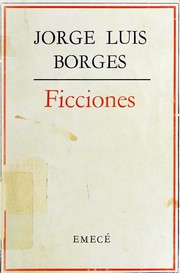
The essential starting point: Borges's short stories introduce the labyrinthine, philosophical style that influenced virtually every writer on this list. Short chapters make it approachable while immediately immersing you in the region's literary DNA.
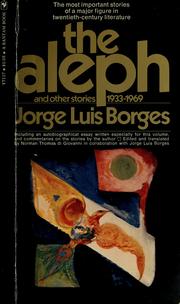
A natural companion to Ficciones, this collection deepens your feel for Borges's themes of infinity, identity, and myth — building the intuition needed to appreciate how later writers respond to and depart from him.
The Magical Realist Canon
BeginnerRead the two novels that defined magical realism for the world, understanding how the fantastical and the political intertwine in Latin American narrative.
▸ Study plan for this stage
Pace: 4–5 weeks, ~40–50 pages/day. Week 1–2: *Pedro Páramo* (125 pages); Week 2–3: *One Hundred Years of Solitude* (417 pages); Week 4–5: Review, reflection, and synthesis exercises.
- Magical realism as a literary mode: the seamless integration of the fantastical into a realistic narrative framework without explanation or apology
- The fragmented, non-linear narrative structure in *Pedro Páramo* and how it mirrors the disorientation of memory and death
- Cyclical time and repetition in *One Hundred Years of Solitude*: how the Buendía family's repeated patterns suggest fate, history, and the impossibility of escape
- The political subtext of magical realism: how both novels encode Latin American violence, colonialism, and social upheaval through supernatural and mythic elements
- The role of solitude as a thematic and structural principle in both works—isolation as both personal and collective condition
- Intertextuality and oral tradition: how both novels draw on myth, folklore, and storytelling to challenge Western literary conventions
- The function of the fantastic as a tool for representing historical trauma and psychological states that realism alone cannot capture
- How does Rulfo's fragmented narrative structure in *Pedro Páramo* create meaning through disorientation, and what does this technique suggest about memory and death?
- What is the relationship between the magical and the political in *Pedro Páramo*? How do supernatural elements encode the violence and oppression of Mexican rural society?
- In *One Hundred Years of Solitude*, why does the Buendía family repeat the same names, make the same mistakes, and experience the same fates across generations? What does this cyclical structure suggest about history and destiny?
- How does García Márquez use magical realism in *One Hundred Years of Solitude* to represent the isolation and solitude of Macondo and its inhabitants?
- What are the key differences in how Rulfo and García Márquez deploy magical realism, and what do these differences reveal about their respective visions of Latin American reality?
- How do both novels challenge or subvert the conventions of Western realist fiction, and why might magical realism be a particularly apt form for Latin American literature?
- Create a timeline or map of *Pedro Páramo*: track which scenes occur in the present (Juan Preciado's arrival) versus the past (the town's history), and note how Rulfo deliberately scrambles chronology. Reflect on how this mirrors the protagonist's confusion.
- Annotate 3–4 key passages from *Pedro Páramo* where the magical or supernatural appears (e.g., the whispers of the dead, the ghost-like quality of the town). For each, write a sentence explaining what historical or psychological reality it might represent.
- Create a family tree of the Buendías across all seven generations in *One Hundred Years of Solitude*. Highlight the repeated names and patterns (e.g., multiple Aurelianos, multiple José Arcadios). Write a brief reflection on what this repetition suggests about the novel's vision of time and fate.
- Select one magical event from *One Hundred Years of Solitude* (e.g., Remedios the Beauty ascending to heaven, the insomnia plague, the rain lasting four years) and write a 1–2 page analysis of how this event functions both literally in the narrative and symbolically as a commentary on Colombian or Latin American history.
- Comparative close reading: choose a scene from *Pedro Páramo* and a scene from *One Hundred Years of Solitude* that both blend the magical and the mundane. Write a 2–3 page essay analyzing how each author uses magical realism differently and what effect each technique produces.
- Write a short piece (500–750 words) in the magical realist mode yourself, set in a recognizable real location, where you blend the fantastical seamlessly into everyday life without explanation. Reflect afterward on the challenges and possibilities of the form.
Next up: This stage establishes magical realism as a foundational Latin American literary mode and equips you to recognize how the fantastical encodes political and historical meaning—skills essential for engaging with the broader canon of Latin American literature and understanding how subsequent writers build on, challenge, or transform these techniques.
This slim, haunting Mexican novel is the direct ancestor of One Hundred Years of Solitude — García Márquez called it the book that taught him how to write. Reading it first makes the debt and the innovation of the next book crystal clear.

The defining novel of Latin American literature and the pinnacle of magical realism. With Borges and Rulfo already in hand, you now have the full context to appreciate its scope, humor, and tragedy.
The Boom & Its Voices
IntermediateEncounter the full range of the Latin American Boom — political allegory, experimental structure, and the continent's turbulent 20th-century history — through three landmark novels.
▸ Study plan for this stage
Pace: 6–7 weeks, ~40–50 pages/day (accounting for Cortázar's density and García Márquez's narrative complexity)
- Cortázar's metafictional playfulness: how 'Hopscotch' breaks linear narrative and invites reader co-creation through its table of instructions and fragmented chapters
- Experimental structure as political resistance: how non-linear form in both works challenges conventional storytelling and mirrors the chaos of Latin American politics
- Magical realism and historical allegory: García Márquez's use of the General's physical and mental decay as metaphor for post-colonial Latin American decline
- The urban intellectual in crisis: Cortázar's portrayal of alienated, cosmopolitan characters grappling with meaning in modern cities
- Narrative unreliability and shifting perspectives: how both authors destabilize reader certainty to reflect ideological confusion and historical trauma
- Solitude and cyclical time: the recurring motif of isolation and repetition as expressions of Latin American historical patterns
- Language as liberation and trap: Cortázar's linguistic games and wordplay versus García Márquez's lyrical prose as different approaches to artistic freedom
- How does Cortázar's table of instructions in 'Hopscotch' function as both a formal innovation and a commentary on reader freedom and authorial control?
- What is the relationship between experimental narrative structure and political critique in these works? How does form embody content?
- How does García Márquez use the General's journey and physical deterioration as an allegory for Latin American post-colonial history?
- Compare the treatment of solitude in 'Hopscotch' and 'The General in his Labyrinth': what does each author suggest about isolation as a condition of modern Latin American existence?
- How do Cortázar's short stories ('Blow-Up,' 'We Love Glenda So Much') differ in approach from 'Hopscotch,' and what do they reveal about his artistic range?
- What role does unreliable narration play in both works, and how does it reflect the ideological instability of the Boom period?
- Read 'Hopscotch' using Cortázar's suggested table of instructions (non-linear order) for at least the first 100 pages, then switch to linear reading; journal on how each approach changes your experience and what Cortázar achieves through this choice
- Create a visual map of the fragmented narrative structure in 'Hopscotch' (chapters, themes, recurring characters) to identify patterns and connections across the non-linear sequence
- Analyze 'Blow-Up' as a metanarrative: trace how the photographer's interpretation of his photographs mirrors the reader's interpretation of the text itself, and write a short reflection on the story's final ambiguity
- Compare the portrayal of urban alienation in Cortázar's Paris sections of 'Hopscotch' with the General's isolation during his journey in García Márquez's novel; write a comparative paragraph on how geography and movement function differently in each
- Create a timeline of the General's physical and mental decline in 'The General in his Labyrinth' and annotate it with historical events from Latin American post-colonial history; argue how García Márquez uses the personal to represent the political
- Write a short piece in Cortázar's experimental style (fragmented, digressive, playful with language) about a contemporary moment, then reflect on what the form allows you to express that conventional narrative cannot
Next up: This stage establishes the formal and thematic foundations of the Boom—metafiction, allegory, and the marriage of experimental technique with historical consciousness—preparing you to encounter how other Boom authors (in the next stage) adapted these innovations to their own national contexts and political urgencies.
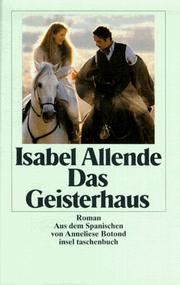
A sweeping multigenerational saga set in Chile that applies the magical realist mode to political upheaval and women's experience — a more novelistic, accessible entry into Boom-era ambition.

Cortázar's experimental masterpiece, which can be read in multiple orders, pushes you to engage actively with form and meaning — a crucial step toward the structural adventurousness of later writers.
A more focused, historically grounded García Márquez novel about Simón Bolívar's final journey — shows how the Boom engaged directly with Latin American history and political disillusionment.
Post-Boom & the Contemporary Turn
ExpertEngage with the writers who inherited, challenged, and exploded the Boom's legacy — darker, more fragmented, and unflinching about violence, exile, and the limits of storytelling.
▸ Study plan for this stage
Pace: 8–10 weeks, ~40–50 pages/day (Kiss of the Spider Woman: 2 weeks; 2666: 6–8 weeks, accounting for its 900+ page length and density)
- Metatheatricality and performative identity: how Puig uses theatrical form to expose the constructed nature of desire, politics, and selfhood
- The prison cell as a microcosm: confinement as both literal and metaphorical space where ideology, sexuality, and power collide
- Fragmentation and narrative collapse in Bolaño: the refusal of coherent plot and the aesthetic of incompleteness as a response to historical trauma
- Violence as both spectacle and absence: how Bolaño renders the 'Santa Teresa murders' as a structural void that organizes the entire novel
- Intertextuality and literary archaeology: how both writers cannibalize, reference, and deconstruct earlier literary traditions (including the Boom itself)
- Exile, displacement, and the writer's complicity: the figure of the intellectual caught between witness, participant, and failure
- Genre instability: how these works resist generic classification (play vs. novel, realism vs. metafiction) as a formal strategy
- How does Puig use the theatrical form and dialogue-heavy structure of Kiss of the Spider Woman to explore the relationship between performance and authenticity, particularly regarding Molina's sexuality and political consciousness?
- What is the significance of the prison setting in Puig's play, and how does it function as a space where personal desire and political ideology become inseparable?
- How does Bolaño's 2666 formally enact fragmentation and incompleteness, and what is the relationship between this fragmented structure and the novel's engagement with violence and historical trauma?
- What role do the 'Santa Teresa murders' play in 2666, and why does Bolaño represent them as a structural absence or void rather than as a solved mystery?
- How do both Puig and Bolaño engage with and critique the literary legacy of the Boom, and what does their work suggest about the possibilities and limits of literature in the post-Boom era?
- What is the significance of exile, displacement, and failed communication in both texts, and how do these themes reflect broader anxieties about the role of the writer and intellectual?
- Close-read a scene from Kiss of the Spider Woman where Molina recounts a film plot, analyzing how the theatrical dialogue and narrative embedding reveal the gap between surface performance and underlying desire or ideology.
- Map the power dynamics in the prison cell across the play's progression: how does the relationship between Molina and Valentín shift, and what does this reveal about Puig's view of political commitment vs. personal authenticity?
- Create a visual diagram or outline of 2666's five-part structure, noting how each section approaches the 'Santa Teresa murders' differently and what is gained or lost in each approach.
- Select one of the 'crimes' or victim descriptions from the 'Part About the Crimes' section of 2666 and write a 2–3 page analytical response exploring what Bolaño withholds from the reader and why that withholding matters.
- Trace intertextual references in 2666 (to Cervantes, Dostoevsky, García Márquez, or other canonical figures) and analyze how Bolaño's citations function as critique, homage, or something more ambiguous.
- Write a comparative essay on how Puig and Bolaño each represent the intellectual or artist figure: what are the stakes of writing or creating in their respective worlds, and what are the costs of failure or complicity?
Next up: This stage establishes the formal and thematic vocabulary for understanding how contemporary Latin American literature has moved beyond the Boom's grand narratives toward fragmentation, historical reckoning, and a skepticism about literature's redemptive power—preparing you to engage with even more recent writers who inherit and further radicalize these strategies.
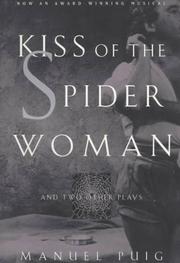
Told entirely in dialogue and documents, Puig's novel about two prisoners in an Argentine jail bridges the Boom and the post-Boom with its radical form and its frank treatment of sexuality and political repression.

Bolaño's sprawling, polyphonic novel about a generation of poets searching for meaning across Mexico and the world is the defining post-Boom masterwork — everything you've read so far prepares you for its ambition and its grief.

Bolaño's monumental final novel, confronting violence, evil, and the silence of history across five interlocking parts — the culmination of the entire curriculum and one of the great novels of the 21st century.
Discussion
Keep reading
Paths that share books, cover the same subject, or open a related topic.