Start with The Kill Artist, the first novel Daniel Silva published about Gabriel Allon: an Israeli intelligence officer who works undercover as an art restorer, pulled out of retirement to hunt an assassin. It is the only sensible starting point, because every later book assumes the bombing in Vienna that destroyed his family, and this is the novel that puts it in the background where it belongs. Meeting it as a flashback in book nine is a much weaker experience.
The tempting alternative is to start with whichever novel is newest, since each case is self-contained and the publisher's cover copy will tell you it stands alone. The cases do stand alone. The personal history does not: the first marriage, the bombing, the recruitment and the eventual promotion pay off across specific books, in order, and Prince of Fire in particular is the payoff the first four are building toward. Reading it early guts them.
One honest note about this list. Silva has published more than twenty Gabriel Allon novels, and what follows is a route through the series rather than a complete bibliography — several volumes between these are not in our catalogue. It is arranged so that no book spoils an earlier one, which is the property that actually matters when a series is this long.
Start here: the first two
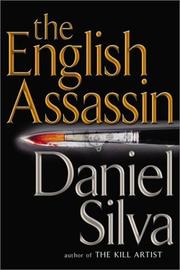
The Kill Artist, then The English assassin — a murdered Zurich banker and looted Nazi art. Read it second because it introduces Christopher Keller, who recurs for the rest of the series, and because it is where Silva finds the subject the books are really about.
The restitution novels
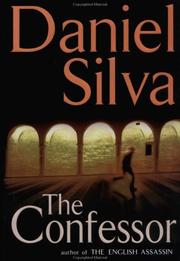
Most readers consider this early trilogy the peak of the run. The confessor takes on the Vatican's wartime silence and a murdered scholar in the archives, and it is the book that established Silva's willingness to build a thriller on a real historical argument. A death in Vienna follows an Austrian war criminal hiding in plain sight and returns Allon to the city where he lost his son, continuing the emotional line from the first novel directly. Then Prince of Fire finally explains the bombing. Read these three in this order and nothing else in the series can spoil them.
The middle run
Moscow rules opens the strongest sustained sequence in the series, with a murdered Russian journalist and an oligarch selling weapons, and it is a clean re-entry point if the earlier books have run together in your memory. The defector is its direct sequel — the two are effectively one story and must be read together. Portrait of a spy is the strongest of the standalone middle books and introduces a character who returns. The English Girl is the best Keller novel, which is why it belongs after the book that established him.
The late books
The black widow sends a doctor undercover into a terrorist network and is the strongest of the later run. House of Spies is its direct sequel and hunts the same target through Morocco — another pair to read as one. The Order returns explicitly to the territory of The confessor, with a dead pope and a suppressed gospel, which is exactly what makes it satisfying this late rather than early. The Cellist deals with Russian money moving through London and brings back characters from the Moscow sequence.
The late novels track real-world events closely, sometimes within months of publication. That is part of their appeal and part of why they date faster than the early ones.
Where to stop
The Cellist is a good place to pause and decide. By that point you have the origin, the restitution trilogy, the Russian sequence and the strongest of the recent books, and you will know whether you want the remaining novels straight through in publication order. If you do, publication order is the answer — there is no chronological reordering worth attempting here. The route in full is in the Gabriel Allon reading path.
Ready to learn something deeply?
Build a reading path — free