Nutrition science: cut through the noise
This curriculum takes a skeptic's journey through nutrition science — starting with how to think clearly about food and evidence, then building into the actual biology and research, and finally reaching the frontier where you can read studies critically and see through fads with confidence. Each stage assumes the vocabulary and mental models built in the previous one, so the order within and across stages matters.
Foundations: How to Think About Food & Evidence
BeginnerDevelop a critical mindset toward nutrition claims, understand why the field is so confusing, and build basic vocabulary around diet and health research.
▸ Study plan for this stage
Pace: 10–12 weeks total, reading roughly 20–25 pages per day, 5 days a week. Week 1–3: "In Defense of Food" (~200 pp; read at a relaxed pace, journaling reactions). Week 4–7: "Bad Science" (~300 pp; slow down for statistical chapters, re-read if needed). Week 8–12: "Nutrition" by Alice Callahan (~400 pp;
- Nutritionism vs. whole-food thinking: Pollan's critique that reducing food to individual nutrients distorts how we understand diet and health
- The Western Diet pattern: Pollan's argument that it is the dietary pattern — not any single food or nutrient — that correlates with modern chronic disease
- The hierarchy of evidence: Goldacre's framework distinguishing anecdotes, case studies, observational studies, RCTs, and systematic reviews/meta-analyses
- How media and industry distort nutrition science: Goldacre's exposure of press-release journalism, cherry-picked data, and conflicts of interest in research funding
- Confounding variables and why nutrition epidemiology is hard: why people who eat salad also exercise, and why that makes causation nearly impossible to isolate
- Basic macronutrient and micronutrient vocabulary: Callahan's grounding in proteins, carbohydrates, fats, vitamins, minerals, and their physiological roles
- Dietary Reference Intakes (DRIs) and how official recommendations are set — and their limitations
- The difference between relative risk and absolute risk: a core statistical concept Goldacre uses to decode alarming health headlines
- According to Pollan, what is 'nutritionism' and why does he argue it has made us less healthy rather than more?
- Using Goldacre's hierarchy of evidence, how would you rank the following: a celebrity testimonial, a randomized controlled trial, a newspaper story citing a single study, and a Cochrane meta-analysis — and why?
- What does Callahan identify as the primary functions of macronutrients, and how do Dietary Reference Intakes attempt to translate that science into practical guidance?
- A headline reads: 'Eating chocolate reduces heart-attack risk by 30%.' Drawing on both Pollan and Goldacre, what questions would you ask before accepting this claim?
- Why is it so difficult to establish causation (rather than correlation) in human nutrition research? Use at least two concepts from the three books to support your answer.
- How do financial conflicts of interest — as described by Goldacre — interact with the media environment Pollan critiques to produce widespread public confusion about food?
- Headline audit (Pollan + Goldacre): Collect 5 nutrition headlines from news sites this week. For each, identify: What nutrient or food is being praised/blamed? Is a whole dietary pattern mentioned? What type of study is cited? Rewrite each headline more accurately.
- Evidence pyramid mapping (Goldacre): Draw Goldacre's hierarchy of evidence from memory. Then find one nutrition claim online, trace it back to its original source, and place that source on your pyramid. Note how many steps the claim traveled from the data to the headline.
- Personal food-pattern journal (Pollan): For 7 days, log not individual nutrients but food patterns — how many meals were home-cooked vs. processed, how many included plants, how many were eaten slowly vs. on the go. Reflect on Pollan's 'Eat food. Not too much. Mostly plants.' rule.
- Nutrient vocabulary flashcards (Callahan): Using Callahan's text, create a set of 30 flashcards covering key terms (e.g., essential amino acid, fat-soluble vitamin, glycemic index, DRI, RDA, EAR). Quiz yourself until you can define each without looking.
- Relative vs. absolute risk translation (Goldacre): Find a study or news story that reports a relative risk (e.g., '40% increased risk'). Calculate or estimate the absolute risk increase. Write a 1-paragraph plain-language explanation of what the number actually means for an individual.
- Synthesis essay — 300–500 words: After finishing all three books, answer this prompt in writing: 'If nutrition science is so uncertain and so easily distorted, how should an ordinary person make food decisions?' Draw explicitly on Pollan's food rules, Goldacre's evidentiary standards, and Callahan's physiological grounding.
Next up: Mastering the critical vocabulary and skeptical mindset built here — what counts as good evidence, what a dietary pattern is, and what nutrients actually do — gives the reader the analytical tools needed to engage productively with deeper, more mechanistic or diet-specific material in the next stage without being misled by oversimplified claims.
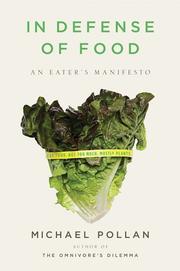
A lucid, accessible entry point that exposes the history of 'nutritionism' and why reductive food science so often misleads us. Gives the reader a healthy skepticism before diving into the science itself.
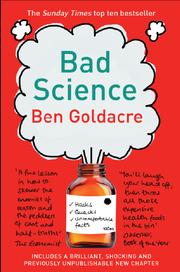
Teaches how to spot flawed studies, misleading statistics, and media distortion — essential critical-thinking tools that apply directly to nutrition headlines. Read this early so every subsequent book is filtered through it.

A rigorous but beginner-friendly open-textbook-style overview of core nutrition science — macronutrients, micronutrients, digestion, and metabolism — providing the factual foundation the later books assume.
The Research Landscape: What Studies Actually Show
IntermediateUnderstand how nutrition research is designed and interpreted, recognize the limits of epidemiology and RCTs, and get an honest picture of what diet-disease links are well-established versus speculative.
▸ Study plan for this stage
Pace: 8–10 weeks total: Weeks 1–4 cover "The Diet Myth" (~25–30 pages/day, 4–5 days/week); Weeks 5–10 cover "Good Calories, Bad Calories" (~20–25 pages/day, 4–5 days/week — it is denser and heavily footnoted, so budget extra time for notes).
- The microbiome as a hidden variable: Spector's central argument that individual gut-bacteria differences explain why identical diets produce wildly different outcomes in different people, undermining one-size-fits-all dietary advice
- Epidemiological limitations in nutrition science: how observational cohort studies, food-frequency questionnaires, and self-reported dietary data generate weak, confounded associations that are routinely over-interpreted in headlines and guidelines
- The replication crisis in nutrition research: why many landmark diet studies (fat-heart hypothesis, calorie-counting models) have failed to replicate, and what Taubes identifies as the institutional and funding pressures that kept flawed paradigms alive
- Carbohydrate-insulin hypothesis vs. energy-balance model: Taubes's detailed forensic reconstruction of how the 'calories in, calories out' consensus was established and why he argues the hormonal (insulin-driven) model of fat storage is better supported by the underlying physiology
- Hierarchy of evidence in nutrition: distinguishing RCTs from observational studies, mechanistic studies, and expert opinion — and understanding why RCTs in nutrition are uniquely difficult to conduct and interpret (blinding, compliance, long time horizons)
- Distinguishing well-established diet-disease links from speculative ones: using both books together to map which claims (e.g., trans fats and cardiovascular disease) rest on strong multi-method evidence versus which (e.g., dietary fat causing obesity) rest primarily on weak epidemiology
- The role of industry funding and scientific consensus: Taubes's investigative journalism lens on how sugar and refined-carbohydrate research was suppressed or sidelined, and what that means for trusting any single body of nutritional evidence
- Personalized nutrition as an emerging paradigm: Spector's case that future dietary guidance must account for individual variation (microbiome, genetics, lifestyle) rather than population-level averages
- After reading Spector, can you explain in concrete terms why two people eating the same meal might have completely different blood-glucose and metabolic responses, and what research methodology would be needed to detect this?
- What specific methodological flaws does Taubes identify in the original studies that established the diet-heart hypothesis, and do those flaws affect the conclusions that were drawn from them?
- How do both authors characterize the reliability of food-frequency questionnaires and self-reported dietary recall data? What does this mean for the validity of large epidemiological cohort studies?
- Using Taubes's account, trace the chain of evidence (or lack thereof) that led to the low-fat dietary guidelines of the 1980s. Which steps in that chain were well-supported by RCTs, and which were inferential leaps?
- Which diet-disease relationships discussed across both books do you now consider well-established (supported by convergent evidence from multiple study types), and which do you consider speculative or contested? Justify your classification.
- How does Spector's microbiome-centered view of nutrition science challenge or complement Taubes's macronutrient-centered critique? Do they agree on the core problem with mainstream nutrition research, even if they differ on the solution?
- Evidence audit: Pick one specific dietary claim from each book (e.g., 'saturated fat causes heart disease' or 'dietary fiber feeds beneficial gut bacteria'). Find 2–3 primary studies cited or implied by the authors and categorize each by study type (RCT, cohort, mechanistic). Rate the overall strength of evidence on a simple 1–5 scale and write a one-paragraph verdict.
- Methodology translation journal: Each week, when either author describes a study, pause and write 3–5 sentences in your own words: What was the study design? What did it actually measure? What did the authors conclude? What alternative explanations were not ruled out? Build this into a running log across both books.
- Claim comparison matrix: Create a two-column table — one column for claims Spector makes, one for claims Taubes makes. For each row, note whether the two authors agree, disagree, or are talking past each other. At the end, write a 300-word synthesis of where their critiques of nutrition science converge.
- Headline deconstruction exercise: Find 5 recent nutrition news headlines (from any major outlet). For each, identify the underlying study type, ask whether the headline accurately reflects the study's actual findings, and apply one specific lesson from either Spector or Taubes to explain why the headline may be misleading.
- Personal diet-belief inventory: Before starting Stage 1, write down 5 dietary beliefs you currently hold (e.g., 'sugar is bad,' 'eating fat makes you fat'). After finishing both books, revisit each belief and annotate it: Has the evidence base changed in your mind? Which book influenced your reassessment most, and why?
- Mock peer review: Imagine you are a journal reviewer. Write a one-page critique of the core empirical argument in one chapter of 'Good Calories, Bad Calories' — identify the strongest evidence Taubes presents, the weakest link in his chain of reasoning, and one study design that could, in principle, settle the question he raises.
Next up: By dismantling naive trust in nutritional headlines and building a critical framework for evaluating evidence, this stage equips the reader to engage productively with the specific diet-disease mechanisms and intervention studies they will encounter in the next stage — approaching them as an informed skeptic rather than a passive consumer of expert opinion.
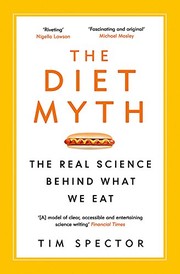
A leading epidemiologist surveys the actual evidence behind common dietary beliefs — fat, sugar, vitamins, gut bacteria — modeling exactly how a scientist reads the literature with nuance and humility.

A deep, heavily sourced investigation into how the diet-heart hypothesis and carbohydrate science developed, and where the evidence was misread. Essential for understanding how scientific consensus can go wrong — read critically alongside Spector.
The Biology: Metabolism, Gut, and the Body
IntermediateBuild a mechanistic understanding of how the body processes food — metabolism, the microbiome, insulin, inflammation — so you can evaluate claims at a biological rather than purely statistical level.
▸ Study plan for this stage
Pace: 8–10 weeks total. Weeks 1–5: "Gut" by Giulia Enders (~20–25 pages/day, reading in three natural sections: digestion mechanics → the nervous system of the gut → the microbiome). Weeks 6–10: "Why We Get Fat" by Gary Taubes (~15–20 pages/day, pausing after each chapter to annotate the hormonal argument
- The digestive tract as a mechanical and chemical system: how food is broken down from mouth to colon, including the roles of stomach acid, bile, and intestinal villi (Enders)
- The gut-brain axis: the enteric nervous system as the body's 'second brain,' and how gut signals influence mood, hunger, and satiety (Enders)
- The microbiome as an active metabolic organ: how gut bacteria ferment fiber, produce short-chain fatty acids, synthesize vitamins, and modulate immune function (Enders)
- Dysbiosis and its downstream effects: how microbial imbalance is linked to inflammation, obesity, and metabolic disease (Enders)
- The carbohydrate-insulin model of fat storage: Taubes's central thesis that elevated insulin — driven by dietary carbohydrates — is the primary hormonal signal directing fat accumulation (Taubes)
- Insulin's role as a metabolic gatekeeper: how it regulates glucose uptake, inhibits lipolysis, and partitions fuel use between fat and carbohydrate oxidation (Taubes)
- Chronic low-grade inflammation as a mechanistic link between diet, gut permeability ('leaky gut'), and metabolic syndrome (Enders + Taubes)
- Distinguishing correlation from mechanism: how both authors use biological plausibility to challenge purely epidemiological nutrition claims
- According to Enders, what specific roles does the enteric nervous system play, and how does it communicate with the brain bidirectionally via the vagus nerve?
- How does Enders describe the microbiome's contribution to energy harvest — and what does this imply about why two people eating the same diet might gain weight differently?
- What is Taubes's core argument against the 'calories in, calories out' model, and what hormonal mechanism does he propose as an alternative explanation for fat gain?
- How does insulin inhibit lipolysis at the cellular level, and why does Taubes argue this makes carbohydrate quality more important than total caloric intake?
- How do the mechanistic accounts in both books converge on inflammation as a shared pathway linking poor diet, gut dysfunction, and metabolic disease?
- Where do Enders and Taubes implicitly or explicitly disagree, and what evidence would be needed to resolve those disagreements?
- Digestion mapping: After finishing 'Gut,' draw a full diagram of the digestive tract from mouth to colon, labeling each organ's function, the enzymes or acids it secretes, and what macronutrient it primarily processes. Annotate where the microbiome acts.
- Microbiome diet audit: For one week, track your fiber intake and food variety using a free app (e.g., Cronometer). Cross-reference with Enders's descriptions of which foods feed beneficial bacteria. Note any patterns between diet and how you feel.
- Insulin response timeline: After reading Taubes's core chapters on insulin, sketch a graph showing blood glucose and insulin levels over 3 hours after a high-carb meal vs. a high-fat meal. Label the hormonal events Taubes describes at each phase.
- Claim stress-test: Find three popular nutrition headlines (e.g., from a news site or social media). For each, write a short paragraph asking: Does this claim have a proposed biological mechanism? Is it consistent with what Enders says about the gut or Taubes says about insulin? What would a mechanistic counter-argument look like?
- Comparative author brief: Write a one-page synthesis comparing how Enders and Taubes each explain weight gain — one through the microbiome lens, one through the hormonal lens. Identify one point of agreement, one point of tension, and one open question neither book fully answers.
- Teach-back session: Explain Taubes's carbohydrate-insulin model to a friend or family member in under five minutes using only an analogy (no jargon). Then explain Enders's microbiome argument the same way. The ability to do this without notes signals genuine internalization.
Next up: By grounding you in the biological machinery — how the gut, hormones, and microbiome actually work — this stage equips you to critically read research studies and population-level evidence in the next stage, moving from "how does the body work?" to "what does the evidence say we should eat, and how strong is that evidence?"

An entertaining yet scientifically grounded tour of digestive physiology and the gut microbiome — the biological layer that underlies much of modern nutrition science and is often missing from diet books.
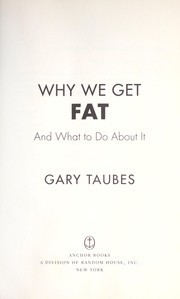
A more accessible companion to his longer work, focusing specifically on the hormonal and metabolic mechanisms of fat storage. Builds the biological vocabulary needed to evaluate low-carb, insulin, and obesity research critically.
Advanced: Reading the Evidence Like a Scientist
ExpertEngage directly with how nutrition science is conducted and communicated, identify systemic biases (industry funding, study design flaws), and arrive at a mature, evidence-based personal framework for diet.
▸ Study plan for this stage
Pace: 10–12 weeks total: ~3 weeks on "Unsavory Truth" (~25 pages/day), ~4 weeks on "How Not to Die" (~30 pages/day), ~3 weeks on "The Obesity Code" (~25 pages/day), plus 1–2 weeks for review, cross-book synthesis, and exercises.
- Industry funding bias: How food and beverage corporations systematically influence nutrition research, dietary guidelines, and academic institutions, as exposed by Nestle in 'Unsavory Truth' — and how to detect sponsored research by reading funding disclosures and conflict-of-interest statements.
- Epidemiological evidence hierarchies: Greger's method in 'How Not to Die' of aggregating large bodies of observational and interventional studies to draw dietary conclusions — and the critical limitations (confounding variables, self-reported data, healthy-user bias) that must be applied when readin
- Whole-food, plant-based evidence base: The specific disease-by-disease mechanistic and epidemiological arguments Greger constructs for plant-predominant diets, and how to evaluate whether the cited studies actually support the claims made.
- Hormonal and metabolic frameworks for obesity: Fung's insulin-centric model in 'The Obesity Code' — the roles of insulin resistance, hyperinsulinemia, and hormonal set-point theory — as an alternative explanatory framework to the simple calories-in/calories-out model.
- Study design literacy: Distinguishing randomized controlled trials, cohort studies, case-control studies, and mechanistic research; understanding why nutrition RCTs are uniquely difficult to conduct; and applying this lens critically to the evidence cited across all three books.
- Conflicting expert narratives: Recognizing that Greger (plant-based maximalism) and Fung (carbohydrate/insulin restriction) reach different practical conclusions from overlapping evidence — and using Nestle's framework to ask 'who benefits?' when evaluating each position.
- Dietary guideline politics: How lobbying, revolving-door relationships between industry and regulatory bodies, and publication bias shape the official nutrition advice that reaches the public, per Nestle's investigative reporting.
- Personal evidence-based framework construction: Synthesizing areas of genuine scientific consensus (minimize ultra-processed foods, prioritize vegetables, avoid excess added sugar) from areas of legitimate ongoing debate (optimal macronutrient ratios, meal timing, animal vs. plant protein) across al
- After reading 'Unsavory Truth,' can you identify at least three concrete mechanisms by which industry funding distorts nutrition science — from study design through publication — and give a real example Nestle documents for each?
- How does Greger's evidence-aggregation methodology in 'How Not to Die' differ from reading a single study, and what are two specific criticisms a skeptical scientist might level at his approach to selecting and presenting research?
- Where do Fung's insulin-resistance model in 'The Obesity Code' and Greger's plant-based framework in 'How Not to Die' directly contradict each other, and where might they actually be compatible? What does the quality of evidence look like on each side?
- Using Nestle's lens from 'Unsavory Truth,' examine one dietary claim made by Greger and one made by Fung: can you trace the funding sources and potential conflicts of interest behind the key studies each author relies on?
- What is Fung's core argument for why caloric restriction alone fails as a long-term obesity intervention, and what type of evidence (mechanistic, epidemiological, or interventional) does he primarily use to support it — and is that evidence sufficient?
- Having read all three books, what is your personal, evidence-based position on two contested topics (e.g., optimal carbohydrate intake; animal vs. plant protein) — and can you articulate the strongest counter-argument to your own position?
- Funding audit drill (during 'Unsavory Truth'): Choose any 5 nutrition studies cited in news headlines this week. Look up the full paper, find the funding disclosure and author conflict-of-interest section, and classify each as industry-funded, publicly funded, or unclear. Write a one-paragraph risk-of-bias note for each, using Nestle's criteria.
- Claim-to-study verification (during 'How Not to Die'): Select one chapter from Greger's book, pick 3 specific claims he makes, locate the original cited studies, and read the abstracts. Assess whether the study design and results actually support the strength of the claim Greger makes. Note any overgeneralizations or omitted caveats.
- Competing frameworks comparison table (after finishing both 'How Not to Die' and 'The Obesity Code'): Build a side-by-side table covering at least 6 topics (e.g., dietary fat, carbohydrates, meal frequency, processed food, caloric deficit, protein source). For each topic, record Greger's position, Fung's position, the type of evidence each cites, and your own assessment of the evidence quality.
- Mock peer review exercise: Write a 400–600 word critical review of one chapter from 'The Obesity Code' as if you were a peer reviewer for a scientific journal. Identify the strength of the evidence, any logical leaps, missing counter-evidence, and whether the conclusions are proportionate to the data presented.
- Personal dietary framework document: After completing all three books, write a 1–2 page 'living document' that states your current evidence-based dietary principles. For each principle, cite the type and quality of evidence supporting it, acknowledge the strongest opposing argument, and flag it as 'high confidence,' 'moderate confidence,' or 'working hypothesis.'
- Media literacy rapid-fire: Find three nutrition articles in popular media (magazines, health websites) published in the last month. Apply all three authors' lenses simultaneously — Nestle's industry-bias filter, Greger's evidence-quality filter, and Fung's hormonal-mechanism filter — and write a short paragraph on what each lens reveals that the others miss.
Next up: By dismantling naive trust in nutrition authorities and building a rigorous, multi-lens framework for evaluating evidence, this stage equips the reader to engage with primary scientific literature directly — the natural next step toward reading and interpreting original research papers and systematic reviews in nutrition science independently.
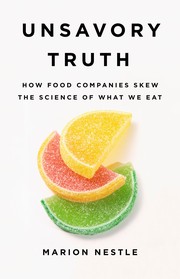
A veteran nutrition scientist exposes how food industry funding shapes research findings and public guidelines — essential for understanding the political economy behind the science you've been reading.
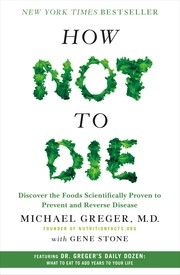
Presents the large-scale epidemiological evidence for whole-food, plant-based eating in a heavily cited format. Read here — after developing critical tools — so you can evaluate its selective use of evidence fairly rather than taking it at face value.

Synthesizes hormonal, metabolic, and epidemiological research into a coherent framework around insulin and fasting. A useful capstone for stress-testing your own reasoning: where does the evidence hold, and where does the argument overreach?
Discussion
Keep reading
Paths that share books, cover the same subject, or open a related topic.