Banking Regulation: The Best Books on Financial Stability, in Order
A bank promises depositors their money on demand while lending it out long — that mismatch is the whole subject, and everything regulation does is an attempt to make it survivable. This path runs in four stages: why banks are structurally fragile, what actually happened in 2008, the live argument about capital and leverage, and finally the political economy of who gets to write bank rules. Dating matters more here than in most subjects, so each book is placed relative to two events: the Dodd-Frank Act of 2010 and the Basel III capital framework agreed the same year and phased in over the decade that followed. A book written in 2009 is describing a problem; a book written in 2015 is judging a fix.
Why Banks Break
BeginnerUnderstand maturity transformation, bank runs and the lender-of-last-resort doctrine, and see that financial crises are a recurring category rather than a series of accidents.
▸ Study plan for this stage
Pace: Five to six weeks for about 1,150 pages. Lombard Street is the shortest and oldest — Bagehot published it in 1873, and the argument itself runs to about 130 pages of a modern edition padded out with introductions and appendices, so read the original text and skim the apparatus. Manias, Panics and Cr
- Maturity transformation as the entire subject: a bank promises deposits on demand and lends long, and every regulation is an attempt to make that survivable
- The bank run as a coordination problem — solvency and liquidity are different failures and a run turns the second into the first
- Bagehot's rule stated properly: lend freely, at a penalty rate, against good collateral that would be good in normal times, and say so in advance
- The Minsky sequence Kindleberger builds on: displacement, credit expansion, euphoria, distress, revulsion — stability itself generating the leverage that ends it
- Crises as a recurring category rather than a series of accidents, which is Reinhart and Rogoff's central empirical claim
- The finding that matters most for regulation: banking crises are followed by long, deep recessions and large increases in public debt
- What eight centuries of counted crises can and cannot establish — a dataset of dated episodes is not a causal model, and Reinhart and Rogoff are careful about this even where their readers are not
- State Bagehot's three conditions and explain what each one is defending against.
- Why does lending at a penalty rate matter if the point is to stop a panic?
- Walk through Kindleberger's cycle using one historical episode from the book, naming the displacement and the point of revulsion.
- What is the difference between an illiquid bank and an insolvent one, and why is the distinction so hard to make in real time?
- What do Reinhart and Rogoff find about the aftermath of banking crises specifically, as against currency or sovereign ones?
- Bagehot was writing in 1873 about a gold-standard London money market. Which parts of his argument survive the change of monetary regime, and which do not?
- Write out Bagehot's three conditions as a checklist, then score one 2008 central bank facility against each — the Federal Reserve's Term Auction Facility or its dollar swap lines are both well documented. Keep the checklist; you will use it again against Geithner's account in the next stage.
- Take one episode from Reinhart and Rogoff's crisis dating for a single country and check the dates against a narrative history of the same period. Where the dataset compresses a messy sequence into a year is where its limits are.
- Build a one-page balance sheet for a simple bank — deposits, equity, loans, reserves — and then run a 10% deposit withdrawal and a 5% loan loss through it separately. The two failures look completely different on the page, which is the illiquidity-insolvency distinction made concrete.
- Find the edition statement in your copy of Manias, Panics and Crashes and note which crises it covers. If it stops before 2008, you are reading a book that predates the events the rest of this path is about.
Next up: You have the mechanism and the historical pattern; the next stage is the one crisis every current rule was written in response to.
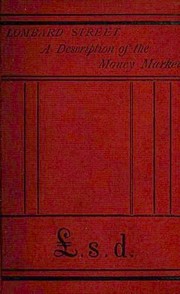
Written in 1873 and still the founding text: lend freely, at a penalty rate, against good collateral. Every central bank in 2008 was arguing about whether it was following Bagehot, so read the 130 pages that the argument is about before reading the argument.

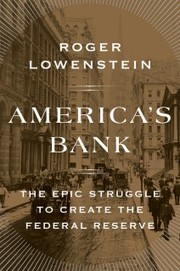
Kindleberger's pattern-book of speculative episodes, from tulips forward, built on Minsky's model of how stability breeds leverage. Read it second: it turns Bagehot's single mechanism into a repeating cycle you can recognise.
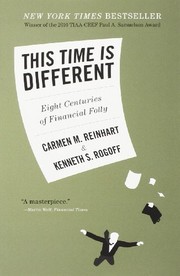
Reinhart and Rogoff's data set — eight centuries of banking, currency and sovereign crises counted rather than narrated. Published in 2009, it is the empirical backing for Kindleberger's argument, and the source of the finding that banking crises are followed by long, deep recessions.
2008, From Inside and Outside
BeginnerGet the sequence of the crisis straight — Bear, Lehman, AIG, the guarantees — from both the journalism and the officials, and notice where those two accounts disagree.
▸ Study plan for this stage
Pace: Two to three months for about 2,150 pages — the longest stage on the path by a wide margin. Too Big to Fail is 600 pages of reportage published in 2009, written entirely before Dodd-Frank existed; Stress Test is 592 pages published in 2014, with Dodd-Frank in force and the stress-testing regime its
- The sequence of 2008 in order: Bear Stearns, the GSEs, Lehman, AIG, the money market fund break, TARP and the guarantees
- Why Lehman was allowed to fail and Bear and AIG were not, in the participants' own account and in the sceptical one
- Repo, tri-party repo and the run on wholesale funding — the run happened in the markets, not at the retail window, which is what makes 2008 different from 1873
- Emergency lending authority and its limits, and why Dodd-Frank restricted it — the specific policy disagreement Firefighting exists to argue
- Stress testing as a regulatory technology invented in the middle of the crisis and made permanent after it
- The transatlantic dimension: European banks were the largest users of Federal Reserve dollar swap lines, which reframes 2008 from an American story into a dollar-funding one
- Reading a participant's memoir — where Geithner is authoritative, where he is arguing a case, and how to tell which
- Lay out the sequence from March to October 2008. At which point did the crisis become a funding run rather than a credit problem?
- What is the official explanation for Lehman, and what is Tooze's? Where exactly do they conflict?
- How does a run on repo differ mechanically from a run on deposits, and why does deposit insurance not stop it?
- Firefighting argues that Dodd-Frank removed powers that will be needed again. State that argument, then state the case for having removed them.
- What does the swap-line evidence do to the claim that 2008 was a crisis of American subprime lending?
- Where does Geithner's account of a specific decision differ from Sorkin's reporting of the same meeting, and which do you believe?
- Build a single dated timeline of 2008 from Sorkin, then annotate it with Geithner's version where the two differ. The disagreements are concentrated in about five decisions and finding them is the point of reading both.
- Score the Fed's 2008 interventions against your Bagehot checklist from stage one: freely, penalty rate, good collateral. At least one facility fails at least one condition, and identifying it is the sharpest thing this stage can teach.
- Look up the peak outstanding balance on the Federal Reserve's dollar swap lines and the counterparty central banks. Then reread Tooze's argument with the actual number in front of you.
- Take one bank that failed and one that did not, and compare their leverage and funding mix in their 2007 annual reports. Do this before reading anyone's explanation of why.
- Read the Firefighting chapter on emergency powers and write the strongest one-paragraph rebuttal you can. You are about to meet that rebuttal in stage four, made by people who were not in the room.
Next up: With the crisis established, the live argument is what should have been done about it — and the sharpest version is about how much equity a bank should hold.
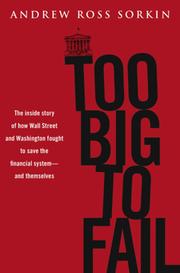
The blow-by-blow narrative of September 2008, published in 2009 and therefore written entirely before Dodd-Frank existed. Read it for the sequence of events; it is reportage, not analysis, and does not pretend otherwise.
The New York Fed president's own account, published in 2014 with Dodd-Frank in force and the stress-testing regime he built already running. Self-serving in places and indispensable on why the rescues took the shape they did.
Bernanke, Geithner and Paulson's short joint retrospective from 2019, written a decade after the fact and explicitly arguing that the crisis-fighting powers Dodd-Frank removed will be needed again. The most compact statement of the official view, and best read straight after Stress Test.

The international account, and the one that shows the crisis was transatlantic rather than American — European banks were the largest users of Federal Reserve dollar swap lines. Published 2018; read it last in this stage because it assumes you know the domestic story.
The Capital Argument
IntermediateFollow the central live debate — how much equity a bank should fund itself with — and be able to state the strongest version of each side.
▸ Study plan for this stage
Pace: Two months for about 1,450 pages. The Bankers' New Clothes is 398 pages published in 2013, after Basel III was agreed in 2010 and while it was being negotiated downward and phased in — which is precisely what Admati and Hellwig are angry about; Between Debt and the Devil is 320 pages from 2015; The
- Equity funding versus lending capacity: Admati and Hellwig's core claim is that the trade-off bankers assert does not exist, and their book is a systematic demolition of each version of the argument
- Risk-weighted capital ratios versus a simple leverage ratio, and why a 12% risk-weighted CET1 ratio can coexist with equity of a few per cent of total assets
- Basel III as the concrete object of the argument: minimum ratios, buffers, the leverage ratio backstop, and a phase-in schedule that ran through the decade after 2010
- Turner's shift of the question from bank fragility to credit allocation — the problem is the volume of credit created against existing real estate rather than the fragility of the intermediary
- King's structural proposal, the pawnbroker for all seasons, which would require pre-positioned collateral against liquid liabilities and effectively end fractional-reserve banking as practised
- Kay's argument that finance has grown far beyond the real-economy functions it exists to serve, and that regulation assuming otherwise keeps failing
- Debt versus equity claims on the same assets, and why the private incentive to use leverage diverges from the social optimum
- The distinction running through the whole stage: safer banks, less lending, or a different structure — three different diagnoses that are often quoted as if they were one
- Why is a risk-weighted capital ratio not a measure of how much equity a bank has, and what does the leverage ratio add?
- State three of the industry arguments against higher capital that Admati and Hellwig demolish, and their answer to each.
- Turner and Admati are often grouped together. What does Turner think is the actual problem, and how would his remedy differ from hers?
- Describe King's pawnbroker proposal and say what it would do to a bank's business model.
- Kay says finance is too large for its functions. What functions, and how would you measure whether it is too large for them?
- All four books were written after Basel III was agreed. What specifically do they say is inadequate about it?
- Pull the most recent annual report or Pillar 3 disclosure of one large bank and compute two numbers: its risk-weighted CET1 ratio, and its simple equity divided by total assets. The gap between them is Admati and Hellwig's book in one calculation.
- Look up the current Basel III minimum ratios and buffers and set them beside the equity levels Admati and Hellwig argue for. Write down the ratio between the two.
- Take the same bank's balance sheet and rerun the 5% loan loss you modelled in stage one at its actual leverage. Then rerun it at 20% equity funding.
- Find the share of one national banking system's lending that is secured on existing real estate, and check Turner's claim against it.
- Write a one-page brief arguing against higher capital requirements, in good faith, using only arguments Admati and Hellwig have not already answered. If you cannot fill the page, that is a finding.
- Set King's proposal against Bagehot's rule from stage one. King is explicitly trying to replace the lender of last resort; write two paragraphs on what would be lost.
Next up: Every proposal in this stage assumes rules can be written and enforced, which is exactly the assumption the last stage tests.

The clearest case that banks should hold far more equity and that every industry argument against it is wrong. Published in 2013, after Basel III was agreed and while it was being watered down, which is precisely what Admati and Hellwig are angry about. The single most useful book here.

By the man who chaired the UK's Financial Services Authority through the crisis, arguing from 2015 that the deeper problem is the volume of credit created for real-estate purchase rather than bank fragility as such. Read it as the complement to Admati: she wants safer banks, he wants less lending.

The former Bank of England governor's 2016 book, and the most radical structural proposal on this path — a pawnbroker for all seasons that would effectively end fractional-reserve banking. Worth reading precisely because a career central banker concluded the post-2010 reforms were insufficient.

The argument that finance has grown far larger than the real-economy functions it exists to serve, and that regulation which assumes otherwise will keep failing. Published 2015; the least technical book in this stage and a good place to stop and think.
Who Writes the Rules
IntermediateSee bank regulation as politics — bargains between governments, bankers and voters — and be able to explain why two countries with similar economies have very different crisis records.
▸ Study plan for this stage
Pace: Two months for about 1,470 pages. Fragile by Design is 584 pages published in 2014 and is the most analytically ambitious book on the path; 13 Bankers is 318 pages from 2010, written while Dodd-Frank was being drafted and arguing that it would not go far enough because the political economy would no
- The game of bank bargains: banking systems as political settlements between governments needing finance, bankers needing charters, and coalitions of debtors and taxpayers
- The comparative case that carries the argument — Canada has had no major banking crisis since the 1840s and the United States has had a dozen, with similar economies and different political structures
- Populist and liberal bargains as different equilibria producing different crisis records, which reframes regulation as an output of politics rather than an input to markets
- Regulatory capture stated as a mechanism rather than an accusation: revolving doors, informational asymmetry, and the industry's role in drafting technical rules
- The Dodd-Frank drafting period as a live test — 13 Bankers predicted the outcome from the political economy, and the prediction can be checked
- The interwar central bankers as the counter-case: enormous discretion, no capture in the modern sense, and catastrophic decisions anyway
- Why an institutional-design argument and a capture argument point at different remedies, and how to tell which problem you are looking at
- State the bank-bargains thesis in your own words. What is being exchanged, and by whom?
- Why has Canada avoided banking crises, on Calomiris and Haber's account? Name the specific institutional features.
- What did 13 Bankers predict about Dodd-Frank in 2010? Check it against what the Act became.
- Does capture explain the interwar failures Ahamed describes, or does something else?
- Read 13 Bankers against Geithner's Stress Test. One author was in the room and one was not — what does each get right that the other misses?
- Having read all four stages, what would you now change first: capital levels, structure, or the political economy that sets both?
- Apply the bank-bargains framework to a third country neither book covers in depth. Identify the coalition, the charter arrangement and the crisis record, and see whether the framework predicts correctly.
- Take one substantive provision of Dodd-Frank, find its final text and its original draft, and trace what changed between them. That single diff is the political economy argument in documentary form.
- Build a table of every book on this path with its publication year, and mark it as before or after Dodd-Frank and Basel III. Then write one line per book on what the author could not have known.
- Take one interwar decision from Lords of Finance — the return to gold at the pre-war parity is the obvious choice — and analyse it with Calomiris and Haber's framework. Then say whether the framework helps or whether Ahamed's explanation is better.
- Write a 1,000-word answer to the question the whole path is built on: why do banks keep breaking, and does regulation help? Then check your answer against Bagehot's 130 pages from stage one and note how much of it he already had.
Next up: This is the end of the path: the mechanism, the crisis, the live argument about capital, and the political economy that decides which of those arguments ever becomes a rule.

The best book on this path: Calomiris and Haber argue that banking systems are political bargains, and demonstrate it by asking why Canada has had no major banking crisis since 1840 and the United States has had a dozen. Published 2014. It reframes everything in the previous stage.
The capture argument stated plainly, from 2010 — written as Dodd-Frank was being drafted and arguing it would not go far enough because the political economy would not allow it. Read it against Geithner, who was in the room.
The four central bankers of the interwar years and how their decisions produced the Depression. Placed last deliberately: after three stages of post-2008 argument, it is the reminder that the same institutional questions were fought over and answered wrongly once already.
Discussion
Keep reading
Paths that share books, cover the same subject, or open a related topic.