Almost everyone approaches this subject through one event — usually 2008 — and the result is a detailed knowledge of one crisis and no framework for the next. The books written from inside a crisis are gripping and they are the wrong place to start, because their whole texture is the sense that something unprecedented is happening. It rarely is.
So this path front-loads the structural books, then works through the historical episodes, then goes inside 2008, and finishes with the argument about what to do. One caveat before you start: this is history and analysis, not investment guidance. None of these books will help you time a market, and several of them explain in detail why nobody reliably does.
The pattern
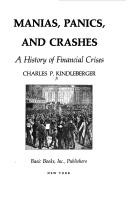
Manias, panics, and crashes by Charles Kindleberger is the foundational text. Building on Hyman Minsky, it lays out a recurring sequence — displacement, credit expansion, euphoria, distress, revulsion — and then demonstrates it across three centuries of episodes. It is the book that makes every subsequent crisis narrative legible. Note that this framework is not universally accepted: economists working from efficient-markets assumptions dispute that bubbles are identifiable in advance, and that disagreement is live rather than settled.
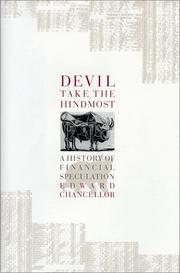
Devil Take the Hindmost by Edward Chancellor supplies the history the framework describes, from tulips and the South Sea Company through the 1980s, and it is far more entertaining than a book on this subject has any need to be.
The historical episodes
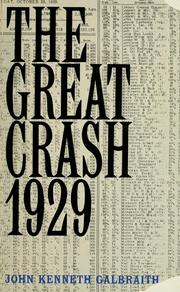
The great crash, 1929 by John Kenneth Galbraith is short, sharp and still the best account of the crash itself. Galbraith writes with a satirist's eye for the men who insisted the fundamentals were sound, and the book is as much about credulity as about finance.
HALL OF MIRRORS by Barry Eichengreen (the catalogue stores that all-capitals form) runs the Depression and 2008 in parallel, arguing that policymakers in 2008 avoided the worst 1930s errors precisely because they had studied them — and then made a different set of mistakes in the recovery. It is the best bridge between the two halves of this path.
Inside 2008
The big short by Michael Lewis is the most readable book about the crisis and follows the handful of investors who saw it coming. Read it knowing that its structure — a few outsiders who were right — is a narrative choice, not a summary of what happened.
Fool's gold by Gillian Tett is the essential complement: a financial journalist's account of how credit derivatives were invented at a single bank and then used in ways their designers never intended. Tett is better than anyone on the instruments themselves.
Too Big to Fail by Andrew Ross Sorkin is the definitive blow-by-blow of the autumn of 2008 — meeting by meeting, phone call by phone call. It is long and it is close to the participants, which is both its strength and the thing to keep in mind while reading it.
After the music stopped by Alan Blinder steps back to the economist's view of causes, policy response and aftermath. If you read only one 2008 book, this is the most complete and the least dramatised.
The long view, and what should change
This time is different by Carmen Reinhart and Kenneth Rogoff assembles eight centuries of financial crises into a single dataset and argues that the phrase in its title is the most expensive sentence in finance. One thing must be stated plainly: a companion academic paper by the same authors, which reported that growth falls sharply above a public-debt threshold, was found to contain a spreadsheet error and contested methodological choices, and the specific threshold result did not survive replication. The book's long historical dataset is a separate contribution and remains widely used. Both facts belong in your head at once.
The bankers' new clothes by Anat Admati and Martin Hellwig makes the clearest case that banks should be funded with far more equity, and dismantles the standard objections one by one. Bankers and some economists disagree with it; read it as the strong form of an argument that has not been resolved.
Close with When Genius Failed by Roger Lowenstein on the collapse of Long-Term Capital Management — a small, self-contained crisis that rehearsed almost every element of the large one a decade later. Follow the full path in order and the repetitions will do the teaching.
Follow the full ordered path here: The Best Books on Financial Crises and Market Crashes, in Order.