Best Books on Film Noir, in Reading Order
This four-stage curriculum moves from accessible introductions to film noir's look and feel, through the historical and stylistic debates that define the field, into its deep roots in German Expressionism and hard-boiled literature, and finally out to neo-noir's reinventions. Each stage builds the critical vocabulary and historical context needed to make the next stage fully intelligible, so the books should be read in the order given.
First Shadows: What Is Film Noir?
BeginnerGain a vivid, accessible feel for what film noir looks and sounds like, understand its core visual and narrative conventions, and get a reliable map of the classic 1940s–50s cycle before diving into scholarly debate.
▸ Study plan for this stage
Pace: 4–5 weeks, ~25–30 pages/day. Start with Silver's accessible visual survey (1–2 weeks), then move to Naremore's deeper historical and theoretical framework (2–3 weeks). Build in viewing time alongside reading.
- Visual language of noir: chiaroscuro lighting, low-key shadows, Dutch angles, and compositional depth as signature techniques
- Narrative conventions: the femme fatale, the morally compromised protagonist, the doomed love affair, and the twist ending as recurring story structures
- The 1940s–50s classic cycle: historical context, studio system constraints, and why noir emerged when it did
- Noir as a visual and tonal mode, not a genre: how noir sensibility crosses detective, crime, and melodrama categories
- The relationship between German Expressionism, wartime anxiety, and American visual culture in shaping noir aesthetics
- How Naremore's concept of noir as a 'more than night'—a mood and worldview—extends beyond simple visual markers
- Key directors, cinematographers, and stars who defined the look and feel of the classic cycle
- The distinction between noir as a historical period (1940s–50s) and noir as an ongoing aesthetic influence
- What are the signature visual techniques of film noir, and how do they create mood and meaning? (Silver)
- How do the femme fatale and morally compromised protagonist function as narrative anchors in noir storytelling? (Silver & Naremore)
- What historical and industrial factors made the 1940s–50s the 'classic cycle' of noir? (Naremore)
- How does Naremore's argument that noir is 'more than night'—a worldview rather than just a visual style—complicate the definition of noir? (Naremore)
- Can you identify and analyze the visual and narrative conventions in a specific classic noir film you've watched?
- What is the relationship between German Expressionism and American film noir, and why does it matter? (Silver & Naremore)
- Watch 3–4 canonical films from Silver's survey (e.g., *The Maltese Falcon*, *The Big Sleep*, *Out of the Past*) and annotate one scene from each, identifying lighting, camera angles, and compositional choices that create noir atmosphere.
- Create a visual mood board (digital or physical) collecting stills from 5–6 noir films, organized by lighting technique (chiaroscuro, silhouette, high contrast, etc.). Write 2–3 sentences explaining how each image exemplifies Silver's visual principles.
- Read a chapter from Silver on a specific noir director or cinematographer, then watch a film by that creator and write a 1-page analysis connecting the book's observations to what you see on screen.
- Map the narrative structure of 2–3 classic noir films using Naremore's framework: identify the protagonist's moral compromise, the femme fatale's role, the inciting incident, and the twist. Note where and how the film's visual style reinforces the narrative.
- Reread Naremore's introduction or key chapter on noir as 'more than night,' then write a 500-word reflection: How does thinking of noir as a mood/worldview rather than a visual checklist change your understanding of what makes a film noir?
- Create a timeline or infographic showing the historical context Naremore outlines (1930s–1950s): wartime, studio system, German émigré influence, and the emergence of noir. Include 3–4 key films and directors at inflection points.
Next up: This stage anchors you in the sensory and narrative reality of classic noir, giving you a stable visual and historical foundation so that the next stage—whether focused on critical theory, gender and sexuality, or noir's afterlife—can build on concrete examples and a shared vocabulary rather than abstract debate.
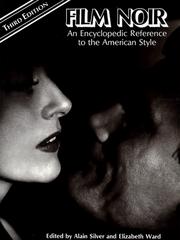
The field's standard reference work, organized by film with concise critical entries. Reading the introduction and a dozen key entries first gives beginners a concrete, film-by-film grounding before any theory.
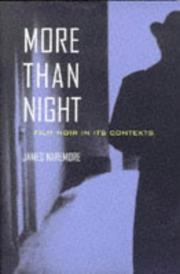
The single most respected scholarly overview of noir; Naremore traces the term's origins, the classic cycle, and its cultural meanings in clear, elegant prose that is accessible even to newcomers.
The Definition Fights: Is Noir a Genre, Style, or Mood?
BeginnerUnderstand why scholars have argued so fiercely about how to define film noir — genre, cycle, style, or sensibility — and be able to articulate the main positions in that debate.
▸ Study plan for this stage
Pace: 2–3 weeks, ~25–30 pages/day, with 2–3 days for review and reflection between major sections
- The chronological boundaries of film noir (1941–1953) and why Borde chose these dates as definitional markers
- How noir functions as a historical cycle rather than a timeless genre with fixed rules
- The distinction between noir as a visual/stylistic phenomenon versus noir as a thematic or moral sensibility
- The role of production conditions, studio systems, and post-war American culture in shaping what we call 'noir'
- How Borde's panoramic approach reveals noir's diversity—resisting a single unified definition
- The tension between critical retrospection (how we define noir now) and contemporary reception (how 1940s audiences understood these films)
- Why did Borde select 1941–1953 as the boundaries for American film noir, and what does this periodization tell us about defining noir?
- According to Borde's analysis, what are the main arguments for treating noir as a cycle rather than a genre?
- How does Borde distinguish between noir as a visual/stylistic category and noir as a mood or sensibility?
- What role do production contexts and industrial factors play in Borde's explanation of why noir emerged when and how it did?
- Can you articulate at least two different positions on noir's definition that Borde presents or implies through his panoramic survey?
- How does Borde's approach of surveying a broad panorama of films help resolve—or complicate—the definitional debate?
- Create a timeline of the 1941–1953 period marking key historical events (WWII, post-war economic shifts, studio changes) and note which films Borde discusses at each point; reflect on how these contexts shaped noir's emergence and evolution
- Select 3–4 films from Borde's panorama and write a one-page analysis for each, identifying which elements are stylistic (lighting, composition, camera work), which are thematic (moral ambiguity, fatalism), and which are mood-based (tone, atmosphere)
- Create a comparison chart of Borde's implicit definition of noir versus one alternative definition (genre vs. cycle vs. style); list what each definition includes, excludes, and why those boundaries matter
- Write a short essay (500–750 words) answering: 'Is noir a genre, a cycle, a style, or a sensibility?' using specific examples from Borde's panorama to support your position
- Conduct a close viewing of one film Borde discusses in detail; pause frequently to note visual techniques, narrative patterns, and emotional tone; then write how each element contributes to noir's identity
- Debate preparation: outline the strongest argument for each major definitional position (genre, cycle, style, sensibility) using evidence from Borde's text; practice articulating why scholars disagree
Next up: By understanding why scholars have fought over noir's definition and recognizing that Borde's panoramic approach reveals noir's internal diversity rather than a single essence, you'll be prepared to examine how specific noir subgenres, visual techniques, and thematic patterns developed—moving from the 'what is noir?' question to 'how did noir actually work?'
Broadens the canon beyond Silver's original selections and introduces competing curatorial choices, making the definitional stakes concrete and visible.
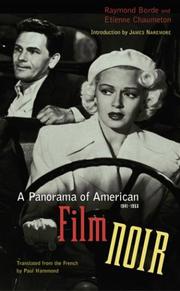
The 1955 French essay that literally named and invented the critical category of film noir; reading it now shows exactly where the definition debates began and why they have never fully resolved.
Roots: German Expressionism and the Hard-Boiled Source
IntermediateTrace film noir's two great debts — the visual grammar of German Expressionist cinema brought to Hollywood by émigré directors, and the literary world of Hammett, Chandler, and Cain that supplied its plots and moral universe.
▸ Study plan for this stage
Pace: 8–10 weeks, ~25–30 pages/day. Start with Kracauer (4–5 weeks, dense theoretical work), move to Chandler's essay (1 week, ~60 pages), then Christopher (2–3 weeks, ~40 pages/day for synthesis and deeper engagement).
- German Expressionism's visual vocabulary: chiaroscuro, distorted sets, psychological shadows, and the visual representation of inner turmoil as foundational to noir aesthetics
- The Weimar-to-Hollywood pipeline: how émigré directors (Lang, Siodmak, Wilder) transplanted Expressionist techniques into American cinema
- Hard-boiled fiction's moral and narrative DNA: the cynical protagonist, corrupt institutions, femme fatales, and the code of honor within a lawless world
- Chandler's theory of detective fiction as social critique: the private eye as moral arbiter in a morally compromised society
- The synthesis of form and content: how Expressionist visual style married hard-boiled narrative to create noir's distinctive worldview
- Psychological realism in both mediums: the exploration of trauma, paranoia, and moral ambiguity as reflections of post-war anxiety
- The femme fatale archetype: her origins in Expressionist cinema and evolution through hard-boiled literature into noir film
- How did German Expressionist visual techniques (lighting, composition, set design) specifically influence the visual language of American film noir?
- What role did émigré directors play in bringing Expressionist aesthetics to Hollywood, and what obstacles did they face?
- According to Chandler's essay, what distinguishes the hard-boiled detective story from earlier detective fiction, and what social function does it serve?
- How do the protagonists in hard-boiled literature embody a moral code that differs from the institutions around them?
- What connections does Christopher draw between German Expressionism and hard-boiled fiction as responses to historical trauma and social instability?
- How did the femme fatale figure evolve from Expressionist cinema into the hard-boiled literary tradition and ultimately into noir film?
- Create a visual analysis chart: select 3–4 key scenes from Kracauer's discussion of Expressionist films and map their visual techniques (shadows, angles, distortion) to specific noir films you've seen, noting how the vocabulary was adapted.
- Close reading of Chandler's essay: annotate 'The Simple Art of Murder' to identify his core arguments about detective fiction, then write a 2-page response explaining how these principles appear in hard-boiled plots.
- Biographical research: trace the careers of 2–3 émigré directors mentioned in Kracauer (e.g., Fritz Lang, Robert Siodmak) from Weimar Germany to Hollywood, documenting how their early work influenced their later noir films.
- Comparative character study: select a hard-boiled protagonist from Chandler's essay or examples and a noir film protagonist, analyzing how they embody the moral code Chandler describes.
- Thematic mapping exercise: using Christopher's framework, create a diagram showing how Expressionist visual anxiety and hard-boiled narrative cynicism converge in noir's treatment of a specific theme (e.g., corruption, paranoia, or betrayal).
- Write a short scene (2–3 pages) in hard-boiled style that deliberately employs Expressionist visual descriptions—shadows, distorted perspectives, psychological atmosphere—to practice synthesizing both traditions.
Next up: This stage establishes the historical and aesthetic foundations of noir—its visual DNA and narrative DNA—preparing you to recognize these elements in action and understand how they evolved into the classic noir films of the 1940s–50s, which the next stage will examine in depth.
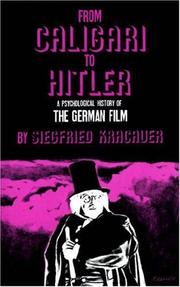
The foundational study of Weimar cinema's dark visual style and psychological themes; after reading this, the shadow-drenched look of noir is immediately legible as a transplanted German idiom.
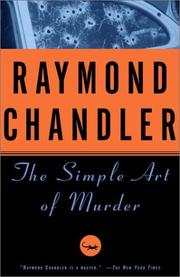
Chandler's famous 1944 essay defines the hard-boiled aesthetic and the moral world of the detective story that fed directly into noir screenplays; essential primary source reading.
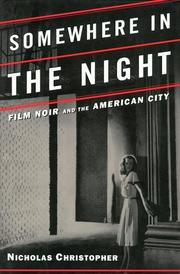
Connects the émigré directors' European sensibility to the American urban landscape, synthesizing the Expressionist and literary threads into a unified account of how noir's world was built.
Neo-Noir and the Long Afterlife
ExpertUnderstand how and why noir was revived, transformed, and interrogated from the 1970s onward — in Hollywood, world cinema, and contemporary culture — and be able to critically evaluate what 'neo-noir' adds or loses.
▸ Study plan for this stage
Pace: 8–10 weeks, ~40–50 pages/day (approximately 2–3 weeks per book, with overlap for synthesis)
- The foundational hard-boiled detective archetype and moral ambiguity in Hammett's work as the DNA of noir
- The historical, industrial, and cultural conditions that enabled noir's emergence and decline in the 1940s–50s
- The aesthetic and thematic vocabulary of noir (visual style, narrative structure, cynicism, fatalism, corruption)
- Why and how 1970s filmmakers (particularly Polanski) consciously revived and transformed noir conventions for a post-Watergate, post-Vietnam America
- The distinction between homage, pastiche, and genuine interrogation in neo-noir: what gets preserved vs. what gets questioned
- How neo-noir functions as cultural commentary on its own era—using noir's visual/narrative language to diagnose contemporary crises
- The global reach of neo-noir: how non-American directors adapted noir for different national contexts and concerns
- The ongoing tension between noir as escapist genre and noir as critical mirror of systemic corruption and moral decay
- What makes Hammett's Sam Spade a proto-noir protagonist, and how do his moral compromises differ from the detective heroes of earlier American fiction?
- According to Spicer, what were the primary industrial, technological, and cultural factors that made the 1940s–50s the 'classic' noir period, and why did that period end?
- How does Wasson argue that Chinatown functions as both a homage to and a deconstruction of classic noir, and what does its success reveal about 1970s American anxieties?
- What is the relationship between the visual/stylistic elements of noir (lighting, composition, camera work) and its thematic preoccupations with corruption and moral ambiguity?
- How do neo-noir films use noir's conventions to interrogate their own historical moment in ways that classic noir films did not or could not?
- What are the key differences between 'neo-noir' as a revival and 'neo-noir' as a transformation? Can a film be both at once?
- Close-read a pivotal scene from The Maltese Falcon (e.g., Spade's final confrontation with Brigid) and annotate it for: moral ambiguity, cynicism, economic desperation, and the tension between personal desire and professional ethics. Then write a 1-page reflection on how this scene establishes the noir protagonist.
- Create a visual mood board or annotated screenshot collection from a classic noir film (e.g., The Killers, Out of the Past, In a Lonely Place) and a 1970s neo-noir (e.g., Chinatown, The Long Goodbye, Farewell, My Lovely). Identify 3–4 visual/compositional choices in each and explain what they communicate about the film's relationship to corruption and power.
- Read Spicer's chapters on noir's industrial context and create a timeline showing: major studio policies, technological shifts (color film, widescreen, television competition), and key noir releases. Write a 2-page analysis of how one industrial change (e.g., the Paramount Decree, the rise of TV) directly shaped noir's visual or narrative style.
- Watch Chinatown and write a detailed scene-by-scene comparison with a classic noir film of your choice, tracking: plot structure, dialogue tone, visual composition, and the protagonist's relationship to the case. Identify 3 moments where Polanski deliberately echoes classic noir and 3 where he deliberately breaks from it.
- Conduct a 'neo-noir audit': select a contemporary film, TV show, or novel published after 2000 that you suspect uses noir conventions (e.g., True Detective, Brick, In Bruges). Analyze it against Spicer's definition of noir and Wasson's account of Chinatown's innovations. Does it qualify as neo-noir? Why or why not? Write 2–3 pages.
- Create a comparative character study of Sam Spade (Hammett), Jake Gittes (Chinatown), and a neo-noir protagonist from a film or book of your choice. Map their moral codes, their relationship to institutions (law, business, family), and their capacity for self-deception. Write a 2-page essay on how the protagonist's moral ambiguity has evolved from classic noir to neo-noir.
Next up: This stage equips you to recognize noir's DNA across genres and eras, and to understand how filmmakers and writers consciously deploy noir's visual and moral language to diagnose cultural crises—preparing you to explore how contemporary media continues to mine noir's aesthetic and thematic resources, and to evaluate what noir reveals about power, corruption, and complicity in your own moment.
Reading the ur-text of hard-boiled fiction at this stage, after the critical framework is in place, reveals exactly how neo-noir writers and directors return to and revise the original source material.
Spicer's BFI volume gives the most systematic account of neo-noir as a global phenomenon, covering the 1970s revival through 2000s reinventions with clear analytical categories built on everything the curriculum has covered.

A deeply researched narrative account of Chinatown's making — the pivotal neo-noir text — that shows in practice how the classic cycle was consciously excavated, mourned, and transformed for a new era.
Discussion
Keep reading
Paths that share books, cover the same subject, or open a related topic.