Dashiell Hammett Reading Order: Where to Start
This curriculum moves from Hammett's short fiction roots through his landmark novels, then zooms out to place him in the hardboiled tradition he helped create. Each stage builds on the last: you first absorb his voice and world, then experience his novelistic ambition at its peak, then gain the critical and historical context to understand why it all matters.
First Encounters: The Continental Op
BeginnerGet comfortable with Hammett's terse prose style, his nameless detective, and the moral ambiguity of his San Francisco underworld before tackling the longer novels.
▸ Study plan for this stage
Pace: 6–8 weeks total: Weeks 1–3 cover The Big Knockover (read ~20–25 pages/day, pausing after each story to take brief notes); Weeks 4–8 cover Red Harvest (~15–20 pages/day, slower pace to track the escalating gang factions and the Op's moral drift).
- The Continental Op as a nameless, faceless narrator — how anonymity shapes reader identification and moral judgment
- Hammett's 'hardboiled' prose style: short declarative sentences, clipped dialogue, deliberate withholding of interiority
- The San Francisco (and Personville/'Poisonville') underworld as a corrupt ecosystem, not just a backdrop
- Moral ambiguity and the 'dirty work' problem — the Op gets results but at an ethical cost he half-acknowledges
- The 'Continental Detective Agency' as an institution: how working for a faceless organization shapes the Op's detachment
- Pervasive violence as a plot engine in Red Harvest: how the Op deliberately plays factions against each other ('stirring things up')
- The femme fatale and unreliable ally archetypes, illustrated by Dinah Brand in Red Harvest
- Hammett's roots in Pinkerton detective work and how real-world labor/class conflict bleeds into the fiction
- In The Big Knockover, how does Hammett use the Op's lack of a name or personal history to keep the reader focused on action and moral texture rather than character biography?
- What specific prose techniques — sentence length, verb choice, dialogue tags, use of physical description — define Hammett's terse style across both books, and where do you find them most effective?
- In Red Harvest, the Op admits he has 'gone blood simple.' What does he mean, and how does this moment complicate any reading of him as a straightforward hero?
- How does Personville ('Poisonville') in Red Harvest function as an almost allegorical portrait of institutional corruption, and what real-world historical context (labor disputes, Prohibition-era crime) does Hammett seem to be drawing on?
- Compare the Op's relationship with female characters in The Big Knockover stories versus his relationship with Dinah Brand in Red Harvest — how does Hammett use these relationships to test the Op's professionalism and detachment?
- By the end of Red Harvest, has the Op 'solved' anything in a moral sense, or merely reshuffled the corruption? What does Hammett seem to be saying about the limits of individual action against systemic rot?
- Style imitation: Choose one action scene from The Big Knockover and rewrite two paragraphs in a deliberately un-Hammett style (florid, introspective, adjectival). Then rewrite them back in Hammett's voice. Comparing the two drafts will make his stylistic choices viscerally concrete.
- Faction map: While reading Red Harvest, draw and continuously update a diagram of Personville's criminal and political factions (Elihu Willsson, Noonan, Thaler, Max, etc.), noting who the Op plays against whom and when. This turns a potentially confusing plot into a visible strategic game.
- Close-reading log: Keep a running list of every moment in both books where the Op expresses — or conspicuously suppresses — an emotion or moral opinion. At the end, review the list: what patterns emerge about what he allows himself to feel?
- The 'blood simple' passage analysis: Find the Op's confession about going 'blood simple' in Red Harvest and write a one-page close reading. What word choices does Hammett use? How does the surrounding scene frame the admission? Does the Op take responsibility or deflect?
- Dialogue isolation exercise: Pick any two-page dialogue exchange from either book, strip out all action beats and narration, and read the dialogue alone. Then restore the beats and re-read. Write a short paragraph on what the physical action adds that the words alone cannot convey.
- Comparative reflection journal: After finishing both books, write a 300–500 word entry answering: 'How did my picture of the Op change from the first story in The Big Knockover to the final page of Red Harvest?' Focus on whether you trust him more or less, and why.
Next up: Mastering the Op's voice and Hammett's stripped-down moral world in these shorter and earlier works gives readers the stylistic fluency and ethical framework needed to appreciate how Hammett scales up his ambitions — in character depth, romantic tension, and urban mythology — when he moves to his full-length novels featuring Sam Spade and the Maltese Falcon.
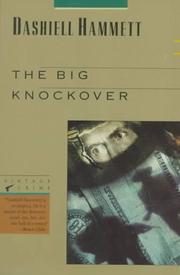
The best single-volume collection of Continental Op stories, edited by Lillian Hellman. Starting here lets you absorb Hammett's voice and the Op's world in short, punchy doses before committing to a novel.
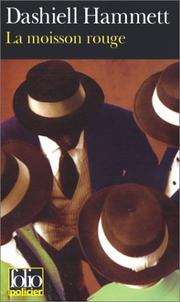
Hammett's first novel grew directly out of Op short stories and reads like a series of linked pulp episodes — a perfect bridge from the stories to the novels, and one of the most violent, propulsive books he ever wrote.
The Major Novels
BeginnerRead Hammett's four remaining novels in the order that shows his growing literary ambition, from the Op's last case through the creation of Sam Spade and Nick Charles.
▸ Study plan for this stage
Pace: 10–12 weeks total (~20–25 pages/day, 5 days/week): spend ~2 weeks on The Dain Curse, ~3 weeks on The Maltese Falcon, ~3 weeks on The Glass Key, and ~2 weeks on The Thin Man, leaving a final week for review and reflection across all four novels.
- Evolution of the Hammett protagonist: from the anonymous, world-weary Continental Op in The Dain Curse to the mythic Sam Spade in The Maltese Falcon, the stoic Ned Beaumont in The Glass Key, and the witty, domestic Nick Charles in The Thin Man — tracing how each hero redefines the hard-boiled detect
- The hard-boiled code of ethics: how each protagonist navigates loyalty, betrayal, and personal integrity in a corrupt world, and how that code shifts in tone from grim professionalism (the Op) to dark romanticism (Spade) to political cynicism (Beaumont) to ironic detachment (Nick).
- Corruption and power structures: The Dain Curse exposes addiction and cult manipulation; The Maltese Falcon indicts greed and romantic deception; The Glass Key dissects machine politics and organized crime; The Thin Man satirizes wealthy New York society — each novel targets a different American ins
- Narrative structure and plotting: The Dain Curse's three-part, episodic structure vs. The Maltese Falcon's tight, single-arc thriller vs. The Glass Key's slow-burn political noir vs. The Thin Man's drawing-room mystery format — understanding how Hammett consciously varied his architecture.
- The femme fatale and gender dynamics: Iva Archer and Brigid O'Shaughnessy in The Maltese Falcon, Janet Henry in The Glass Key, and Nora Charles in The Thin Man — how Hammett's female characters evolve from dangerous manipulators to complex partners.
- Dialogue as character and action: Hammett's minimalist, behaviorist prose style — what characters do NOT say reveals as much as what they do, a technique most fully realized in The Glass Key and The Maltese Falcon.
- The MacGuffin and the nature of truth: the Maltese Falcon as the ultimate symbol of illusory value; the 'Dain Curse' as a manufactured myth; the murder mystery in The Thin Man as almost secondary to social comedy — how Hammett questions whether the 'solution' ever truly matters.
- Growing literary ambition: reading the four novels in sequence to see Hammett move from genre craftsman to a writer Raymond Chandler called 'the best American crime writer,' influencing literary modernism and anticipating existentialist fiction.
- How does the Continental Op's handling of Gabrielle Leggett's 'curse' in The Dain Curse reflect Hammett's skeptical, rationalist worldview, and how does this differ from Sam Spade's motivations at the end of The Maltese Falcon?
- In The Maltese Falcon, why does Sam Spade turn Brigid O'Shaughnessy over to the police despite his feelings for her, and what does this decision reveal about Hammett's hard-boiled code of professional ethics?
- How does The Glass Key use Ned Beaumont's relationship with Paul Madvig to explore themes of loyalty and political corruption — and why is Beaumont a more ambiguous hero than either the Op or Spade?
- In what ways does The Thin Man represent a deliberate tonal departure from the three preceding novels, and how does the Nick-and-Nora dynamic subvert or reinvent the conventions Hammett established in his earlier work?
- Trace the role of deception across all four novels: how do The Dain Curse's false curse, The Maltese Falcon's fake bird, The Glass Key's political cover-up, and The Thin Man's social performance all serve as variations on a single thematic obsession?
- How does Hammett's prose style — particularly his use of behaviorist, action-focused description and clipped dialogue — function differently in The Glass Key compared to The Thin Man, and what does that difference suggest about each book's intended effect on the reader?
- Character comparison journal: After finishing each novel, write a one-page profile of the protagonist (the Op, Spade, Beaumont, Nick Charles) answering: What does he want? What is his code? What does he sacrifice? At the end of all four, write a final page comparing them side by side.
- Close-reading dialogue drill: Select one key interrogation or confrontation scene from each novel (e.g., Spade confronting Brigid in The Maltese Falcon; Beaumont and Shad O'Rory in The Glass Key). Reread the scene, then rewrite it in a more 'explaining' style. Compare your version to Hammett's and articulate what his minimalism achieves that yours does not.
- Corruption map: For each novel, draw a simple diagram mapping the power structure — who holds power, who wants it, and how the crime connects to that struggle. Note how the scale shifts from a cult (The Dain Curse) to a city's political machine (The Glass Key) to Manhattan high society (The Thin Man).
- MacGuffin analysis essay (500 words): Choose one novel and write a short essay arguing whether the central object or mystery (the curse, the falcon, the murder of Taylor Henry, the Wynant disappearance) is ultimately 'solved' in a satisfying way — and what Hammett seems to be saying about the nature of truth and resolution.
- Tone and genre tracking: As you read The Thin Man, keep a running list of moments that feel more like screwball comedy or social satire than crime fiction. After finishing, write a paragraph arguing whether The Thin Man is best classified as a detective novel, a comedy of manners, or something else entirely.
- Influence research exercise: After completing all four novels, read Raymond Chandler's 1944 essay 'The Simple Art of Murder' (freely available online). Annotate it, identifying every claim Chandler makes about hard-boiled fiction and finding one specific passage from one of your four Hammett novels that either supports or complicates that claim.
Next up: Mastering these four novels gives the reader a complete map of Hammett's fictional world and stylistic range, providing the essential foundation for the next stage — exploring the critical, biographical, and cultural context that explains why Hammett's work had such a seismic impact on American literature, film noir, and political thought.
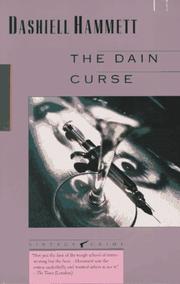
The Op's second and final novel-length case; reading it right after Red Harvest shows how Hammett was already pushing the form toward psychological complexity and gothic atmosphere.

Hammett's masterpiece and the defining hardboiled novel. Sam Spade, Brigid O'Shaughnessy, and Gutman set the template for an entire genre — best appreciated now that you already know Hammett's world.
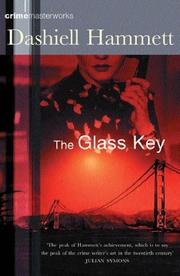
Often considered Hammett's most technically accomplished novel; its political corruption plot and morally opaque hero Ned Beaumont reward the closer reading you can now bring after The Maltese Falcon.
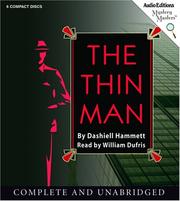
Hammett's last novel and a deliberate tonal departure — witty, domestic, and urbane. Reading it last shows the full arc of his career and sets up the cultural legacy discussions in Stage 3.
Hardboiled Context & Critical Depth
IntermediateUnderstand the pulp magazine world Hammett came from, the tradition he launched, and the critical frameworks scholars use to analyze his work and its legacy.
▸ Study plan for this stage
Pace: 4–5 weeks total: Week 1 — Read "The Simple Art of Murder" in full (it is a long essay plus stories, ~80–100 pages depending on edition), re-reading Chandler's central manifesto section at least twice and annotating key claims. Weeks 2–4 — Read "Hardboiled America" at a pace of ~25–30 pages per day,
- The 'Chandler Thesis': Hammett's role in taking murder away from the genteel English tradition and grounding crime fiction in realistic American social conditions — as argued in 'The Simple Art of Murder'
- The ideal of the hardboiled detective as a moral knight in a corrupt world: Chandler's famous 'down these mean streets' formulation and what it demands of the hero
- Pulp magazine culture: the economic, editorial, and aesthetic conditions of Black Mask and its peers that shaped Hammett's style, as documented in 'Hardboiled America'
- The visual and material culture of pulp: how cover art, typography, and cheap paper stock created a distinct aesthetic identity that O'Brien argues is inseparable from the fiction itself
- Hammett as originator vs. Hammett as product: the tension between viewing him as a lone genius and viewing him as the sharpest expression of a collective pulp tradition
- Prose style as ideology: how Hammett's stripped, declarative sentences enact a worldview of distrust, stoicism, and democratic skepticism toward authority
- The legacy and canonization problem: how Chandler's essay and O'Brien's cultural history together show how a 'low' genre gets elevated into literary respectability
- Genre as social document: O'Brien's argument that hardboiled fiction maps the anxieties of Depression-era and Prohibition-era America onto urban geography and character type
- According to Chandler in 'The Simple Art of Murder,' what specific failures of the classical detective story did Hammett's work correct, and do you find Chandler's critique convincing or self-serving?
- How does O'Brien's account of pulp magazine economics and visual culture in 'Hardboiled America' complicate or enrich the purely literary argument Chandler makes about the genre's value?
- What does Chandler mean when he says the detective must be 'a complete man and a common man and yet an unusual man'? How does this ideal map — or fail to map — onto Hammett's actual protagonists like the Continental Op or Sam Spade?
- O'Brien treats cover art, layout, and the physical object of the pulp magazine as meaningful evidence. What does this methodology reveal about hardboiled fiction that a purely text-based reading would miss?
- Both Chandler and O'Brien are engaged in acts of canon-making. How do their respective agendas (a practicing novelist vs. a cultural historian) shape what each chooses to emphasize or omit about Hammett?
- How do the social and historical conditions O'Brien describes in 'Hardboiled America' — Prohibition, urbanization, Depression-era distrust of institutions — show up as specific formal or thematic features in the hardboiled style?
- Annotation dialogue: Read Chandler's central manifesto passage in 'The Simple Art of Murder' and write a one-page 'reply' from Hammett's perspective, using only evidence drawn from Hammett's actual fiction you read in earlier stages — where would Hammett agree, resist, or complicate Chandler's claims?
- Visual archive exercise: Using O'Brien's descriptions in 'Hardboiled America' as a guide, find 5–8 actual Black Mask or pulp cover images (widely available in digital archives) and write a paragraph for each connecting the visual rhetoric — color, pose, typography — to a specific stylistic or thematic feature O'Brien discusses.
- Comparative close reading: Select one page of Hammett prose and apply Chandler's criteria from 'The Simple Art of Murder' as a checklist. Does the passage meet his standards? Where does it exceed or fall short of his own definition?
- Canon-construction map: Draw a two-column chart — one column for Chandler's literary/aesthetic criteria, one for O'Brien's historical/material criteria — and populate each with at least six specific claims from the books. Then write a short paragraph on what a complete critical picture of Hammett requires that neither book alone provides.
- Style imitation: Write a 300–400 word hardboiled scene set in a contemporary city, consciously applying the stylistic principles Chandler articulates. Then annotate your own draft, noting which choices were guided by Chandler's essay and which by O'Brien's account of the genre's social roots.
- Argument stress-test: Identify the single weakest claim in Chandler's essay and the single weakest claim in O'Brien's book. Write a one-paragraph rebuttal for each, citing specific counter-evidence from the other book in the stage wherever possible.
Next up: By establishing the critical vocabulary (pulp origins, prose-as-ideology, canon formation) and the cultural-historical frame (pulp economics, Depression-era America, visual culture) from Chandler and O'Brien, the reader is now equipped to return to Hammett's primary texts — or advance to more specialized scholarly criticism — with the analytical tools needed to read them as both literary achieveme
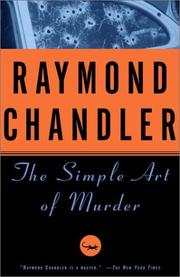
Chandler's famous 1944 essay (collected here with stories) is the essential critical document of the hardboiled tradition — it explicitly defines what Hammett achieved and why it mattered, making it the ideal bridge to criticism.

A richly illustrated cultural history of pulp paperback fiction that places Hammett squarely in the Black Mask era and the broader paperback revolution, giving essential publishing and visual context.
Discussion
Keep reading
Paths that share books, cover the same subject, or open a related topic.