Best Books on Silent Film, in Reading Order
This curriculum moves from a panoramic grasp of silent cinema's history and aesthetics through focused studies of its great comedians, the radical national movements in Germany and the Soviet Union, and finally the traumatic transition to sound — each stage building the critical vocabulary and historical context needed for the next. Starting at an intermediate level, the path assumes some film literacy but no specialist knowledge of the silent era.
The Whole Picture: Silent Cinema's Arc
IntermediateGain a confident historical and aesthetic framework for the entire silent era — from the first projected images through the late 1920s — so every later, focused study has a map to hang on.
▸ Study plan for this stage
Pace: 8–10 weeks, ~40–50 pages/day (Brownlow first, then Nelmes; allow time for note-taking and film viewing between sections)
- The technological evolution from Lumière actualities through narrative cinema to the sophisticated visual language of the late 1920s
- How silent cinema developed its own grammar of editing, intertitles, performance style, and camera technique to tell stories without dialogue
- The major directorial movements and stylistic schools (German Expressionism, Soviet Montage, French Impressionism, American commercial cinema) and their distinct aesthetic approaches
- The economic and industrial structures that shaped silent film production, distribution, and exhibition across different national cinemas
- The relationship between theatrical performance traditions and film acting—how silent actors conveyed emotion and narrative through gesture, facial expression, and body movement
- How intertitles functioned as both narrative device and aesthetic element, and why their removal marked a crucial transition point
- The role of live musical accompaniment in shaping the viewer's emotional and temporal experience of silent films
- The historical contingency of the silent era's end: why sound arrived when it did and what was lost and gained in the transition
- Trace the technical and narrative innovations that transformed cinema from Lumière's short actualities into feature-length narratives with complex editing by the mid-1920s, using specific examples from Brownlow.
- Compare and contrast the aesthetic priorities of at least three different national or stylistic movements in silent cinema (e.g., German Expressionism vs. Soviet Montage vs. American studio cinema). What visual and narrative strategies defined each?
- Explain how silent actors conveyed psychological states, character motivation, and narrative information without dialogue. What performance techniques did they develop, and how did these differ from stage acting?
- Analyze the function of intertitles in silent narrative: How did they evolve from simple scene labels to integral storytelling devices? What aesthetic and practical constraints did they impose?
- How did the economics of silent film production (studio systems, distribution networks, exhibition venues) influence the kinds of stories that got made and the stylistic choices filmmakers could pursue?
- Describe the role of live music in silent cinema. How did the score shape temporal pacing, emotional tone, and viewer interpretation of the image?
- Create a timeline of 8–10 landmark silent films (drawn from Brownlow's examples) spanning 1895–1928, noting the key technical or narrative innovation each represents. Annotate with the specific pages in Brownlow where each is discussed.
- Watch two films from different national movements (e.g., one German Expressionist, one Soviet Montage) and write a comparative analysis of their visual language, editing strategies, and use of space—grounding your observations in the aesthetic frameworks Nelmes provides.
- Select one silent film and create a shot-by-shot breakdown of a 2–3 minute sequence, identifying the editing patterns, camera angles, performance choices, and intertitle placement. Explain how these elements work together to convey meaning without sound.
- Compile a visual mood board (screenshots, sketches, or notes) showing how three different directors used lighting, composition, and set design to create distinct aesthetic worlds. Label each with the director's name and the stylistic movement Brownlow identifies them with.
- Write a 500-word essay: 'What was lost and what was gained when sound arrived?' Use specific examples from Brownlow and Nelmes to argue how the transition changed cinema's visual and narrative possibilities.
- Attend or watch a silent film with live musical accompaniment (or find a high-quality recording of one). Write reflective notes on how the music shaped your experience of pacing, emotion, and meaning—compare this to watching the same film with a modern score or no music.
Next up: With a confident grasp of silent cinema's full historical arc and its major aesthetic movements, you are now equipped to dive deep into specific directors, genres, or national cinemas, knowing how each fits into the larger evolution and what formal innovations they contributed.

The foundational oral history of Hollywood's silent era, built from interviews with surviving participants. Reading it first gives you living voices and concrete anecdotes that make every subsequent analytical text feel grounded.
Establishes the critical and formal vocabulary — mise-en-scène, montage, genre, spectatorship — that the more specialist books in later stages assume you already possess.
The Earliest Cinema: Origins and the First Language of Film
IntermediateUnderstand how cinema invented itself between roughly 1895 and 1915 — the nickelodeon era, early narrative, and the pioneers who turned a novelty into an art form.
▸ Study plan for this stage
Pace: 4–5 weeks, ~25–30 pages/day. Musser's work is dense with historical detail and technical analysis; allow time for note-taking and rewatching referenced films.
- The invention of cinema as a technological and cultural process, not a single moment—from Edison and Lumière through the nickelodeon boom
- Early cinema's shift from novelty attraction to narrative storytelling (1895–1908), and the formal innovations that made narrative possible
- The role of the nickelodeon theater in democratizing cinema and establishing it as a mass medium
- Key pioneers (Edison, Lumière, Méliès, Porter, Griffith) and their distinct contributions to cinematic language
- The emergence of editing, camera movement, and mise-en-scène as tools for meaning-making in early narrative films
- How early cinema borrowed from and diverged from theater, vaudeville, and photography
- The relationship between technological constraints and creative innovation in the silent era
- How did cinema evolve from a technological novelty (1895) into a narrative art form by 1908–1915, and what were the key turning points in that evolution according to Musser?
- What was the nickelodeon, and why was it crucial to cinema's establishment as a mass medium?
- Compare the approaches of Edison, Lumière, and Méliès to early cinema. How did their different visions shape the medium's possibilities?
- What formal innovations (editing, framing, camera movement) did early filmmakers develop, and how did these create new narrative possibilities?
- How did early cinema's relationship to theater and vaudeville influence its form and content?
- What does Musser argue about the role of the filmmaker as author in early cinema, and how does this challenge or support auteur theory?
- Watch at least 5–6 films referenced in Musser's text (e.g., Lumière shorts, Edison's 'The Great Train Robbery,' Méliès' 'A Trip to the Moon,' Porter's 'Life of an American Fireman,' Griffith's 'Birth of a Nation' or 'Intolerance'). Take notes on how editing, framing, and narrative structure differ across them.
- Create a timeline of cinema's technological and narrative milestones (1895–1915) based on Musser's account. Annotate with the key innovators and films at each stage.
- Write a 500-word analysis comparing two early films from different makers (e.g., a Lumière actualité vs. a Méliès fantasy film). Explain how their formal choices reflect their different visions of what cinema could be.
- Research and write a short biography (300–400 words) of one pioneer Musser emphasizes (Edison, Lumière, Méliès, Porter, or Griffith), focusing on how their background shaped their cinematic innovations.
- Sketch out a simple storyboard for a 1–2 minute narrative film using only the techniques available to filmmakers circa 1905–1910 (no complex editing, limited camera movement). Reflect on how constraints shaped creativity.
- Create a visual or written comparison chart: 'Nickelodeon vs. Vaudeville vs. Theater'—how did each medium's conventions influence early cinema's form and audience expectations?
Next up: This stage establishes cinema's formal and technological foundations, preparing you to analyze how filmmakers refined and systematized these innovations into the classical Hollywood style and international movements of the 1920s–1930s.
The definitive scholarly account of pre-nickelodeon and early nickelodeon cinema; reading it now, after Brownlow's human warmth, adds rigorous historical and industrial depth.
The Great Comedians: Chaplin, Keaton, and Lloyd
IntermediateDevelop a deep, comparative understanding of the three masters of silent comedy — their distinct philosophies, techniques, and cultural meanings — and see how comedy became the era's most sophisticated art form.
▸ Study plan for this stage
Pace: 8–10 weeks, ~40–50 pages/day, with 2–3 days per week dedicated to film viewing and comparative analysis
- Chaplin's Tramp character as a vehicle for pathos, social commentary, and the tension between sentiment and satire
- Keaton's deadpan aesthetic and mechanical precision: comedy through physical logic and architectural mise-en-scène
- Lloyd's everyman persona and narrative-driven comedy: the integration of character development with gag construction
- The evolution of each comedian's style across the 1920s and early 1930s, and how sound threatened their art forms
- How each comedian's background (music hall, vaudeville, family performance) shaped their distinct comedic philosophy
- The relationship between editing, camera placement, and timing in silent comedy—how form creates meaning
- Silent comedy as social text: how each comedian engaged with modernity, class anxiety, and human dignity
- The comparative legacy of the three: why Chaplin achieved cultural dominance while Keaton and Lloyd were later reassessed
- How does Chaplin's use of pathos differ fundamentally from Keaton's and Lloyd's approaches to emotion in comedy?
- What role did each comedian's early performance background play in shaping their silent film technique?
- How did Keaton's approach to mise-en-scène and editing create comedy without relying on facial expression?
- Compare how Chaplin, Keaton, and Lloyd each handled the transition from shorts to feature-length films.
- What social or political themes does each comedian's work engage with, and how do these reflect their distinct worldviews?
- How did the coming of sound cinema affect each comedian differently, and what does this reveal about the foundations of their art?
- Create a detailed scene-by-scene breakdown of one iconic sequence from each comedian (e.g., Chaplin's factory scene in Modern Times, Keaton's train sequence in The General, Lloyd's clock-hanging scene in Safety Last!), analyzing how editing and camera work generate comedy
- Watch and annotate 3–4 films per comedian in chronological order, noting how their style evolves and identifying recurring gag types, character traits, and thematic concerns
- Write a comparative essay (2,000–2,500 words) analyzing how one specific theme (e.g., poverty, technology, ambition, romance) is treated differently across one film by each comedian
- Create a visual chart mapping the evolution of each comedian's character across their career, noting shifts in personality, costume, narrative role, and emotional register
- Conduct a 'gag autopsy': select one complex comedic sequence from each comedian and write a technical analysis of how the gag is constructed, timed, and why it works
- Produce a short written comparison of how each comedian uses the body and face as comedic instruments, with specific examples from the texts and films
Next up: This stage establishes the three foundational figures of silent comedy and their distinct artistic philosophies, preparing you to explore how their innovations influenced later comedians, how sound cinema transformed the medium, and how silent comedy's techniques persist in modern cinema.

The most thorough and authoritative Chaplin biography, drawing on the studio archives; it belongs first because Chaplin's career spans the whole silent period and sets the benchmark against which Keaton and Lloyd are measured.
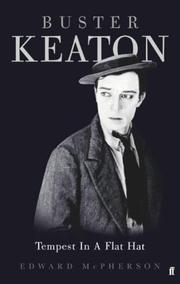
A lucid, critically engaged portrait of Keaton's genius that reads naturally after Robinson, highlighting how Keaton's spatial and mechanical comedy differs fundamentally from Chaplin's emotional pantomime.
Completes the triumvirate by examining Lloyd's optimistic, go-getter persona and his underrated technical mastery, rounding out your comparative picture of silent comedy's range.
National Visions: German Expressionism and Soviet Montage
ExpertMaster the two most intellectually ambitious silent film movements — German Expressionism and Soviet montage cinema — understanding their aesthetic theories, political contexts, and lasting influence on world cinema.
▸ Study plan for this stage
Pace: 8–10 weeks, ~40–50 pages/day (with viewing time for films). Kracauer's book (~300 pages) in weeks 1–4; Leyda's book (~430 pages) in weeks 5–10, with overlapping film screenings throughout.
- German Expressionism as visual psychology: how distorted sets, shadows, and composition reflected inner psychological states and social anxiety in Weimar Germany
- Kracauer's thesis of cinema as social document: how German films encoded the political unconscious and foreshadowed fascism
- Soviet montage theory and practice: Eisenstein's collision montage, Pudovkin's linkage montage, and Vertov's kino-eye as competing approaches to meaning-making through editing
- The relationship between form and ideology: how both movements used cinematic technique to advance political and philosophical worldviews
- The historical contexts: Weimar instability and German Expressionism; Soviet revolution and the avant-garde's role in building the new socialist state
- Specific masterworks and their formal innovations: Caligari, Nosferatu, Battleship Potemkin, Man with a Movie Camera, October
- The influence of these movements on later cinema: how their techniques became foundational to modern filmmaking across genres and nations
- According to Kracauer, how do the visual distortions and set designs in German Expressionist films reflect the psychological and political crises of Weimar Germany?
- What is the fundamental difference between Eisenstein's collision montage and Pudovkin's linkage montage, and what philosophical assumptions underlie each approach?
- How did the Soviet avant-garde filmmakers use cinema as a tool for revolutionary ideology, and what formal techniques did they develop to achieve this?
- Trace the evolution of German Expressionism from Caligari through the late 1920s: how did the movement's visual language and thematic concerns shift over time?
- What does Leyda argue about the relationship between Soviet film aesthetics and the political demands of the Soviet state across different periods?
- How have the formal innovations of German Expressionism and Soviet montage influenced contemporary cinema? Provide specific examples from films you've studied.
- Read Kracauer's introduction and Part One carefully, annotating his key arguments about cinema as a 'mass medium' and social mirror; write a 500-word synthesis of his methodology.
- Watch The Cabinet of Caligari, Nosferatu, and The Last Laugh while reading Kracauer; for each film, identify three specific visual techniques and explain how they support Kracauer's psychological interpretation.
- Create a detailed visual analysis chart comparing the set design, lighting, and composition of three German Expressionist films; note how each film's formal choices reflect its thematic concerns.
- Read Leyda's chapters on early Soviet cinema and Eisenstein; create a side-by-side comparison of how Eisenstein and Pudovkin theorize montage, with direct quotes and your own analysis of their differences.
- Watch Battleship Potemkin, October, and Man with a Movie Camera while reading Leyda; for each, identify 5–7 specific montage sequences and describe the 'collision' or 'linkage' at work and what meaning is created.
- Write a 1,000-word essay arguing how either German Expressionism or Soviet montage directly influenced a specific later film (post-1930) that you know well; ground your argument in formal analysis.
- Conduct a comparative close reading: select one chapter from Kracauer and one from Leyda that address similar themes (e.g., the relationship between form and politics); write a 750-word dialogue between the two authors.
- Create an annotated timeline (1919–1930) mapping the major German Expressionist and Soviet films alongside key historical events; include stills and brief notes on how each film responds to its moment.
Next up: This stage establishes the two foundational avant-garde movements and their theoretical frameworks—expressionism as psychological/political allegory and montage as ideological tool—preparing you to understand how subsequent national cinemas (French Impressionism, Japanese silent cinema, American avant-garde) either adopted, adapted, or rejected these models in their own contexts.
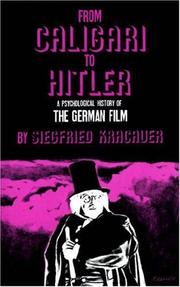
The classic psycho-social reading of Weimar cinema; its argument that German silent film prefigured Nazism is contested but indispensable, and its close readings of Expressionist films are unmatched.
The authoritative English-language history of Soviet cinema, covering Eisenstein, Vertov, Pudovkin and their theoretical writings; it should follow Kracauer so you can compare two politically charged national cinemas side by side.
The End of Silence: What Sound Cost
ExpertReckon with the coming of sound as both a technological rupture and a cultural loss — understanding what was artistically sacrificed, who survived the transition and who didn't, and how historians have mourned and reassessed the silent era.
▸ Study plan for this stage
Pace: 6–7 weeks, ~40–50 pages/day. Begin with Eyman's "The Speed of Sound" (weeks 1–4, ~400 pages), then move to Kobel's "Silent Movies" (weeks 5–7, ~300 pages). Allocate 2–3 days per week for reflection and comparative analysis between the two texts.
- The technological transition from silent to sound film: how the innovation was developed, marketed, and imposed on an industry resistant to change
- The aesthetic losses of the transition: what filmmaking techniques, visual storytelling, and artistic possibilities were abandoned or diminished with the arrival of synchronized dialogue
- The human cost of sound: which actors, directors, and craftspeople thrived in the new era and which were displaced or sidelined due to voice, accent, or artistic incompatibility
- The myth-making around the silent era: how historians and critics have retrospectively mourned the loss of silent cinema and reassessed its artistic achievements
- The economics and power dynamics: how studio systems, patent holders, and financial interests shaped the speed and nature of the transition
- Silent film as a universal language: the particular loss of cinema's ability to transcend linguistic and national boundaries
- Survivor narratives: how certain filmmakers and performers adapted, reinvented themselves, or resisted the new sound paradigm
- According to Eyman, what were the major technological innovations that made synchronized sound feasible, and which competing systems emerged before one became dominant?
- How did the film industry's initial resistance to sound change, and what economic and competitive pressures ultimately forced the transition?
- What specific visual and narrative techniques that were central to silent filmmaking became less viable or were abandoned after the arrival of sound?
- Which major silent film stars and directors successfully transitioned to sound, and which saw their careers decline or end? What factors determined their fates?
- How does Kobel's 'Silent Movies' reassess or reframe the artistic value of the silent era in light of what was lost in the transition?
- What does it mean that silent film functioned as a 'universal language,' and what was culturally lost when dialogue became central to cinema?
- Create a timeline of key technological developments in sound film (1920s–1930s) based on Eyman's account, marking the pivotal moments when the industry shifted from resistance to adoption.
- Select three silent films mentioned in Kobel and analyze one scene from each, identifying specific visual or editing techniques that would become less prominent in sound cinema; write a 2–3 page analysis of what these techniques accomplished.
- Compile a 'transition chart' of at least 10 major silent-era figures (actors, directors, cinematographers) from both books, documenting whether they thrived, adapted, or disappeared in the sound era and why.
- Write a comparative essay (4–5 pages) on how Eyman's 'The Speed of Sound' frames the transition as inevitable/technological versus how Kobel's 'Silent Movies' frames it as a cultural loss or artistic rupture.
- Watch a scene from a canonical silent film (e.g., Chaplin, Keaton, or Greta Garbo) and a scene from an early sound film by the same or contemporary director; annotate how dialogue, sound effects, and music change the rhythm, pacing, and visual storytelling.
- Interview or write a reflection: If you were a silent-era filmmaker or actor in 1927, would you have resisted or embraced sound? Use specific evidence from both books to justify your position.
Next up: This stage establishes the historical rupture and cultural stakes of cinema's transition to sound, preparing you to examine how subsequent filmmakers consciously revived, reimagined, or rejected silent techniques in later eras and movements.
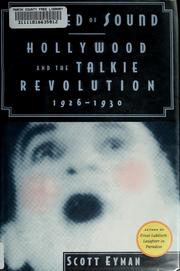
The best single-volume account of Hollywood's transition to sound, 1926–1930, rich in industrial detail and human stories of careers made and destroyed; it synthesises everything the earlier stages have built.
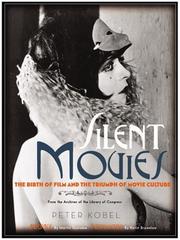
A visually rich, reflective survey that serves as a capstone — revisiting the whole arc of silent cinema with the elegiac awareness of what sound swept away, consolidating your journey through the curriculum.
Discussion
Keep reading
Paths that share books, cover the same subject, or open a related topic.