Film noir has a strange bibliographic problem: the thing came before the name. American studios in the 1940s were making crime melodramas, not noirs. The category was invented in Paris after the war, when French critics finally saw a backlog of American films arriving all at once and noticed a common darkness. Every book on the subject is arguing, implicitly or explicitly, about whether that retroactive label describes a genre, a style, a mood, or a critical fiction.
That means reading order matters more here than for most film topics. Start with a reference that shows you the films, then read the critics who fight about what they are, then go back to the sources noir drew from — German expressionism and American pulp fiction — which explain the look and the voice respectively.
Get the films in front of you first
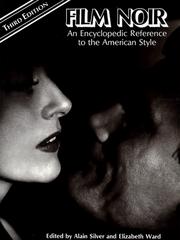
Begin with Film Noir, the Silver and Ward encyclopedia that catalogues the classic-period titles with credits, synopses, and stills. It is a browsing book, not a reading book, and its function is to give you a mental library. Watch a dozen entries before you read a word of theory; the arguments that follow are unreadable otherwise.
The argument about what noir is
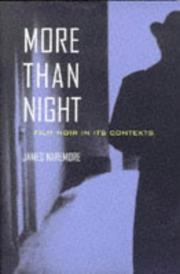
More than night by James Naremore is the best single critical study — it traces how the idea of noir was constructed by French criticism, absorbed by American academia, and eventually sold back as a marketing category, while taking the films seriously as art. Pair it with A panorama of American film noir, 1941-1953, the Borde and Chaumeton study that started it all. Reading the founding French text after Naremore's account of its reception is unusually satisfying: you see how much of the modern consensus comes from two critics writing in 1955 about films they had just discovered.
Film noir by Andrew Spicer is the tidiest overview of the whole debate, running through the classic cycle, neo-noir, and the British variant, and it works well as a synthesis once you have the two positions above.
Where the look and the voice came from
The visual grammar came substantially from émigré directors trained in Weimar cinema, which is why From Caligari to Hitler belongs here. Siegfried Kracauer's argument — that German films of the 1920s revealed a national psychology drifting toward authoritarianism — is heavily disputed as history and still indispensable as film criticism. Read it knowing that later scholars consider its psychological determinism overreaching.
The voice came from pulp. The Simple Art of Murder collects Raymond Chandler's essay attacking the genteel English detective story and demanding a fiction where crime happens in real streets, plus several of his own stories. Then read The Maltese Falcon itself: Hammett's novel is the source text for the archetype, and the difference between the book's Spade and Bogart's is instructive.
Noir as a way of seeing
Somewhere in the night by Nicholas Christopher reads noir as a mythology of the American city — a labyrinth, a set of recurring figures, a dream logic — and is the most lyrical book on the list. Close with The Big Goodbye: Chinatown and the Last Years of Hollywood, Sam Wasson's account of the 1974 film that revived and complicated the form, along with the studio era ending around it.
Follow the path in order and the label stops being a mood word — you will be able to say what a film is doing and where the technique came from. If cinema history is your thing, the silent film hub picks up the story a generation earlier.
Follow the full ordered path here: Best Books on Film Noir, in Reading Order.
Ready to learn something deeply?
Build a reading path — free