Mystery & detective fiction: the essential path
This curriculum traces mystery and detective fiction from its 19th-century origins through the Golden Age, the hardboiled revolution, and into contemporary crime writing. Each stage builds on the last — first establishing the genre's foundational logic and conventions, then complicating them, then subverting and expanding them — so that by the end the reader can appreciate not just individual books but the full conversation the genre has been having with itself for nearly two centuries.
The Founding Detectives
BeginnerUnderstand the DNA of detective fiction — the puzzle, the eccentric genius detective, the loyal narrator, and the satisfying reveal — through the writers who invented these conventions.
▸ Study plan for this stage
Pace: 10–12 weeks total. Week 1–2: Poe's detective tales ("The Murders in the Rue Morgue," "The Mystery of Marie Rogêt," "The Purloined Letter") plus a sampling of his horror and poem work (~20–25 pages/day). Weeks 3–4: Remaining Poe tales and poems, focusing on atmosphere and narrative voice (~20 pages/d
- The 'Armchair Detective' and Ratiocination: How Poe's C. Auguste Dupin — and later Holmes — solve crimes through pure logical deduction rather than physical investigation, establishing the template of the genius-intellect detective.
- The Watson Function: The role of the loyal, admiring narrator (Poe's unnamed companion, Doyle's Dr. Watson) as a stand-in for the reader — someone smart enough to follow along but not smart enough to solve the puzzle, whose limitations make the detective's brilliance shine.
- The Puzzle-Box Structure: How each story is engineered as a fair-play intellectual game — clues are planted in plain sight, red herrings mislead, and the satisfying 'reveal' reorders everything the reader thought they knew.
- The Eccentric Genius Archetype: The deliberate social otherness of Dupin and Holmes (odd habits, emotional detachment, bohemian lifestyles) as a narrative device that signals their superior observational powers and separates them from ordinary society.
- Atmosphere as Evidence: Poe's use of Gothic setting and dread — and Doyle's use of fog, moors, and Victorian London — not merely as backdrop but as active elements that shape suspense and misdirect the reader.
- The 'Locked Room' and Impossible Crime: Introduced in 'The Murders in the Rue Morgue,' this sub-genre convention — a crime that appears physically impossible — and how it forces both detective and reader into lateral thinking.
- The Villain and the Foil: How antagonists (the hidden criminal in Poe, Moriarty's shadow in Holmes, the Baskerville curse) are constructed to be worthy of the detective's intellect, and how lesser investigators (the Paris Prefect, Inspector Lestrade) serve as comic foils.
- Serialization and the Short Story Form: How the short story format of Poe's tales and Doyle's Adventures shaped the conventions of detective fiction — self-contained cases, recurring characters, and the need to hook a reader within the first paragraph.
- After reading the Dupin stories in Poe and the Holmes stories in Doyle, what specific traits — intellectual, social, and behavioral — do the two detectives share, and where do they meaningfully differ?
- In 'The Murders in the Rue Morgue,' 'The Purloined Letter,' and at least two Holmes stories from The Adventures, identify one major clue that was visible to the reader all along. Why does it not register as significant on first reading, and what does that reveal about how detective fiction controls attention?
- What narrative work does Watson perform in The Adventures of Sherlock Holmes and The Hound of the Baskervilles that Poe's unnamed narrator also performs — and why is this narrative choice more effective than simply telling the story from the detective's own point of view?
- The Hound of the Baskervilles is set largely on Dartmoor, away from Baker Street. How does Doyle use the moor's atmosphere to sustain mystery and dread, and how does this compare to Poe's use of Gothic setting in his horror and detective tales?
- How does 'The Purloined Letter' challenge the assumption that detection requires physical searching or forensic evidence? What does this story argue about the nature of intelligence and observation?
- By the end of this stage, can you articulate the 'formula' of a classic detective story — its structural beats from crime to reveal — using specific scenes from at least two of the books as evidence?
- The Dupin-to-Holmes Comparison Chart: Create a two-column document listing Dupin (Poe) and Holmes (Doyle) side by side. For each detective, record: their method of deduction, their relationship with their narrator, their attitude toward official law enforcement, and one signature habit or quirk. Use direct quotations from the texts as evidence for each entry.
- Write Your Own 'Ratiocination' Scene: Choose any mundane object in your home (a worn shoe, a coffee mug, a set of keys). Write a 300–500 word scene in which a Dupin- or Holmes-style detective examines the object and deduces the owner's recent history from physical details alone. Model the voice and reasoning style directly on the Poe or Doyle passages you found most compelling.
- Clue Mapping for 'The Hound of the Baskervilles': As you read the novel, keep a running log of every detail that seems odd, suspicious, or unexplained. After finishing, go back and mark which of these details were genuine clues, which were red herrings, and which you missed entirely. Write a paragraph reflecting on how Doyle managed your attention.
- The Watson Rewrite: Select one Holmes story from The Adventures where Watson narrates a key deduction scene. Rewrite that same scene (200–300 words) from Holmes's first-person perspective. Then write a short reflection: what is lost or gained? What does this experiment reveal about why Doyle chose Watson as narrator?
- Atmosphere Annotation: Re-read the opening two pages of 'The Murders in the Rue Morgue' and the Dartmoor chapters of The Hound of the Baskervilles. Highlight every word or phrase that builds mood rather than advances plot. Write a one-paragraph analysis of how each author uses atmosphere to prime the reader's suspicion and anxiety.
- Design a 'Founding Conventions' Glossary: By the end of the stage, compile a personal glossary of 8–10 terms (e.g., ratiocination, locked-room mystery, Watson figure, red herring, the reveal) with your own definitions and one specific textual example from Poe or Doyle for each term. This glossary will serve as a reference tool for all future stages of the curriculum.
Next up: Mastering the original conventions — the genius detective, the puzzle structure, the Watson narrator, and the satisfying reveal — gives the reader the baseline 'grammar' of the genre, making it possible to recognize, appreciate, and critically evaluate how later writers in the next stage deliberately expand, subvert, or reinvent those same conventions.
![The Complete Tales and Poems of Edgar Allan Poe [67 stories, 52 poems, 4 essays]](https://covers.openlibrary.org/b/id/11694688-M.jpg)
Poe's three Dupin stories ('The Murders in the Rue Morgue,' 'The Mystery of Marie Rogêt,' 'The Purloined Letter') are the genre's ground zero, introducing the armchair detective and pure logical deduction. Read these first so every later book feels like a response to Poe.
![The Adventures of Sherlock Holmes [12 stories]](https://covers.openlibrary.org/b/id/6717853-M.jpg)
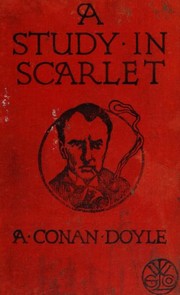
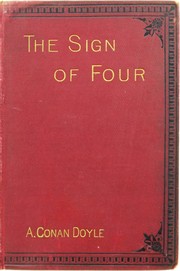
The short-story format makes this the perfect entry point into Doyle, establishing Holmes and Watson as the archetype all future detective duos are measured against. Reading the stories in order shows how Doyle refined his formula.
After the short stories, this novel-length case demonstrates how the Holmes formula scales up and adds gothic atmosphere — a crucial bridge to the longer, more complex books ahead.
The Golden Age
BeginnerMaster the classic 'whodunit' — its rules, its pleasures, and its social world — through the three writers who defined the form at its peak in the 1920s–1940s.
▸ Study plan for this stage
Pace: 8–10 weeks total: ~2.5–3 weeks per book at a relaxed beginner pace of 15–20 pages/day. Week 1–3: The Murder of Roger Ackroyd (~270 pp); Week 4–6: Gaudy Night (~500 pp, slightly more reading per day); Week 7–10: The Tiger in the Smoke (~280 pp, with extra time for reflection and exercises).
- The 'whodunit' contract: the implicit promise between author and reader that the puzzle is fair and solvable from clues provided in the text
- Unreliable narration: how Christie weaponizes the first-person narrator in Roger Ackroyd to hide truth in plain sight without technically lying
- The 'rules' of Golden Age detection (Knox's Decalogue & Van Dine's 20 Rules): what they permit, what they forbid, and how each of the three books honors or quietly bends them
- The detective as social outsider: Poirot's foreignness, Wimsey's aristocratic eccentricity, and Albert Campion's deliberate self-effacement as tools for observing closed communities
- Setting as social microcosm: the English village (Roger Ackroyd), the Oxford women's college (Gaudy Night), and the post-WWII London fog (Tiger in the Smoke) each reflect anxieties of their era
- The 'cozy' aesthetic vs. genuine darkness: how Golden Age fiction balances drawing-room manners with real violence, and how Allingham in particular pushes toward psychological menace
- Clue architecture: the difference between a red herring, a fair-play clue, and a 'hidden in plain sight' clue — with examples drawn from all three novels
- Gender and genre: how Sayers uses Gaudy Night to argue that the detective novel can carry serious intellectual and feminist themes without sacrificing plot integrity
- In The Murder of Roger Ackroyd, which specific narrative techniques does Christie use to mislead the reader, and can you identify at least three moments where the truth was technically present but concealed? Does this feel 'fair' to you — why or why not?
- Gaudy Night is set almost entirely among women in an academic institution. How does Sayers use the Oxford setting to explore the tension between intellectual life and domestic expectation, and how does that tension connect to the identity of the culprit?
- Compare the three detectives — Poirot, Wimsey/Vane, and Campion — as observers of their social worlds. What does each detective's outsider status (of different kinds) allow them to see that insiders cannot?
- The Tiger in the Smoke introduces a villain, Jack Havoc, who is given far more interiority than is typical of Golden Age fiction. How does Allingham's choice to show us the criminal's perspective change the feel of the novel compared to the other two books?
- Across all three novels, how is the English class system both a plot mechanism (it determines who has motive, means, and access) and a subject of implicit critique?
- What distinguishes a 'fair-play' clue from a red herring? Choose one example of each from any of the three books and explain how you identified which was which on reflection.
- Re-read the final revelation chapter of The Murder of Roger Ackroyd and then flip back through the book marking every passage where the narrator's language was technically accurate but deliberately misleading. Keep a two-column log: 'What I assumed' vs. 'What the text actually said.'
- Draft a one-page 'fair-play audit' for Gaudy Night: list every clue Sayers plants that points toward the real culprit, and every red herring that points away. Assess whether the novel passes the Knox/Van Dine standard of fairness.
- Write a 300-word 'setting analysis' for each of the three books (one per novel), arguing how the physical and social environment — the village, the college, the fog-bound city — is not just backdrop but an active shaping force on the crime and its solution.
- Create a suspect comparison chart for any one of the three novels: list each suspect, their motive, their opportunity, the clues that implicate them, and the clues that exonerate them. Use this to reconstruct the experience of reading as a puzzle-solver.
- After finishing The Tiger in the Smoke, write a short (200-word) contrast piece: how does the atmosphere and moral tone of Allingham's novel differ from Christie's, and what specific craft choices (point of view, pacing, villain treatment) produce that difference?
- Keep a running 'Golden Age Glossary' as you read all three books — define and give a textual example for: alibi, red herring, locked-room problem, unreliable narrator, MacGuffin, and fair-play clue. By the end of stage, you should have at least one example from the actual texts for each term.
Next up: By mastering the rules, pleasures, and social assumptions of the Golden Age whodunit through these three novels, the reader has a stable baseline against which the next stage's harder-edged, rule-breaking fiction — whether American hardboiled, psychological suspense, or postmodern detective fiction — will register as deliberate, meaningful departures rather than mere chaos.
Christie's most audacious novel is the perfect Golden Age opener: it plays completely fair while breaking every assumption the reader brings from Doyle. It resets expectations and proves the genre can genuinely surprise.
Sayers elevates the whodunit into a novel of ideas, weaving questions of women's education and intellectual integrity into the mystery. It shows how Golden Age fiction could carry serious literary weight.

Allingham's darkest and most atmospheric novel pushes the Golden Age toward psychological thriller territory, preparing the reader for the moral ambiguity of the hardboiled era to come.
The Hardboiled Revolution
IntermediateUnderstand how American crime writers tore up the Golden Age rulebook — replacing country-house puzzles with urban corruption, and the genius detective with a flawed, mortal hero.
▸ Study plan for this stage
Pace: 6–7 weeks total: Week 1–2 — The Maltese Falcon (~30 pages/day, ~220 pages); Week 3–4 — The Big Sleep (~25 pages/day, ~230 pages); Week 5 — The Simple Art of Murder (essay, ~50 pages, read in 2–3 sittings); Weeks 6–7 — review, re-read key passages, and complete exercises.
- The hardboiled style: terse, vernacular prose stripped of Victorian ornamentation — study Hammett's clipped dialogue and Chandler's simile-laden but street-level narration as two distinct executions of the same ethos
- The flawed, mortal hero: Sam Spade and Philip Marlowe are neither omniscient nor infallible — track their physical vulnerability, moral compromises, and personal codes across both novels
- Urban corruption as setting and theme: San Francisco and Los Angeles are not backdrops but active forces — crime flows from systemic rot (police, politicians, wealthy clients) rather than a single aberrant villain
- The femme fatale and gender dynamics: Brigid O'Shaughnessy and Carmen Sternwood weaponize femininity; analyze how both novels construct, exploit, and ultimately punish female agency
- Moral ambiguity over puzzle-box plotting: neither Spade nor Marlowe delivers a clean, satisfying solution — the 'who did it' matters less than 'what does justice cost the detective personally'
- Chandler's manifesto in 'The Simple Art of Murder': use the essay as a critical lens to retroactively interrogate both novels — Chandler explicitly attacks Golden Age conventions and defines the hardboiled ideal
- The MacGuffin and narrative misdirection: the Maltese Falcon (the object) and the Sternwood case (the true crime) are both deliberately unsatisfying resolutions — learn to read this as intentional critique, not poor plotting
- Class, money, and power: both novels show that wealth insulates criminals; the detective's independence from institutional power (police, law, wealth) is his only moral authority
- In The Maltese Falcon, Spade turns Brigid over to the police despite apparent feelings for her — what does this decision reveal about his personal code, and how does it complicate a simple reading of him as 'hero'?
- Chandler argues in The Simple Art of Murder that the Golden Age mystery is an artificial, dishonest form — having read The Big Sleep, identify two specific structural or stylistic choices Chandler makes that embody his own stated alternative ideal.
- Both The Maltese Falcon and The Big Sleep feature plots that are famously difficult to follow or resolve cleanly. Using Chandler's essay as a framework, explain why this narrative 'messiness' might be a feature rather than a flaw.
- How do San Francisco in The Maltese Falcon and Los Angeles in The Big Sleep function as more than settings — what does each city's specific geography, social landscape, and atmosphere contribute to the moral world of each novel?
- Compare Sam Spade and Philip Marlowe as hardboiled heroes: where do their personal codes overlap, and where do they diverge? Which do you find more morally coherent, and why?
- Chandler's essay coins the phrase 'down these mean streets a man must go who is not himself mean.' How fully do Spade and Marlowe each live up to — or fall short of — this ideal within their respective novels?
- Prose autopsy: Select one page of Hammett dialogue from The Maltese Falcon and one page of Chandler narration from The Big Sleep. Write a 300-word comparison of their sentence rhythms, word choices, and what each style implies about the narrator's worldview — then check your observations against Chandler's own criteria in The Simple Art of Murder.
- Character code card: After finishing each novel, write a 'moral code' for Spade and then for Marlowe in exactly 5 bullet points, using only evidence from the text. Compare the two cards — note overlaps and contradictions, and revise after reading the essay.
- City mapping exercise: Draw or annotate a rough map of the locations visited in either The Maltese Falcon or The Big Sleep. Label each location with the social class or type of corruption it represents. What pattern emerges about how the detective moves through social strata?
- Rewrite the ending: Take the final confrontation scene in The Maltese Falcon (Spade and Brigid) and rewrite it as a Golden Age resolution — give it a drawing-room reveal, a tidy moral, and a triumphant detective. Then write a paragraph on what is lost and what Hammett gains by refusing this.
- Essay dialogue: Read The Simple Art of Murder and write a one-page 'response letter' from a Golden Age defender (imagine Agatha Christie or Dorothy Sayers) rebutting Chandler's three strongest points. This forces you to steelman both sides of the genre debate.
- Simile collection: As you read The Big Sleep, keep a running list of every Chandler simile or metaphor. At the end, categorize them by what they reveal (character, atmosphere, class, menace). Identify which three are most essential to the novel's meaning and explain why in a short paragraph.
Next up: Mastering the hardboiled foundation — its urban moral ambiguity, flawed protagonists, and distrust of institutions — equips the reader to recognize how later crime writers either deepened these conventions (noir fiction, psychological crime) or deliberately subverted them, setting up the next stage's exploration of how the genre evolved beyond Hammett and Chandler's template.
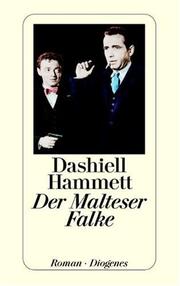
Hammett's masterpiece is the founding text of hardboiled fiction — terse, cynical, and morally ambiguous in ways the Golden Age never allowed. Read it first to feel the full shock of the genre's reinvention.

Chandler takes Hammett's template and adds poetic prose and a deeper melancholy. Philip Marlowe's Los Angeles is the definitive hardboiled world, and this novel is its richest expression.
Chandler's famous essay collection, including his manifesto on crime fiction, gives the reader critical language to articulate what separates hardboiled from Golden Age — essential intellectual scaffolding before moving to contemporary work.
Expanding the Canon
IntermediateSee how mid-to-late 20th-century writers diversified the genre across geography, race, gender, and psychology, proving the mystery form could hold any human experience.
▸ Study plan for this stage
Pace: 6–8 weeks total; roughly 20–25 pages/day. Suggested pacing: Week 1–2 — "In the Heat of the Night" (~200 pp, read in ~10 days, leaving time for reflection); Week 3–5 — "A Great Deliverance" (~400 pp, read at ~25 pages/day); Week 6–8 — "Devil in a Blue Dress" (~215 pp, read in ~10 days, with the final
- The 'outsider detective' archetype: how Virgil Tibbs (Black Northern detective in a racist Southern town), Thomas Lynley/Barbara Havers (class-divided partnership), and Easy Rawlins (Black man navigating white power structures in 1940s LA) each derive their investigative authority from marginalized
- Race as structural obstacle and narrative engine: Ball and Mosley both use the detective's Blackness not as background detail but as the central mechanism that shapes every clue, alibi, and confrontation
- Class and gender as co-equal lenses: George's pairing of aristocratic Lynley with working-class, female Havers dismantles the genteel tradition from within, showing that social friction between investigators can be as generative as the crime itself
- Psychological depth and trauma as plot: 'A Great Deliverance' pioneers the use of severe psychological damage (dissociation, abuse histories) as both motive and mystery, moving the genre toward the psychological thriller
- Setting as character: the small-town American South in Ball, the Yorkshire moors and English class geography in George, and the Black neighborhoods of postwar Los Angeles in Mosley each function as active forces that constrain and reveal characters
- The unreliable community: all three novels feature communities that actively withhold truth from the detective — for reasons of racism, class shame, or self-preservation — making the social environment itself an antagonist
- First-person vs. third-person voice and its ideological weight: Mosley's first-person Easy Rawlins narration creates intimacy and irony unavailable to Ball's and George's third-person perspectives, and signals whose interiority the genre is finally centering
- Expanding the canon's definition of 'justice': each novel ends with a resolution that is morally ambiguous or socially incomplete, reflecting the authors' critiques of the systems — legal, racial, class-based — their detectives must navigate
- In 'In the Heat of the Night,' how does John Ball use the white townspeople's resistance to Virgil Tibbs to expose the gap between legal authority and social power — and how does Tibbs's expertise ultimately force a grudging respect that the novel refuses to make feel triumphant?
- Elizabeth George pairs Detective Inspector Lynley and Sergeant Havers as near-opposites in class, education, and temperament. How does their friction serve the investigation in 'A Great Deliverance,' and what does George suggest about whose instincts — the insider's or the outsider's — are better suited to uncovering hidden truth?
- Walter Mosley places Easy Rawlins in a world where cooperating with white law enforcement is itself a form of danger. How does this double-bind shape Easy's investigative methods in 'Devil in a Blue Dress,' and how does it differ from the constraints facing Virgil Tibbs?
- All three novels feature a community that is collectively hiding something. Compare the nature of those secrets in each book — what does each community most fear exposure of, and how does that fear reflect the specific social world the author is depicting?
- How does 'A Great Deliverance' use the backstory of its central victim/suspect to reframe the mystery as a question about survival and trauma rather than guilt and punishment? What does this signal about the direction the genre is heading?
- Taken together, what vision of 'justice' do these three novels collectively offer? Is it the same as solving the crime — and if not, what is the difference?
- Character-constraint mapping: For each detective (Tibbs, Lynley/Havers, Easy Rawlins), draw a two-column chart listing (a) the social identities/positions that restrict their access to information or safety, and (b) the same identities that paradoxically give them unique investigative insight. Compare the three charts and write a one-paragraph synthesis.
- Close-reading the first encounter: Reread the first scene in each book where the detective meets the community or client that will resist them most. Annotate the specific language choices the author uses to signal power dynamics. Write a 300-word comparison of how each author encodes social hierarchy in prose style alone.
- Rewrite a scene, shift the lens: Choose one scene from 'In the Heat of the Night' written in Ball's third-person and rewrite it in first-person from Virgil Tibbs's interior perspective, consciously imitating Mosley's voice in 'Devil in a Blue Dress.' Reflect in a short paragraph on what is gained and lost.
- Setting as argument: Write a one-page 'setting analysis' for each of the three novels — the American South, Yorkshire, and 1940s Black LA — arguing how the physical and social geography is not merely backdrop but actively determines what kind of mystery can be told there.
- The justice audit: After finishing all three books, write a structured 400-word essay answering: 'What does each novel's ending reveal about what its author believes the detective story can and cannot fix?' Use at least one specific scene from each book as evidence.
- Comparative timeline: Build a simple timeline of real-world historical events (the Civil Rights Movement, post-WWII Black migration, British class shifts post-WWII) alongside the publication dates of the three novels (1965, 1988, 1990). Annotate each book's entry with two or three ways the historical moment shaped the specific social anxieties the mystery plot is processing.
Next up: By seeing how Ball, George, and Mosley each bent the mystery form around a specific social identity and geography, the reader is now equipped to recognize the genre as a flexible, politically conscious vehicle — a foundation essential for engaging with the even more radical formal and cultural experiments that define contemporary and global mystery fiction.
Ball's novel introduces Virgil Tibbs, one of fiction's first Black detective heroes, and uses the mystery form to dissect American racism head-on — a pivotal expansion of who the genre's protagonists could be.
George transplants the American psychological depth of hardboiled fiction back to England, creating a procedural that is as much about character trauma as detection — a model for the modern literary crime novel.
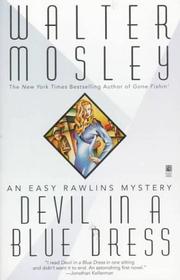
Mosley's Easy Rawlins series reclaims the hardboiled tradition for Black America, set in 1940s Los Angeles. It deepens everything learned from Hammett and Chandler by showing whose stories that world left out.
Contemporary Crime Writing
ExpertEngage with 21st-century crime fiction at its most ambitious — books that use the genre's conventions self-consciously to explore identity, justice, and the nature of storytelling itself.
▸ Study plan for this stage
Pace: 6–8 weeks total: Weeks 1–3 on "The Devotion of Suspect X" (~40–50 pages/day, given its tight pacing), followed by Weeks 4–7 on "The Secret History" (~35–45 pages/day, allowing time for its denser prose and moral layering), with Week 8 reserved for comparative reflection, essay drafting, and exercise
- Inverted detective structure: 'howcatchem' vs. 'whodunit' — Higashino reveals the crime immediately, shifting suspense from discovery to concealment and moral complicity
- The unreliable or withheld narrator: both novels control reader sympathy by strategically limiting or distorting what we know and when we know it
- The criminal as tragic protagonist: Ishigami in 'Suspect X' and Henry Winter's group in 'The Secret History' are rendered with deep interiority, forcing readers to root against justice
- Guilt as aesthetic and philosophical problem: Tartt frames murder through classical Greek concepts of beauty and transgression; Higashino frames it through mathematical devotion and selfless sacrifice
- Justice vs. the law — neither novel equates legal outcome with moral resolution; both interrogate whether 'the right ending' is even possible
- Genre self-consciousness: both authors use established crime conventions (the brilliant detective, the closed circle of suspects) only to subvert or hollow them out
- Identity and performance: characters in both books construct false selves — Ishigami engineers an entire false reality; the Hampden students perform an invented Hellenic identity — and the novels ask what 'authentic' selfhood means under pressure
- The ethics of the reader: both books implicate the reader in their own voyeurism and moral sympathy, making the act of reading itself a subject of the narrative
- In 'The Devotion of Suspect X,' how does Higashino's choice to reveal the murder on page one change the emotional and moral experience of reading compared to a traditional mystery — and what does the reader 'detect' instead?
- Both Ishigami and the Hampden group commit acts of extraordinary intellectual effort in service of concealing a crime. How do each novel's treatments of intelligence and brilliance complicate our moral judgment of these characters?
- Tartt opens 'The Secret History' with the murder disclosed in the prologue. How does this structural choice mirror Higashino's inverted approach, and what does each author gain — or sacrifice — by eliminating traditional suspense?
- How does each novel use a detective or investigator figure (Kusanagi/Yukawa in 'Suspect X'; the novel's retrospective narrator Richard in 'The Secret History') to represent the limits of rational inquiry into human motivation?
- Neither book delivers a conventionally satisfying justice. Compare the endings: what vision of moral order — or disorder — does each author leave the reader with?
- How do both novels use the concept of 'devotion' or 'loyalty' to a group or individual as a force that distorts ethical reasoning? What does this suggest about the social construction of guilt?
- Structural diagram: Draw a timeline for each novel marking when the crime occurs, when it is revealed to the reader, and when it is revealed to investigators. Annotate each gap with the question: 'What is the reader feeling here, and why?' Compare the two diagrams side by side.
- Sympathy audit: After finishing each book, write a one-page 'sympathy log' — list every moment you found yourself hoping the criminal would not be caught, and identify the specific technique (prose style, withheld information, character backstory) Higashino or Tartt used to engineer that feeling.
- Rewrite a scene from the detective's POV: Choose one scene from 'Suspect X' (e.g., Yukawa's deduction) and rewrite it from Ishigami's perspective, or vice versa. Then do the same for a scene in 'The Secret History' from Henry's point of view rather than Richard's. Reflect on how POV controls moral weight.
- Justice verdict essay: Write a 600–800 word argumentative essay answering: 'Does either novel suggest that justice is achieved by the final page?' Use specific textual evidence from both books and resist the urge to conflate legal outcome with moral resolution.
- Genre convention checklist: List the classic conventions of detective fiction (brilliant detective, hidden culprit, rational revelation, restored social order). For each convention, note whether 'Suspect X' and 'The Secret History' fulfill, subvert, or ignore it — and what effect each choice produces.
- Comparative character study: Write a 500-word comparison of Ishigami ('Suspect X') and Henry Winter ('The Secret History') as 'criminal intellectuals.' Focus on how each character's defining discipline — mathematics vs. classical studies — shapes both their crime and their moral self-justification.
Next up: By mastering how Higashino and Tartt bend genre conventions to explore complicity, identity, and the limits of justice, the reader is now equipped to engage with crime fiction that pushes even further into metafiction, postcolonial critique, or experimental form — the natural frontier of the genre's most ambitious contemporary work.
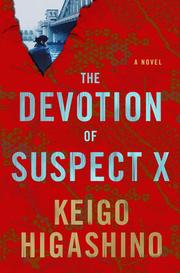
This Japanese inverted mystery — where the reader knows the killer from page one — is a masterclass in using genre expectations against themselves, and introduces the reader to the globally diverse tradition of crime writing.

Tartt's literary thriller inverts the whodunit entirely: we know who did it and why from the first page, and the novel becomes an excavation of guilt and complicity — proof that mystery's DNA runs through the best literary fiction.
Discussion
Keep reading
Paths that share books, cover the same subject, or open a related topic.