Raymond Chandler Reading Order: Where to Start
This curriculum moves through Raymond Chandler's work in a carefully sequenced arc: you begin with his most accessible and celebrated novel to get a feel for Philip Marlowe and Chandler's voice, progress through the remaining novels in the order that best builds thematic and stylistic understanding, and finish with his essential essays and letters that reveal the craft and philosophy behind everything you've read. Each stage deepens your appreciation of what came before.
Meet Marlowe — The Essential Entry Point
BeginnerGet hooked on Chandler's voice, understand who Philip Marlowe is, and absorb the rhythm of the hard-boiled style before tackling the full canon.
▸ Study plan for this stage
Pace: 6–8 weeks total: Weeks 1–3 for The Big Sleep (~25–30 pages/day, reading in 3–4 sittings per week), Weeks 4–7 for Farewell, My Lovely (~25–30 pages/day at the same pace), and Week 8 as a consolidation week for review, re-reading favourite passages, and completing exercises. Both novels are short (~20
- The Hard-Boiled Voice: Chandler's first-person narration is inseparable from Marlowe's personality — sardonic, poetic, and morally alert. Learn to hear the voice as a literary device, not just a stylistic quirk.
- Philip Marlowe as a Code Hero: Marlowe operates by a private ethical code in a corrupt world. Track his choices in both novels — what he refuses to do, who he protects, and why — to understand his character as Chandler's moral compass.
- The Simile as Signature: Chandler's extended, unexpected similes ('as inconspicuous as a tarantula on a slice of angel food cake') are central to his style. Recognise them as a tool that simultaneously creates atmosphere, reveals character, and delivers dark humour.
- Los Angeles as a Character: Both novels use LA's geography, class divisions, and social rot as active elements of the plot. Notice how Chandler moves Marlowe between wealthy Pasadena estates (The Big Sleep) and seedy Bay City (Farewell, My Lovely) to expose social hypocrisy.
- Plot as Labyrinth — and Why That's the Point: The Big Sleep famously has an 'unsolvable' plot. Understand that Chandler prioritises scene-by-scene tension and character revelation over tidy resolution. The journey matters more than the solution.
- Corruption and Class: Both novels dramatise how wealth and power insulate the guilty. The Sternwood family in The Big Sleep and the racial and social hierarchies in Farewell, My Lovely are not backdrops — they are the crime.
- Moose Malloy and Carmen Sternwood as Foils to Marlowe: Study the antagonists and morally compromised characters in each book as mirrors that define Marlowe by contrast — what he is not, and what he refuses to become.
- The Femme Fatale and Gender: Carmen Sternwood and Velma Valento are dangerous women in very different ways. Begin to think critically about how Chandler constructs femininity, desire, and threat — a conversation you will continue in later stages.
- By the end of The Big Sleep, what has Marlowe actually solved — and what has he deliberately left unsolved, and why? What does this choice reveal about his character?
- How does Chandler use the physical geography of Los Angeles in both novels to comment on class and moral corruption? Give at least one specific example from each book.
- Choose three Chandler similes — at least one from each novel — and explain what each one accomplishes beyond mere description. What mood, character insight, or thematic idea does each carry?
- Compare Carmen Sternwood (The Big Sleep) and Velma Valento (Farewell, My Lovely): how are they similar as 'dangerous women,' and how does Chandler make them feel like distinct characters rather than the same archetype?
- Moose Malloy's search for Velma drives Farewell, My Lovely. In what ways is Moose a tragic figure rather than simply a villain, and how does Marlowe's attitude toward him evolve over the novel?
- After reading both books, how would you describe Marlowe's personal code of ethics in your own words? Identify at least two moments — one from each novel — where he acts against his own financial interest in order to honour that code.
- Voice Imitation Journal: After finishing each chapter, write 3–5 sentences in Marlowe's first-person voice describing something mundane from your own day (a commute, a coffee shop, a difficult colleague). Focus on replicating the sardonic tone and the unexpected simile. Do this at least five times across both novels.
- Simile Catalogue: Keep a running list of every Chandler simile that strikes you in both novels. At the end of each book, pick your top three and write a short note (2–3 sentences) on why each one works — what it compares, what it implies, and what it makes you feel.
- Plot-Mapping The Big Sleep: Draw a simple flowchart or timeline of The Big Sleep's plot events. Where does the chain of causality break down or become ambiguous? Write a one-paragraph reflection on whether the 'unsolvable' mystery bothers you as a reader, and why or why not.
- Character Contrast Essay (500 words): Write a short comparative piece on Carmen Sternwood and Velma Valento. Argue which character you find more fully realised and why, using specific scenes and dialogue from the texts.
- LA Location Log: Each time a specific Los Angeles neighbourhood, building, or landscape is named or described in either novel, jot it down with a one-line note on its social connotation (wealthy, seedy, in-between). At the end, look at your list: what pattern do you see in where crime originates vs. where it is hidden?
- Marlowe's Code Manifesto: After finishing Farewell, My Lovely, write a one-page 'personal code of conduct' as if you were Marlowe — in his voice, in the present tense. Base every rule strictly on actions and decisions he takes in the two novels. This will serve as a reference document for the rest of the curriculum.
Next up: Mastering Marlowe's voice and moral framework in these two foundational novels equips the reader to engage with the deeper structural experiments, darker themes, and evolving characterisation that Chandler pursues across the rest of his canon.
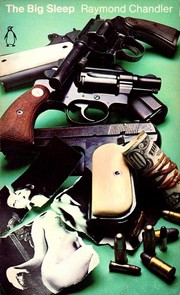
The first Marlowe novel and the most famous — it introduces the detective, the Los Angeles milieu, and Chandler's iconic simile-laden prose. Starting here grounds every subsequent novel in the series.

Widely considered Chandler's most emotionally resonant novel, it deepens Marlowe's character and expands the social canvas of LA. Reading it second lets you see how Chandler immediately grew beyond his debut.
The Middle Novels — Chandler Hits His Stride
BeginnerRead the four novels from Chandler's most productive period in sequence, tracking his evolving plots, darker themes, and increasingly complex portrait of Marlowe.
▸ Study plan for this stage
Pace: 8–10 weeks total; roughly 20–25 pages per day. Suggested breakdown: ~2.5 weeks for The High Window, ~2.5 weeks for The Lady in the Lake, ~3 weeks for The Little Sister, plus a final week for review, comparison, and exercises. Reading sessions of 30–45 minutes daily work well for a beginner pace.
- Marlowe's evolving moral code — across all three novels, track how Marlowe's personal ethics harden or soften in response to client betrayal, corruption, and violence, moving beyond the simple 'knight-errant' archetype
- The victimized woman as structural pivot — The High Window's Merle Davis (psychologically shattered by her employer), The Lady in the Lake's multiple women in peril, and The Little Sister's Orfamay Quest each use a female character to expose male power and social hypocrisy
- Los Angeles as moral landscape — Chandler uses specific geography (the Idle Valley lake resort, the Cahuenga Pass, Hollywood studios) not as backdrop but as a symbol of California's false promise and class anxiety
- Plot complexity vs. emotional truth — Chandler himself admitted his plots were sometimes incoherent; a key skill is learning to follow the emotional and thematic logic of a scene even when the mystery mechanics are murky
- Tone and voice in first-person noir — Marlowe's sardonic similes and deadpan observations are not decoration; they are his psychological defense mechanism and the reader's moral compass
- Hollywood and celebrity culture as corruption — The Little Sister is Chandler's most direct satire of the film industry, linking fame, money, and violence in ways that deepen themes introduced more quietly in the earlier two novels
- Class and social mobility — all three novels pit working-class or lower-middle-class characters against wealthy patrons, and Marlowe's refusal to be bought is the central ethical drama
- Repetition and variation as craft — reading the three novels in sequence reveals Chandler consciously repeating structural moves (the false client, the hidden crime behind the presented crime, the late revelation) while varying their emotional register
- In The High Window, how does Merle Davis's psychological condition reframe the mystery's solution, and what does Chandler seem to be saying about the damage wealthy employers inflict on vulnerable employees?
- The Lady in the Lake features two women whose identities become dangerously entangled — how does Chandler use this doubling to comment on female agency and male projection in 1940s California?
- How does Marlowe's attitude toward his clients shift across the three novels? Does he become more cynical, more compassionate, or both — and which specific scenes support your reading?
- The Little Sister is widely read as Chandler's bitterest book — what targets (Hollywood, family, ambition) does he satirize, and how does the novel's tone differ from the relatively cooler irony of The High Window and The Lady in the Lake?
- Chandler's Los Angeles is almost a character in itself — choose one specific location from each novel and explain how Chandler uses it to reinforce the book's central theme.
- How does Chandler signal that the 'presented' mystery (the one the client hires Marlowe to solve) is never the real mystery? Trace this structural pattern through all three books.
- Simile log: Keep a running notebook of Marlowe's similes and metaphors in each book (e.g., 'as inconspicuous as a tarantula on a slice of angel food cake'). After finishing each novel, pick your three favorites and write a one-sentence analysis of what each simile reveals about Marlowe's state of mind at that moment.
- Character motivation map: For each novel, draw a simple diagram showing every major character, what they want, and what they are hiding. Compare the three diagrams side by side — note which character types recur and which are unique to a single book.
- The 'real crime' exercise: Write a one-paragraph summary of (a) the crime the client presents to Marlowe and (b) the crime Marlowe actually ends up solving in each novel. Then write a third paragraph explaining why the gap between the two matters thematically.
- Tone comparison: Choose one scene of violence or confrontation from each of the three novels. Write a short paragraph (150–200 words) comparing how Chandler's prose style handles the scene differently — pace, word choice, Marlowe's emotional reaction — and what that tells you about the mood of each book.
- Los Angeles field journal: Using the novels' descriptions, sketch or list the key locations in each book and annotate them with one adjective Chandler uses and one theme the location embodies. This builds your sense of how Chandler's geography is always symbolic.
- Comparative character essay: Write a 300–400 word informal essay arguing which of the three novels presents the most complex or sympathetic female character, using specific textual evidence from The High Window, The Lady in the Lake, and The Little Sister to support your claim.
Next up: Mastering these three novels — their escalating moral darkness, Chandler's increasingly confident voice, and his deepening critique of Los Angeles society — gives the reader the thematic and stylistic foundation needed to fully appreciate the ambition and elegiac tone of The Long Goodbye and Playback, where Chandler pushes Marlowe's isolation and disillusionment to their most fully realized and em
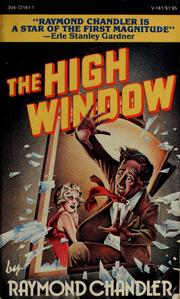
The third novel, often underrated, introduces a more confined and claustrophobic mystery — reading it here shows Chandler experimenting with structure after his first two successes.
The fourth novel takes Marlowe out of the city and into the California mountains, broadening the world and showcasing Chandler's descriptive range at its peak.
Written after a gap and a stint in Hollywood, this novel is Chandler's most cynical and satirical — reading it fifth lets you feel the shift in his mood and the sharpening of his social critique.
The Late Masterworks — Marlowe Fully Formed
IntermediateExperience Chandler's two most ambitious and novelistically mature works, which reward the reader who already knows Marlowe well.
▸ Study plan for this stage
Pace: 6–7 weeks total: spend 4–5 weeks on The Long Goodbye (~20–25 pages/day across its ~316 pages, allowing time to re-read key scenes) and 2 weeks on Playback (~15–20 pages/day across its ~163 pages, with deliberate comparative reflection built in).
- Chandler's shift from plot-driven pulp to character-driven literary fiction — The Long Goodbye prioritizes emotional depth and male friendship over mystery mechanics
- The Terry Lennox relationship as Chandler's most sustained exploration of loyalty, betrayal, and disillusionment, and what it reveals about Marlowe's moral code
- Elegiac tone and the theme of time, loss, and aging — both novels carry a melancholy awareness that Marlowe's world is slipping away
- Chandler's prose style at its most self-conscious and literary: extended metaphors, interior monologue, and set-piece descriptions that function almost independently of plot
- Playback as a deliberate contraction and coda — a shorter, quieter, more defeated novel that reads as Marlowe (and Chandler) making peace with limitations
- The role of women in the late works: Eileen Wade in The Long Goodbye as Chandler's most complex and dangerous femme fatale; Betty Mayfield in Playback as a more sympathetic, ambiguous figure
- Moral ambiguity without resolution — both novels end with Marlowe compromised, uncertain, or quietly heartbroken rather than triumphant
- Chandler's autobiographical shadow: his troubled marriage, alcoholism, and late-career exhaustion visibly inflect both narratives
- In The Long Goodbye, what does Marlowe's friendship with Terry Lennox ultimately cost him emotionally, and how does the novel's final scene with Lennox reframe everything that came before?
- How does Eileen Wade function differently from earlier Chandler femmes fatales — in what ways is she more novelistically complex, and how does Chandler use her to critique the social world of Idle Valley?
- The Long Goodbye is often called Chandler's most 'un-pulp' novel. What specific structural and stylistic choices support that claim?
- What does Playback's compressed scale, muted stakes, and ambiguous ending suggest about where Marlowe — and Chandler — had arrived by the late 1950s?
- How do the two novels treat the theme of identity and reinvention (consider Terry Lennox's transformation, Betty Mayfield's flight and alias, and Marlowe's own self-questioning)?
- Taken together, what vision of post-war American society do these two novels construct, and how does Marlowe's outsider status illuminate that society's failures?
- Close-reading journal: Select one extended Marlowe interior monologue from each novel (e.g., the 'gimlet' passage in The Long Goodbye, or Marlowe's beachside reflections in Playback) and write a one-page analysis of how Chandler's sentence rhythm and imagery carry emotional meaning beyond the literal content.
- Character map for The Long Goodbye: Chart every named character, their relationship to Marlowe, and the moment (if any) they betray or disappoint him. Then write a short paragraph arguing whether the novel is fundamentally about friendship or about the impossibility of friendship.
- Comparative essay (500–700 words): Contrast the endings of The Long Goodbye and Playback. How does each ending leave Marlowe — and the reader — feeling? What does the difference in emotional register tell you about Chandler's evolving intentions?
- Rewrite a scene: Take the final confrontation scene between Marlowe and the 'returned' Terry Lennox and rewrite it from Lennox's point of view. What does this exercise reveal about Chandler's deliberate choice to keep us locked inside Marlowe's perspective?
- Tone tracking: As you read Playback, keep a running list of moments where the novel's tone feels noticeably different from The Long Goodbye (pacing, humor, Marlowe's energy level, descriptive density). Use this list to write a brief argument: is Playback a lesser work, or a purposefully diminished one?
- Research connection: Read one short biographical account of Chandler's life between 1954–1958 (the composition period of Playback) and annotate your copy of the novel with at least five marginal notes connecting a biographical fact to a specific passage or plot choice.
Next up: Having experienced Marlowe at his most emotionally exposed and Chandler's prose at its most literary, the reader is now equipped to step back and engage critically with Chandler's essays, letters, and the broader scholarly conversation about his place in American literature and the crime fiction tradition.
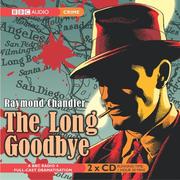
Chandler's most literary and emotionally complex novel — Marlowe's friendship with Terry Lennox elevates the book beyond genre. It lands with full force only after you've lived with the earlier novels.
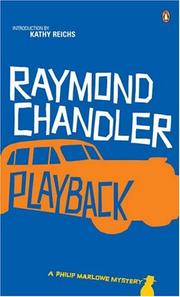
The final completed Marlowe novel, quieter and more melancholy, it serves as a coda to the whole series and is best appreciated last, with the full weight of the canon behind it.
The Craft Behind the Canon — Essays and Letters
IntermediateUnderstand Chandler's conscious artistic philosophy, his theory of detective fiction, and his views on Hollywood and American culture — transforming you from a reader into a true student of his work.
▸ Study plan for this stage
Pace: 6–8 weeks total: Week 1–2 — Read "The Simple Art of Murder" in full (~30–40 pages/day including the essay and all short stories); annotate the title essay heavily. Weeks 3–8 — Read "Selected Letters of Raymond Chandler" at a leisurely 15–20 pages/day, keeping a running journal organized by theme (cr
- Chandler's manifesto on detective fiction: the rejection of the 'puzzle' school (Christie, Van Dine) in favor of realism and moral seriousness
- The concept of the 'mean streets' and the knight-errant hero — Marlowe as a man who is neither tarnished nor afraid, existing in but not corrupted by a corrupt world
- Chandler's theory of prose style: the primacy of the sentence, the value of simile and metaphor, and 'the smell of fear' as emotional truth over plot mechanics
- The distinction between the 'literary' and the 'popular' — Chandler's ambivalence about genre and his aspirations toward serious literature
- Hollywood as creative purgatory: Chandler's letters reveal his conflicted experience as a screenwriter — the money, the compromise, the contempt, and the occasional pride
- Chandler's critique of American culture: the corruption of institutions, the phoniness of wealth, and the moral vacancy of Los Angeles as a symbol of modernity
- The evolution of his self-awareness as an artist, visible across the letters — from pulp craftsman to self-conscious literary figure
- The relationship between Chandler's biography (late start, alcoholism, devotion to Cissy) and his artistic convictions as confessed in the letters
- According to 'The Simple Art of Murder,' what fundamental flaw does Chandler identify in the classical 'Golden Age' detective story, and what does he propose as its corrective?
- How does Chandler define the ideal detective hero in the famous closing passage of 'The Simple Art of Murder,' and how does this definition complicate or enrich your reading of Marlowe in the novels?
- Based on the Selected Letters, how did Chandler view his own Hollywood screenwriting work — as craft, as compromise, or as something more ambiguous? Use at least two specific letters to support your answer.
- What does Chandler's correspondence reveal about his theory of prose style that goes beyond what he states in 'The Simple Art of Murder'? Where do the two sources agree or contradict each other?
- How do the letters illuminate Chandler's feelings about being a 'genre' writer? Did he accept or resist that label, and how did that tension shape his ambitions?
- In what ways do the letters reveal the personal and emotional sources — his marriage, his loneliness, his drinking — that fed the moral atmosphere of his fiction?
- The Manifesto Annotation: Re-read the title essay 'The Simple Art of Murder' with a pen in hand. Mark every claim Chandler makes about what detective fiction should do. Then, for each claim, write a one-sentence verdict: does the Marlowe novels (from earlier stages) actually fulfill it? Build a two-column 'promise vs. practice' chart.
- The Letter Thematic Index: As you read the Selected Letters, maintain a running index under four headings — CRAFT, HOLLYWOOD, AMERICAN CULTURE, SELF-DOUBT. Log the page number and a one-line summary each time a letter touches one of these themes. At the end, identify which theme dominates and what that reveals about Chandler's inner life.
- Write Your Own 'Simple Art' Essay: Draft a 500–700 word essay in Chandler's argumentative style defending or attacking a contemporary genre (crime thriller, fantasy, literary fiction). Imitate his rhetorical moves: the dismissal of a reigning school, the statement of what the genre could be, and the portrait of the ideal practitioner.
- The Sentence Autopsy: Select one paragraph from 'The Simple Art of Murder' and one passage from a letter that you find particularly striking. Break each sentence down: identify the subject, the verb, and any simile or metaphor. Then write an imitation sentence for each, substituting your own subject matter but preserving the syntactic and rhetorical structure.
- Hollywood Cross-Examination: Using only evidence from the Selected Letters, write a one-page 'closing argument' as if you were a lawyer either prosecuting or defending the claim: 'Raymond Chandler's Hollywood years damaged his development as a serious artist.' Cite specific letters by date or recipient.
- The Biographical-Textual Bridge: Choose three letters that feel most personally revealing (about Cissy, about drinking, about loneliness or aging). For each, identify one scene, image, or character moment from the Marlowe novels that seems to echo or transmute that personal reality. Write a short paragraph on each connecting the life to the work.
Next up: Having internalized Chandler's own artistic vocabulary and self-critique, the reader is now equipped to engage with scholarly and critical perspectives on his work — moving from Chandler's self-assessment to how literary critics, biographers, and cultural historians have evaluated, challenged, and expanded upon his legacy.
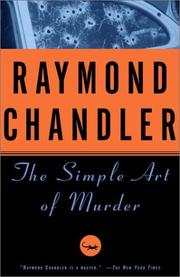
This collection contains Chandler's landmark title essay — one of the most important pieces of criticism in crime fiction — alongside his best short stories. It is essential for understanding the ideas that drove every Marlowe novel.

Edited by Frank MacShane, these letters reveal Chandler's wit, self-doubt, opinions on writing, and his Hollywood years in his own unguarded voice — the perfect final layer for a deep understanding of the man and the work.
Discussion
Keep reading
Paths that share books, cover the same subject, or open a related topic.