Ancient Greece: democracy, war & philosophy
This four-stage curriculum takes a complete beginner from vivid storytelling introductions all the way to primary sources and lasting cultural legacy. Each stage builds the vocabulary, chronology, and analytical tools needed for the next, so that by the end the reader can engage with ancient Greek ideas on their own terms and understand why they still animate the modern world.
Foundations: The World of the Greeks
BeginnerBuild a mental map of ancient Greece — its geography, key city-states, myths, and major periods — so that names, places, and events feel familiar before diving into history.
▸ Study plan for this stage
Pace: 10–12 weeks total, reading ~20–25 pages/day. Week 1–3: "The Greeks" by Paul Cartledge (survey chapters, pause to sketch maps and timelines). Week 4–6: "Mythology" by Edith Hamilton (read thematically by myth cycle, ~25 pages/day). Week 7–12: "The Iliad" by Homer (~15–20 pages/day, slower pace to abs
- Greek geography as destiny: how the fragmented peninsula, islands, and sea shaped the polis system and inter-city rivalry (Cartledge)
- The polis (city-state) as the fundamental unit of Greek political and social life — contrasting Athens and Sparta as archetypes (Cartledge)
- Major chronological periods: Minoan/Mycenaean Bronze Age, the Dark Ages, Archaic, Classical, and Hellenistic eras — and how each sets the stage for the next (Cartledge)
- The Greek pantheon and its logic: the Olympian gods as personifications of natural and human forces, and the moral universe they inhabit (Hamilton)
- The hero tradition: what makes a Greek hero (aristeia, kleos, hubris, fate) and why these figures anchor Greek identity (Hamilton & Homer)
- The Trojan War as a cultural touchstone: its mythic origins in Hamilton and its lived, human drama in Homer's Iliad
- Epic conventions in the Iliad: invocation of the Muse, epithets, similes, aristeia sequences, and the oral tradition behind the text (Homer)
- The theme of wrath (mēnis) and its consequences: how Achilles' anger drives the Iliad's plot and encodes Greek values around honor, pride, and mortality (Homer)
- After reading Cartledge, can you sketch a rough map of Greece labeling the Aegean Sea, major city-states (Athens, Sparta, Corinth, Thebes), and key regions (Attica, the Peloponnese, Ionia)? Can you place each on a rough timeline?
- How does Cartledge explain the role of geography — mountains, seas, and scattered islands — in preventing Greek political unification and fostering the polis system?
- Using Hamilton's Mythology, who are the twelve Olympians, what domains do they govern, and how do their personalities and conflicts reflect Greek values and anxieties?
- Hamilton presents several hero myths (Perseus, Heracles, Theseus, etc.). What common pattern or 'heroic template' runs through these stories, and how does it differ from modern ideas of heroism?
- What is the central conflict of the Iliad, and how does Achilles' withdrawal from battle — driven by wounded honor — set the entire tragedy in motion? Who are the key figures on each side?
- By the end of the Iliad, what does Homer suggest about the relationship between glory (kleos), mortality, and grief? How does the final scene between Achilles and Priam crystallize these themes?
- Map-building exercise: After finishing Cartledge, draw a hand-drawn map of the Greek world from memory. Label city-states, seas, mountain ranges, and neighboring civilizations (Persia, Egypt). Annotate each city-state with two or three traits Cartledge associates with it.
- Timeline wall: Create a visual timeline spanning Minoan Crete (~2000 BCE) through the Hellenistic period (~30 BCE) using Cartledge as your guide. As you read Hamilton and Homer, add mythological events and Trojan War episodes to the timeline to see how myth and history interweave.
- God and hero profile cards: For each major Olympian and hero encountered in Hamilton, write a 3×5 index card listing their domain, key myth, defining personality trait, and one moral lesson their story encodes. Use these as flashcards throughout the stage.
- Myth-to-Iliad connection log: Keep a running two-column journal as you read the Iliad — one column for references or characters that appeared first in Hamilton's Mythology, the other for how Homer develops or complicates them. This trains close reading and cross-text synthesis.
- Passage imitation: Choose one of Homer's extended similes from the Iliad (e.g., the simile comparing warriors to waves, or Achilles to a lion) and write your own simile in the same style describing a modern scene. Then write a short paragraph explaining what Homer's original simile reveals about its context.
- Socratic self-quiz: After each book, close it and write for 10 minutes answering: 'What three things surprised me most, and how do they change what I thought I knew about ancient Greece?' Review your answers before starting the next book to carry insights forward.
Next up: Having built a mental map of Greek geography (Cartledge), a fluency with its gods and heroes (Hamilton), and a felt sense of Greek values through Homer's epic, the reader is now equipped with the names, places, and moral vocabulary needed to engage confidently with primary historical sources and deeper political and philosophical analysis in the next stage.
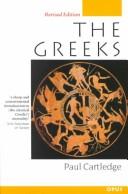
A concise, accessible overview by a leading scholar that introduces Greek identity, society, and values without assuming prior knowledge — the perfect first orientation.
Greek myths are the cultural bedrock that every later historian and philosopher references; Hamilton's classic retelling gives beginners the shared stories and gods they need to understand allusions throughout the curriculum.
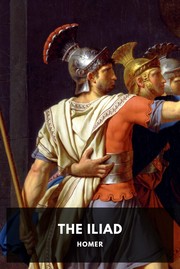
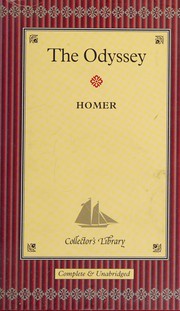
The foundational text of Greek civilization itself — read in Emily Wilson's or Robert Fagles's translation, it establishes the heroic code, the gods, and the values of honor and glory that Athens and Sparta both inherited.
Athens and Sparta: Two Cities, One World
BeginnerUnderstand the contrasting societies of Athens and Sparta in depth — their politics, daily life, and the birth of democracy — and follow the great wars that defined the classical age.
▸ Study plan for this stage
Pace: 12–14 weeks total, reading ~25–35 pages/day. Week 1–3: "The Spartans" by Paul Cartledge (~20–25 pages/day, shorter and more focused); Week 4–8: "The Histories of Herodotus" (~30 pages/day, allowing extra time for the dense, episodic narrative); Week 9–14: "The Peloponnesian War" by Donald Kagan (~35
- The Spartan 'agoge': the brutal state-run education and military training system that shaped every Spartan male, and how it produced a society built entirely around martial excellence
- The role of Spartan women, the helot underclass, and the Perioikoi — understanding that 'Sparta' was a layered, stratified society, not just an army
- Athenian democracy: the reforms of Cleisthenes and Solon as described through Herodotus's lens, including the concepts of isonomia (equality before the law) and the assembly (ekklesia)
- The Persian Wars as narrated by Herodotus — the battles of Marathon, Thermopylae, Salamis, and Plataea — and how they forged a fragile Greek unity and an enduring rivalry between Athens and Sparta
- Herodotus's method: the first 'historian' blending myth, ethnography, and eyewitness account — learning to read his narrative critically and identify bias and purpose
- The origins and causes of the Peloponnesian War as Kagan analyzes them — the growth of Athenian imperial power (the Delian League), Spartan fear, and the failure of diplomacy
- Key episodes of the Peloponnesian War: the Plague of Athens, the Sicilian Expedition, and the eventual Spartan victory — and what they reveal about the limits of democracy and empire
- The concept of 'Greek identity' (Panhellenism) vs. polis rivalry: how Athens and Sparta could unite against Persia yet destroy each other in the decades that followed
- According to Cartledge, how did the agoge and the helot system mutually reinforce each other — and what were the long-term vulnerabilities this created for Sparta?
- How does Herodotus portray the contrast between Greek freedom and Persian despotism, and where in The Histories can you find specific passages that reveal his own cultural biases?
- What were the key strategic and political decisions at Thermopylae and Salamis, and how did each city-state's contribution shape the post-war balance of power between Athens and Sparta?
- According to Kagan, was the Peloponnesian War inevitable? What does he identify as the 'real' cause versus the immediate pretexts, and how does this compare to Thucydides's own explanation (as Kagan presents it)?
- How did Athenian democracy function in practice during the Peloponnesian War — and what role did demagogues, the assembly, and military overreach (the Sicilian Expedition) play in Athens's downfall?
- Taken together across all three books, what fundamental differences in values, governance, and social structure made lasting cooperation between Athens and Sparta structurally impossible?
- MAPPING EXERCISE (during Cartledge): Draw a diagram of Spartan society showing the three tiers — Spartiates, Perioikoi, and Helots — with arrows showing how each group supported or threatened the others. Annotate with specific details from The Spartans (e.g., the krypteia, the syssitia mess halls).
- COMPARATIVE CHART (after Cartledge, before finishing Herodotus): Build a side-by-side comparison table of Athens vs. Sparta across six dimensions: governance, military structure, role of women, treatment of outsiders, economy, and cultural values. Update it as you read Herodotus and Kagan.
- HERODOTUS CLOSE READING (during The Histories): Choose one major battle account (e.g., Thermopylae or Salamis) and write a one-page source analysis: What does Herodotus emphasize? What might he be omitting or exaggerating? What is his apparent purpose in telling it this way?
- DEBATE PREPARATION (after Kagan, Part I): Write a 300-word argument from Sparta's perspective justifying going to war, then a 300-word rebuttal from Athens's perspective — drawing only on evidence Kagan provides. This forces active engagement with his causal analysis.
- TIMELINE CONSTRUCTION (ongoing, all three books): Maintain a running visual timeline from ~700 BCE (Spartan reforms) through 404 BCE (end of the Peloponnesian War). Pin each major event to a book and chapter so you can see how Cartledge, Herodotus, and Kagan's narratives overlap and diverge.
- REFLECTIVE JOURNAL ENTRY (end of stage): Write 400–500 words answering: 'Which city — Athens or Sparta — do you think made a greater long-term contribution to Western civilization, and why?' Cite at least one specific argument or passage from each of the three books to support your view.
Next up: By understanding the internal contradictions and ultimate self-destruction of the Athenian and Spartan models, the reader is primed to explore how the power vacuum left by the Peloponnesian War opened the door for Macedonia — and the world-altering rise of Philip II and Alexander the Great.
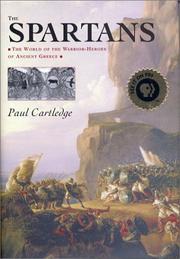
A focused, readable portrait of Sparta's unique warrior society that corrects modern myths and shows how Spartan power shaped every major conflict of the era.
The 'father of history' tells the story of the Persian Wars — Marathon, Thermopylae, Salamis — in his own words; reading him now, with context established, brings the wars to life as Greeks themselves understood them.
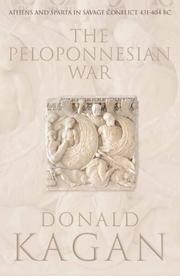
Kagan's single-volume distillation of his landmark four-volume work is the clearest modern account of the catastrophic Athens-vs-Sparta conflict that ended the golden age — essential for understanding how democracy can destroy itself.
The Golden Age: Philosophy, Democracy, and Culture
IntermediateEngage directly with the great thinkers — Socrates, Plato, Aristotle — and understand how Athenian democracy and philosophy were born, what they actually argued, and why those arguments are still alive today.
▸ Study plan for this stage
Pace: 8–10 weeks total. Weeks 1–4: "The Last Days of Socrates" (Euthyphro, Apology, Crito, Phaedo) — read one dialogue per week (~30–50 pages each), re-reading key passages twice. Weeks 5–10: "Nicomachean Ethics" — Books I–III in weeks 5–6, Books IV–VII in weeks 7–8, Books VIII–X in weeks 9–10 (~20–25 pag
- The Socratic Method: how elenchus (cross-examination) exposes contradictions and pursues definitions of virtues like piety, justice, and courage
- The Examined Life: Socrates' conviction (Apology) that an unexamined life is not worth living, and his acceptance of death as consistent with that principle
- Civil Obligation vs. Conscience: the tension in the Crito between obeying unjust laws and one's personal moral duty to the state that raised you
- The Immortality of the Soul and the Philosopher's Vocation: the Phaedo's arguments for why the true philosopher should not fear death
- Eudaimonia (Flourishing/Happiness): Aristotle's claim in the Nicomachean Ethics that the highest human good is not pleasure or honor but a life of excellent activity in accordance with virtue
- The Doctrine of the Mean: virtue as a stable disposition (hexis) to choose the middle path between excess and deficiency (e.g., courage between cowardice and recklessness)
- Practical Wisdom (Phronesis): the master virtue in Aristotle that allows one to deliberate well and apply general principles to particular situations
- Friendship (Philia) and the Political Animal: Aristotle's Books VIII–IX argument that deep friendship is essential to the good life, and his view that humans are by nature social and political beings
- In the Apology, what exactly is the charge against Socrates, how does he defend himself, and why does he refuse to propose exile as a penalty — what does this reveal about his philosophy?
- The Crito presents a powerful argument from 'the Laws of Athens' urging Socrates to stay and accept his sentence. Do you find this argument convincing, or does it conflict with the moral reasoning Socrates uses elsewhere?
- How does Aristotle's concept of eudaimonia differ from modern notions of happiness as a feeling or subjective state? What are the implications of defining happiness as an activity rather than a condition?
- Choose one virtue Aristotle analyzes (e.g., courage, generosity, justice) and explain how the Doctrine of the Mean applies to it — what are its two corresponding vices?
- Aristotle distinguishes three kinds of friendship in Books VIII–IX. What are they, which does he consider highest, and why does he think the highest form is rare?
- Where do Socrates and Aristotle agree and disagree on the relationship between virtue and knowledge? (Consider Socrates' claim that virtue is knowledge against Aristotle's insistence on habituation and character.)
- Socratic Dialogue Journal: After each dialogue in 'The Last Days of Socrates,' write a one-page reconstruction of the central argument in your own words — then steelman the opposing side. Ask: where could Socrates' interlocutor have pushed back harder?
- Put Socrates on Trial: Write a 300–500 word closing statement either for the prosecution or the defense, using only evidence from the Apology and Crito. Then write the opposing closing statement. Which is more persuasive, and why?
- Personal Virtue Audit (Aristotle's Mean): Draw a table with 5–8 virtues from the Nicomachean Ethics (courage, generosity, wit, etc.). For each, label the excess and deficiency, then honestly assess where you personally tend to fall on the spectrum. Write a short reflection on what Aristotle would prescribe.
- Eudaimonia Definition Essay: Before reading the Nicomachean Ethics, write a paragraph defining 'the good life' in your own words. After finishing Book X, write a second paragraph. Compare the two: what did Aristotle change in your thinking, and what do you still resist?
- Cross-Text Debate: Identify one specific ethical question (e.g., 'Is it ever right to break the law for a moral reason?') and write a structured dialogue between Socrates (drawing on the Crito) and Aristotle (drawing on the Ethics). Let each thinker respond to the other's strongest point.
- Phronesis in Practice: For one full week, keep a daily log of a real decision you faced. For each entry, apply Aristotle's framework: What is the end (telos) you are aiming at? What would a person of practical wisdom (phronimos) do? Did habit or reason guide your choice?
Next up: By internalizing how Socrates and Aristotle built systematic frameworks for ethics, politics, and the good life, the reader is now equipped to trace how these ideas were institutionalized, challenged, and transformed — whether through Hellenistic successor schools, the Macedonian conquests, or the eventual collision with Rome and early Christianity.
The Euthyphro, Apology, Crito, and Phaedo together dramatize the trial and death of Socrates — the single most important event in the history of Western philosophy — and are short enough to be read in one sitting.
Plato's masterwork on justice, the ideal state, and the philosopher-king is the book that has most directly shaped Western political thought; it belongs here after Socrates so the reader understands who is speaking and why.
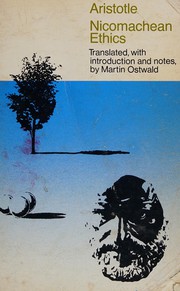
Aristotle's practical guide to living well and the good life completes the philosophical trio and shows how Greek ethics became the template for moral philosophy from the Romans to the present day.
Legacy: Why Greece Still Runs the Modern World
ExpertSynthesize everything into a big-picture understanding of how Greek ideas — democratic governance, rational inquiry, tragedy, rhetoric, and science — were transmitted to Rome, the Renaissance, and modernity.
▸ Study plan for this stage
Pace: 6–8 weeks total: ~3 weeks on "The Fate of Rome" (~25–30 pages/day, including time to annotate Harper's epidemiological and climate arguments) and ~3–4 weeks on "The Closing of the Western Mind" (~20–25 pages/day, with slower reading around Freeman's philosophical and theological chapters). Reserve t
- Transmission and transformation: how Greek intellectual achievements were filtered, distorted, or preserved as they passed through Roman institutions and later Christianity
- Climate and disease as structural forces: Harper's argument in 'The Fate of Rome' that the Antonine and Justinianic plagues, alongside climate deterioration, dismantled the Roman infrastructure that had been carrying Greek knowledge westward
- The Roman synthesis: how Rome was simultaneously the greatest vehicle and the greatest transformer of Greek ideas — adopting Greek rhetoric, philosophy, and science while subordinating them to imperial and later ecclesiastical power
- The narrowing of rational inquiry: Freeman's central thesis in 'The Closing of the Western Mind' that the Christianization of the Roman Empire — especially post-Constantine — systematically suppressed the Greek tradition of open rational debate in favor of revealed dogma
- Faith vs. reason as a historical fault line: the tension between Platonic/Aristotelian rationalism and Pauline/Nicene theology that Freeman traces as the defining intellectual rupture of late antiquity
- Institutional fragility of knowledge: how Greek scientific and philosophical texts survived (or didn't) depending on the health of specific institutions — libraries, schools, patronage networks — all of which Harper shows were devastated by plague and fiscal collapse
- The role of individual actors and councils: Freeman's close reading of figures like Athanasius, Constantine, and Origen to show how personal and political decisions — not just abstract forces — shaped which Greek ideas were canonized and which were suppressed
- Legacy as selective memory: synthesizing both books to understand that 'Greek legacy' reaching the Renaissance and modernity was a curated, contested, and often distorted remnant — not a clean inheritance
- According to Harper in 'The Fate of Rome,' how did the convergence of pandemic disease and climate change undermine the Roman state's capacity to sustain the urban, literate culture through which Greek ideas had been transmitted — and what does this imply about the material preconditions for intellectual life?
- Freeman argues in 'The Closing of the Western Mind' that Constantine's endorsement of Christianity was a decisive turning point for rational inquiry. What specific mechanisms — legal, institutional, and theological — does Freeman identify as having marginalized the Greek philosophical tradition after this moment?
- How do Harper's and Freeman's accounts complement each other? Where Harper emphasizes biological and environmental collapse, Freeman emphasizes ideological closure — how do these two explanatory frameworks interact when you read the books together?
- Freeman traces a tension between Platonic philosophy and Pauline Christianity throughout 'The Closing of the Western Mind.' In what ways did Platonism survive inside Christian theology, and in what ways was it suppressed or distorted?
- Both books deal with the late Roman Empire as a critical bottleneck for Greek legacy. Based on your reading, what would you identify as the single most consequential moment or process — from either book — that determined how much of Greek rational culture survived into the medieval and modern West, and why?
- Having read both books, how would you revise or complicate a naive 'Greece → Rome → Renaissance → Modernity' transmission narrative? What does the evidence from Harper and Freeman suggest about the gaps, losses, and distortions in that story?
- Parallel timeline: Build a dual-axis timeline covering 150–600 CE. On one axis, plot Harper's key events (Antonine Plague, Crisis of the Third Century, Justinianic Plague, climate phases). On the other, plot Freeman's key events (Paul's letters, Council of Nicaea, Theodosius's edicts, closure of the Platonic Academy). Annotate where the two timelines intersect and write 2–3 sentences explaining th
- Transmission audit: Choose three specific Greek ideas — one from science (e.g., Galenic medicine), one from philosophy (e.g., Stoic cosmology), one from political thought (e.g., deliberative rhetoric) — and trace, using evidence from both books, exactly what happened to each idea between 200 CE and 600 CE. Did it survive intact, get transformed, get suppressed, or get lost? Write a one-page report
- Steelman debate: Write two short position papers (300–400 words each) — one defending Harper's structural/material explanation as the primary cause of Greek knowledge loss, and one defending Freeman's ideological/theological explanation. Then write a 200-word synthesis paragraph adjudicating between them.
- Close-reading annotation sprint: Select one chapter from 'The Fate of Rome' (recommended: the chapter on the Antonine Plague's demographic effects) and one from 'The Closing of the Western Mind' (recommended: the chapter on Constantine and the Council of Nicaea). Annotate every claim about Greek intellectual inheritance — highlight what is being transmitted, what is being lost, and what is being c
- Legacy gap analysis: Make a list of Greek achievements covered earlier in your curriculum (democracy, Socratic method, Euclidean geometry, Hippocratic medicine, Aristotelian logic, tragedy). For each, write a sentence or two on what evidence Harper and Freeman provide — directly or indirectly — about whether and how that achievement reached the modern world. Identify which legacies are best and wo
- Synthesis essay: Write a 700–1,000 word essay responding to this prompt: 'The Greek legacy that shaped the modern world was not inherited — it was reconstructed from ruins. Using Harper and Freeman, explain what was lost, what survived, and what that survival cost.'
Next up: By exposing the fragility, selectivity, and ideological shaping of Greek transmission through Rome and early Christianity, this stage equips the reader to critically interrogate how the Renaissance and Enlightenment thinkers believed they were "recovering" Greece — setting up a deeper examination of how modernity consciously and unconsciously reinvented its ancient inheritance.

By tracing how Rome absorbed and transmitted Greek civilization, this book reveals the crucial bridge between ancient Athens and the modern West — showing what survived, what was lost, and why it matters.
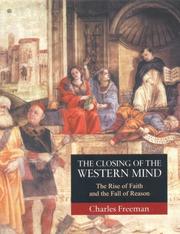
Freeman's sweeping account of how Greek rational thought was nearly extinguished and then recovered traces the long arc of Greek intellectual legacy from antiquity to the Renaissance, giving the reader a final, panoramic view of why Greece still matters.
Discussion
Keep reading
Paths that share books, cover the same subject, or open a related topic.