Medieval literature rewards a little scaffolding. The worldview is genuinely foreign—its assumptions about God, kingship, love, and language differ from ours—so a path that gives you context before the primary texts pays off quickly. Read the great poems cold and much of their strangeness reads as mere difficulty; read them prepared and the strangeness becomes the point.
It also spans a wide arc of English, from the alliterative Old English line to Chaucer's supple Middle English. Knowing the map helps you hear the shifts. Here's a sequence that orients before it dives.
Getting your bearings
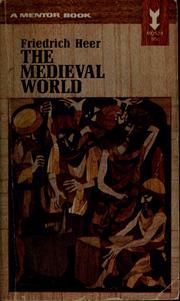
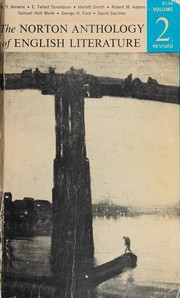
Start with The medieval world, Heer's broad cultural history that furnishes the mental furniture—feudalism, faith, and the medieval imagination. The Norton Anthology of English Literature gives you well-annotated selections and headnotes to sample widely, and A guide to Old English introduces the language and forms behind the earliest verse. This groundwork makes everything after easier.
The great poems
Now the masterpieces. Beowulf, in Heaney's vigorous translation, is the towering Old English epic of monsters and mortality. Sir Gawain and the Green Knight, in Armitage's crackling version, is the finest Middle English romance—a beheading game and a test of honor. The death of King Arthur draws on Malory's great cycle of chivalry and its collapse.
Chaucer and the wider field
Then the tradition's central figure. The Canterbury Tales is Chaucer's teeming, funny, humane pilgrimage across every rank of society, and Troilus and Criseyde his supreme long poem of love and betrayal. Piers Plowman offers Langland's fierce dream-vision of salvation and social justice. Close with The Cambridge companion to medieval English literature, 1100-1500, which sets it all in scholarly context.
Follow the full path to enter the medieval world with a guide rather than a guess.
Follow the full reading path →
Ready to learn something deeply?
Build a reading path — free