Epic Poetry: Best Books to Read in Order
This curriculum guides an intermediate reader through the four great Western epics — the Iliad, Odyssey, Aeneid, and Paradise Lost — by first building the critical vocabulary and mythological context needed to read them deeply, then tackling each poem in its natural historical order, and finally stepping back to understand how they form a unified tradition. Each stage assumes the previous one, so the difficulty and interpretive ambition rise steadily from orientation to mastery.
Orientation: The Epic Tradition
IntermediateUnderstand what epic poetry is, how it works as a form, and acquire the mythological and historical background needed to read the four great epics without constant interruption.
▸ Study plan for this stage
Pace: 6–8 weeks, ~40–50 pages/day. Start with Graves' thematic selections (3–4 weeks, focusing on foundational myths), then Clarke's analysis (2–3 weeks, slower pace for close reading). Build in review and synthesis time.
- The structure and function of myth in ancient Greek culture: how myths served religious, social, and explanatory purposes
- Key mythological cycles and genealogies: the Titans, Olympians, heroes, and their interconnected stories as a coherent tradition
- The oral tradition and formulaic composition: how epic poetry was composed, transmitted, and performed in pre-literate and early literate Greece
- Narrative techniques in the Odyssey: repetition, digression, simile, and characterization as tools for meaning-making in epic form
- The hero's journey archetype: how epic heroes are defined by kleos (glory), timē (honor), and their relationship to fate and the gods
- Historical and cultural context: the Bronze Age world, the Mycenaean civilization, and how historical memory shapes epic narrative
- Thematic coherence in epic: how individual myths and episodes connect to larger patterns of human experience, divine will, and moral order
- What are the major mythological cycles Graves presents, and how do they relate to one another (e.g., Titanomachy, Olympian succession, Heracles cycle)?
- How does Clarke explain the role of repetition and formulaic language in the Odyssey, and what effect does this have on the poem's meaning?
- What is the significance of the hero's relationship to fate, honor (timē), and divine will in epic poetry, and how do Graves' myths illustrate this?
- How does Clarke analyze Odysseus's character development through the poem, and what narrative techniques does Homer use to reveal it?
- What historical or cultural elements from the Bronze Age world (as discussed in Graves) appear to be embedded in the Odyssey's narrative?
- How does understanding the broader mythological tradition (from Graves) enhance your reading of specific episodes and allusions in the Odyssey?
- Create a genealogical chart of the Olympian gods and major hero lineages from Graves, noting key conflicts and alliances; use this as a reference while reading Clarke.
- Identify and annotate 5–10 instances of formulaic language or repeated epithets in a selected book of the Odyssey (e.g., Book 1 or 9); write a short note on how each repetition reinforces character or theme.
- Write a 2–3 page comparative analysis of how Graves presents a myth (e.g., Prometheus, Heracles) and how that myth is alluded to or echoed in the Odyssey passages Clarke discusses.
- Map the major episodes of the Odyssey against the hero's journey archetype (departure, trials, return, reintegration); note where Clarke identifies departures from or complications of this pattern.
- Select one extended simile from the Odyssey (e.g., the weeping of Odysseus); analyze it using Clarke's framework—what does it reveal about character, situation, or theme?
- Create a timeline or summary sheet of the mythological background relevant to the Odyssey (e.g., the Trojan War, Agamemnon's fate, Athena's role); cross-reference it with specific scenes Clarke analyzes.
Next up: This stage equips you with the mythological literacy and formal understanding of epic composition necessary to read the four great epics (likely the Iliad, Odyssey, Aeneid, and Paradise Lost) with confidence, recognizing allusions, appreciating narrative technique, and grasping the cultural stakes of heroic action.
Provides a comprehensive, readable reference to the gods, heroes, and stories that underpin the Iliad and Odyssey; reading it first means you will recognize every allusion the moment it appears.
A concise critical introduction to how Homeric epic is constructed — oral formula, ring composition, simile, and narrative structure — giving you the analytical tools to read Homer actively rather than passively.
Homer: War and Homecoming
IntermediateRead and deeply understand the Iliad and Odyssey as complete poems, appreciating their structure, themes of rage and cunning, mortality and return, and their contrasting visions of heroism.
▸ Study plan for this stage
Pace: 12–14 weeks, ~40–50 pages/day (approximately 6,000 pages total across both epics in a quality translation)
- The concept of kleos (glory/fame) and how it motivates Homeric heroes to pursue honor through combat and endurance
- The dual structure of the Iliad: the wrath of Achilles as the organizing principle and its consequences for the Greek army and Troy
- Contrasting heroic ideals: the martial, rage-driven heroism of Achilles versus the cunning, adaptive heroism of Odysseus
- The role of fate (moira) and divine intervention in shaping mortal destinies and the limits of human agency
- The Odyssey's thematic inversion: the journey home (nostos) as a test of character, loyalty, and wisdom rather than martial prowess
- Mortality and mortality-awareness as a defining feature of human existence in both epics, contrasted with divine immortality
- The function of similes, epithets, and oral formulae in creating meaning and rhythm across the vast narrative scope
- The social and political structures of the Homeric world: honor codes, guest-friendship (xenia), and the role of the assembly
- How does Achilles' wrath function as both a personal crisis and a structural organizing principle for the entire Iliad?
- What are the key differences between Achilles' conception of heroism and Odysseus' conception, and how do the two epics embody these contrasting ideals?
- How do the gods intervene in mortal affairs in both epics, and what does this reveal about the Homeric understanding of fate versus free will?
- What is the significance of the homecoming (nostos) in the Odyssey, and how does it differ thematically from the war narrative of the Iliad?
- How do similes and formulaic language function in the Iliad and Odyssey to create meaning and reinforce themes?
- What role does mortality play in shaping the choices and values of Homeric heroes, and how does awareness of death influence their pursuit of kleos?
- Create a detailed character map tracking Achilles, Hector, Odysseus, and Penelope across both epics, noting how their values, choices, and fates reflect the central themes of each poem
- Annotate 3–4 extended similes from the Iliad and 3–4 from the Odyssey, analyzing what each comparison reveals about the action, character, or theme it describes
- Write a comparative essay (1,500–2,000 words) on how the Iliad and Odyssey present contrasting visions of heroism, using specific scenes and speeches as evidence
- Track the role of a single god (e.g., Athena, Poseidon, or Zeus) across both epics, noting how divine intervention shapes mortal outcomes and reflects divine personalities
- Create a timeline of key events in the Odyssey's narrative structure, distinguishing between the main plot, flashbacks, and embedded stories, then reflect on how this non-linear structure differs from the Iliad's approach
- Perform a close reading of two pivotal speeches (one from each epic—e.g., Achilles' speech in Book 9 of the Iliad and Odysseus' speech to the Phaeacians in Book 9 of the Odyssey), analyzing how language reveals character and values
Next up: This stage establishes Homer as the foundational voice of Western epic tradition and provides deep familiarity with the archetypal themes of heroism, mortality, and divine-human relations that will inform all subsequent encounters with epic poetry from Virgil's Aeneid to later European traditions.
The foundational Western epic; read it first because the Odyssey presupposes its world, and every later epic in this curriculum consciously responds to it. Use the Robert Fagles or Richmond Lattimore translation for fidelity and power.
The natural sequel in theme and tone — where the Iliad is about the cost of glory, the Odyssey is about the cost of survival; reading it immediately after the Iliad lets the contrast resonate fully.
Kirk's authoritative Cambridge commentary illuminates Homeric diction, structure, and meaning book by book; dipping into it after your first read of Homer transforms a good reading into a deep one.
Virgil: Empire and Piety
IntermediateRead the Aeneid understanding how Virgil deliberately rewrites Homer to serve a Roman vision of history, duty, and empire, and recognize the poem's profound ambivalence beneath its imperial surface.
Read this short critical study before the Aeneid to understand Virgil's relationship to Homer and his innovations in psychology and narrative — it makes the poem's subtlety immediately visible.
The great Roman epic and the essential bridge between Homer and Milton; coming to it after Homer, you will feel every deliberate echo and inversion Virgil builds into his poem.
Milton: The Christian Epic
ExpertRead Paradise Lost as the culmination of the classical epic tradition — understanding how Milton absorbs and transforms Homer and Virgil into a Christian cosmos — and grasp its theological, political, and poetic ambitions.
▸ Study plan for this stage
Pace: 8–10 weeks, ~40–50 lines/day (or 2–3 books per week), with weekly review sessions
- Milton's theodicy: how Paradise Lost justifies God's ways to man through the Fall narrative and the problem of free will versus divine foreknowledge
- The transformation of classical epic conventions (invocation, heroic journey, descent, warfare) into Christian theological argument
- Satan as a complex, psychologically realized antagonist: his rebellion, rhetoric, and tragic grandeur as a challenge to the epic hero archetype
- The relationship between Paradise Lost and its classical predecessors (Homer's epics and Virgil's Aeneid): allusion, imitation, and Christian supersession
- Milton's poetic language and blank verse technique: how syntax, imagery, and sound reinforce theological meaning
- The political dimensions of Paradise Lost: monarchy, obedience, and rebellion in the context of Milton's own era and religious convictions
- Adam and Eve as the true epic protagonists: their temptation, fall, and redemptive promise as the poem's emotional and spiritual center
- The cosmology of Paradise Lost: the hierarchies of Heaven, Hell, and Earth, and how spatial geography reflects theological order
- How does Milton's invocation and opening differ from Homer and Virgil, and what does this reveal about his theological ambitions?
- Explain Milton's theodicy: how does he reconcile human free will with God's omniscience and the inevitability of the Fall?
- What makes Satan a compelling and complex character, and how does his characterization challenge or complicate the traditional epic hero?
- Trace the parallels and departures between Paradise Lost and the classical epics in terms of plot structure, heroic action, and ultimate meaning
- How does Milton's blank verse serve his theological and political purposes? Identify specific passages where form reinforces content
- What is the significance of the temptation and fall of Adam and Eve as the climax of the poem, and how does it redefine epic heroism?
- Read and annotate Books I–II (Satan's council in Hell): map Satan's rhetorical strategies and compare his speeches to classical villains or antagonists
- Perform a close reading of the invocation (Book I, lines 1–26) alongside Homer's Iliad opening and Virgil's Aeneid opening; write a 500-word analysis of how Milton's differs and why
- Create a visual map of Paradise Lost's cosmology (Heaven, Hell, Chaos, Earth) with key locations and characters; annotate with theological significance
- Read Books IV–V (Satan in Eden, Raphael's warning): analyze the temptation setup and compare Eve's vulnerability to classical tragic heroines
- Write a comparative essay (800–1000 words) on one classical epic convention (e.g., the descent, the council of war, the journey) as it appears in Homer/Virgil and Milton
- Read Books IX–X (the Fall): perform a detailed line-by-line analysis of the temptation dialogue and Adam's response; examine how Milton portrays the moment of human disobedience
- Conduct a rhetorical analysis of Satan's soliloquies (e.g., Book IV, lines 32–113): how does his language reveal his psychology and theological position?
- Read Book XII (Michael's prophecy and Adam's redemption): discuss how the promise of Christ reframes the entire narrative and transforms epic closure
Next up: This deep engagement with Paradise Lost as the apex of Christian epic prepares you to examine how later poets respond to, critique, or reimagine Milton's vision—whether through Romantic reinterpretations, postcolonial revisions, or modernist fragmentations of the epic form itself.
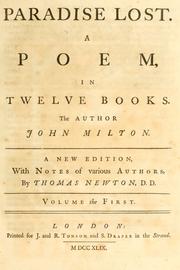
The summit of the curriculum; having read Homer and Virgil, you will catch Milton's constant allusions and inversions, and the poem's argument about heroism, obedience, and free will will land with full force.
Synthesis: The Epic as a Tradition
ExpertStep back and understand all four epics as a single, evolving conversation across three millennia — seeing how each poem redefines heroism, history, and the human condition in response to its predecessors.
▸ Study plan for this stage
Pace: 6–8 weeks, ~40–50 pages/day (with 2–3 days per week for synthesis and reflection)
- The Western canon as a self-correcting system: how literary works reshape and redefine what counts as 'great' literature across centuries
- Bloom's anxiety of influence: how later epics (Virgil, Dante, Milton, etc.) engage in creative misreading of their predecessors to establish their own authority
- Epic and empire as inseparable: how imperial ideology shapes narrative structure, heroic values, and historical representation in foundational texts
- Quint's argument that epics encode competing visions of history—some celebrating conquest and centralization, others critiquing or subverting imperial projects
- The evolution of heroism across the epic tradition: from Homeric kleos (glory through martial prowess) to Christian redemption to Enlightenment individualism
- Intertextuality as the engine of the tradition: how each epic deliberately echoes, revises, and contests earlier epics to claim its place in the canon
- The relationship between literary form and political ideology: how meter, narrative voice, and plot structure encode assumptions about power, justice, and human agency
- According to Bloom, what is the anxiety of influence, and how does it explain why later poets must 'misread' their predecessors to create original work?
- How does Quint argue that epic poetry is fundamentally connected to imperial projects, and what evidence does he provide from specific epics?
- What does Bloom mean by the Western canon as a self-correcting system, and how does this concept help explain why certain epics endure while others fade?
- Compare Quint's reading of two epics from his study: how does each encode a different relationship to empire, conquest, or historical progress?
- How has the definition of heroism shifted across the epic tradition, and what role do Bloom and Quint assign to this shift in understanding the tradition as a whole?
- What is the relationship between literary form (narrative structure, meter, voice) and political ideology in the epics discussed by Bloom and Quint?
- Create a timeline mapping Bloom's account of the Western canon: identify 5–7 key epics he discusses, note when each was written, and annotate one sentence per epic explaining how it 'corrects' or redefines the tradition
- Trace the anxiety of influence through a specific pair of epics (e.g., Homer → Virgil, or Virgil → Dante): find 3–4 direct allusions or structural echoes in the later poem and explain how the later poet uses these to assert independence
- Read Quint's analysis of empire in 2–3 epics and create a comparative chart: for each, identify (a) the imperial ideology it endorses or critiques, (b) the narrative techniques used to encode this ideology, and (c) the historical moment of composition that explains this stance
- Write a 2–3 page synthesis essay: 'How do Bloom's theory of the canon and Quint's theory of epic and empire together explain why certain epics become foundational while others are forgotten?'
- Select one epic discussed in both Bloom and Quint (e.g., the Aeneid, Paradise Lost, or The Faerie Queene) and write a close reading of a single passage that demonstrates both the anxiety of influence (Bloom) and the imperial ideology (Quint) at work
- Create a visual map showing how heroism is redefined across 4–5 epics in the tradition: use Bloom and Quint to explain what values each epic prioritizes and how these shift in response to historical and literary pressures
Next up: This stage equips you to see the epic tradition as a coherent, self-aware conversation about power, heroism, and human meaning—preparing you to either apply these frameworks to non-Western epic traditions, examine how modern works (novels, films, graphic novels) inherit and transform epic conventions, or conduct original research on a specific epic's place within this larger genealogy.

Bloom's sweeping argument about literary influence and greatness places Homer, Virgil, and Milton in direct dialogue; reading it last lets you test your own hard-won judgments against a major critic's.

A landmark scholarly study showing how the politics of victory and defeat run through every epic from Homer to Milton — the perfect capstone that unifies everything you have read into a single interpretive framework.
Discussion
Keep reading
Paths that share books, cover the same subject, or open a related topic.