Classical mythology: gods, heroes & meaning
This curriculum moves from accessible retellings and overviews, through the primary ancient sources, into deeper literary and cultural analysis, and finally to the best modern retellings that show mythology's living legacy. Each stage builds the vocabulary, cast of characters, and interpretive tools needed for the next, so nothing feels overwhelming or out of context.
Foundations: Meet the Gods and Heroes
BeginnerBuild a confident mental map of the major Greek and Roman gods, heroes, and core myths before touching any primary source.
▸ Study plan for this stage
Pace: 6–8 weeks total. Week 1–5: Hamilton's "Mythology" (~25–30 pages/day, reading one thematic section at a time — Gods, Heroes, Trojan War, etc.). Week 6–8: D'Aulaires' "Book of Greek Myths" at a leisurely pace (~15–20 pages/day), revisiting each deity/hero as a visual and narrative reinforcement of Ham
- The Olympian family tree: the twelve major Olympians, their Roman equivalents, and their domains (e.g., Zeus/Jupiter, Athena/Minerva, Apollo/Apollo)
- The cosmogony: how the world and gods came to be — Chaos, Titans, the Olympian revolt, as told in Hamilton's opening chapters
- The nature of Greek myth: myths as explanations of natural phenomena, human behavior, and cultural values — Hamilton's introduction is essential here
- Hero archetypes: the traits, trials, and fatal flaws that define heroes like Perseus, Heracles, Theseus, and Odysseus across Hamilton's hero sections
- The role of fate and the gods' intervention: how divine will, prophecy, and hubris drive mortal stories throughout Hamilton
- The Underworld and its geography: Hades, Persephone, the rivers Styx and Lethe, Elysium, and Tartarus as described in Hamilton
- Greek vs. Roman retellings: Hamilton explicitly flags where Roman poets (Ovid, Virgil) reshape Greek originals — recognizing these layers is a foundational critical skill
- D'Aulaires' visual mythology: using the illustrated portraits and family groupings in D'Aulaires to lock in character identities, attributes (symbols, animals, weapons), and relationships
- After reading Hamilton's introduction, how does she characterize the Greek view of the gods compared to earlier, more fearsome mythologies — and why does that distinction matter for reading the myths?
- Can you name all twelve Olympians, their Greek and Roman names, their primary domains, and at least one myth associated with each, drawing on Hamilton's god-by-god sections?
- How do the hero myths in Hamilton (Perseus, Heracles, Theseus, Odysseus) follow a recognizable pattern of quest, divine aid, and fatal flaw — and where does each hero deviate from that pattern?
- Using D'Aulaires as a visual reference, can you identify a god or hero from their symbolic attributes alone (e.g., trident, owl, winged sandals, lightning bolt)?
- How does Hamilton explain the Trojan War's origins, and which gods take which sides — and why does their involvement reflect their individual personalities and domains?
- Where do Hamilton and D'Aulaires tell the same myth differently in tone or detail, and what does that reveal about how myths change across retellings?
- Build a hand-drawn Olympian family tree on a single large sheet of paper as you read Hamilton, adding each god when first introduced. Include Roman names, symbols, and one myth note per deity. Update it with D'Aulaires' illustrations as inspiration in weeks 6–8.
- Keep a 'Myth Log': after each major myth in Hamilton, write 3–5 sentences summarizing (1) the main characters, (2) the conflict, (3) the resolution, and (4) what value or natural phenomenon the myth seems to explain.
- After finishing Hamilton's hero chapters, write a one-page comparison of any two heroes (e.g., Heracles vs. Theseus) — their quests, their helpers, their flaws, and their fates. Use only evidence from Hamilton.
- Use D'Aulaires as a 'flashcard book': cover the text on each page and try to name the depicted god or hero from the image and attributes alone, then check yourself. Repeat for any you miss.
- Create a 'Greek vs. Roman' cheat sheet: as Hamilton flags Roman retellings, note the Greek original vs. the Roman version side by side (e.g., Eros vs. Cupid in the Psyche myth). This will be invaluable in later stages with primary sources.
- Draw or map the Greek Underworld from Hamilton's description — label Hades, Persephone, Charon, the rivers, Elysium, Tartarus, and any notable residents (Sisyphus, Tantalus, etc.). Annotate with the myths that explain how each figure ended up there.
Next up: By finishing Hamilton and D'Aulaires, the reader has a confident mental cast list and story map of classical mythology, making them fully prepared to encounter the gods and heroes in their own words through primary sources like Homer's Iliad and Odyssey or Ovid's Metamorphoses — without getting lost in unfamiliar names, relationships, or allusions.
The single best starting point: a clear, beautifully written survey of Greek, Roman, and Norse myth that introduces every major deity and hero. Read it first to get the full cast of characters in your head.

Deceptively simple but remarkably complete, this illustrated retelling cements the relationships between gods and the logic of the Olympian world — ideal as a visual companion right after Hamilton.
The Primary Sources: Hear the Ancient Voices
BeginnerRead the myths as the Greeks and Romans actually told them, developing a feel for the original tone, values, and narrative style.
▸ Study plan for this stage
Pace: 10–12 weeks total: ~3–4 weeks for The Iliad (~30 pages/day, using a verse or prose translation with notes), ~3 weeks for The Odyssey (~25 pages/day), and ~4–5 weeks for Metamorphoses (~20 pages/day, reading one or two books of the poem per sitting). Plan for one dedicated "reflection day" per week w
- Epic conventions and oral-formulaic style: recognize repeated epithets (e.g., 'swift-footed Achilles,' 'rosy-fingered Dawn'), invocations of the Muse, and in medias res openings as deliberate craft choices in both The Iliad and The Odyssey
- Homeric values — timē (honor), kleos (glory through fame), nostos (homecoming), and xenia (guest-friendship) — and how they drive every major plot decision in The Iliad and The Odyssey
- The Greek pantheon in action: how the Olympian gods intervene, take sides, and reflect human passions in The Iliad and The Odyssey, establishing the theological backdrop for all later mythology
- Heroic archetypes and their contrasts: Achilles (wrath and aristeia) vs. Hector (duty and pathos) in The Iliad; Odysseus (cunning and endurance) vs. the suitors (hubris) in The Odyssey
- Transformation as mythological grammar: Ovid's Metamorphoses uses physical change — human to animal, plant, or star — as a metaphor for psychological, moral, or cosmic truth across 250+ myths
- Roman re-framing of Greek myth: how Ovid in Metamorphoses adapts, ironizes, and sometimes subverts the Greek originals, reflecting Augustan Roman culture, politics, and literary sophistication
- Narrative tone and register: distinguishing the solemn, martial grandeur of The Iliad from the adventurous, folk-tale texture of The Odyssey and the witty, elegiac, and sometimes darkly comic voice of Metamorphoses
- The mythological cosmos — creation, divine hierarchy, the Underworld, fate vs. free will — as it is established across all three works and will underpin every later retelling
- After reading The Iliad, can you explain what Achilles' wrath is directed at, why he withdraws from battle, and what finally drives him back — and what does this arc reveal about Homeric values of honor and grief?
- How does The Odyssey define heroism differently from The Iliad? Use specific episodes (e.g., the Cyclops, the Sirens, the suitors) to show how Odysseus's cunning and endurance replace Achilles' martial fury as the central virtue.
- What is xenia (guest-friendship) and how does its violation or observance function as a moral engine in both The Iliad and The Odyssey?
- Choose any three transformations in Ovid's Metamorphoses (e.g., Daphne, Actaeon, Arachne) and explain what each metamorphosis 'means' — what human truth or divine principle does the physical change embody?
- How does Ovid's narrative voice in Metamorphoses differ from Homer's? Point to specific moments of irony, pathos, or playfulness that signal a Roman, literary sensibility rather than an oral, bardic one.
- Across all three works, how is the relationship between gods and mortals portrayed? Are the gods just, arbitrary, or something more complex — and does your answer change between Homer and Ovid?
- Epithet & formula journal (The Iliad & Odyssey): As you read, keep a running list of repeated epithets and stock phrases. After finishing both epics, write a one-page reflection on what these repetitions reveal about oral storytelling and what values they reinforce.
- Character motivation map (The Iliad): Draw a simple diagram with Achilles at the center. Map every major decision he makes to one of the Homeric values (timē, kleos, grief, fate). Then do the same for Hector. Compare the two maps and write three sentences on what the contrast reveals.
- Odyssey episode log: For each major adventure in The Odyssey (Cyclops, Circe, Sirens, Scylla & Charybdis, Phaeacians, etc.), write 2–3 sentences identifying the temptation or threat, how Odysseus responds, and which value is being tested or affirmed.
- Transformation analysis cards (Metamorphoses): For every myth in Metamorphoses where a character is transformed, write a small index card with: (1) who is transformed and into what, (2) the cause (divine anger, pity, punishment, escape?), and (3) your interpretation of the symbolic meaning. Aim for at least 15 cards by the end.
- Tone comparison exercise: Select one myth that appears in both a Homeric epic and Metamorphoses (e.g., Circe, the Trojan War backdrop, Polyphemus). Write a one-page side-by-side comparison of how each author handles tone, pacing, and the role of the gods.
- Commonplace book of passages: Throughout all three books, copy out 8–10 passages that strike you as especially powerful, strange, or beautiful. After finishing Metamorphoses, re-read them all and write a short paragraph on what they collectively reveal about how ancient authors understood the relationship between humans, gods, and fate.
Next up: Having absorbed the myths in their original ancient voices — Homer's oral grandeur and Ovid's literary wit — the reader now has a living feel for the raw material that every later poet, playwright, and artist drew upon, making them ready to explore how subsequent traditions interpreted, transformed, and argued with these same stories.
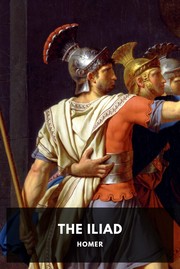
The foundational epic of Western literature; having Hamilton's overview first makes the gods' interventions and heroic code immediately intelligible rather than confusing.
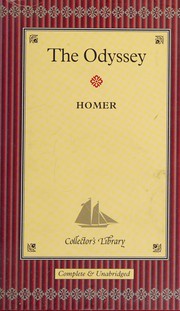
Read directly after the Iliad, it deepens the heroic world and introduces the myth of the long journey home — one of mythology's most enduring archetypes.
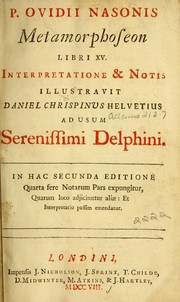
Rome's great mythological compendium: 250 myths in one poem, told with wit and psychological depth. This is the single source most responsible for how Western culture has pictured the myths ever since.
Going Deeper: Tragedy, Meaning, and the Hero's Journey
IntermediateUnderstand what the myths meant — psychologically, religiously, and culturally — and how Greek tragedy used myth to explore the human condition.
▸ Study plan for this stage
Pace: 6–8 weeks total. Weeks 1–3: Read The Oresteia (~30–40 pages/day, including rereading dense choral odes). Weeks 4–7: Read The Hero with a Thousand Faces (~20–25 pages/day, pausing to journal after each major section). Week 8: Synthesis, review, and completing exercises.
- The cycle of blood guilt and justice in The Oresteia: how Aeschylus traces the House of Atreus from vendetta logic (the Furies) to civic law (the Areopagus), dramatizing the birth of justice as a social institution
- The role of the Greek chorus: not mere background, but a collective moral voice that frames, questions, and emotionally amplifies the action — pay close attention to the choral odes in Agamemnon
- Hubris, fate, and divine will: how characters in The Oresteia (Agamemnon, Clytemnestra, Orestes) are simultaneously free agents and instruments of divine necessity
- Campbell's monomyth — the Hero's Journey: the universal three-act structure (Separation → Initiation → Return) that Campbell argues underlies myths across all cultures and eras
- The cosmological, sociological, pedagogical, and psychological functions of myth as defined by Campbell: myths are not primitive errors but living technologies for orienting human beings in the world
- The archetypal figures of the monomyth: the Herald, the Threshold Guardian, the Mentor, the Shadow, the Shapeshifter — and how to spot them in The Oresteia
- Campbell's concept of the 'road of trials' and the 'innermost cave': the hero must die symbolically to be reborn — Orestes' matricide and trial as a concrete literary example
- The tension between the personal and the universal in myth: Campbell argues myths speak to the individual psyche (Jungian archetypes) while The Oresteia shows myth doing public, political, civilizational work
- How does Aeschylus use the three plays of The Oresteia to dramatize a transition from private revenge to public justice — and what does this say about the cultural function of myth in 5th-century Athens?
- According to Campbell, what are the four functions of mythology, and can you find at least one moment in The Oresteia that illustrates each function?
- Trace Orestes' journey through Campbell's Separation → Initiation → Return framework. Where does his story fit neatly, and where does it resist or complicate the monomyth structure?
- What is the role of the Furies (Erinyes) in The Oresteia, and how does their transformation into the Eumenides reflect Campbell's idea that the hero's journey reconciles opposing forces?
- Campbell argues the hero 'returns' with a boon for his community. What is Orestes' 'boon,' and how does the establishment of the Areopagus represent it?
- How does Campbell's concept of the 'threshold guardian' help explain the dramatic function of characters like the Watchman, the Chorus, or Apollo in The Oresteia?
- Scene-by-scene Hero's Journey map: After finishing The Oresteia, draw a visual diagram of Campbell's monomyth stages and physically place key scenes and characters from all three plays onto it. Note where the fit is strong and where it breaks down — the gaps are as instructive as the matches.
- Choral ode close reading: Choose one choral ode from Agamemnon (e.g., the 'hymn to Zeus' or the ode on hubris) and write a one-page analysis of how it functions as a moral or theological commentary. What does the Chorus fear? What do they know? What can't they bring themselves to say?
- Four functions audit: Create a two-column table. On the left, list Campbell's four functions of myth (cosmological, sociological, pedagogical, psychological). On the right, write a specific passage or scene from The Oresteia that fulfills each function, with a two-sentence explanation.
- Rewrite a myth beat: Pick one stage of Campbell's monomyth (e.g., 'The Road of Trials' or 'The Innermost Cave') and write a 300–500 word creative retelling of the corresponding moment in Orestes' story, but set it in a modern context (e.g., a courtroom drama, a family intervention). Reflect on what is preserved and what is lost in translation.
- Debate the monomyth: Write a one-page argument FOR and a one-page argument AGAINST Campbell's claim that the Hero's Journey is a universal structure, using only evidence from The Oresteia. This forces genuine critical engagement rather than passive acceptance.
- Reading journal — 'What does this myth mean?': After each of the three plays in The Oresteia, write a journal entry answering: What is this play 'about' beneath the plot? What human fear, desire, or question is it processing? Compare your three entries at the end and track how your interpretive instincts develop.
Next up: By internalizing both the dramatic craft of Greek tragedy (through The Oresteia) and the deep interpretive framework of the monomyth (through Campbell), the reader is now equipped to approach any classical myth not just as a story to be retold, but as a layered artifact to be decoded — a skill that will be essential for engaging with the broader canon of Greek and Roman mythology at an advanced le

The only complete surviving Greek tragic trilogy, it shows how myth was staged as civic and moral drama — a crucial step from 'story' to 'meaning'.

Campbell's landmark study of the monomyth reveals the deep structural patterns shared across mythologies, giving you a powerful analytical lens to apply to everything you've already read.
Modern Retellings: Mythology Alive Today
IntermediateSee how contemporary authors reimagine classical myth, and appreciate why these stories remain psychologically and culturally vital.
▸ Study plan for this stage
Pace: 6–8 weeks total: Weeks 1–4 for "Circe" (~30–35 pages/day, ~393 pages), Weeks 5–8 for "The Song of Achilles" (~25–30 pages/day, ~378 pages). Allow 1–2 buffer days per week for reflection journaling and discussion.
- Feminist Reclamation: How Miller repositions Circe — a minor, often villainous figure in Homer — as a fully realized protagonist with interiority, agency, and growth, illustrating how mythology can be retold to center marginalized voices.
- Psychological Depth vs. Archetypal Flatness: Both books transform Homeric archetypes (the witch, the hero, the lover) into psychologically complex characters, exploring how modern fiction grants myth emotional realism without losing its mythic power.
- The Outsider and Power: Circe's identity as neither fully god nor mortal, and Patroclus's identity as an overlooked, 'lesser' hero, both explore how mythology encodes anxieties about belonging, power, and social hierarchy.
- Reimagining the Trojan War Cycle: 'The Song of Achilles' retells the Iliad through Patroclus's perspective, demonstrating how a shift in narrative point-of-view can radically reinterpret canonical events (Achilles's rage, fate, glory/kleos) and foreground relationships the original text marginalizes
- Fate, Free Will, and Prophecy: Both novels wrestle with the Greek concept of Moira (fate) — Circe defies divine expectation through self-determination, while Achilles knowingly walks toward his foretold death — showing how modern authors use fate as a lens for contemporary questions of choice and id
- Queering the Canon: 'The Song of Achilles' explicitly centers the romantic and erotic relationship between Achilles and Patroclus, a relationship implied but not explicit in Homer, demonstrating how modern retellings can recover or amplify queer readings of classical texts.
- Mythology as Living Culture: Across both books, Miller demonstrates that classical myths are not museum pieces but dynamic narratives that absorb and reflect contemporary values — feminism, LGBTQ+ identity, trauma, and the ethics of power.
- Narrative Voice and Intimacy: The use of first-person voice in 'Circe' and close third-person in 'The Song of Achilles' shows how point-of-view is itself an interpretive act, shaping reader empathy and challenging the 'official' versions of myth.
- In 'Circe,' how does Miller use Circe's transformation of men into pigs — an act Homer frames as villainy — to reframe questions of female power and self-defense? What does this reframing reveal about the original myth's assumptions?
- How does 'The Song of Achilles' use Patroclus as narrator to challenge the Iliad's central value of kleos (glory through martial deeds)? What alternative values does Patroclus's perspective elevate?
- Both Circe and Patroclus are defined in their source texts largely by their relationships to more powerful figures (Odysseus, Achilles). How does Miller give each character an independent moral and emotional identity, and what narrative techniques make this convincing?
- How do both novels handle the tension between fate and free will? Identify at least one key moment in each book where a character chooses to act against or alongside their prophesied destiny, and analyze what Miller seems to argue about human agency.
- Miller draws on a wide range of classical sources beyond Homer (Ovid's Metamorphoses, Hesiod, the Homeric Hymns). Choose one episode in 'Circe' that synthesizes multiple mythological traditions and explain how Miller's synthesis creates new meaning.
- Why might contemporary readers find these retellings more emotionally accessible than reading Homer or Ovid directly? What is gained — and what might be lost — when myth is translated into the conventions of the modern literary novel?
- Side-by-Side Comparison: Read the Circe episode from Homer's Odyssey (Book X) and the Scylla episode alongside the corresponding chapters in Miller's 'Circe.' Write a 1-page comparison noting every deliberate change Miller makes — in tone, motivation, and outcome — and argue why each change matters.
- Character Interiority Journal: Choose one scene in 'The Song of Achilles' where Patroclus witnesses a major Iliadic event (e.g., Achilles's withdrawal from battle, Hector's death). Rewrite a single paragraph of that scene from Achilles's point-of-view, then reflect: how does the shift change your moral sympathies?
- Myth Mapping: Create a visual 'myth map' for 'Circe' — a diagram or annotated timeline that tracks every classical myth or figure Circe encounters (Prometheus, Daedalus, Odysseus, Medea, Scylla, etc.). Annotate each node with the original mythological source and Miller's key departure from it.
- Modern Retelling Pitch: Choose any minor or silenced figure from the Trojan War cycle who does NOT appear as a protagonist in either book (e.g., Briseis, Cassandra, Hecuba, Chryseis). Write a 300-word pitch for a modern retelling from their perspective, explaining what contemporary theme their story would illuminate.
- Thematic Essay: Write a 500–700 word essay responding to the question: 'Both Circe and Patroclus are outsiders in their mythological worlds. What does Miller suggest, across both novels, about the relationship between powerlessness and moral clarity?'
- Reading Group Discussion: Host or participate in a 45-minute discussion using these two prompts — (1) 'Is Miller's Achilles a hero, an antihero, or something else entirely?' and (2) 'Does giving Circe a happy ending betray or honor the spirit of Greek tragedy?' Record or journal your key takeaways.
Next up: Mastering how modern authors consciously reshape classical myth prepares the reader to step back and study the original mythological frameworks themselves — the cosmologies, theogonies, and heroic cycles — with fresh eyes and critical questions already in hand.

A richly researched, character-driven retelling that rewards readers who know the original sources — you'll catch every allusion and feel the full weight of Miller's reinvention.
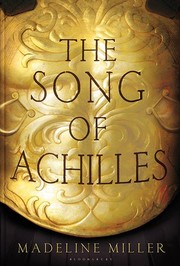
Miller retells the Iliad through Patroclus's eyes, making it a perfect bookend to Homer; reading it here, after the primary sources, transforms it from a love story into a meditation on heroism and mortality.
Discussion
Keep reading
Paths that share books, cover the same subject, or open a related topic.