Learn Old English: Best Books to Read in Order
This curriculum takes an intermediate learner — someone comfortable with linguistic concepts and perhaps a little Latin or a modern Germanic language — through a rigorous, structured path into Old English. It moves from systematic grammar and controlled reading practice, through rich prose and poetry, to an unaided encounter with Beowulf, the crown jewel of Anglo-Saxon literature.
Grammar & First Steps
IntermediateMaster Old English phonology, noun declensions, verb conjugations, and basic syntax so that every later text can be approached analytically rather than by guesswork.
▸ Study plan for this stage
Pace: 8–10 weeks, ~40–50 pages/day (alternating focused grammar study with reader passages)
- Old English phonology: the vowel and consonant inventory, sound changes (palatalization, rhotacism, gemination), and how they differ from Modern English
- Noun declensions: the five major classes (strong masculine, strong neuter, strong feminine, weak, and minor declensions) with their case endings (nominative, accusative, genitive, dative, instrumental)
- Verb conjugations: strong verbs (ablaut patterns in seven classes), weak verbs (dental suffix formation), and the distinction between indicative and subjunctive moods
- Grammatical agreement and case syntax: how case endings signal grammatical relationships and how word order interacts with case in Old English sentences
- Inflectional morphology as a system: recognizing that phonological changes, declensional patterns, and verb forms are interconnected rather than isolated rules
- Reading strategy for inflected texts: how to parse unfamiliar words by identifying stems, affixes, and case endings before consulting a glossary
- What are the major phonological features of Old English, and how do palatalization and gemination affect consonant clusters?
- How do you identify which declensional class a noun belongs to, and what are the case endings for each class in the singular and plural?
- What is ablaut, and how does it function in strong verb conjugations across the seven classes?
- How do weak verbs form their past tense, and what is the role of the dental suffix?
- How does case marking in Old English signal grammatical relationships (subject, object, possession), and when does word order override or reinforce case?
- Given an unfamiliar Old English word in a text, how would you decompose it into stem and inflectional morphemes to determine its grammatical function?
- Phonology drills: Transcribe Old English words from Hogg using IPA notation; identify which phonological rules (palatalization, rhotacism, gemination) apply to given word pairs and explain the conditioning environment
- Declension paradigm completion: Fill in missing forms in noun declension tables for all five major classes using Hogg's paradigms; then check your work against Diamond's Reader glossary
- Verb conjugation practice: Conjugate strong verbs from all seven ablaut classes (e.g., singan, helpan, bindan) across all persons, numbers, and tenses; do the same for weak verbs (e.g., fremman, deman)
- Morphological parsing: Take 20–30 sentences from Diamond's Reader passages and parse each word by identifying the stem, inflectional suffix, and grammatical function (case, number, person, tense) before looking up the gloss
- Case and agreement exercises: Identify the case of every noun, adjective, and demonstrative in a short passage; explain why each case is used and how it relates to the verb or preposition governing it
- Comparative analysis: Select 5–10 Old English sentences and rewrite them with different word orders; discuss how the case system allows or constrains these permutations and how meaning shifts
Next up: Mastery of phonology, declensions, conjugations, and case syntax equips you to move beyond mechanical glossary-checking to genuine linguistic analysis, enabling the next stage to focus on text interpretation, idiom, and literary style rather than foundational grammar.
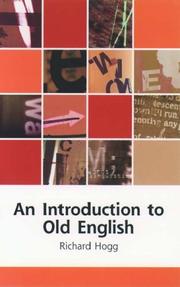
A concise, linguistically rigorous grammar written for learners who already understand grammatical terminology. Its tight structure gives a complete systematic overview before any extended reading begins.

Pairs grammatical reference tables with short, carefully graded reading passages, bridging the gap between abstract rules and real texts — the ideal second step after Hogg.
Guided Reading — Prose
IntermediateBuild reading fluency and vocabulary through annotated prose texts, learning to parse sentences independently and absorb the rhythms of Anglo-Saxon writing.
▸ Study plan for this stage
Pace: 8–10 weeks, ~15–20 pages/day (alternating between primer drills and reader passages)
- Morphological flexibility: recognizing how Old English nouns, adjectives, and verbs change form across cases, genders, and numbers in actual prose contexts
- Sentence structure and word order: understanding how OE prose arranges clauses and how to identify the main verb and arguments despite unfamiliar syntax
- Vocabulary acquisition through context: building a working lexicon by encountering words repeatedly in Sweet's annotated passages and inferring meaning from surrounding text
- Parsing strategies: developing the habit of working through complex OE sentences methodically, using grammatical endings and function words as guides
- Anglo-Saxon prose rhythm and style: absorbing the cadence, formulaic expressions, and rhetorical patterns typical of OE prose (especially in religious and historical texts)
- Annotation and glossing techniques: learning to use Sweet's notes and glossaries efficiently to support independent reading without constant dictionary lookup
- Transitioning from primer to reader: moving from controlled, graded exercises in the Primer to longer, less-glossed passages in the Reader
- How do you identify the main verb and subject in an OE prose sentence, and what role do case endings and word order play?
- What are the major morphological patterns for OE nouns and adjectives across the strong and weak declensions, and how do they appear in Sweet's prose texts?
- How does Sweet's annotation and glossing support your reading, and what strategies do you use when encountering an unfamiliar word in context?
- What are the characteristic features of Anglo-Saxon prose style as exemplified in Sweet's Reader (e.g., use of parataxis, repetition, formulaic phrases)?
- Can you read a passage from Sweet's Reader aloud with reasonable fluency, parsing the grammar and understanding the overall sense without translating word-for-word?
- How do the prose passages in the Reader differ in difficulty and style from the controlled sentences in the Primer, and what does this reveal about OE prose conventions?
- Daily drill: Work through 2–3 pages of the Primer's paradigm exercises and short sentences, writing out full morphological analyses (case, gender, number) for at least 10 words per session
- Annotated close reading: Select a 10–15 line passage from the Reader, create your own glossary of unfamiliar words before consulting Sweet's notes, then compare your guesses with the provided glosses
- Sentence parsing: Take 3–4 complex OE prose sentences from the Reader each week, diagram or outline their structure (identifying main clause, subordinate clauses, and arguments), then translate into modern English
- Vocabulary journal: Maintain a running list of high-frequency words encountered across both texts, noting their morphological variants and semantic range as revealed by context
- Oral fluency practice: Read aloud 1–2 passages (50–100 words) from the Reader each week, focusing on phrasing and rhythm rather than word-by-word accuracy
- Comparative analysis: Choose two passages of similar length from the Primer and Reader, note differences in complexity, annotation density, and prose style, and reflect on what you've learned
Next up: Mastery of guided prose reading—parsing sentences independently, absorbing OE vocabulary and syntax patterns, and developing fluency with annotated texts—prepares you to tackle less-glossed or unannotated OE prose and poetry, where you will rely on internalized grammar and context to sustain meaning without constant reference support.
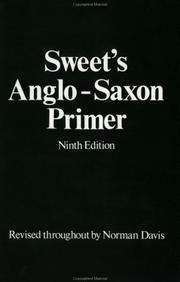
The classic pedagogical primer, revised and still unsurpassed for drilling paradigms alongside short prose extracts from the Anglo-Saxon Chronicle and Ælfric. Read it for its exercises and glossary.
The natural sequel to the Primer, offering longer, more varied selections from Alfred's translations, homilies, and early verse — with full glossary — that consolidate prose reading before poetry.
Poetry & Poetic Grammar
IntermediateUnderstand the distinct grammar, formulaic diction, and alliterative metre of Old English verse so that poetic texts no longer feel like a foreign dialect within the language.
▸ Study plan for this stage
Pace: 6–8 weeks, ~25–30 pages/day. Start with Mitchell's chapters on poetic grammar (weeks 1–3), then shift to close reading of poems in Alexander with parallel grammar reference (weeks 4–8).
- Alliterative metre and stress patterns: how Old English verse uses stressed syllables and alliteration instead of end-rhyme
- Poetic inflectional grammar: nominative, accusative, dative, and genitive case endings in verse contexts and their metrical function
- Formulaic diction and kennings: stock phrases, compound epithets, and how poets recycled and varied traditional vocabulary
- The half-line (hemistich) as the basic unit: how caesura divides lines and how alliteration links half-lines
- Poetic word order and syntax: how verse word order differs radically from prose, driven by metrical and alliterative demands
- Sound symbolism and phonetic effects: how alliteration and assonance create meaning and emphasis beyond semantic content
- Manuscript conventions and scribal variation: how to read poetic texts in their transmitted form and account for scribal errors or dialect variation
- How does Old English alliterative metre work, and why does it not depend on syllable count or end-rhyme?
- What is a kenning, and how do kennings function as both metrical and semantic devices in Old English poetry?
- How do case endings in Old English poetry signal grammatical relationships, and how do they interact with metrical constraints?
- What is the role of the caesura and the half-line in Old English verse structure?
- How does poetic word order in Old English differ from prose word order, and what metrical or alliterative principles drive these differences?
- How can you distinguish between scribal error and intentional poetic variation when reading a manuscript text?
- Scan 5–10 lines from Alexander's poems for stress and alliteration; mark the caesura and identify which syllables carry alliterative weight.
- Parse the case endings and syntactic function of 3–4 noun phrases from a single poem in Alexander; map how case marking relates to word order.
- Identify and collect 10–15 formulaic phrases or kennings from Alexander's texts; note their metrical shape and semantic range across different poems.
- Rewrite a 4–6 line passage from Alexander's poems into Modern English prose word order; then reverse-engineer why the poet chose the poetic order.
- Compare two manuscript versions or editorial variants of the same poem passage (if available in Alexander's apparatus); discuss whether the difference is metrical, grammatical, or semantic.
- Compose 4–6 lines of your own alliterative verse in Modern English using the stress and alliteration patterns you've learned; then attempt a short Old English imitation using Mitchell's grammar guide.
Next up: Mastery of poetic grammar and formulaic language equips you to read longer, more complex poems independently and to recognize how individual poets innovated within traditional constraints—preparing you to analyze authorial voice and thematic variation in subsequent stages.

Mitchell and Robinson's guide is the most widely used university textbook in the field, with dedicated chapters on poetic style, metre, and the kenning system — essential preparation before tackling Beowulf.

A facing-page translation of shorter Old English poems (The Wanderer, The Seafarer, Wulf and Eadwacer, riddles) that trains the eye to see poetic structure and builds the vocabulary stock needed for longer epics.
Into Beowulf
ExpertRead Beowulf in Old English with full comprehension, understanding its manuscript tradition, poetic craft, and cultural world — arriving at the text as a scholar-reader, not just a tourist.
▸ Study plan for this stage
Pace: 8–10 weeks, ~25–30 pages/day (Chambers first: 2–3 weeks; Klaeber second: 5–7 weeks, with overlap for comparative study)
- Beowulf's manuscript tradition: the Nowell Codex, its history, scribal hands, and textual cruxes that shape interpretation
- The poem's oral-formulaic composition: alliterative meter, kennings, and the Germanic poetic craft underlying the text
- Historical and legendary contexts: the Offa and Finn episodes as embedded narratives that illuminate Beowulf's themes of loyalty, fate, and heroic obligation
- Klaeber's critical apparatus: how editorial choices (emendations, punctuation, variant readings) affect meaning and how to read a scholarly edition
- The cultural world of the poem: Germanic heroic values, Christian overlay, kingship, and the social codes governing warrior culture
- Textual variants and cruxes: how to weigh competing readings and understand why scholars disagree on key passages
- Poetic technique in context: how alliteration, stress patterns, and formulaic language function within Old English verse tradition
- The Finnsburgh episode: its relationship to the main narrative, its manuscript history, and its role in Beowulf's thematic architecture
- What is the Nowell Codex, how was it damaged, and what textual problems does this history create for modern editors and readers?
- How do Chambers's discussions of the Offa and Finn stories deepen your understanding of Beowulf's narrative structure and thematic concerns?
- What is the oral-formulaic theory, and how does recognizing formulaic patterns in Beowulf change your reading of individual lines and scenes?
- Using Klaeber's apparatus, explain how a single textual variant (emendation, punctuation choice, or manuscript reading) can alter the meaning of a passage you've studied
- What are the key differences between Chambers's and Klaeber's editorial and interpretive approaches, and how do these differences reflect broader scholarly debates?
- How do Germanic heroic values and Christian elements coexist in Beowulf, and what does the poem's cultural layering suggest about its composition and audience?
- Create a detailed timeline of the Nowell Codex's history (Chambers, Introduction) and map how each damage or loss event affects specific passages in Beowulf; note which cruxes remain unsolved
- Select three formulaic phrases from Beowulf (e.g., 'þæt wæs god cyning,' 'hwæt we gar-dena') and trace them through the poem; document their variations and explain how repetition with variation creates meaning
- Read Chambers's discussion of the Offa digression (pp. 1–50 approx.) and write a 500-word analysis of how this embedded narrative comments on the main action and Beowulf's heroic code
- Using Klaeber's critical apparatus, select five textual variants from different sections of Beowulf; for each, write a brief note explaining the manuscript evidence, the editor's choice, and how the variant affects interpretation
- Annotate a 100-line passage of Beowulf (in Klaeber's edition) marking every alliterative pattern, stress pattern, and formulaic element; then write a paragraph explaining how the poetic technique reinforces the passage's meaning
- Compare Chambers's and Klaeber's introductions side by side; create a chart listing their key disagreements on dating, authorship, manuscript tradition, and interpretation, and argue which position you find more convincing and why
Next up: Having mastered the manuscript tradition, editorial apparatus, and poetic craft of Beowulf through Chambers and Klaeber, you are now equipped to engage with specialized critical and linguistic studies that build on this foundation—whether focusing on specific episodes, Old English grammar and meter, or thematic and historical interpretation.
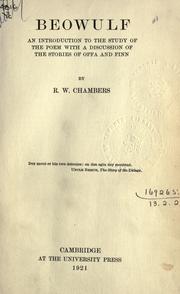
The foundational scholarly introduction to the poem's legendary background, manuscript history, and critical debates — read this before the Old English text so the epic's world is already familiar.
Klaeber's edition (Klaeber's Beowulf, 4th ed., ed. Fulk, Bjork & Niles) is the standard scholarly text with full Old English, exhaustive glossary, and commentary — the edition every serious student reads the poem in.
Deepening — Language & Legacy
ExpertSituate Old English within the history of the English language and Anglo-Saxon culture, and gain the reference tools for independent scholarly work beyond the curriculum.
▸ Study plan for this stage
Pace: 8–10 weeks, ~40–50 pages/day, with 1–2 days per week for synthesis and exercises
- The Indo-European roots of Old English and its relationship to Germanic languages, Latin, and Norse through sound shifts and morphological patterns
- The historical development of English from Proto-Germanic through Old English to Middle English, including key phonological and grammatical changes
- The Anglo-Saxon cultural, political, and religious context that shaped the language, particularly the impact of Christianity and literacy
- Dialectal variation in Old English (West Saxon, Mercian, Northumbrian, Kentish) and how scribal practices standardized the written language
- The role of manuscript transmission, scribal conventions, and textual criticism in reconstructing Old English forms and meanings
- How to use scholarly reference tools—etymological dictionaries, concordances, and philological databases—for independent research
- The continuity and rupture of Old English vocabulary and grammar through the Norman Conquest and into Middle English
- The cultural legacy of Old English literature and language in shaping English identity and modern linguistic scholarship
- How do the sound shifts described in Grimm's Law and Verner's Law explain the systematic differences between Old English and its Germanic cognates?
- What were the major phonological and morphological changes that occurred between Old English and Middle English, and what evidence from the texts supports these transitions?
- How did the Christianization of Anglo-Saxon England and the introduction of literacy influence the development and preservation of Old English?
- What are the defining characteristics of the major Old English dialects, and how did West Saxon emerge as the dominant written standard?
- How do you use the OED, the Bosworth-Toller dictionary, and other reference tools to trace the etymology and semantic history of a word from Old English to Modern English?
- What role did scribal practices and manuscript conventions play in shaping our understanding of Old English orthography and grammar?
- Create a comparative chart mapping cognates across Old English, Modern German, Old Norse, and Latin for 20–30 common words, annotating the sound correspondences and explaining them through Grimm's Law
- Trace the etymological journey of 5–8 Modern English words backward through Middle English and Old English using the OED and Bosworth-Toller, documenting semantic shifts and morphological changes
- Analyze a short Old English text passage (e.g., from Beowulf or the Anglo-Saxon Chronicle) and identify dialectal markers, scribal conventions, and textual variants across different manuscripts
- Construct a timeline of major phonological changes (vowel shifts, consonant weakening, inflectional erosion) between Old English and Middle English, supported by specific textual examples from both periods
- Compile an annotated reference guide for your own research, including key abbreviations, manuscript sigla, and the strengths/limitations of major Old English dictionaries and databases
- Write a 1,500–2,000 word research note on a single Old English word or phrase, tracing its cultural significance in Anglo-Saxon society, its linguistic relatives, and its modern descendants
Next up: This stage equips you with the historical and methodological foundations to engage with Old English texts as a scholar—understanding both the language's deep roots and its transmission through manuscripts—preparing you to undertake close textual analysis, literary interpretation, and specialized research in subsequent stages.

Places Old English in its Germanic family context — comparing it with Gothic, Old Norse, Old High German — giving the advanced learner a panoramic linguistic perspective unavailable in grammar books alone.
Mitchell's accessible but scholarly companion weaves language study with cultural history, archaeology, and literature, making it the ideal capstone that shows why Old English repays a lifetime of study.
Discussion
Keep reading
Paths that share books, cover the same subject, or open a related topic.