The Roaring Twenties and Prohibition: the best books, in order
This curriculum takes a beginner from the vivid surface of 1920s America down to its criminal underworld, cultural revolutions, and political contradictions. Each stage builds on the last: narrative history first, then focused deep-dives into Prohibition and organized crime, and finally scholarly analysis of the era's lasting meaning.
Foundations: The World of the 1920s
BeginnerBuild a vivid, accessible mental map of 1920s America — its prosperity, culture, anxieties, and contradictions — before zooming in on any single thread.
▸ Study plan for this stage
Pace: 6–7 weeks, ~40–50 pages/day. Start with "Only Yesterday" (approximately 400 pages, 2–3 weeks), then transition to "The Great Gatsby" (approximately 180 pages, 1–2 weeks), with 1–2 weeks for review and synthesis exercises.
- The economic boom and consumer culture of the 1920s: mass production, advertising, stock market speculation, and the illusion of endless prosperity
- The clash between traditional values and modern social change: jazz, flappers, sexual liberation, Prohibition, and generational conflict
- Regionalism and class divisions: the contrast between wealthy urban centers and rural America, and between old money and new money
- The American Dream as both aspiration and illusion: how characters and society pursued wealth, status, and reinvention
- Prohibition as a defining cultural and political force: its origins, enforcement challenges, and role in organized crime and social hypocrisy
- The role of technology and media: automobiles, radio, cinema, and advertising in reshaping daily life and values
- Underlying anxieties beneath the glitter: racial tensions, immigration fears, moral decay concerns, and the fragility of the boom
- What were the primary sources of economic growth in the 1920s, and why did many Americans believe prosperity would last forever?
- How did Prohibition shape American society, and what contradictions did it create between law and behavior?
- What does 'Only Yesterday' reveal about the generational divide between older Americans and the youth of the 1920s?
- How does Gatsby's pursuit of Daisy embody the broader American Dream of the 1920s, and what does Fitzgerald suggest about its achievability?
- What is the significance of the contrast between East Egg and West Egg in 'The Great Gatsby,' and what does it reveal about class and old money versus new money?
- What role do women, jazz, and consumer goods play in both 'Only Yesterday' and 'The Great Gatsby' as symbols of 1920s modernity?
- Create a detailed timeline of major events, trends, and cultural moments from 'Only Yesterday' (e.g., Prohibition's start, the stock market boom, major scandals). Annotate each with how it shaped American life.
- Build a visual map or infographic comparing East Egg, West Egg, and the Valley of Ashes from 'The Great Gatsby'—label the class divisions, values, and lifestyles of each location.
- Write character sketches for Gatsby, Daisy, Tom, and Nick from 'The Great Gatsby,' then cross-reference them with the social types and attitudes described in 'Only Yesterday' (e.g., the nouveau riche, the flapper, the conservative businessman).
- Analyze 3–4 key passages from 'The Great Gatsby' (e.g., the green light scene, the valley of ashes description, Gatsby's parties) and explain how each reflects a theme or anxiety from the 1920s as documented in 'Only Yesterday'.
- Create a mock 1920s newspaper front page or magazine spread that synthesizes information from both books—include headlines about the economy, Prohibition enforcement, jazz culture, and social scandals.
- Write a comparative essay (1,500–2,000 words) titled 'Illusion and Reality in the 1920s,' using specific examples from both 'Only Yesterday' and 'The Great Gatsby' to explore how the decade's promise differed from its reality.
Next up: This stage establishes the historical context, cultural texture, and thematic tensions of the 1920s, equipping you to dive deeper into Prohibition's specific origins, enforcement mechanisms, and criminal underworld in the next stage.
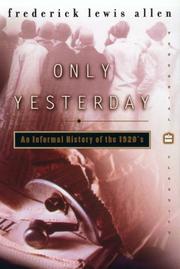
Written in 1931 by a journalist who lived through it, this is the classic popular history of the 1920s — breezy, anecdote-rich, and perfect for building intuition about the era's feel before tackling denser works.
The defining literary portrait of the Jazz Age: bootleggers, new money, and moral hollowness. Reading it here grounds every later historical fact in lived cultural texture.
Prohibition: The Noble Experiment
BeginnerUnderstand what Prohibition was, why Americans passed it, how it was enforced (and evaded), and why it ultimately failed.
▸ Study plan for this stage
Pace: 4–5 weeks, ~40–50 pages/day. Start with "Last Call" (approximately 500 pages) over 2–3 weeks, then "Prohibition" (approximately 300 pages) over 1–2 weeks, allowing time for review and exercises.
- The origins of the temperance movement and how moral, religious, and public health concerns evolved into a constitutional amendment
- The political coalition that enabled Prohibition: how diverse groups (progressives, religious conservatives, women's suffrage advocates) united around a single cause
- The mechanics of enforcement under the Volstead Act: federal agents, local police, and the challenges of policing a nation-wide ban
- The rise of organized crime and bootlegging networks: how Prohibition created economic incentives for illegal alcohol production and distribution
- The culture of evasion: speakeasies, home brewing, medicinal alcohol loopholes, and how ordinary Americans circumvented the law
- The unintended consequences of Prohibition: corruption of law enforcement, violence, class divisions, and the strengthening of criminal enterprises
- The reasons for Prohibition's repeal: economic depression, loss of tax revenue, public opinion shifts, and the recognition that the experiment had failed
- What were the primary arguments made by temperance advocates before Prohibition, and how did they frame alcohol as a social problem?
- How did Prohibition become a constitutional amendment, and what diverse political groups supported it?
- What methods did federal and local authorities use to enforce Prohibition, and what were the main obstacles they faced?
- How did organized crime and bootlegging operations develop during Prohibition, and what role did they play in American society?
- What were the main ways ordinary Americans evaded Prohibition laws, and why were these methods so widespread?
- What were the major unintended consequences of Prohibition, and how did they contribute to its eventual repeal?
- Create a timeline of Prohibition's key events (from early temperance movements through repeal) using evidence from both books, noting the major turning points in public opinion and enforcement.
- Map the bootlegging networks described in the books: identify major smuggling routes, key criminal figures, and how supply chains operated across regions.
- Analyze primary source excerpts (provided or found) from temperance advocates and Prohibition supporters—identify their rhetorical strategies and assumptions about American society.
- Write a comparative essay on enforcement strategies described in both books: How did federal approaches differ from local ones? Why were some more effective than others?
- Research and present on one specific aspect of evasion culture (speakeasies, home brewing, medicinal alcohol loopholes) using examples from the books, then find one additional primary source to supplement.
- Create a cause-and-effect diagram showing how Prohibition led to organized crime, corruption, and violence—use specific examples from the texts to support each connection.
Next up: This stage establishes the historical context and mechanics of Prohibition itself, preparing you to examine how this failed experiment shaped subsequent American policy, criminal justice reform, and public attitudes toward government regulation in the decades that followed.

The definitive, Pulitzer Prize–finalist narrative of Prohibition from its temperance-movement roots to repeal — essential reading that covers politics, bootlegging, and speakeasies in one sweeping, readable arc.
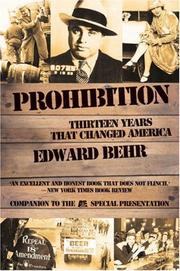
A concise, journalistic companion that focuses tightly on the street-level reality of bootleggers and speakeasies, reinforcing Okrent's broader narrative with vivid detail.
Gangsters & Organized Crime
IntermediateTrace how Prohibition gave birth to modern organized crime, from Al Capone's Chicago Outfit to the national crime syndicates that outlasted the Volstead Act.
▸ Study plan for this stage
Pace: 6–8 weeks, ~40–50 pages/day. "Get Capone" (400 pages) over 3 weeks, then "Five Families" (500+ pages) over 3–4 weeks, with 1 week for review and synthesis.
- Prohibition as an economic opportunity: how the Volstead Act created a black market that made organized crime profitable and powerful
- Al Capone's rise and methods: his consolidation of Chicago's underworld through violence, bribery, and business acumen, and how he became a national symbol of gangsterism
- The structure of criminal enterprises: how Capone's Outfit operated as a vertically integrated business with divisions for bootlegging, gambling, prostitution, and enforcement
- From local to national: how Prohibition-era gangs evolved from city-based operations into interconnected crime syndicates with territorial agreements and national coordination
- The Five Families framework: the emergence of the Genovese, Gambino, Luciano, Bonanno, and Profaci families as the dominant organized crime structure that persisted long after Prohibition ended
- Law enforcement response and corruption: how federal agents, local police, and politicians were compromised, outmaneuvered, or complicit in organized crime's expansion
- The transition from Prohibition to post-Prohibition survival: how organized crime diversified and adapted when alcohol became legal again, ensuring their institutional survival
- How did Prohibition create the economic conditions for Al Capone's rise, and what specific revenue streams did his Chicago Outfit control?
- What were the key differences between Capone's violent consolidation tactics in Chicago and the more structured, business-like approach that emerged in the Five Families model?
- How did the Five Families establish and maintain their dominance over New York organized crime, and what role did figures like Lucky Luciano and Meyer Lansky play in creating this structure?
- What mechanisms did organized crime use to corrupt law enforcement and political officials, and why were these efforts so successful during and after Prohibition?
- How did organized crime adapt and survive after Prohibition ended in 1933, and what new criminal enterprises did they develop?
- What was the relationship between the Chicago Outfit and the emerging national crime syndicates described in 'Five Families'—were they rivals, partners, or something else?
- Create a detailed organizational chart of Capone's Chicago Outfit based on 'Get Capone', mapping out the hierarchy, key lieutenants, and their specific responsibilities (bootlegging, gambling, enforcement, etc.)
- Construct a timeline of major events from Capone's rise (mid-1920s) through his conviction (1931), noting how each event shifted the balance of power in Chicago's underworld
- Develop a comparative table contrasting Capone's operational methods with those of the Five Families leaders (Luciano, Genovese, Gambino, etc.) as described in 'Five Families'—focus on violence, business structure, and political connections
- Write a 2–3 page analysis of how Prohibition specifically enabled organized crime's growth, using specific examples from both books to show the economic logic behind their expansion
- Create a map of organized crime territories and influence across major U.S. cities (Chicago, New York, Las Vegas, etc.) as they emerge in 'Five Families', showing how the national syndicate was structured
- Interview or discuss with a peer: explain how organized crime survived the repeal of Prohibition in 1933, using specific examples from the books of how they transitioned to new revenue sources
Next up: This stage establishes organized crime as a permanent institutional force born from Prohibition, setting the stage for the next stage to explore how these syndicates operated during the post-Prohibition era, their infiltration of legitimate businesses and unions, and their eventual confrontation with federal law enforcement through the FBI and RICO prosecutions.
A rigorously researched biography of Al Capone that reads like a thriller — the ideal entry point into organized crime because Capone is the era's most iconic figure and his story encapsulates the whole system.
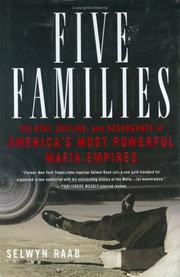
Traces the origins of the New York mob families directly back to Prohibition-era bootlegging, showing how the criminal infrastructure built in the 1920s hardened into permanent institutions.
Culture, Jazz & the New America
IntermediateUnderstand the cultural revolution happening alongside Prohibition — the Harlem Renaissance, the rise of jazz, the New Woman, and the clash between modernity and tradition.
▸ Study plan for this stage
Pace: 8–10 weeks, ~40–50 pages/day (alternating between both books to build thematic connections)
- The Harlem Renaissance as a flowering of African American art, literature, and music that challenged racial hierarchies and created new cultural forms
- Jazz as both a musical innovation and a symbol of modernity, rebellion, and the blending of African American and American identity
- The New Woman of the 1920s: changing gender roles, sexual liberation, economic independence, and the backlash against these shifts
- The Great Migration and its role in reshaping American cities, particularly the movement of African Americans from the South to northern urban centers
- The tension between tradition and modernity: how Prohibition, religious conservatism, and older values clashed with urban sophistication, consumer culture, and new social freedoms
- Speakeasies, nightlife, and underground culture as spaces where racial and gender boundaries were temporarily transgressed
- The interconnection between economic opportunity, cultural expression, and social mobility during the 1920s boom
- How individual stories and migrations reveal the broader structural forces shaping American society during this era
- How did the Harlem Renaissance emerge as a response to the Great Migration, and what role did figures like Langston Hughes, Duke Ellington, and Zora Neale Hurston play in defining this movement?
- What made jazz a revolutionary art form in the 1920s, and why did it provoke such intense opposition from traditionalists and religious conservatives?
- How did the concept of the New Woman challenge existing gender norms, and what economic and social factors enabled this shift in women's roles?
- What was the relationship between Prohibition and the rise of speakeasies and underground culture, and how did these spaces function as sites of social transgression?
- How does Wilkerson's narrative of the Great Migration illuminate the personal motivations and systemic barriers that shaped African American movement northward?
- In what ways did the cultural innovations of the 1920s—jazz, literature, fashion, sexuality—represent a rejection of Victorian values and a embrace of modernity?
- Create a timeline mapping key events, artistic movements, and cultural figures from both books; annotate it with how Prohibition and the Great Migration intersect with cultural moments
- Listen to recordings of jazz artists mentioned in the books (Duke Ellington, Bessie Smith, Louis Armstrong) and write a short reflection on how the music embodies the themes of freedom and modernity discussed in the texts
- Research and write a 2–3 page biographical sketch of a Harlem Renaissance figure (Hughes, Hurston, McKay, etc.) using Moore's descriptions as a starting point, then expand with additional research
- Analyze primary source advertisements, fashion magazines, or newspaper articles from the 1920s to identify how the New Woman was marketed and how traditionalists responded; compare your findings to Moore's analysis
- Conduct a close reading of a passage from Wilkerson describing a migrant's journey or decision to leave the South; write an analytical paragraph connecting personal agency to structural racism
- Create a visual map of major northern cities (Chicago, New York, Detroit) showing where migrants settled, what industries they worked in, and what cultural institutions emerged—use Wilkerson's data and Moore's cultural snapshots
Next up: This stage establishes the cultural and social dynamism of the 1920s, showing how Prohibition paradoxically fueled underground innovation and how migration reshaped American cities—preparing you to examine the economic foundations, political responses, and ultimate collapse of this era in the next stage.

A lively cultural history that weaves together jazz, flappers, the Harlem Renaissance, and celebrity culture into a single narrative, filling the cultural gaps left by the political histories.
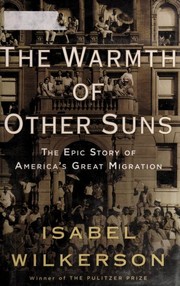
The Great Migration — Black Americans moving north into cities like Chicago and New York — was the human engine behind the Harlem Renaissance and jazz explosion; this Pulitzer Prize winner provides essential context for why 1920s culture looked the way it did.
Synthesis & Lasting Legacy
ExpertAnalyze the 1920s as historians do — understanding its economic contradictions, the seeds of the Great Depression, and what the era reveals about American identity and the limits of moral legislation.
▸ Study plan for this stage
Pace: 4–5 weeks, ~40–50 pages/day (Kennedy's dense analytical prose requires careful reading; allocate extra time for note-taking on economic and social contradictions)
- Economic contradictions of the 1920s: mass production and consumer culture coexisting with agricultural crisis, unequal wealth distribution, and speculative excess
- The structural vulnerabilities that made the Great Depression inevitable: overextended credit, stock market speculation, and the fragility of the banking system
- Prohibition as a case study in the limits of moral legislation: the gap between law and enforcement, unintended consequences (organized crime, bootlegging), and the clash between rural and urban values
- The 1920s as a period of cultural modernization: the Jazz Age, changing gender roles, and generational conflict reflecting deeper anxieties about American identity
- How Kennedy's historical analysis reveals the 1920s not as a discrete 'roaring' era but as a prelude to crisis—understanding causation rather than nostalgia
- The role of government policy (or lack thereof) in both enabling the boom and failing to prevent the collapse
- Regional and class divisions: how the prosperity of the urban, industrial North masked rural poverty and agricultural collapse
- What were the main economic contradictions of the 1920s, and how did they create the conditions for the Great Depression?
- How does Kennedy explain the relationship between Prohibition and organized crime, and what does this reveal about the limits of moral legislation?
- What role did consumer credit, stock market speculation, and banking practices play in making the 1920s boom unsustainable?
- How did the cultural modernization of the 1920s (Jazz Age, changing gender roles, generational conflict) reflect deeper anxieties about American identity?
- What structural weaknesses in the American economy did the 1920s mask, and why did policymakers fail to address them?
- How does Kennedy's analysis challenge the popular image of the 1920s as simply a 'roaring' era of prosperity?
- Create a two-column chart: one side lists the 'boom' indicators of the 1920s (production, consumption, stock prices), the other lists the 'bust' indicators (agricultural crisis, wage stagnation, debt levels). Annotate with page references from Kennedy showing how these coexisted.
- Write a 2–3 page analytical essay: 'Prohibition as a Window into American Contradictions.' Use Kennedy's discussion of Prohibition to argue how the policy reveals the clash between rural moralism and urban modernity, and why enforcement failed.
- Build a timeline of key economic events Kennedy identifies (1920–1929): mark which were driven by speculation vs. structural problems. Use this to trace the causal chain leading to 1929.
- Conduct a close reading exercise on Kennedy's discussion of the banking system: identify 3–4 specific vulnerabilities he highlights, then write one paragraph explaining why contemporaries did not recognize these dangers.
- Create a character/profile analysis of the 1920s consumer: based on Kennedy's evidence, describe the typical buyer of automobiles, radios, and stocks. What assumptions about the future did they make, and why were those assumptions wrong?
- Debate preparation: argue both sides—'The 1920s boom was inevitable given American capitalism' vs. 'Better policy could have prevented the Depression.' Use Kennedy's evidence to support each position.
Next up: This stage equips you with Kennedy's rigorous causal analysis of how the 1920s created the Depression, preparing you to examine the political and social responses to that crisis and how Americans reimagined their economy and government in the 1930s.
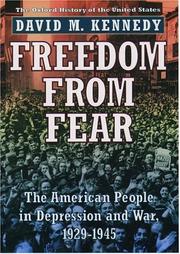
This Pulitzer Prize–winning history opens with a masterful analysis of 1920s prosperity and inequality, showing exactly how the boom years planted the seeds of collapse — the perfect capstone that reframes everything learned so far.
Discussion
Keep reading
Paths that share books, cover the same subject, or open a related topic.