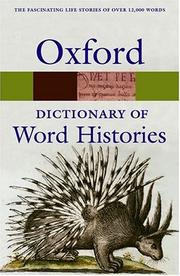
The Oxford dictionary of word histories
Glynnis Chantrell · 2004
As an Amazon Associate we earn from qualifying purchases. Some book links are affiliate links; you pay the same price and we may earn a small commission.
About this book
Why did a Roman soldier connect the word salary with salt? The Oxford Dictionary of Word Histories describes the origins and sense development of thousands of core words of the English language; dates are given where recorded evidence of use has been found sourced by the ongoing research for the Oxford English Dictionary. Additional word histories outside this core group are included for words with a particularly interesting story to tell and links between words are given where these enhance the picture. A key feature of the book is the inclusion of a large number of well-known idioms with dates of original use with details of how and when they came about: for example happy as a sandboy, and say it with flowers. Colourful popular beliefs are explored about words such as posh and snob, while insights are given into our social history revealed by language development. The notion of 'relationships' is central and highlights the following: DT shared roots (e.g. stare and starve both from a base meaning be rigid) DT common ancestry (mongrel related to mingle and among) DT surprising commonality (wage and wed) DT typical formation (blab, bleat, chatter, gibber, all imitative of sounds) DT influence by association DT shared wordbuilding elements (hyperspace, hypersonic, hyperlink) with boxed information on the various meanings of the prefix in question.
Appears in these reading paths


Etymology and Word Origins: Best Books, in Order
Related reading guides
Reader reviews
Ratings and notes from readers — tagged with how deep into the subject they were.
Loading reviews…