Etymology is a rare subject where the beginner's pleasure and the expert's rigor point in the same direction. Everyone enjoys learning that a word once meant something surprising, but the deeper reward is understanding the forces, sound change, borrowing, metaphor, migration, that push words around over centuries. The trap is stopping at trivia.
This path starts with the joy, then builds the machinery. Read the popular introductions first, then the reference works and rigorous histories that explain why the fun facts are true.
Fall in love with words
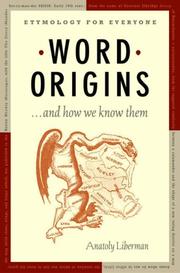
Start with Bill Bryson's The Mother Tongue, a witty tour of English that hooks you even where specialists quibble with details. Then Anatoly Liberman's Word Origins... and How We Know Them is the perfect corrective and companion, showing how etymologists actually reason and how they separate real derivations from folk myths. Norman Lewis's Word Power Made Easy comes at it from the vocabulary side, teaching Greek and Latin roots you will meet everywhere else.
Build your reference shelf
Next, get the tools. The Oxford dictionary of word histories is a browsable, authoritative record of individual words to keep at hand. David Crystal's The stories of English zooms out to the whole language, including the non-standard varieties usually left out, and Henry Hitchings' The secret life of words traces how borrowing shaped English through history and empire. Sol Steinmetz's Semantic antics focuses on meaning change, one of the most fascinating mechanisms in the field.
The bigger picture
Finally, widen the frame beyond English. The Horse, the Wheel, and Language is a landmark on Proto-Indo-European and how a prehistoric language spread across continents. John McWhorter's The Power of Babel explains how all languages constantly change and split, and Simon Horobin's An Introduction to the History of the English Language gives you a clean scholarly overview to tie the strands together. Ending here turns word-love into a real grasp of linguistic history.
Follow the full path in order to go from enjoying words to understanding them.
Follow the full reading path →
Ready to learn something deeply?
Build a reading path — free