Learn Sanskrit: Best Books to Read, in Order
This curriculum takes a complete beginner from the Sanskrit alphabet all the way to reading classical Indian texts, building skills in a logical sequence: script and sounds first, then systematic grammar, then applied reading of real literature. Each stage assumes mastery of the previous one, so working through the books in order will give you both the structural understanding and the practical reading ability that deep Sanskrit learning requires.
Script & First Steps
BeginnerMaster the Devanagari script, learn correct pronunciation, and get a first feel for Sanskrit's sound system and basic vocabulary before touching grammar.
▸ Study plan for this stage
Pace: 4–5 weeks, ~15–20 pages/day (focusing on Coulson's introduction and script chapters; expect slower pace due to script memorization and pronunciation drills)
- Devanagari script: recognizing and writing all 46 basic characters (14 vowels + 33 consonants) and their diacritical marks
- Sanskrit phonetics: the five-fold consonant classification system (velar, palatal, retroflex, dental, labial) and how articulation affects meaning
- Vowel system: the distinction between short and long vowels and their acoustic properties
- Conjunct consonants (consonant clusters): how consonants combine and how to recognize them in written form
- Correct pronunciation: aspirated vs. unaspirated stops, retroflex vs. dental consonants, and nasalization
- Basic vocabulary: 50–100 common Sanskrit words introduced in Coulson's early sections to build familiarity with sound patterns
- Transliteration conventions: understanding IAST (International Alphabet of Sanskrit Transliteration) and how it maps to Devanagari
- Can you identify all 14 vowels and 33 consonants in Devanagari script and write them from memory?
- What is the difference between aspirated and unaspirated consonants, and can you pronounce examples correctly?
- How do retroflex consonants differ from dental consonants, and why does this distinction matter in Sanskrit?
- Can you read a short Devanagari sentence aloud with correct pronunciation, including proper vowel length?
- What are conjunct consonants, and how do you recognize them when reading Devanagari text?
- Can you transliterate a simple Sanskrit word from Devanagari to IAST and back?
- Daily Devanagari writing practice: spend 10–15 minutes each day writing vowels, then consonants, then mixed characters until you can write all 46 without reference
- Pronunciation drills: use Coulson's audio resources (if available) or online Sanskrit pronunciation guides to practice each consonant class daily, focusing on aspiration and retroflex distinctions
- Script recognition speed drills: time yourself reading random Devanagari characters or short words, aiming to recognize each character in under 1 second
- Conjunct consonant flashcards: create or use flashcards to practice recognizing 20–30 common conjunct consonant combinations from Coulson's examples
- Transliteration exercises: convert 10–15 simple English transliterated words into Devanagari, then reverse the process to check accuracy
- Vocabulary repetition: learn and review the 50–100 basic Sanskrit words Coulson introduces, using spaced repetition (e.g., Anki) with audio pronunciation
Next up: By mastering Devanagari and internalizing Sanskrit's sound system, you'll be able to read and pronounce Sanskrit text fluently, which is essential for the next stage where you'll begin learning basic grammatical forms and how words are constructed and inflected.
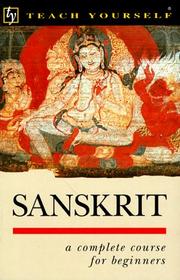
Coulson's opening chapters gently introduce the script and basic phonology before grammar begins, making it the ideal bridge from pure alphabet study into structured learning.
Core Grammar — Foundations
BeginnerUnderstand Sanskrit's noun cases, verb conjugations, and basic sentence structure well enough to parse simple sentences independently.
▸ Study plan for this stage
Pace: 4–5 weeks, ~25–30 pages/day (alternating between both texts; ~2 weeks per book)
- The eight Sanskrit cases (nominative, accusative, instrumental, dative, ablative, genitive, locative, vocative) and their grammatical functions in sentences
- Noun declension patterns for masculine, feminine, and neuter genders across the three number categories (singular, dual, plural)
- Present-tense verb conjugation (parasmaipada and atmanepada) and how person/number agreement works with subjects
- The role of verbal roots and how prefixes (upasargas) modify meaning
- Basic sentence structure: subject-object-verb word order flexibility and how cases signal grammatical relationships
- Sandhi (phonetic combination rules) at word boundaries and their effect on parsing
- Simple nominal sentences (copular constructions) and how to identify the predicate nominative
- Introduction to verbal adjectives (participles) and their agreement with nouns
- Can you identify the case of a noun in a simple Sanskrit sentence and explain what grammatical role it plays (e.g., subject, direct object, instrument)?
- Given a verb in the present tense, can you identify its root, person, number, and voice (parasmaipada or atmanepada)?
- How do sandhi rules affect the spelling and pronunciation of words at phrase boundaries, and can you apply them to parse a simple phrase?
- Can you decline a regular noun across all eight cases in singular, dual, and plural forms?
- What is the difference between a nominal sentence and a verbal sentence, and how do you identify the predicate in each?
- Can you parse a simple 3–5 word Sanskrit sentence, labeling each word's case, gender, number, and grammatical function?
- Complete all declension tables in Srinivasachari's book for at least 10 different nouns (masculine, feminine, neuter) and write them out by hand to build muscle memory
- Conjugate 15 common Sanskrit verbal roots (e.g., bhū, gam, pac, vad) across all persons and numbers in present tense, both voices
- Apply sandhi rules to 20 word pairs from the texts, writing out the combined form and explaining which rule applied
- Parse 10 simple sentences from Perry's primer, identifying case, gender, number, and grammatical function for every word
- Create 5 original simple sentences (3–5 words each) using nouns and verbs from the texts, then parse them yourself
- Work through all practice exercises and vocabulary drills in both books, paying special attention to case-marking patterns in context
Next up: Mastery of these foundational cases, conjugations, and sentence structures equips you to recognize complex verbal forms, compound words, and multi-clause sentences in the next stage, where you will encounter past tenses, conditional moods, and participial constructions.

A widely-used, accessible primer popular across India that drills the eight noun cases and basic verb forms through short, manageable daily lessons — ideal for building confidence early.
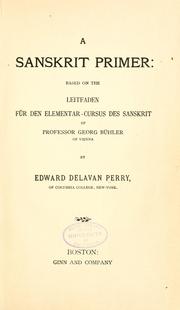
A classic American university primer that systematically introduces declensions and conjugations with graded exercises, reinforcing and deepening what the previous book introduced.
Systematic Grammar — Going Deeper
IntermediateAchieve a thorough command of Sanskrit grammar — including compound words (samāsa), participles, and complex sandhi rules — and be able to analyze any classical sentence.
▸ Study plan for this stage
Pace: 8–10 weeks, ~25–30 pages/day, with 2–3 review days per week
- The four types of samāsa (compound words): tatpuruṣa, dvandva, bahuvrihi, and avyayībhāva, with their formation rules and semantic distinctions
- Participles (kṛdanta) and their role in expressing tense, aspect, and agency in classical Sanskrit sentences
- Advanced sandhi rules (visarga sandhi, sibilant sandhi, vowel coalescence) and their application across word boundaries in continuous text
- Nominal inflection patterns for irregular nouns, pronouns, and adjectives that deviate from standard paradigms
- Verbal conjugation in all tenses and moods, including the conditional, subjunctive, and optative forms used in classical literature
- Gerunds (absolutives) and infinitives as non-finite verb forms that structure complex sentence relationships
- Syntactic analysis: how grammatical elements combine to express meaning in multi-clause sentences typical of classical texts
- Morphological decomposition: the ability to parse any word into its root, suffix, and affix components
- What are the four primary types of samāsa, and how do you distinguish between a tatpuruṣa and a bahuvrihi compound based on the relationship between its components?
- Explain how participles function in Sanskrit sentences and provide examples of how past, present, and future participles modify or relate to the main verb.
- What are the key sandhi rules that apply at word boundaries in classical Sanskrit, and how do you apply them when analyzing or constructing continuous text?
- Given a complex Sanskrit sentence from classical literature, how would you systematically parse it to identify the main verb, its arguments, and the function of each subordinate clause or participle?
- How do gerunds (absolutives) and infinitives differ in their use, and what grammatical role does each play in expressing sequential or purposive actions?
- Describe the formation and use of the conditional, subjunctive, and optative moods in classical Sanskrit, with examples from actual texts.
- Analyze 5–10 compound words (samāsa) from classical Sanskrit texts; identify their type, decompose them into components, and explain the semantic relationship between the parts.
- Parse 10–15 sentences containing participles; identify the participle, determine its tense/aspect, and explain how it relates to the main clause.
- Apply sandhi rules to construct 20–30 word combinations, then reverse-engineer sandhi-affected text by identifying the underlying forms before sandhi was applied.
- Decompose 15–20 irregular nouns and pronouns through all cases and numbers; compare their patterns to regular paradigms and note exceptions.
- Conjugate 10–12 verbs across all tenses (present, imperfect, perfect, future, conditional) and moods (indicative, optative, subjunctive, imperative) in both parasmaipada and ātmanepada.
- Identify and translate 10–15 sentences containing gerunds and infinitives; explain the grammatical function of each non-finite form and its relationship to the main action.
- Perform detailed syntactic analysis on 5–8 multi-clause sentences from classical texts (e.g., Bhagavad Gītā, Rāmāyaṇa, or Mahābhārata); diagram the relationships between clauses and identify all grammatical dependencies.
Next up: Mastery of Kale's systematic grammar equips you with the analytical tools to read and interpret authentic classical Sanskrit texts with confidence, preparing you to engage directly with literary works and develop interpretive skills beyond mechanical parsing.
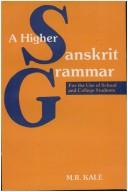
Kale's exhaustive reference grammar, used in Indian universities for over a century, is the go-to resource for looking up any rule in depth and understanding the Paninian tradition behind it.
Transitioning to Real Texts
IntermediateRead simplified and graded classical Sanskrit passages with a dictionary, building the vocabulary and stamina needed for unassisted reading of original literature.
▸ Study plan for this stage
Pace: 4–5 weeks, ~40–50 pages/day (dictionary study interspersed with active vocabulary practice)
- Dictionary navigation and entry structure in Apte's dictionary (headwords, inflections, multiple meanings, usage labels)
- Building a working vocabulary of high-frequency Sanskrit roots and their derivatives
- Understanding how English-to-Sanskrit lookup differs from Sanskrit-to-English (reverse lookup strategies)
- Recognizing word families and morphological patterns to infer meaning without dictionary lookup
- Distinguishing between classical Sanskrit forms and their grammatical variants in dictionary entries
- Developing efficient dictionary consultation techniques to avoid breaking reading flow
- Connecting dictionary definitions to actual usage in simplified classical passages
- How do you navigate Apte's dictionary to find the correct form of an inflected Sanskrit word?
- What strategies help you identify the root of a Sanskrit word when you encounter an unfamiliar inflection?
- How can you use Apte's dictionary to understand the range of meanings a single Sanskrit word carries, and how do you choose the right meaning in context?
- What patterns in word formation (prefixes, suffixes, compound structures) does Apte's dictionary help you recognize?
- How does consulting Apte's English-Sanskrit section differ from using a Sanskrit-English dictionary, and when is each most useful?
- What techniques allow you to read Sanskrit passages with dictionary support without constantly interrupting your flow?
- Daily vocabulary drills: Select 20–30 entries from Apte's dictionary each day, write out the headword, root, and 2–3 example meanings; practice reverse-lookup (English to Sanskrit) for common words
- Morphological analysis practice: Take 10–15 inflected Sanskrit words from simplified passages and trace each back to its dictionary headword using Apte's entry structure
- Timed dictionary lookups: Set a 2-minute timer and locate 5 random Sanskrit words in Apte's dictionary; gradually reduce lookup time to build speed and confidence
- Word family mapping: Choose 5 Sanskrit roots from Apte's dictionary and map out their derivatives (nouns, verbs, adjectives, adverbs) to see how one root generates multiple related words
- Contextual meaning selection: Read a simplified passage (5–10 sentences) and for each unfamiliar word, consult Apte's dictionary and write down which of the multiple meanings fits the context best, with justification
- Dictionary entry transcription: Transcribe 10–15 complete entries from Apte's dictionary by hand, noting headword, grammatical information, and sample definitions to internalize entry structure and deepen retention
Next up: This stage equips you with fluent dictionary navigation skills and a robust working vocabulary, enabling you to move into reading longer, less-simplified classical passages with confidence and gradually reduce your reliance on constant dictionary consultation.

Apte's dictionary is the essential companion for reading any classical text; introduced here so learners build the habit of dictionary-assisted reading before tackling harder literature.
Reading Classical Indian Literature
ExpertRead major works of classical Sanskrit literature — epic, philosophical, and poetic — with confidence, appreciating both linguistic nuance and cultural depth.
▸ Study plan for this stage
Pace: 12–16 weeks, ~40–50 pages/day (Sanskrit text + commentary). Bhagavad-Gita: 3–4 weeks; Shakuntala: 3–4 weeks; Ramayana: 6–8 weeks
- Dharma (duty/righteousness) as the organizing principle across epic, dramatic, and philosophical contexts in the Bhagavad-Gita, Shakuntala, and Ramayana
- Linguistic registers and poetic devices: kavya conventions, meter (chandas), rasa (aesthetic emotion), and their deployment in Kālidāsa's drama versus Vālmīki's epic verse
- Vyasa's philosophical synthesis in the Bhagavad-Gita: karma yoga, bhakti, and jnana as paths to moksha, and their resonance in the moral dilemmas of the Ramayana
- Character development through constraint and duty: Arjuna's crisis, Shakuntala's separation and reunion, Rama's exile and kingship as expressions of svadharma (individual duty)
- Narrative structure and intertextuality: how the Ramayana echoes and reframes Vedic themes; how Shakuntala draws on mythological and philosophical frameworks
- The role of divine intervention and human agency: understanding when characters act freely versus when they are bound by fate, karma, or divine will
- Textual interpretation: reading with commentary traditions (bhashya) to access layers of meaning—grammatical, philosophical, and cultural
- What is the central philosophical argument of the Bhagavad-Gita, and how does Krishna's teaching on karma yoga address Arjuna's moral crisis?
- How does Kālidāsa use rasa (emotional aesthetics) and poetic language in Shakuntala to convey the themes of separation, duty, and reunion?
- Compare the concept of dharma as it appears in the Bhagavad-Gita and the Ramayana: how do Rama's choices reflect or challenge Krishna's teachings?
- What is the narrative structure of the Ramayana, and how do the major episodes (Rama's exile, the search for Sita, the war with Ravana) develop the epic's central themes?
- How do the three texts employ different literary forms (philosophical dialogue, drama, epic verse) to explore similar themes of duty, virtue, and human purpose?
- What role does divine grace (prasada) or divine will play in the resolution of conflicts in the Bhagavad-Gita, Shakuntala, and the Ramayana?
- Close-read a key passage from each text (e.g., Gita 2.47, Shakuntala Act 5, Ramayana Book 2 opening) in Sanskrit, parsing grammar and identifying poetic devices; compare translations and commentary interpretations
- Create a comparative chart of dharma across the three texts: list instances where characters face duty-versus-desire conflicts and analyze their choices in light of Krishna's teachings
- Memorize and recite 10–15 verses from the Bhagavad-Gita (e.g., 2.47, 3.35, 6.47) and 5–10 lines from Shakuntala in Sanskrit; practice proper pronunciation and meter
- Write a 2–3 page analytical essay on one of the following: (a) How does Shakuntala's separation from Dushyanta mirror or diverge from Rama's separation from Sita? (b) What does the Ramayana suggest about the limits of Krishna's philosophy as presented in the Gita?
- Trace the narrative arc of one major character across their text (Arjuna in the Gita, Shakuntala across the play, Rama through the Ramayana); create a detailed character study noting how their understanding of duty evolves
- Attend or listen to a recorded performance of Shakuntala (in Sanskrit or with Sanskrit audio); note how the rasa and emotional beats align with or diverge from your reading, and reflect on the role of performance in classical literature
Next up: This stage equips you with deep fluency in major classical Sanskrit texts and their philosophical, aesthetic, and narrative traditions—preparing you to engage with secondary philosophical commentaries, regional adaptations, and post-classical Sanskrit literature with confidence in both linguistic and cultural interpretation.

The Gita's verse Sanskrit is among the most studied in the world; its manageable length, profound content, and wealth of available commentaries make it the ideal first major classical text to read in the original.
Kalidasa's celebrated drama represents the height of classical Sanskrit kāvya style; reading it after the Gita exposes the learner to poetic compounds, dramatic prose, and the full beauty of the language.

Valmiki's epic, read in selected books (such as the Bala Kanda), consolidates everything learned — epic meter, rich vocabulary, and narrative Sanskrit — and marks the achievement of genuine classical reading ability.
Discussion
Keep reading
Paths that share books, cover the same subject, or open a related topic.