Learn Animal Behavior: The Best Ethology Books, in Order
This curriculum takes you from the intuitive "why do animals do that?" question all the way to the cutting edge of animal cognition and evolutionary theory. Each stage builds on the last: you first develop a feel for animal behavior in the wild, then learn the scientific framework that explains it, then dive into the mechanisms of instinct and evolution, and finally grapple with the deepest questions about animal minds.
First Encounters — Observing Animals in the Wild
BeginnerDevelop a naturalist's eye for animal behavior, build intuition for why animals act as they do, and fall in love with the subject before encountering formal theory.
▸ Study plan for this stage
Pace: 8–10 weeks, ~40–50 pages/day (mix of reading and reflection time). Start with "King Solomon's Ring" (4–5 weeks), then move to "In the Shadow of Man" (4–5 weeks).
- Careful, patient observation as the foundation of understanding animal behavior—learning to watch without imposing human assumptions
- Individual personality and emotional life in animals—recognizing that animals are not mere automatons but have distinct temperaments, preferences, and social bonds
- Imprinting and early learning—how young animals form attachments and learn species-typical behaviors from their environment and caregivers
- Social hierarchies and family structures in animal groups—understanding how animals organize themselves and negotiate relationships
- Communication systems in animals—how animals signal to each other through vocalizations, body language, and other modalities
- The naturalist's method—combining anecdote, careful description, and repeated observation to build understanding before formal hypothesis-testing
- Evolutionary continuity between humans and other animals—recognizing behavioral and emotional parallels that suggest shared ancestry
- What does Lorenz mean by 'imprinting,' and how does he demonstrate it in his work with greylag geese? What are the implications for understanding animal behavior?
- How does Goodall's long-term presence in Gombe Stream change what she is able to observe about chimpanzee behavior compared to brief field studies?
- Describe the social structure and family relationships Goodall observes in her chimpanzee community. How do individual personalities shape these relationships?
- What methods do both Lorenz and Goodall use to study animal behavior, and how do these methods differ from more controlled laboratory approaches?
- How do Lorenz and Goodall each present evidence for emotional and cognitive abilities in animals? What specific examples stand out?
- What parallels do Lorenz and Goodall draw between animal behavior and human behavior? Where do they suggest continuity, and where do they note differences?
- Conduct a 30-minute observation of a wild or semi-wild animal (bird, squirrel, insect, etc.) without intervening. Record detailed notes on posture, movement, vocalizations, and interactions. Repeat this 3–4 times with the same individual or group if possible, and note changes in behavior or apparent 'personality.'
- After reading about imprinting in Lorenz, research and write a 1-page reflection on how imprinting might apply to a familiar animal (pet, farm animal, or wild species you know). Consider what the animal 'learned' early in life.
- Create a behavioral ethogram (a simple chart of behaviors) for one animal species you observe or know well. List 8–10 distinct behaviors (e.g., foraging, grooming, playing, resting) and describe what triggers each one.
- Read a passage from Lorenz or Goodall that describes an animal's apparent emotion or personality. Write a short response (1–2 pages) analyzing: (a) what evidence they provide, (b) alternative explanations, and (c) why the naturalist's method makes this kind of observation possible.
- Sketch or photograph an animal in three different behavioral states (e.g., alert, feeding, resting). Annotate your images with observations about body posture, ear position, tail position, etc. Reflect on how these physical cues communicate the animal's state.
- Interview someone who has spent significant time observing a particular animal (a zookeeper, wildlife rehabilitator, farmer, or birder). Ask them about individual differences they've noticed, unexpected behaviors, and how their understanding has changed over time. Write up the conversation as a 2–3 page narrative.
Next up: This stage builds the emotional and observational foundation needed to engage with formal ethological theory—you now understand *why* animal behavior matters and have practiced the patient, detailed observation that underpins rigorous scientific study, preparing you to learn the mechanisms and principles that explain the behaviors you've witnessed.
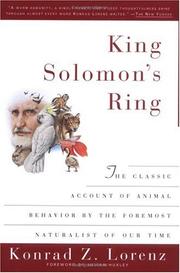
Written by one of the founders of ethology, this accessible classic introduces key concepts — imprinting, fixed action patterns, social bonds — through vivid, personal animal stories. It is the perfect entry point to thinking like an ethologist.

Goodall's landmark account of chimpanzee society teaches the reader to observe animal behavior patiently and rigorously, and raises early questions about the line between instinct and learned social behavior.
Foundations — The Science of Animal Behavior
BeginnerUnderstand the four core questions of ethology (Tinbergen's 'four whys'), learn how evolution shapes behavior, and acquire the vocabulary needed for deeper study.
▸ Study plan for this stage
Pace: 4–5 weeks, ~40–50 pages/day. Start with Krebs' introduction (1–2 weeks) to establish foundational concepts, then move to Alcock's comprehensive coverage (2–3 weeks) to deepen and systematize your understanding.
- Tinbergen's four questions: ultimate (evolutionary) vs. proximate (mechanistic) explanations, ontogeny, and phylogeny—and how they organize all ethological inquiry
- Natural selection and adaptation as the primary drivers of behavior; how behavioral traits are subject to the same evolutionary pressures as morphological traits
- The distinction between instinct, learning, and their interaction; innate releasing mechanisms and fixed action patterns as foundational concepts in behavioral analysis
- Behavioral ecology framework: how animals allocate time and energy to maximize fitness through foraging, mating, and parental care decisions
- Proximate mechanisms of behavior: hormones, neural circuits, and sensory systems as the 'how' behind observable actions
- Comparative method and phylogenetic context: understanding behavior across species and recognizing evolutionary relationships
- Cost-benefit analysis in behavior: how natural selection favors behaviors that increase reproductive success relative to their energetic or survival costs
- Terminology and conceptual vocabulary essential for ethology: stimulus, response, releaser, motivation, drive, and behavioral sequence
- Explain Tinbergen's four questions and provide a concrete example of how each would be applied to a single behavior (e.g., territorial defense in birds or foraging in insects).
- How does evolutionary thinking change the way we explain animal behavior compared to purely mechanistic or descriptive approaches?
- What is the relationship between proximate and ultimate explanations? Can a behavior have a complete proximate explanation without an ultimate one, or vice versa?
- Describe the difference between fixed action patterns and learned behaviors. What evidence suggests that most complex behaviors involve both innate and learned components?
- Using the behavioral ecology framework, explain how an animal's decisions about foraging, mate choice, or parental investment reflect trade-offs shaped by natural selection.
- How would you design a comparative study to test whether a particular behavior is homologous (shared by common descent) or analogous (convergently evolved) across two species?
- Select one animal behavior you observe regularly (e.g., a pet's feeding behavior, a bird's nesting, an insect's response to light). Write a one-page analysis applying all four of Tinbergen's questions to explain it.
- Create a detailed ethogram (behavioral inventory) for a freely behaving animal over 30 minutes (live or video). Categorize each behavior as innate, learned, or mixed; note triggers and outcomes.
- Read a primary research paper on animal behavior (suggested: search for papers on foraging or mate choice in your library). Identify which of Tinbergen's questions the study addresses and critique whether it answers all four.
- Conduct a cost-benefit thought experiment: choose a risky behavior (e.g., aggressive display, long-distance migration) and hypothesize what fitness benefits must outweigh the costs for natural selection to favor it.
- Map the proximate mechanisms (hormones, neural pathways, sensory inputs) underlying a behavior discussed in Alcock (e.g., courtship in insects). Create a flowchart showing how stimulus → sensory system → neural processing → motor output.
- Compare the same behavior across three species using the comparative method. Identify which aspects are likely homologous and which convergent; explain what this tells you about evolutionary pressures.
Next up: This stage equips you with Tinbergen's conceptual framework and the vocabulary to ask rigorous questions about behavior; the next stage will deepen your understanding of specific behavioral systems (social behavior, communication, reproduction) and teach you how to design and interpret empirical studies that test these questions.

The standard undergraduate textbook in the field, co-authored by Krebs and Davies; it systematically covers foraging, mating, communication, and cooperation through an evolutionary lens — essential vocabulary for everything that follows.
A beautifully written and richly illustrated survey that ties every category of behavior — from aggression to parental care — back to natural selection, reinforcing the evolutionary framework introduced by Krebs.
Going Deeper — Instinct, Genes, and Selfish Strategies
IntermediateUnderstand the gene-centered view of evolution, kin selection, reciprocal altruism, and how 'selfish' genetic logic produces the full spectrum of animal social life.
▸ Study plan for this stage
Pace: 8–10 weeks, ~40–50 pages/day. Start with *The Selfish Gene* (4–5 weeks, dense conceptual material requiring re-reading of key chapters), then *The Ants* (3–4 weeks, more observational but builds on theoretical foundation).
- The gene as the unit of selection: how genes, not organisms or species, are the primary drivers of evolution and behavior
- Replicators and vehicles: the distinction between genes (replicators that persist) and organisms (vehicles that carry them)
- Kin selection and inclusive fitness: how altruism toward relatives can spread if it increases copies of shared genes
- The evolution of cooperation through reciprocal altruism: how non-kin can cooperate when there's potential for future reciprocation
- Evolutionary stable strategies (ESS): behavioral strategies that cannot be invaded by mutant alternatives in a population
- Selfish DNA and genetic conflict: how genes can behave 'selfishly' even within the same organism
- Social insects as extreme case studies: how eusocial colonies (ants, bees) demonstrate kin selection and genetic logic at scale
- The gene-centered explanation of animal social systems: from aggression and mating to cooperation and division of labor
- What does Dawkins mean by calling genes 'selfish,' and how does this perspective differ from viewing organisms or species as the unit of selection?
- Explain kin selection using Hamilton's rule (rB > C). How does this explain why animals help relatives even at a cost to themselves?
- What is reciprocal altruism, and under what conditions can it evolve between unrelated individuals? What mechanisms prevent cheating?
- How do evolutionary stable strategies (ESS) explain the maintenance of behavioral variation in animal populations?
- Why are social insects (ants, in particular) such powerful examples of gene-centered evolution? What role does relatedness play in their extreme cooperation?
- How does *The Ants* illustrate the principles from *The Selfish Gene*? Identify at least three specific ant behaviors and explain them through the lens of kin selection or genetic self-interest.
- Create a concept map linking replicators, vehicles, genes, organisms, and populations. Use examples from both books (e.g., a gene for altruism, a worker ant, a colony).
- Work through 3–4 numerical examples of Hamilton's rule (rB > C) with concrete scenarios: a bird warning relatives of predators, a ground squirrel babysitting siblings, an ant worker caring for the queen's offspring.
- Analyze a specific animal behavior from *The Ants* (e.g., worker sterility, nestmate recognition, division of labor) and write a 1–2 page explanation using gene-centered logic. Identify the genes' 'interests' versus the organism's apparent interests.
- Design a thought experiment: imagine a hypothetical ant species with lower relatedness between workers and the queen (e.g., 0.25 instead of 0.75). Predict how their social structure would differ based on kin selection theory.
- Compare two animal social systems (one from *The Selfish Gene*, one from *The Ants*) in terms of how cooperation is maintained. What role do kin selection, reciprocal altruism, and punishment play in each?
- Read a peer-reviewed paper applying Dawkins' or Hamilton's ideas to a real animal system (e.g., vampire bat food sharing, naked mole rat colonies). Summarize how the gene-centered view explains the observed behavior.
Next up: This stage grounds you in the theoretical logic of how genes shape behavior; the next stage will likely explore how proximate mechanisms—hormones, neural circuits, development—actually implement these genetic strategies in real animals, showing the mechanistic 'how' behind the evolutionary 'why.'
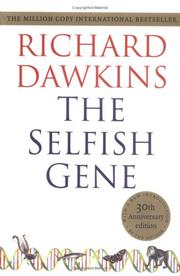
Dawkins reframes natural selection at the level of the gene, explaining altruism, cooperation, and conflict with elegant clarity — this paradigm shift is indispensable for understanding modern behavioral ecology.
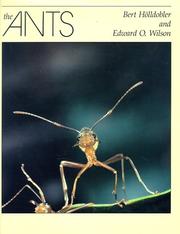
Co-authored with E.O. Wilson, this Pulitzer Prize-winning masterwork shows how kin-selection theory plays out in extraordinary detail in the most socially complex animals on Earth, grounding abstract theory in concrete biology.
Animal Minds — Cognition, Emotion, and Culture
IntermediateMove beyond reflex and instinct to evaluate the evidence for learning, problem-solving, emotion, culture, and self-awareness across the animal kingdom.
▸ Study plan for this stage
Pace: 10–12 weeks, ~40–50 pages/day. Start with de Waal's "Are We Smart Enough" (2 weeks), move to Montgomery's "The Soul of an Octopus" (3 weeks), then finish with de Waal's "Mama's Last Hug" (2–3 weeks), leaving 2–3 weeks for review, synthesis, and exercises.
- Cognitive bias and anthropomorphism: how human assumptions shape our interpretation of animal behavior, and how to design experiments that account for observer bias
- Convergent evolution of intelligence: how different species (primates, cetaceans, cephalopods, corvids) solve problems independently, suggesting multiple paths to cognition
- Emotion as adaptive behavior: evidence that animals experience fear, joy, grief, and empathy—not as metaphors but as functional states with evolutionary roots
- Culture in animals: learned behaviors transmitted socially across generations (tool use, hunting techniques, dialects), challenging the human monopoly on tradition
- Self-awareness and metacognition: mirror tests, metacognitive tasks, and the spectrum of self-recognition across species
- Individual personality and agency: how animals make choices, show preferences, and express unique temperaments within their species
- The octopus as a model for alien intelligence: distributed cognition, problem-solving without social learning, and radically different neural architecture
- Continuity vs. discontinuity: why the evidence points to gradual differences in degree rather than absolute categorical differences between human and animal minds
- What is the 'smart animal bias' and how does it differ from anthropomorphism? How does de Waal argue we should design experiments to test animal cognition fairly?
- Describe three examples of convergent evolution in animal intelligence. Why does the independent emergence of similar cognitive abilities across unrelated species suggest something fundamental about intelligence?
- What evidence does Montgomery present for emotion and personality in octopuses? How does the octopus's distributed nervous system affect the way it learns and solves problems?
- How does de Waal define animal culture, and what examples from the books demonstrate learned behavior being transmitted across generations?
- What is the significance of mirror self-recognition tests, and what do the results across different species tell us about the distribution of self-awareness?
- How do the three books collectively challenge the idea that human cognition is categorically different from animal cognition?
- Design an experiment: Choose an animal behavior described in one of the books (e.g., tool use in crows, problem-solving in octopuses, or grief in elephants). Write a detailed experimental protocol that controls for observer bias and alternative explanations. Identify what would count as evidence for vs. against the cognitive claim.
- Comparative cognition matrix: Create a table comparing five animal species (humans, great apes, cetaceans, octopuses, corvids) across dimensions like tool use, social learning, self-recognition, and emotional expression. Use specific examples from the books. What patterns emerge?
- Octopus case study: Read Montgomery's descriptions of individual octopuses (Athena, Kali, Karma, etc.). Write a 2–3 page character sketch of one octopus, analyzing its personality, problem-solving approach, and emotional responses. How does Montgomery's narrative technique shape your perception of octopus cognition?
- Emotion in animals: Identify three emotional behaviors described across the three books (e.g., grief in elephants, play in cetaceans, curiosity in octopuses). For each, write a paragraph explaining: (a) the observable behavior, (b) why it might be adaptive, (c) whether it requires conscious emotion or could be explained by instinct alone.
- Culture vs. instinct debate: Select one example of animal culture from the books (e.g., orca hunting dialects, chimpanzee tool traditions). Write a dialogue between a skeptic and a de Waal-style advocate, where each argues whether this behavior is learned culture or genetically programmed instinct. What evidence would settle the debate?
- Reflection essay: After finishing all three books, write a 3–4 page reflection on how your view of animal minds has changed. What was the most surprising claim? What still seems uncertain? How does this stage reshape your understanding of the human-animal boundary?
Next up: This stage establishes that animal minds are far more complex and continuous with human minds than traditionally assumed, preparing you to explore how these cognitive and emotional capacities evolved, how they vary across ecological niches, and how they shape animal social systems and communication—the focus of the next stage.
De Waal surveys decades of comparative cognition research to argue that each species has its own form of intelligence shaped by its ecology — a crucial corrective to both anthropomorphism and anthropocentrism.
A beautifully observed account of octopus cognition and personality that forces the reader to reconsider what 'mind' means in a radically different body plan, broadening the cognitive framework built by de Waal.
Focuses specifically on animal emotions and their evolutionary continuity with human feelings, synthesizing ethology and cognitive science to close the loop between behavior, evolution, and inner experience.
Advanced Synthesis — Evolution, Behavior, and Human Nature
ExpertIntegrate everything — genetics, ecology, cognition, and culture — into a unified evolutionary view of behavior, and critically evaluate how these ideas apply to humans.
▸ Study plan for this stage
Pace: 8–10 weeks, ~40–50 pages/day. Darwin (400 pp) over 2 weeks; Sapolsky (790 pp) over 6–8 weeks with weekly synthesis breaks.
- Emotional expression as evolved, adaptive behavior with continuity across species — Darwin's framework for understanding emotions as functional traits shaped by natural selection
- Hierarchical causation in behavior: integrating molecular/genetic, developmental, situational, evolutionary, and cultural levels of explanation (Sapolsky's model)
- The neurobiology of aggression, fear, and social bonding — from amygdala and prefrontal cortex function to hormonal systems (testosterone, oxytocin, cortisol)
- Reciprocal altruism, kin selection, and game theory as evolutionary logic for cooperation, morality, and in-group/out-group bias
- How human culture and cognition amplify, redirect, or constrain evolved behavioral tendencies — the gene-culture coevolution perspective
- Critical evaluation of evolutionary psychology: distinguishing robust evidence from just-so stories and recognizing human behavioral flexibility
- The evolutionary roots of human violence, sexuality, parenting, and moral judgment — and why simple biological determinism fails
- How does Darwin's concept of emotional expression as evolved, adaptive behavior differ from earlier views, and what evidence does he use to support continuity of emotions across species?
- Explain Sapolsky's hierarchical model of causation. How would you apply all five levels (molecular, developmental, situational, evolutionary, cultural) to explain a single human behavior (e.g., aggression, altruism, or mate choice)?
- What are the neural and hormonal mechanisms underlying fear, aggression, and social bonding, and how do they interact with context and culture?
- How do kin selection and reciprocal altruism explain cooperation and morality, and what are the limitations of these frameworks when applied to modern human societies?
- What is gene-culture coevolution, and how does it help explain why humans show both universal behavioral patterns and extraordinary cultural diversity?
- Critically evaluate the claim that human behavior is 'determined' by evolution. What does the evidence actually show about the interplay between evolved predispositions and human agency?
- Darwin close-read: Select 3–4 emotional expressions Darwin describes (e.g., rage, fear, affection) and map his evidence for each — observations, cross-cultural reports, animal parallels. Write a 1-page synthesis on what makes his argument convincing or limited by modern standards.
- Hierarchical causation case study: Choose one human behavior (violence, generosity, sexual jealousy, parenting style). Write a 2–3 page analysis applying Sapolsky's five levels, citing specific examples from Behave.
- Neurobiology diagram: Create an annotated diagram showing how the amygdala, prefrontal cortex, and key hormones (cortisol, testosterone, oxytocin) interact to modulate a specific behavior under different contexts. Include one 'cultural override' scenario.
- Evolutionary logic debate: Take a specific human trait (e.g., male sexual jealousy, female preference for status in mates, or in-group favoritism). Outline the evolutionary argument, then identify 3–4 alternative or complicating explanations (developmental, cultural, individual variation). Write a 2-page critical assessment.
- Gene-culture coevolution example: Research and write a 2–3 page case study of one trait showing clear gene-culture interaction (e.g., lactase persistence, alcohol metabolism, or moral norms around kinship). Cite both Sapolsky and one external source.
- Behavioral synthesis essay: Write a 4–5 page integrative essay on a complex human behavior (e.g., warfare, cooperation, or moral judgment) that weaves together Darwin's evolutionary perspective, Sapolsky's hierarchical causation model, and at least one cultural or individual variation you've observed or researched.
Next up: This stage equips you to recognize behavior as a product of nested evolutionary, biological, and cultural systems—preparing you to either specialize in a particular domain (e.g., clinical applications of behavioral neuroscience, conservation ethology, or cultural evolution) or to critically engage with popular science and policy debates that misapply evolutionary thinking.
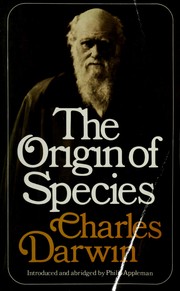
Reading Darwin's own foundational text at this stage reveals how far the field has come and how much he anticipated; it provides essential historical depth and sharpens critical thinking about evolutionary arguments.
Sapolsky's magnum opus integrates neuroscience, endocrinology, evolution, and ethology to explain the biological roots of behavior — a demanding but rewarding capstone that unifies every level of analysis studied so far.
Discussion
Keep reading
Paths that share books, cover the same subject, or open a related topic.