Zoology: a reading path through the animal kingdom
This curriculum takes a beginner from a sense of wonder about the animal kingdom all the way to a rigorous, research-level understanding of zoology. It begins with accessible narrative science to build intuition and vocabulary, then moves through comparative anatomy and animal behavior, before diving into evolutionary biology and the full sweep of animal diversity across the phyla. Each stage builds directly on the conceptual tools laid down in the previous one.
Foundations: The Animal Kingdom Comes Alive
BeginnerBuild a broad, enthusiastic mental map of animal life — major groups, key behaviors, and the idea that animals are shaped by evolution and ecology — before encountering formal terminology.
▸ Study plan for this stage
Pace: 8–10 weeks, ~25–35 pages/day (with flexibility for reflection and observation breaks)
- Vertebrates are a unified group sharing a backbone, yet display remarkable diversity in form and function across fish, amphibians, reptiles, birds, and mammals
- Evolution by natural selection explains why animals have the traits they do—body structure, behavior, and ecology are all adaptive responses to environment
- Ecology and behavior are inseparable: how an animal lives (diet, habitat, social structure) directly shapes its anatomy and survival strategy
- Biodiversity is staggering and organized into nested groups; understanding major animal phyla and classes reveals patterns in life's architecture
- Intelligence, consciousness, and complex behavior exist across the animal kingdom in unexpected forms—not unique to humans or mammals
- Observation and curiosity are the foundation of zoology; direct encounter with animals (even through narrative) deepens understanding more than facts alone
- What are the five major classes of vertebrates, and what key anatomical or physiological feature distinguishes each from the others?
- How does Young explain the relationship between an animal's body structure and its ecological role or lifestyle?
- According to Wilson, what are the major patterns of biodiversity on Earth, and why do certain regions contain more species than others?
- What evidence does Montgomery present that cephalopods (specifically octopuses) possess intelligence and emotional complexity, and what does this suggest about consciousness in non-human animals?
- How do the three books together illustrate the idea that evolution, ecology, and behavior are interconnected?
- Can you describe a specific animal from each book and explain how its anatomy, behavior, and environment fit together as an integrated system?
- While reading Young, sketch or diagram the skeletal and muscular systems of three different vertebrate classes (e.g., fish, bird, mammal); annotate how each structure relates to the animal's lifestyle
- Create a 'behavior-ecology-anatomy' card for 5–6 animals from Young's book: on one side, list the animal's habitat and diet; on the reverse, predict what body features it should have, then verify against the text
- Read Wilson's chapters on biodiversity hotspots and choose one region (rainforest, coral reef, etc.); research and list 10 species from that region, noting their phylum/class and one adaptation each
- Keep a 'curiosity journal' while reading Montgomery: after each chapter, write one question about octopus behavior or intelligence that surprised you, and note what made it surprising
- Visit a local aquarium, zoo, or natural history museum (or watch a high-quality nature documentary) and identify at least three animals; for each, write a paragraph connecting its observed behavior or appearance to concepts from Young or Wilson
- Conduct a 'backyard biodiversity survey': spend 20 minutes observing insects, birds, or other animals in your neighborhood; sketch or photograph them, classify by phylum/class, and reflect on what ecological roles they might play
Next up: This stage establishes intuitive, narrative-driven familiarity with animal diversity, evolution, and behavior—creating a mental scaffold onto which the next stage will layer formal taxonomy, physiology, and ecological theory with confidence and genuine curiosity.
A classic, readable survey of vertebrate groups that introduces anatomy, physiology, and evolution together, giving beginners a coherent framework for all backboned animals.
Wilson's masterful narrative explains how biodiversity arose and why it matters, introducing the concept of species, ecosystems, and extinction in vivid, accessible prose — perfect for grounding the learner in the big picture.
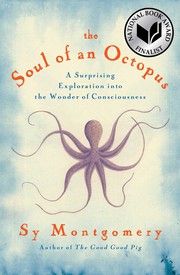
A compelling, personal account of invertebrate intelligence that makes abstract concepts like cognition and behavior feel immediate, and sparks curiosity about the vast diversity of non-vertebrate life.
Animal Behavior: Why Animals Do What They Do
BeginnerUnderstand the principles of ethology — instinct, learning, communication, social structure, and the evolutionary logic behind behavior — as a lens for interpreting animal life.
▸ Study plan for this stage
Pace: 8–10 weeks, ~40–50 pages/day (King Solomon's Ring: 3–4 weeks; Introduction to Behavioural Ecology: 4–5 weeks, with 1–2 weeks for integration and review)
- Instinct vs. learning: how innate behaviors and acquired behaviors interact in animal decision-making
- Imprinting and critical periods: how early experience shapes lifelong behavioral patterns (Lorenz's foundational work)
- Sign stimuli and fixed action patterns: how specific environmental cues trigger automatic behavioral responses
- Communication systems: how animals signal information through displays, vocalizations, and body language
- Social hierarchies and group living: costs and benefits of cooperation, dominance, and territorial behavior
- Evolutionary logic of behavior: how natural selection shapes behavioral strategies to maximize fitness and survival
- Behavioral ecology framework: linking behavior to ecological constraints, resource competition, and reproductive success
- What is imprinting, and why did Lorenz's experiments with greylag geese demonstrate that early experience can override genetic predisposition?
- How do sign stimuli and fixed action patterns work together to produce behavior, and what examples does Lorenz provide from his observations?
- What is the difference between instinctive and learned behavior, and how do animals combine both in real-world situations?
- How do animals use communication (visual, acoustic, chemical) to convey information about territory, mating readiness, and social status?
- What evolutionary pressures shape social structures, and how do concepts like dominance hierarchies and cooperation increase reproductive fitness?
- How does behavioral ecology explain trade-offs between foraging efficiency, predator avoidance, and mating effort?
- Observe a common animal (bird, squirrel, insect, pet) for 30 minutes and document: one fixed action pattern, one learned behavior, and one communication signal—then explain the likely evolutionary function of each
- Replicate Lorenz's imprinting concept: research a species with critical periods (e.g., songbirds, ducklings) and write a 2–3 page analysis of how early experience shapes adult behavior
- Create a behavioral ethogram (detailed behavioral inventory) for a species of your choice, categorizing behaviors as instinctive, learned, or mixed—include sketches or photos
- Design a hypothetical experiment testing a sign stimulus (e.g., how a specific color or sound triggers a response) in a local animal species; write up the methods and predicted outcomes
- Map the social hierarchy in a group animal (ants, wolves, primates) using published research or video observation; explain how dominance relationships affect resource access and reproduction
- Analyze a real behavioral trade-off (e.g., a bird's choice between foraging in open vs. cover, or time spent on territory defense vs. parenting) using the cost-benefit framework from Krebs
Next up: This stage grounds you in the observational and evolutionary foundations of animal behavior, preparing you to explore more specialized topics—such as mating systems, parental care, predator-prey dynamics, or cognitive abilities—with a solid understanding of how behavior evolves and functions in ecological context.
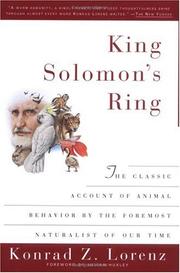
The founding classic of ethology, written by a Nobel laureate in warm, anecdotal prose; it establishes core concepts like imprinting and fixed action patterns that all later animal behavior study builds on.

The standard undergraduate text in the field, it rigorously connects behavior to natural selection — foraging theory, mating systems, altruism — and prepares the reader for evolutionary thinking in later stages.
Comparative Anatomy & Physiology: How Animal Bodies Work
IntermediateGain a working understanding of how animal body plans are structured, how organ systems function across different phyla, and how form is tied to function and environment.
▸ Study plan for this stage
Pace: 8–10 weeks, ~25–30 pages/day (Hill's *Animal Physiology* is dense; allow time for diagrams and re-reading key sections)
- Homeostasis and regulation: how animals maintain stable internal conditions despite environmental change
- Comparative physiology across phyla: how different animal groups solve the same physiological problems (respiration, circulation, excretion, osmoregulation)
- Structure-function relationships: how anatomical design reflects ecological niche and lifestyle (e.g., streamlined bodies in fast swimmers, large surface areas in gas exchangers)
- Organ system integration: how nervous, endocrine, and circulatory systems coordinate to maintain function
- Metabolic diversity: how energy acquisition and use varies with body size, temperature, activity level, and environment
- Adaptation at multiple scales: from molecular (ion channels, enzymes) to organismal (organ systems) to ecological (lifestyle constraints)
- Constraints and trade-offs: why no single design is optimal for all environments; how evolution shapes compromises
- How do different animal groups (fish, amphibians, reptiles, mammals, birds) solve the problem of gas exchange, and what anatomical features enable each solution?
- What is homeostasis, and how do negative feedback loops maintain it? Give examples from Hill's treatment of temperature regulation and osmoregulation.
- How does body size affect metabolic rate, surface area-to-volume ratios, and the design of organ systems? Why do large animals and small animals face different physiological challenges?
- Compare the circulatory systems of fish, amphibians, reptiles, and mammals. How does each design reflect the animal's habitat and metabolic demands?
- How do animals in different environments (desert, aquatic, polar) modify their physiology to conserve water, manage salt balance, or regulate temperature?
- What is the relationship between an animal's lifestyle (sedentary vs. active, ectothermic vs. endothermic) and the structure of its nervous and muscular systems?
- Create comparative anatomy charts: for each major organ system (respiratory, circulatory, excretory, nervous), map how fish, amphibians, reptiles, mammals, and birds differ. Annotate with functional explanations from Hill.
- Dissection or detailed diagram study: using Hill's illustrations and supplementary resources, trace blood flow through a fish heart, then a mammalian heart. Explain why the changes occurred evolutionarily.
- Case study analysis: select three animals from different phyla (e.g., desert scorpion, deep-sea fish, arctic mammal) and explain how their physiology is adapted to their environment using Hill's principles of osmoregulation, temperature control, and metabolism.
- Metabolic scaling calculations: work through Hill's examples of how metabolic rate scales with body mass. Calculate predicted metabolic rates for animals of different sizes and explain the physiological basis.
- Feedback loop diagrams: draw and label negative feedback loops for thermoregulation, blood pH regulation, and water balance. Identify the sensor, integrator, and effector in each.
- Comparative physiology problem set: answer questions like 'Why can a hummingbird sustain a higher heart rate than an elephant?' or 'Why do desert mammals concentrate their urine more than aquatic mammals?' using Hill's framework.
Next up: This stage establishes the mechanistic foundation—how individual organ systems work—preparing you to explore how these systems evolved, how they're regulated by genes and development, and how ecological pressures shaped animal diversity across evolutionary time.
A comprehensive yet clear textbook covering how animals regulate temperature, breathe, circulate blood, and sense the world — building the physiological vocabulary needed to understand diversity at a mechanistic level.
Evolution & the Tree of Life
IntermediateUnderstand the evolutionary mechanisms — natural selection, speciation, phylogenetics — that produced animal diversity, and learn to read the tree of life as a history of animal lineages.
▸ Study plan for this stage
Pace: 8–10 weeks, ~25–30 pages/day. Start with "The Selfish Gene" (4–5 weeks, ~20 pages/day for the core chapters), then "Acquiring Genomes" (4–5 weeks, ~25–30 pages/day for denser material). Build in 1–2 weeks for review and integration.
- Gene-centered view of evolution: genes, not organisms, as the primary units of selection and replication
- Replicators and vehicles: how genes (replicators) build bodies (vehicles) to ensure their own survival and propagation
- Natural selection as a mechanism for gene frequency change across generations
- Evolutionary stable strategies (ESS) and behavioral evolution: how selfish behavior can be evolutionarily advantageous
- Symbiosis and horizontal gene transfer as major drivers of evolutionary innovation and complexity
- Endosymbiotic theory: how organelles (mitochondria, chloroplasts) originated from bacterial symbiosis
- Acquired genomes and the role of symbiosis in the origin of eukaryotes and animal diversity
- Phylogenetic thinking: reading evolutionary trees as records of lineage divergence and symbiotic events
- How does Dawkins' gene-centered perspective differ from organism-centered views of evolution, and why does this distinction matter for understanding animal behavior?
- What is the difference between a replicator and a vehicle, and how do genes function as both?
- How do evolutionary stable strategies (ESS) explain the persistence of apparently 'selfish' or costly behaviors in animal populations?
- What is endosymbiotic theory, and what evidence from 'Acquiring Genomes' supports the idea that mitochondria and chloroplasts were once free-living bacteria?
- How does symbiosis and horizontal gene transfer challenge the traditional tree-of-life model, and what does this mean for understanding eukaryotic evolution?
- How would you use phylogenetic trees to trace both vertical inheritance and symbiotic acquisition events in animal lineages?
- Create a detailed concept map linking genes, replicators, vehicles, and natural selection. Use examples from 'The Selfish Gene' (e.g., kin selection, reciprocal altruism) to illustrate each connection.
- Analyze a specific animal behavior (e.g., parental care, territorial aggression, or cooperation) through both a gene-centered and organism-centered lens. Write a 2–3 page comparison explaining which framework better accounts for the behavior.
- Draw and annotate a phylogenetic tree for a real animal group (e.g., primates, insects, or mollusks). Mark nodes where you infer symbiotic events occurred based on Margulis's framework (e.g., mitochondrial acquisition in early eukaryotes).
- Work through a population genetics problem: given initial allele frequencies and selection coefficients, calculate how gene frequencies change across generations. Relate your results back to Dawkins' concept of replicator success.
- Read a primary research paper on endosymbiosis or horizontal gene transfer in animals (e.g., on mitochondrial evolution or bacterial symbionts in insects). Summarize how the evidence supports or challenges Margulis's thesis.
- Create a visual comparison chart: traditional vertical inheritance vs. symbiotic/horizontal acquisition. Use examples from both books to show how each process has shaped animal diversity.
Next up: This stage establishes the mechanistic foundations—how genes drive evolution and how symbiosis generates novelty—preparing you to apply these principles to specific animal body plans, developmental programs, and ecological roles in the next stage.
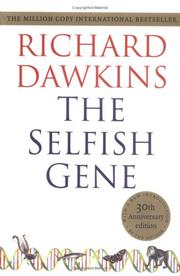
Dawkins reframes evolution from the gene's perspective, cementing the learner's understanding of natural selection, kin selection, and adaptation in a way that makes all of zoology's patterns click into place.
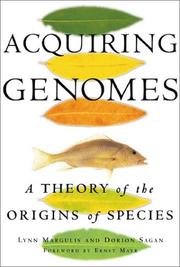
Margulis presents the symbiotic and collaborative dimensions of evolution, broadening the learner's view beyond competition alone and introducing the deep origins of animal cells and body plans.
Animal Diversity: A Full Survey Across the Phyla
ExpertAchieve a systematic, research-level understanding of the full sweep of animal diversity — from sponges and worms to insects, echinoderms, and mammals — including their phylogeny, anatomy, ecology, and evolutionary history.
▸ Study plan for this stage
Pace: 12–14 weeks, ~40–50 pages/day. "Invertebrates" (Brusca): 8–9 weeks, ~45 pages/day (dense, technical); "The Ancestor's Tale" (Dawkins): 4–5 weeks, ~35 pages/day (narrative-driven, complementary phylogenetic perspective).
- Phylogenetic relationships and evolutionary history across all major animal phyla, from basal groups (sponges, cnidarians) to derived groups (arthropods, chordates)
- Comparative anatomy and body-plan evolution: how fundamental structures (segmentation, coeloms, appendages, nervous systems) vary and constrain diversity
- Ecological roles and functional morphology: how invertebrate anatomy relates to feeding, locomotion, reproduction, and survival strategies
- Molecular and fossil evidence for animal phylogeny: understanding cladistic trees and how molecular clocks inform divergence times
- Life-history strategies and developmental patterns (larval forms, metamorphosis, asexual reproduction) as drivers of ecological success
- Systematics and taxonomy: formal classification, synapomorphies, and how to read and construct phylogenetic trees
- Biogeography and macroecology: distribution patterns of invertebrate groups and their evolutionary explanations
- The role of contingency and constraint in shaping animal diversity: why certain body plans succeed and others fail
- What are the major synapomorphies that define each major animal phylum, and how do these characters support their phylogenetic placement?
- How does body-plan architecture (e.g., segmentation, coelomate vs. acoelomate organization) constrain or enable ecological diversity within and across phyla?
- Trace the evolutionary origin of key innovations (e.g., notochord, jointed appendages, closed circulatory systems) and explain their adaptive significance.
- What does molecular phylogenetics reveal about animal relationships that morphological data alone could not, and where do the two approaches conflict?
- How do larval forms and developmental strategies (e.g., indeterminate vs. determinate growth) reflect and enable ecological specialization in invertebrates?
- Explain the concept of 'deep time' and contingency in Dawkins' narrative: how would animal diversity differ if key extinction events or mutations had not occurred?
- Create a detailed comparative anatomy table for 8–10 major phyla (sponges, cnidarians, flatworms, annelids, mollusks, arthropods, echinoderms, chordates), documenting coelom type, segmentation, nervous system organization, and feeding mode; annotate with evolutionary advantages.
- Construct or redraw 3–4 phylogenetic trees from Brusca and Dawkins (e.g., early animal divergences, arthropod relationships, vertebrate origins) by hand, labeling nodes with synapomorphies and estimated divergence times; compare trees across sources.
- Select 5 invertebrate groups and write a 1–2 page 'evolutionary case study' for each, explaining: (a) key anatomical innovations, (b) ecological roles, (c) fossil record evidence, (d) molecular support for their placement, and (e) one unsolved phylogenetic question.
- Dissect or examine preserved specimens (or high-resolution images/videos) of representatives from 6–8 phyla; sketch and label major organ systems, noting homologies and differences; relate observations back to phylogenetic hypotheses in the texts.
- Read and summarize 2–3 primary research papers on animal phylogenomics or paleontology (e.g., from journals like *Nature*, *Science*, *Molecular Biology and Evolution*) that test or refine hypotheses presented in Brusca or Dawkins; write a 2–3 page synthesis comparing the paper's findings to the textbook accounts.
- Create a 'phylogenetic timeline' poster or digital visualization spanning 600+ million years, plotting major animal groups, key innovations, mass extinctions, and biogeographic events; use both Brusca's systematic detail and Dawkins' narrative arc to ensure accuracy and coherence.
Next up: This stage establishes the full taxonomic and phylogenetic scaffold of animal life, providing the foundational knowledge of diversity, anatomy, and evolutionary relationships needed to specialize in functional morphology, behavioral ecology, or conservation biology in subsequent stages.
The definitive reference on invertebrate zoology, covering every major phylum with rigorous detail on morphology, reproduction, and phylogeny — the essential companion for understanding the 95% of animals without backbones.

A grand, reverse-chronological pilgrimage back through evolutionary time, meeting every major animal lineage at its branching point — the perfect capstone that ties together phylogeny, diversity, and deep time into one coherent narrative.
Discussion
Keep reading
Paths that share books, cover the same subject, or open a related topic.