The Best Primatology Books on Apes and Monkeys
This curriculum builds from accessible, narrative-driven introductions to primates all the way to rigorous scientific treatments of cognition, culture, and social complexity. Each stage deepens the reader's vocabulary and conceptual toolkit — starting with vivid field accounts, moving through comparative behavior and cognition, and culminating in advanced evolutionary and theoretical frameworks.
First Encounters: The World of Primates
BeginnerBuild an intuitive feel for primate diversity, field research, and the emotional lives of our closest relatives through compelling, accessible narratives.
▸ Study plan for this stage
Pace: 8–10 weeks, ~40–50 pages/day (approximately 3 weeks per book with overlap for reflection)
- Long-term field observation as the foundation of primatology: Goodall's 30+ year commitment to understanding chimpanzee behavior in Gombe Stream National Park
- Primate emotional and social complexity: recognizing tool use, grief, personality, and social hierarchies in our closest living relatives
- Evolutionary continuity between humans and primates: how bonobos and chimpanzees reveal shared capacities for empathy, morality, and conflict resolution
- The role of the researcher in the field: how immersion, patience, and relationship-building transform what we can learn about primate societies
- Primate diversity and adaptation: contrasting chimpanzee and bonobo social structures, and baboon survival strategies in African savannas
- Ethics and agency in primate research: recognizing individual personalities, respecting autonomy, and moving beyond viewing primates as mere subjects
- How narrative and storytelling make primatology accessible: using personal accounts to convey scientific insight and emotional truth
- What did Jane Goodall's long-term observations at Gombe reveal about chimpanzee tool use, and why was this discovery significant for understanding human evolution?
- How do bonobos and chimpanzees differ in their social structures and conflict resolution strategies, and what does this tell us about the diversity of primate societies?
- What examples from the books demonstrate that primates have emotional lives and individual personalities? How does recognizing this change the way we should study and treat them?
- How did Shirley Strum's approach to studying baboons differ from traditional primatology, and what advantages did her long-term presence in the field provide?
- What ethical responsibilities do primatologists have toward their subjects, and how do the three authors address this in their work?
- How do the three books collectively illustrate the importance of patience, immersion, and relationship-building in field research?
- Keep a 'primate observation journal' while reading: sketch or describe one behavioral scene from each book (e.g., a tool-use moment from Goodall, a bonobo conflict resolution from de Waal, a baboon social interaction from Strum) and reflect on what it reveals about primate cognition
- Create a comparative chart of chimpanzee, bonobo, and baboon social structures, hierarchies, and conflict-resolution methods across the three books; identify patterns and differences
- Write a 2–3 page personal narrative from the perspective of a field researcher (Goodall, de Waal, or Strum) describing a pivotal moment of discovery or ethical dilemma they faced
- Select one primate individual mentioned in the books (e.g., Flint or Flo from Goodall's work) and write a character sketch exploring their personality, relationships, and significance to the research
- Conduct a 'close reading' exercise: choose one emotionally striking passage from each book and analyze how the author uses language and narrative to convey both scientific observation and emotional truth
- Design a hypothetical field study: outline a research question about primate behavior, explain your methodology (drawing on the approaches used by Goodall, de Waal, and Strum), and discuss the ethical considerations you would need to address
Next up: This stage builds an intuitive, emotionally grounded understanding of primate diversity and field methods that prepares you to engage with more specialized topics—such as primate cognition, social evolution, conservation challenges, and the methodological debates within primatology—in the next stage.

The perfect entry point — Goodall's landmark account of chimpanzee life at Gombe introduces core concepts like tool use, social bonds, and individual personality in vivid, readable prose.

De Waal contrasts chimpanzees and bonobos to explore empathy and morality, gently introducing the reader to comparative primatology and the idea that social behavior has deep evolutionary roots.
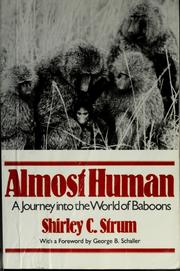
Strum's account of baboon society broadens the reader's view beyond apes to Old World monkeys, showing how complex social politics emerge even outside our closest relatives.
Social Lives and Politics
BeginnerUnderstand the mechanics of primate social structure — dominance, alliance, kinship, and conflict — through focused, evidence-based storytelling.
▸ Study plan for this stage
Pace: 8–10 weeks, ~40–50 pages/day. "Chimpanzee Politics" (first 5–6 weeks, ~300 pages) followed by "Mama's Last Hug" (final 3–4 weeks, ~300 pages). Allow 1 week buffer for reflection and exercise completion.
- Dominance hierarchies and power dynamics: how rank is established, maintained, and challenged through coalitions and alliances rather than brute force alone
- Coalition-building and strategic alliance: the role of third parties in determining outcomes, and how individuals leverage relationships for political gain
- Kinship and maternal bonds as foundational social structures: how family relationships shape lifelong social positioning and influence
- Conflict resolution and reconciliation: mechanisms primates use to repair relationships after aggression, including reassurance, grooming, and tolerance
- Individual personality and agency: how temperament, intelligence, and social skill drive political outcomes independent of physical strength
- Emotional continuity across the lifespan: how early social bonds and experiences shape behavior, relationships, and well-being in old age
- Evidence-based observation methods: how long-term field studies and detailed behavioral records reveal social complexity invisible in short-term snapshots
- In 'Chimpanzee Politics,' how did Yeroen, Luit, and Nikkie's coalition dynamics illustrate that dominance is not simply about physical strength? What role did alliances play in determining who held power?
- What is reconciliation, and why is it adaptive for primate societies? Provide examples from the books of how chimps repair relationships after conflict.
- How do maternal relationships and kinship influence an individual's social position and alliances throughout their life, according to 'Mama's Last Hug'?
- Compare the social strategies of different individuals across both books: what personality traits or social skills enabled some to succeed politically despite lacking physical dominance?
- What does the concept of 'emotional continuity' mean in the context of 'Mama's Last Hug,' and how does it challenge the idea that animals lack complex emotional lives?
- How do the long-term observational methods used in these studies reveal social complexity that short-term observations would miss?
- Create a dominance hierarchy diagram for the main chimp characters in 'Chimpanzee Politics' (Yeroen, Luit, Nikkie, and others). Track how the hierarchy shifts across key events and explain the role of coalitions in each shift.
- Identify and annotate 3–4 reconciliation scenes from 'Chimpanzee Politics.' For each, describe the conflict, the aggression, and the specific reconciliation behavior(s) used. Reflect on why these behaviors matter for group stability.
- Write a 500-word character study of one individual from the books (e.g., Mama, Flint, or one of the male chimps). Focus on how their personality, kinship ties, and social skills shaped their political position and relationships.
- Create a timeline of Mama's life across 'Mama's Last Hug,' marking key relationships, losses, and behavioral changes. Annotate how emotional continuity is evident across decades.
- Conduct a 'mini-observation' exercise: watch 10–15 minutes of primate footage (YouTube or nature documentary) and record behaviors using the same systematic approach de Waal describes. Identify dominance signals, affiliative behaviors, and conflict.
- Debate or write a reflection: 'Are primate politics fundamentally different from human politics, or do they reveal universal principles of social organization?' Ground your argument in specific examples from both books.
Next up: This stage establishes that primate social life is driven by complex emotional, strategic, and relational dynamics—not instinct alone—preparing you to explore how these foundations scale to larger group structures, cultural transmission, and the evolutionary origins of human society in subsequent stages.

A landmark study of power, coalition, and manipulation among chimps at Arnhem Zoo; introduces the reader to systematic behavioral observation and social network thinking.
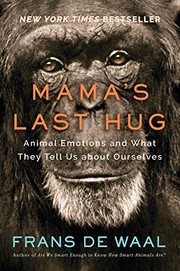
Builds directly on Chimpanzee Politics by examining animal emotions and their expression, deepening the reader's understanding of the inner lives behind the social behaviors already encountered.
Cognition, Culture, and Communication
IntermediateGrasp how primates think, learn, communicate, and transmit culture — moving from anecdote to cognitive science.
▸ Study plan for this stage
Pace: 8–10 weeks, ~40–50 pages/day. De Waal (350 pp, 2–3 weeks) → Whitehead (400 pp, 2–3 weeks) → Tomasello (400 pp, 3–4 weeks), with 1–2 weeks for integration and review.
- Anthropomorphism vs. cognitive science: moving from anecdotal observation to rigorous testing of animal cognition (de Waal's core argument)
- Theory of mind in primates: how apes and monkeys understand others' beliefs, intentions, and knowledge states (Tomasello's framework)
- Cultural transmission in non-human animals: how behaviors, traditions, and knowledge spread and persist across generations (Whitehead on cetaceans; Tomasello on apes)
- Social learning mechanisms: imitation, emulation, teaching, and cumulative culture—what primates can and cannot do (Tomasello's distinctions)
- Communication systems in primates: gestural, vocal, and multimodal signaling and their cognitive underpinnings (de Waal and Tomasello)
- Convergent evolution of cognition: how cetaceans and primates independently evolved similar cognitive and cultural capacities (Whitehead and comparative perspective)
- The uniqueness question: what cognitive abilities are uniquely human vs. shared with other apes (Tomasello's central thesis)
- Experimental methodology: how to test animal cognition rigorously and avoid projection bias (de Waal's methodological critique)
- What does de Waal mean by 'anthropomorphism' as a scientific problem, and how does he argue we can study animal cognition rigorously without it?
- How do Tomasello's concepts of 'imitation' and 'emulation' differ, and why does this distinction matter for understanding primate culture?
- What evidence does Whitehead present that whales and dolphins possess culture in the anthropological sense, and how does this compare to primate culture?
- According to Tomasello, which cognitive abilities (e.g., theory of mind, intentional communication, cumulative culture) are uniquely human, and which are shared with other apes?
- How do de Waal's examples of primate communication (gestural and vocal) challenge the idea that language is uniquely human?
- What role does social learning play in the persistence of cetacean and primate cultures, and what are the limits of what non-human animals can transmit culturally?
- Annotate 5–10 key experiments from de Waal (e.g., mirror self-recognition, false-belief tests) and write a one-page summary of the methodology, results, and what they reveal about animal cognition.
- Create a comparison table of communication modalities (gesture, vocalization, facial expression) across the three species groups (apes, monkeys, cetaceans) using evidence from all three books.
- Design a hypothetical experiment to test whether a specific primate or cetacean population has culturally transmitted a behavior; justify your method against de Waal's critique of anthropomorphism.
- Read and summarize 2–3 primary research papers cited in Tomasello on theory of mind or cumulative culture in apes; write a 2-page reflection on how the evidence supports or complicates his claims.
- Create a 'culture map' for one cetacean population (e.g., orcas or humpback whales) using Whitehead's data: what behaviors are culturally transmitted, how do they spread, and what does this tell us about cetacean cognition?
- Write a comparative essay (3–4 pages) answering: 'In what ways are human culture and primate/cetacean culture fundamentally different, and in what ways are they continuous?' Ground your argument in all three books.
Next up: This stage establishes that cognition, culture, and communication are not uniquely human—setting the foundation to explore how these capacities evolved, how they vary across species, and what evolutionary pressures shaped them in the next stage.
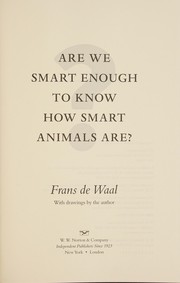
A rigorous but accessible survey of animal cognition research that reframes how we measure intelligence; essential for understanding what primate minds can and cannot do.

Though focused on cetaceans, this book provides the clearest scientific framework for defining and studying animal culture — concepts directly applicable to primate cultural transmission research.

Tomasello's comparative study of ape and human cognition is the field's foundational scientific text, introducing joint attention, imitation, and social learning with empirical rigor.
Evolution, Ecology, and Deep Theory
ExpertSynthesize primate behavior within evolutionary biology and ecology, understanding the selective pressures that shaped social systems, life histories, and intelligence.
▸ Study plan for this stage
Pace: 8–10 weeks, ~40–50 pages/day. Dunbar (4 weeks), Wrangham (2.5 weeks), Sapolsky (3–3.5 weeks). Allocate extra time for Sapolsky given its density and breadth.
- Social brain hypothesis: how group size constraints drive cognitive evolution and language emergence in primates
- Kin selection, reciprocal altruism, and costly signaling as evolutionary mechanisms underlying grooming, gossip, and coalition formation
- Demonic male syndrome: how male aggression, lethal coalitions, and sexual coercion coevolve with social structure and ecology in apes
- Phylogenetic context: comparing bonobos, chimpanzees, and humans to infer ancestral selective pressures
- Life history trade-offs: how reproductive strategy, development time, and social investment reflect ecological constraints and mating systems
- Neuroendocrine mechanisms: how hormones (testosterone, cortisol, oxytocin) mediate behavior and link proximate physiology to ultimate evolutionary function
- Integrative behavioral ecology: synthesizing evolutionary game theory, developmental plasticity, and environmental variability to explain behavioral diversity
- Aggression, dominance, and cooperation as context-dependent strategies shaped by resource distribution, predation risk, and reproductive competition
- How does Dunbar's social brain hypothesis explain the relationship between group size, neocortex ratio, and the evolution of language and theory of mind in primates?
- What evidence do Wrangham and Dunbar present for the role of male coalitionary aggression in shaping human and ape social systems, and how does this differ between bonobos and chimpanzees?
- How do Sapolsky's neuroendocrine mechanisms (hormonal regulation of aggression, stress, and social bonding) provide a proximate explanation for the ultimate evolutionary patterns Dunbar and Wrangham describe?
- What trade-offs between mating competition, parental investment, and group living emerge across the primate order, and how do these constrain the evolution of intelligence and language?
- How can you use evolutionary and ecological principles from these three books to predict or explain a specific primate behavior (e.g., infanticide, alliance formation, or teaching) in a species not explicitly discussed?
- What are the key differences in selective pressures between bonobos and chimpanzees, and what do these differences reveal about the conditions favoring cooperation versus aggression in ape societies?
- Comparative life history table: Create a matrix comparing humans, chimpanzees, bonobos, and one other primate (e.g., macaques) across gestation length, interbirth interval, juvenile dependency period, and group size. Annotate with hypotheses about selective pressures from Dunbar and Wrangham.
- Social brain hypothesis test: Calculate neocortex ratio for 5–8 primate species using published data; plot against group size and language/tool use complexity. Write a 2-page analysis of whether the correlation supports Dunbar's hypothesis and identify outliers.
- Demonic male syndrome case study: Select one ape species (chimpanzee, bonobo, or human) and write a 3–4 page synthesis explaining how male aggression, sexual coercion, and lethal coalitions are shaped by ecology, mating system, and female distribution, citing Wrangham and Dunbar.
- Neuroendocrine mechanism mapping: Choose one behavior (e.g., aggression, affiliation, or status-seeking) and trace the causal chain from Sapolsky's hormonal mechanisms (testosterone, cortisol, oxytocin) through proximate physiology to ultimate evolutionary function, grounding it in examples from all three books.
- Evolutionary game theory scenario: Model a simple scenario (e.g., male coalition formation or female alliance choice) as a game with payoff matrices. Predict stable strategies under different ecological conditions (resource scarcity, predation risk, sex ratio) and compare predictions to primate data from the books.
- Integrative essay: Write a 5–7 page essay synthesizing all three books to explain how a complex human behavior (e.g., gossip, warfare, or monogamy) evolved from ancestral primate conditions, addressing social structure, neuroendocrinology, and ecological constraints.
Next up: This stage grounds you in the mechanistic and evolutionary foundations of primate behavior, positioning you to apply these principles to human-specific domains—culture, technology, morality, and society—in the next stage.

Dunbar's social brain hypothesis links primate group size, neocortex volume, and the evolution of language — a bold theoretical framework that ties together everything learned so far.
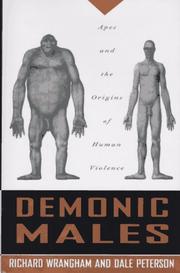
Wrangham examines aggression, violence, and male coalitions across primates and humans, offering a hard evolutionary lens that challenges and deepens earlier, more sympathetic portrayals.
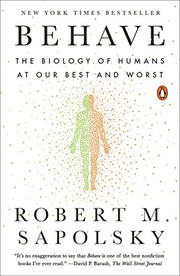
A sweeping synthesis of neuroscience, endocrinology, evolution, and behavior — the ideal capstone that places everything learned about primates within the full biological context of why animals (including us) act as they do.
Discussion
Keep reading
Paths that share books, cover the same subject, or open a related topic.