Plasma physics describes ionized gases where charged particles and electromagnetic fields interact collectively, the state of most visible matter in the universe and the key to fusion energy. It is notoriously multi-layered: you can describe a plasma as individual particles, as a fluid, or through a full kinetic distribution, and each description is right in a different regime. A good reading order introduces those pictures in the sequence that keeps them straight.
The mistake is diving into kinetic theory or magnetohydrodynamics before the single-particle and fluid intuitions are set. Once you know how one particle drifts in crossed fields, the collective behavior has a foundation to stand on.
Start with a real course
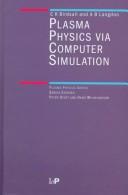
Introduction to plasma physics and controlled fusion by Francis Chen is the classic first text, clear on single-particle motion, fluid and wave descriptions, and the basics of fusion, with the physical intuition that later books assume. Read it completely before moving on. To connect theory to practice early, Plasma physics via computer simulation by Charles Birdsall and A. Bruce Langdon shows how the equations become working particle-in-cell models.
Build the theoretical core
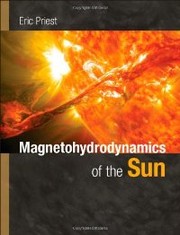
The Theory of Plasma Waves by Thomas Stix is the definitive treatment of how waves propagate through magnetized plasma, a subject that pervades the field. Plasma Kinetic Theory by David Melrose develops the distribution-function description rigorously. For the fluid limit in astrophysical settings, Magnetohydrodynamics of the Sun by Eric Priest is a superb applied MHD text.
Move toward fusion and space
Plasma Confinement by Richard Hazeltine and James Meiss, Tokamaks by John Wesson, and Plasma Physics and Fusion Energy by Jeffrey Freidberg carry you into the physics and engineering of confining plasma for fusion, each with a different balance of theory and machine reality. For the cosmic side, Physics of space plasmas by George Parks and High Energy Astrophysics by Malcolm Longair extend the same principles to the magnetosphere, the solar wind, and beyond.
Read in this order and the many faces of plasma resolve into one subject. Follow the full path to keep them aligned.
Follow the full reading path →
Ready to learn something deeply?
Build a reading path — free