Best Books on the History of Environmentalism, in Reading Order
Environmentalism did not begin with climate change; it began with a nineteenth-century argument about what wilderness was for, and it changed shape at least three times before carbon entered the conversation. This path reads the founding American texts first, then the single book that created the modern movement, then the historians who explain where the idea came from and how differently it looks outside the West, then the politics that built the institutions, and finally the turn to global and planetary problems.
The founding texts
BeginnerRead the three books that supplied environmentalism with its language — solitude in nature, wilderness preservation, and the land ethic — in the order the ideas developed.
▸ Study plan for this stage
Pace: Four to five weeks for roughly 700 pages, and the page count understates it — all three are written to be read slowly. Walden is 268 pages and the Economy chapter alone will take a week if you do the arithmetic it asks for. My First Summer in the Sierra is 170 pages of journal entries and can be rea
- Thoreau's core move in Walden: treating nature as a moral and philosophical resource rather than an economic one, and making the argument by accounting rather than by assertion
- The Economy chapter as the foundation — Thoreau itemises what the cabin cost, because his claim is that most labour buys things nobody needs
- The honest limits of Walden: the pond is a mile and a half from Concord and Thoreau went into town regularly. The book is an experiment in attention, not in self-sufficiency, and reading it as the latter produces bad environmentalism
- Muir turning private contemplation into public campaigning — My First Summer in the Sierra reads as a naturalist's journal, and it is also the case for national parks being built in real time
- The preservation-versus-conservation split that Muir's position defines: nature protected for its own sake against nature managed for wise use, which is the fault line under every argument in the rest of this path
- Leopold's land ethic — that a thing is right when it tends to preserve the integrity, stability and beauty of the biotic community — stated as a formal ethical criterion rather than a sentiment
- 'Thinking Like a Mountain' and the fact that Leopold had once shot wolves as a matter of professional policy. The essay is a documented change of mind by a working forester, which is why it carries weight Muir's rhapsodies do not
- That all three men write about landscapes which had people living in them, and what each does with that fact
- Walden's longest chapter is about money. Why does Thoreau start there rather than at the pond?
- Muir presents himself as a witness rather than an advocate in this book. Find where the advocacy shows anyway and say how it is doing its work
- What was Leopold's earlier position on predators, and what specifically changed it? Why does he tell it as a story rather than as a finding?
- State Leopold's land ethic in his own words, then say what practical decision it settles and what it leaves entirely open
- Each of these three books describes a landscape as though it were empty. What is lost by that, and does any of the three notice?
- Reconstruct Thoreau's cabin accounts from the Economy chapter, total them, and then price the same list of materials today. He itemises to the half-cent precisely so that you will do this
- Read 'Thinking Like a Mountain' three times — it is only a few pages — and write out its argument as a numbered chain of steps. Then note which step is the one doing the ethical work
- Copy out Leopold's land ethic sentence, then write 200 words on a real land-use decision it would settle and a real one it would not. Keep the sentence; you will need it again in the last stage
- Find a passage where Muir describes a place as untouched, then spend twenty minutes finding out who was living in or using that valley at the time, and write a paragraph on the gap
- Build a three-column table — Thoreau, Muir, Leopold — with rows for what nature is for, who the intended reader is, and what action the book asks for. Keep it; two later stages ask you to add columns
Next up: You now have the vocabulary the movement inherited — solitude, preservation, and an ethic of land — which is exactly what Rachel Carson had available when she needed to make a public argument about chemistry.
The origin point for the American habit of treating nature as a moral resource rather than only an economic one. Read it as a founding document rather than a nature guide.

Muir turned Thoreau's private reflection into a public campaign for national parks, and this is his most readable book. His preservationist position defines one pole of every argument that follows.

Leopold's land ethic — that a thing is right when it tends to preserve the integrity of the biotic community — is the most influential idea in environmental thought. Read it third: he had been a working forester on the other side of the preservation argument.
The book that started the movement
BeginnerUnderstand how one work of science writing produced a regulatory regime, and what it cost the person who wrote it.
▸ Study plan for this stage
Pace: Five weeks. Silent Spring is 336 pages of carefully sourced science writing with about fifty pages of references; give it two to three weeks and actually look at the notes, because how she supported her claims is half of why the book survived. Lear's biography is 634 pages and takes two to three mor
- 'A Fable for Tomorrow' — the book opens with a composite town that does not exist, and Carson says so. The choice is the most argued-about thing in the book and it is deliberate
- Biomagnification: persistent compounds concentrate as they move up a food chain, which makes a chemical that is safe at the point of application dangerous several trophic levels away. This is the structural argument of the book, not the anecdotes
- Carson's actual target, which is indiscriminate aerial application and the absence of any regulatory review, rather than pesticides as such
- The final chapter, 'The Other Road', proposing biological controls — the book has a constructive half that almost nobody remembers, and forgetting it produced a caricature
- The industry campaign Lear documents: legal pressure on the publisher, the funded rebuttals, and the persistent framing of Carson as hysterical and unqualified — the gendered attack is not incidental to the story
- That Carson was dying of metastatic breast cancer while defending the book and concealed it, because disclosure would have been used against her
- The institutional consequences — the Presidential Science Advisory Committee report, the founding of the EPA in 1970, the 1972 DDT ban — and the honest question of how direct the causal chain really is
- The counter-argument, made since the 1990s, that restricting DDT cost lives to malaria, and the fact that Carson never called for a total ban
- Carson opens with a town that does not exist. Make the strongest defence of that choice, then the strongest objection
- Explain biomagnification, and say why it makes a persistent pesticide a categorically different problem from an acutely toxic one
- Why is 'The Other Road' the least-remembered chapter, and what does forgetting it do to the book's reputation on both sides?
- From Lear: what forms did the attack on Carson take, and how much of it engaged the science at all?
- Given that Carson argued for regulation rather than prohibition, how should a reader assess the later claim that Silent Spring cost lives?
- Pick one chapter and trace every factual claim in it to Carson's own reference list, checking whether the source supports the sentence. The notes are the reason the book withstood the attack and the exercise shows you how
- Write 300 words on 'A Fable for Tomorrow' purely as rhetoric: what it does to a reader, and why it had to come first rather than last
- From Lear, build a timeline of the industry response — date, actor, action, effect — from the pre-publication serialisation onward
- Write the strongest brief against Silent Spring as an industry scientist could have written it in 1963, using only what was known then. Then mark which of your points turned out to be correct
- Add a Carson column to the three-column table from the previous stage. Note how much the answer to 'who is the intended reader' has changed
Next up: Carson gave the movement a mass public and a political enemy — the next stage steps back to ask where the ideas she inherited actually came from, and how differently they look from outside America.
The 1962 book on pesticides that led to the DDT ban and, indirectly, to the EPA. It is the hinge between conservation and modern environmentalism, so read it before any history of the movement.
The definitive biography, showing the chemical-industry campaign against Carson and the cancer she was concealing while she defended the book. It explains why Silent Spring landed the way it did.
Where the idea came from
IntermediateTrace the intellectual history of wilderness and ecology, and see how provincial the American story looks from elsewhere.
▸ Study plan for this stage
Pace: Four weeks. Wilderness and the American Mind is 357 pages of intellectual history and takes three; it is organised chronologically and rewards reading in order rather than dipping. Guha's Environmentalism is 161 pages and takes a week — it is short, comparative, and deliberately written to unsettle
- Nash's central thesis: appreciating wilderness requires being safe from it, so wilderness enthusiasm is a modern urban product rather than a frontier one
- The Puritan inheritance of wilderness as moral wasteland, and the Romantic and primitivist imports that inverted it — the American idea is borrowed before it is native
- Hetch Hetchy as the movement's founding defeat: Muir's preservationism against Pinchot's utilitarian conservation, lost, and treated ever since as a founding moment precisely because it was lost
- The 1964 Wilderness Act's statutory definition of wilderness as a place where man is a visitor who does not remain, and the management problems a definition by human absence creates
- The critique Nash's later editions take up, that the wilderness ideal writes Indigenous inhabitation out of landscapes that were inhabited and managed
- Guha's distinction between the environmentalism of the affluent — scenery, recreation, species — and the environmentalism of the poor, where the resource in dispute is a livelihood
- Guha's three strands of environmental thinking: back-to-the-land agrarianism, scientific industrialism, and wilderness preservation, which lets you place any given environmentalist argument
- The export problem: national parks modelled on the American template have repeatedly meant evicting the people who lived there, which turns preservation into a distributive question
- What is Nash's evidence that wilderness appreciation depends on distance from wilderness? Is the argument historical, psychological, or both?
- Why is Hetch Hetchy treated as the American movement's founding moment when it was a defeat? What did losing it produce?
- The Wilderness Act defines wilderness by the absence of people. What management problems follow, and who bears the cost of them?
- Set out Guha's distinction between the two environmentalisms, with one concrete movement as an example of each
- After Guha, which claims in Thoreau, Muir and Leopold look parochial, and which survive the comparison intact?
- Put Nash and Guha in two columns on the national park model: what each counts as its achievement and what each counts as its cost. The rows will not line up, which is the point
- Write 250 words reconstructing the Hetch Hetchy argument as Muir made it and as Pinchot made it, then say which you find stronger and why
- Take one movement Guha describes and write a page on what it actually demanded, then compare those demands to the agenda of a large American environmental organisation of the same decade
- Return to your Thoreau–Muir–Leopold table and add a row: what would Guha say this author could not see? Answer it for each
- Find the passage where Nash states his thesis most compactly and write the strongest counter-case — that wilderness value is not merely a product of urban safety — using anything from the first stage
Next up: With the ideas placed and their limits exposed, the next stage watches them turn into legislation, agencies and eventually a partisan divide.

The standard history of how Americans went from fearing wilderness to legislating its protection. It is the scholarly frame for everything in the first stage.

Guha sets American wilderness preservation beside the environmentalism of the poor in India, Brazil and Africa, where the issue is livelihood rather than scenery. The necessary corrective before you mistake one tradition for the whole.
How it became politics
IntermediateFollow the movement from presidential conservation through the mass mobilisation of 1970 to the partisan split that still shapes environmental policy.
▸ Study plan for this stage
Pace: Eight weeks, and the length is almost entirely Brinkley. The Wilderness Warrior is 940 pages; at 25 pages a day that is five to six weeks, and it is a book you can read in sections by topic if you keep a running list of the protected areas and dates. The Genius of Earth Day is 357 pages and takes tw
- Roosevelt's conservation record as governing policy rather than protest: roughly 230 million acres, the national monuments created under the 1906 Antiquities Act, the bird reservations, and the Forest Service built under Pinchot
- The hunter-naturalist origin of American conservation — it came substantially from sportsmen and elite gentlemen's clubs, which shapes what it protected and what it did not
- Utilitarian conservation as distinct from preservation, and the fact that the movement's greatest institutional victories came from the utilitarian wing
- Rome's argument that Earth Day 1970's most durable product was a cohort of people who made environmentalism a career, not the legislation directly
- The decentralised teach-in structure of Earth Day, which is why it scaled and why nobody controlled its message
- The legislative decade that followed — clean air, clean water, endangered species, and the creation of the EPA — passed with bipartisan margins that are now hard to credit
- The Ehrlich–Simon wager on the price of five metals over a decade, which Simon won, and Sabin's use of it as the hinge where environmental questions became left-right questions
- Why the resource-scarcity frame was a bad bet to have made, and how much of the movement's later credibility problem traces back to predictions that did not come true
- Roosevelt's conservation was utilitarian, top-down and driven by hunters. In what sense is it environmentalism, and in what sense is it not?
- Brinkley writes at enormous length and with open admiration. Name two places where you should read him sceptically, and say what a critical biographer would emphasise instead
- Rome claims Earth Day's main output was people rather than laws. What evidence does he give, and is it sufficient?
- Environmental laws passed with overwhelming bipartisan support in the early 1970s. What changed, and when — is Sabin's answer the whole answer?
- Ehrlich lost the bet. Does that discredit his argument? What would a fair version of the wager have measured instead of metal prices?
- Build a legislative table for 1964 to 1980: statute, year, what it did, and the vote margin. The margins are the finding
- Write a 500-word abstract of Roosevelt's conservation record with the actual numbers, so you can use it later without rereading 940 pages. Do this as you go rather than at the end
- From Rome, list the principal Earth Day organisers and what each did for the following twenty years. The career trajectories are his argument, laid out as data
- Write 300 words on the Ehrlich–Simon bet as a piece of experimental design: what proposition it actually tested, and what it was taken to have tested
- Take one 1970s statute and trace its intellectual ancestry back to a book in the first two stages of this path. Some trace cleanly and some do not, and the ones that do not are more interesting
Next up: The politics you have just read were built around particular places and particular pollutants — the last stage watches the movement confront a problem with no location at all.
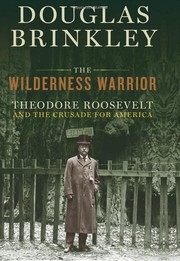
Theodore Roosevelt's conservation presidency — 230 million acres protected — told at length. It shows environmentalism operating as mainstream governing policy long before it became a movement.
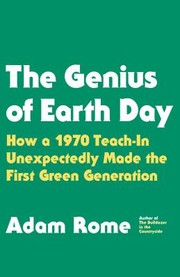
Reconstructs how the first Earth Day in 1970 was organised and why it produced a decade of environmental legislation. The best account of the movement's peak effectiveness.

The Ehrlich–Simon wager over resource scarcity, used to explain how environmental questions became a left-right dispute. Read it last in this stage: it is where the consensus Rome describes breaks apart.
From conservation to climate
IntermediateFollow the shift from protecting particular places to confronting planetary-scale change, and see what that does to the movement's older arguments.
▸ Study plan for this stage
Pace: Three weeks. The End of Nature is 226 pages and reads quickly, but read it as a document of 1989 rather than as current science — keep a note of every prediction it makes. The Sixth Extinction is 352 pages of field reportage organised one species or site per chapter, which makes it easy to read in s
- McKibben's actual claim, which is philosophical rather than physical: once nothing on earth is unaffected by human activity, nature as an independent category has ended, whatever happens to the temperature
- That this was written in 1989, for a general audience, before the first IPCC assessment — so it is readable as prediction, and you should score it
- The second half of The End of Nature, on humility and on the reflex to reach for technological fixes, which is where McKibben becomes an heir to Leopold rather than to Carson
- Kolbert's structure: each chapter takes one organism or site and reports it, so the argument is assembled from cases rather than asserted
- Cuvier and the invention of extinction as an idea — that species could vanish had to be discovered, and Kolbert opens there because it establishes how recent the whole conceptual apparatus is
- Ocean acidification, chytrid fungus in amphibians, and the human transport of species into a 'New Pangaea' as three mechanisms that are not reducible to habitat loss
- The Alvarez impact hypothesis and the five previous mass extinctions as the comparison class that makes 'sixth' a testable claim rather than a slogan
- The scale problem this stage poses to the first: an ethic built for a biotic community you can walk across may not transfer to a planetary accounting
- State McKibben's argument that nature has ended. Is it a claim about the physical world, about a concept, or about both — and does the distinction weaken it?
- Which of The End of Nature's 1989 predictions held up, which did not, and which were framed so that they could not be checked?
- Why does Kolbert begin with Cuvier rather than with a living species? What does it establish about how new the idea of extinction is?
- Which of Kolbert's chapters makes the strongest case that the present extinction differs in kind rather than degree from ordinary background loss, and why that one?
- Does Leopold's land ethic still function at planetary scale? If not, what would have to be added — and does either of these books supply it?
- List every prediction McKibben makes in 1989 and mark each as borne out, refuted, or unfalsifiable. This is the single most useful thing you can do with the book now
- After Kolbert, write out the five previous mass extinctions with rough date and cause, then one paragraph on what makes the present case comparable and one on what makes it different
- Take Leopold's land ethic sentence from the first stage and rewrite it for a problem with no location — carbon, or acidification. Note exactly which words break
- Complete the table you have been building since the first stage by adding McKibben and Kolbert. Then write a paragraph on what has changed across all seven authors in the answer to 'who is the intended reader'
- Write the closing essay: 1,000 words tracing one idea — wilderness, the land ethic, or the precautionary instinct — from Thoreau to Kolbert, citing a book from every stage and naming the point at which the idea stopped working
Next up: This closes the path; the natural continuations are the climate policy literature, environmental justice in the United States, and the growing body of work on Indigenous land management that answers the wilderness question from the other side.
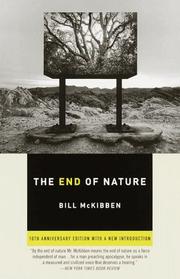
The first book on climate change written for a general audience, arguing that human influence has ended nature as an independent category. It is the direct heir to Silent Spring and the start of the modern climate literature.
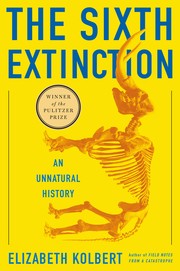
A Pulitzer-winning account of the current mass extinction, reported from the field. Finish here: it turns the local conservation ethic of stage one into a planetary accounting.
Discussion
Keep reading
Paths that share books, cover the same subject, or open a related topic.