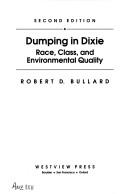
The founding book is Dumping in Dixie, Robert Bullard's 1990 study of where hazardous waste facilities actually got sited across the American South. It is sociology with maps and community interviews, not polemic, and almost everything written since is arguing with it, extending it or applying it somewhere new. Start there.
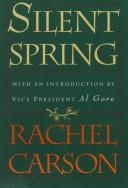
Read Silent Spring first only if you have not already. Rachel Carson's 1962 book is the ancestor of modern environmentalism rather than of environmental justice specifically — it is about pesticides and ecological harm, and it does not ask who bears the burden. Knowing that distinction is most of what separates the two literatures.
How the categories were built
Two histories explain why the burden falls where it does. Clean and White by Carl Zimring traces how American ideas about waste, sanitation and hygiene became racialised across the nineteenth and twentieth centuries — why particular people came to be associated with dirt, and how that association shaped where dirty work was put. The Rise of the American Conservation Movement by Dorceta Taylor does the parallel job on the other side, showing that the conservation tradition Americans revere was built by a narrow elite with explicit ideas about who belonged in nature.
Toxic Communities, also by Taylor, is the synthesis to read next, and it is the book that handles the hardest empirical question honestly. When a plant and a poor Black neighbourhood end up in the same place, which came first? Industry-side researchers have argued that facilities were sited on cheap land that later attracted low-income residents; environmental justice scholars have argued for discriminatory siting and shown longitudinal cases of it. Taylor lays out the evidence on both sides rather than asserting a verdict, and the answer plainly differs case by case.
The case studies
Diamond by Steve Lerner is the Norco, Louisiana story — a Black neighbourhood pressed against a Shell chemical plant, and a decade-long relocation fight. Noxious New York by Julie Sze is an urban-planning history of how bus depots, sewage plants and incinerators concentrated in particular New York neighbourhoods, and of the activism that formed in response. Wastelanding by Traci Voyles is about uranium mining on Navajo land and is the most theoretically ambitious of the three, arguing that some landscapes get culturally marked as sacrificeable before they are physically ruined.
Two books cover Flint and you do not need both. What the eyes don't see is Mona Hanna-Attisha's first-person account — she is the paediatrician whose blood-lead data forced the issue, and the book is a memoir of that fight. The poisoned city by Anna Clark is the journalist's version: wider, colder, better on the state emergency-manager politics that made the switch possible. Take the memoir for the human account, the reporting for the mechanism.
Waste by Catherine Coleman Flowers is about raw sewage in Lowndes County, Alabama, and hookworm in the twenty-first-century United States. It is a short memoir by the organiser herself.
The arguments and the frame
A Terrible Thing to Waste by Harriet Washington argues that environmental toxins are a major and under-acknowledged cause of cognitive harm in minority communities. It is a popular synthesis, strongly argued, and it presses the neurological evidence further than many specialists would; treat the specific quantitative claims as the author's case rather than as settled consensus, and the underlying exposure disparities as very well established.
From the ground up by Luke Cole and Sheila Foster is the legal and movement analysis — how environmental justice organising actually worked, what Title VI litigation could and could not deliver, and why the movement grew out of civil rights rather than conservation. Slow violence and the environmentalism of the poor by Rob Nixon is the outlier: a literary and postcolonial study of harms too gradual and dispersed to register as events. It is the most demanding book here and the one that will change how you read the rest.
Follow the path in order — the sociology first, then the places, then the theory.
Follow the full ordered path here: Environmental Justice: A Reading Order for Pollution, Race and Place.