Best Books on Environmental Engineering, in Reading Order
Environmental engineering is unusual among engineering disciplines in that it was created by public argument as much as by technical development, so this path begins with three books about why the field exists before any treatment process appears. It then takes the standard survey course plus the aquatic chemistry that everything downstream depends on, and finishes with the specialist references for each medium — drinking water, wastewater, air, solid waste and groundwater. A reader who only wants literacy can stop after the second stage; the third and fourth are working design references and are best used a chapter at a time against a real problem.
Why the field exists
BeginnerUnderstand the public-health and political history that produced environmental regulation, and why engineering solutions in this field are always constrained by institutions.
▸ Study plan for this stage
Pace: Six to eight weeks, and this stage is reading rather than working — no calculations, no problem sets. Silent Spring is 336 pages and takes two weeks. Cadillac Desert is 582 pages of political history and needs three to four. The Big Necessity is 317 pages and reads quickly, about ten days. Read them
- Carson's actual argument, which is narrower and better than its reputation: not that pesticides are poison, but that persistent chlorinated compounds bioaccumulate up food chains and concentrate in top predators, so an application rate that is harmless at the point of use is not harmless at the top
- Persistence and bioaccumulation as the two properties that make a compound an environmental engineering problem rather than a toxicology one. Every regulation of a persistent organic pollutant since traces to this framing
- How to read Silent Spring honestly: sixty years of research have refined and in places corrected specific claims, particularly on cancer causation, and reading it as current toxicology does the book no favours. Read it as the argument that created the regulatory regime you will spend the rest of the
- Reisner's central demonstration: the great Western water projects were justified by benefit-cost analyses assembled to reach a predetermined answer, and the Bureau of Reclamation and the Army Corps competed to build. The hydrology followed the politics
- The Ogallala aquifer and groundwater mining as Reisner presents it — extraction far exceeding recharge, with the consequence deferred to a generation that did not choose it. This is the same physical problem you will model formally in stage four
- Salinisation and reservoir sedimentation as the engineered systems' unbudgeted costs, and Reisner's point that projects were evaluated over horizons shorter than their own failure modes
- George's global sanitation picture: the number of people without safe disposal, the fact that the flush-and-forget sewer is a minority technology worldwide, and why the hard part is behavioural and institutional rather than hydraulic
- The through-line all three books establish and that the rest of the path assumes: in this discipline the technical solution is almost never the binding constraint. Institutions, financing and politics are
- State Carson's bioaccumulation argument precisely. Why does a low application rate not guarantee a low concentration in a peregrine falcon?
- Which of Carson's specific claims have been refined or corrected since 1962, and which core mechanism has held up?
- In Reisner's account, how were the great Western dams justified, and what did the benefit-cost analyses systematically omit?
- What is groundwater mining, and why is the Ogallala the canonical case? What does the physical situation imply about the region's future?
- What does George identify as the main obstacle to sanitation coverage, and why is it not primarily an engineering obstacle?
- Give one example from each book where an institution's incentives, not a technical limit, determined the outcome
- Write a one-page timeline of US environmental regulation — 1962 Silent Spring, 1970 EPA and the Clean Air Act, 1972 Clean Water Act, 1974 Safe Drinking Water Act, 1976 RCRA, 1980 CERCLA. Every design constraint in stages three and four descends from a line on this page.
- Take the water system that serves your own address and find out where the water comes from, who owns the infrastructure and when it was built. Reisner's argument becomes local in about an hour.
- Write 200 words on a decision from Cadillac Desert that would have gone differently under an honest technical assessment. Then write 100 words on why it did not.
- After The Big Necessity, sketch the full path of what leaves your own toilet — pipe, sewer, plant, receiving water or land application. Most people cannot complete this diagram, and completing it is the beginning of the discipline.
Next up: Knowing what the field is for and what constrains it, you can start the technical work — beginning with the mass balances and aquatic chemistry that every process in the path depends on.

The book that created the modern environmental movement and, indirectly, the regulatory regime this whole discipline works within. Read it as history rather than as current toxicology — sixty years of research have refined and in places corrected its specific claims about pesticides — but its central argument about persistence and bioaccumulation held up.

Water supply engineering in the American West as a political and institutional story: dams built for reasons that were never hydrological, and aquifers spent faster than they recharge. The best available demonstration that infrastructure decisions are rarely made on technical grounds.
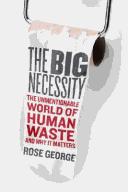
Sanitation, globally — sewers, latrines, sludge, and the two and a half billion people without safe disposal. Placed here because wastewater engineering is easier to take seriously once you have seen what its absence costs, and because it frames the field's largest unsolved problem.
The survey course and the chemistry underneath it
IntermediatePerform mass balances and reactor calculations, work with equilibrium and kinetics in natural waters, and describe the main unit processes across water, air and waste.
▸ Study plan for this stage
Pace: Six to nine months, and this is the stage that decides whether you learn the subject or read about it. Davis and Cornwell is 964 pages, Masters and Ela 706, Sawyer 752 — over 2,400 pages of textbook, none of it readable at narrative pace. Plan on 10 to 15 pages a session with a pen and a calculator.
- The mass balance as the discipline's single organising tool: accumulation equals in minus out plus generation minus consumption. Davis introduces it early and every unit process in the next two stages is a mass balance with a specific reaction term
- Reactor models — batch, plug flow, completely mixed flow, and mixed flow in series — with their residence-time distributions. Choosing the wrong idealisation is the most common way a treatment calculation goes silently wrong
- Reaction kinetics and the practical distinction between zero, first and second order, plus the temperature dependence that makes a plant designed in one climate behave differently in another
- Acid-base equilibria and the carbonate system, which is Sawyer's centre of gravity: alkalinity, buffer intensity, and why alkalinity determines how much coagulant a water can accept before pH collapses
- Dissolved oxygen, BOD and the oxygen-sag curve. BOD is an operational definition rather than a physical quantity, and understanding what the five-day test actually measures is what separates people who can read a discharge permit from people who cannot
- Coagulation chemistry — double layer compression, charge neutralisation, sweep floc — because this is where the chemistry becomes design in stage three's very first chapter
- Masters and Ela's stronger material: quantitative risk assessment, air and water quality modelling, energy systems and climate. Davis compresses all of this, and for anyone coming from science rather than civil engineering Masters is the better entry
- The Streeter-Phelps model and Gaussian plume dispersion as the two classic analytical models the survey texts teach — both simple enough to work by hand, and both still the mental model practitioners use
- Write the general mass balance equation and apply it to a completely mixed lake receiving a constant contaminant load. What is the steady-state concentration and how long does it take to approach it?
- A first-order reaction runs in a plug flow reactor and in a CSTR of equal volume. Which gives greater conversion, and why? Prove it rather than remembering it
- What is alkalinity, how is it measured, and why does a low-alkalinity water limit how much alum you can add?
- What does the five-day BOD test actually measure, and name three ways it can mislead you about a wastewater
- Sketch the oxygen sag curve downstream of a discharge and identify the two competing rate processes that produce its shape
- Using Masters, work a quantitative risk assessment for a drinking water contaminant. What are the four steps, and which one carries the most uncertainty?
- Work every example problem in Davis's mass balance and reactor chapters by hand before moving on, then do the end-of-chapter problems. This is not optional — the entire path assumes fluency here and there is no way to acquire it by reading.
- Take a real water quality report from your own utility, which by law is published annually, and identify every parameter on it that you can now explain. Repeat the exercise at the end of stage three and compare.
- Work through Sawyer's alkalinity and carbonate-system problems and then hand-calculate the coagulant dose for a water of given alkalinity. This single calculation connects the chemistry text to the treatment texts.
- Solve one Streeter-Phelps problem and one Gaussian plume problem by hand, then rebuild each in a spreadsheet and vary the inputs. Seeing which parameters the answers are sensitive to is worth more than the solutions.
- Read Davis and Masters on the same topic — air pollution is the best test case — and write a paragraph on what each includes that the other does not. It tells you which book to reach for later.
Next up: With mass balances, kinetics and aquatic chemistry fluent, you can open the two design references that assume all of it on page one.

Davis and Cornwell is the standard first text and the most design-oriented of the surveys: material balances, hydraulics, water and wastewater treatment, air pollution, solid waste and noise, with worked examples throughout. This is the spine of the path.
Read alongside Davis for the science Davis compresses — risk assessment, water and air quality modelling, energy systems and climate change are treated much more fully here. Masters and Ela is also the better book for anyone coming from a science rather than a civil engineering background.

The prerequisite everything later assumes: acid–base equilibria, alkalinity, dissolved oxygen, BOD, coagulation chemistry and the standard analytical methods. Treatment process design is applied aquatic chemistry, and skipping this stage is why many engineers can size a unit but not diagnose one.
Water and wastewater, in design detail
IntermediateSelect and size real treatment trains for drinking water and municipal wastewater, and understand the biological and physicochemical basis of each unit process.
▸ Study plan for this stage
Pace: A year or more, and stated honestly: these are not books you read. MWH's Water Treatment is 1,901 pages and Wastewater Engineering 1,834 — roughly 3,700 pages of design reference. Nobody reads either cover to cover, including the engineers who use them daily. The right approach is a chapter at a tim
- The drinking water treatment train as a sequence of barriers — coagulation, flocculation, sedimentation, filtration, disinfection — and the multiple-barrier principle that no single process is trusted alone
- Coagulation and flocculation design in MWH: rapid mix energy, velocity gradient G, tapered flocculation, and the jar test as the empirical method that still determines dose because the theory does not predict it well enough
- Sedimentation basin design through overflow rate rather than detention time, and why that distinction is the most commonly botched idea in water treatment
- Filtration mechanics — depth filtration, head loss development, backwash design, and the difference between a filter that is removing particles and one that is merely accumulating them
- Disinfection and the CT concept, plus the central modern tradeoff: chlorine controls pathogens and forms disinfection byproducts, so the design problem is a balance between two health risks rather than an optimisation of one
- Activated sludge in Metcalf and Eddy, which is the intellectual core of the discipline: solids retention time as the master design variable, the food-to-microorganism ratio, sludge settleability, and the fact that you are designing an ecosystem rather than a machine
- Biological nutrient removal — nitrification, denitrification and enhanced biological phosphorus removal — where the design consists of arranging aerobic, anoxic and anaerobic zones so the desired organisms outcompete the others
- Solids handling and anaerobic digestion, which consumes a disproportionate share of a plant's capital and operating cost and gets a disproportionately small share of most curricula
- Why is a sedimentation basin sized on overflow rate rather than detention time? Derive the relationship
- What is the CT concept, and how do you compare the required CT for Giardia against that for a virus at the same temperature and pH?
- State the disinfection byproduct tradeoff precisely. What design and operational levers reduce DBP formation without compromising pathogen control?
- What is solids retention time, and why is it the master variable in activated sludge design? What happens to the microbial community as you increase it?
- Design a biological nutrient removal configuration on paper and explain what each zone selects for. Why must the anaerobic zone come first for phosphorus removal?
- What fraction of a typical municipal plant's cost is solids handling, and why is anaerobic digestion so often the process that determines whether a plant works?
- Size a complete conventional drinking water treatment train for a town of 20,000 using MWH's design criteria — rapid mix, flocculation, sedimentation, filtration, disinfection contact. Work it end to end on paper. It will take a weekend and it is the single most valuable exercise in this stage.
- Run a jar test if you can get access to one, or work through MWH's jar test examples in detail if you cannot. The gap between the theory and the empirical dose is the honest state of coagulation practice.
- Design an activated sludge process from Metcalf and Eddy's examples for a given flow and load, then recalculate it at half the SRT and at double. Watching the effluent quality, tank volume and sludge production move together is how the design variable becomes intuitive.
- Get a copy of a real discharge permit for a plant near you and identify every limit on it. Then find the unit process in Metcalf and Eddy responsible for meeting each limit. This maps the regulation from stage one directly onto the hardware.
- Take one operational problem — bulking sludge is the classic — and read the diagnostic section on it. Then write 300 words explaining what you would check first and in what order. Diagnosis, not sizing, is what the reference is really for.
Next up: Water and wastewater are the field's centre of gravity; the last stage covers the three media the water texts skip, each of which consumes a large share of real engineering budgets.

The definitive drinking water reference: coagulation, sedimentation, filtration, adsorption, membranes, oxidation and disinfection, each developed from principles through to design criteria. Large and expensive, and the book municipal water engineers actually use.
Metcalf and Eddy is the wastewater equivalent and possibly the most-cited engineering reference in the field — activated sludge, nutrient removal, anaerobic digestion, solids handling, reuse. Read the biological treatment chapters closely; they are the intellectual core of the discipline.
Air, solid waste and the subsurface
IntermediateHandle the media the water-focused texts skip: air pollution control equipment, solid waste systems, and contaminant transport in groundwater.
▸ Study plan for this stage
Pace: Nine to twelve months across three references totalling roughly 2,100 pages. De Nevers is 546 pages and is the one book in this stage that can genuinely be read straight through — three months at a steady pace, working the problems. Integrated Solid Waste Management is 978 pages and is a reference;
- De Nevers's framing that control technology follows from regulation: what must be installed is determined by a standard, and the engineering question is the cheapest way to meet it. He is unusually explicit about this and it is the honest description of the practice
- The control equipment families and their operating regimes — cyclones for large particles at low cost, electrostatic precipitators for high volumes of fine particulate, baghouses for very high efficiency on dry streams, wet scrubbers where gases and particulate must both be removed
- Combustion control, NOx formation chemistry — thermal versus fuel NOx — and why controlling it means controlling flame temperature and residence time rather than adding equipment downstream
- Solid waste as a systems problem in Tchobanoglous: generation rates, collection routing, transfer economics, materials recovery, and the fact that collection is the majority of the cost, which is counterintuitive to everybody outside the field
- Modern landfill design as a containment engineering problem — composite liners, leachate collection and treatment, gas collection and the post-closure care period that outlasts the operating life. A landfill is a long-term chemical reactor you have agreed to monitor for decades
- Freeze and Cherry on subsurface flow: Darcy's law, hydraulic conductivity across many orders of magnitude, flow nets, and the aquifer characterisation that everything in groundwater remediation depends on
- Contaminant transport as advection plus dispersion plus retardation plus decay, and the practical consequence that a plume moves slower than the water for sorbing compounds and that cleanup timescales are set by desorption rather than by pumping capacity
- DNAPLs as the reason groundwater remediation so often fails: dense non-aqueous phase liquids sink below the water table, pool on low-permeability layers, and dissolve slowly for decades regardless of how much water you pump
- Choose a control device for a fine particulate stream at high volume and justify the choice against two alternatives on efficiency, pressure drop and capital cost
- Explain thermal NOx formation and give two combustion modifications that reduce it. Why is downstream control the more expensive route?
- What is the largest cost component of a municipal solid waste system, and why do most people guess wrong?
- Describe a modern landfill in cross-section from the subgrade to the cap, naming each layer's function. What happens to leachate and to gas?
- State Darcy's law and use it to estimate travel time between two points given a gradient, a conductivity and a porosity. Why is the answer usually an underestimate for a sorbing contaminant?
- Why do pump-and-treat systems so often fail to clean an aquifer? Give the physical reasons, including DNAPL behaviour
- Work De Nevers's problems on cyclone and ESP sizing for the same gas stream and compare the results on efficiency and energy. Doing both for one stream is how the tradeoff stops being abstract.
- Find the emissions inventory for a facility near you, identify what control equipment it reports, and work out which regulation required it. This closes the loop from the 1970 Clean Air Act in stage one to the hardware.
- Estimate the waste generation for your own household for a week by weighing it, then scale to a city of 100,000 and size a collection fleet using Tchobanoglous's routing methods. The arithmetic is more surprising than the reading.
- Draw a flow net by hand for a simple confined aquifer with a pumping well, following Freeze and Cherry. Hand-drawn flow nets are how hydrogeologists learn to see the subsurface and no software substitutes for the first one.
- Take a Superfund site record, publicly available, and read the remedial investigation. Identify the contaminant, the transport mechanism, the remedy chosen and the projected timescale. Then judge, with Freeze and Cherry in hand, whether the timescale is plausible.
- Return to the water quality report you annotated in stage two and mark it again. The difference between the two annotations is the measure of the whole path.
Next up: This is the end of the path — the field's history and politics, its analytical foundations, the water and wastewater design references, and the air, solid waste and groundwater media — and you now have on your shelf the same set of books a practising environmental engineer reaches for.
The clearest text on control equipment — cyclones, scrubbers, electrostatic precipitators, baghouses, combustion controls — and unusually good at explaining the regulatory framework that determines what must be installed. De Nevers writes better than most textbook authors.

The standard reference on collection, transfer, materials recovery, composting, combustion and landfill design, including leachate and gas management. Solid waste gets the least classroom time and consumes a large share of municipal engineering budgets.
Freeze and Cherry is still the standard text on subsurface flow and contaminant transport more than forty years on, and is now freely available online. Ends the path with the medium where contamination is hardest to see, slowest to move and most expensive to remediate.
Discussion
Keep reading
Paths that share books, cover the same subject, or open a related topic.