The Best Data Mining Books to Learn the Field
This curriculum builds a rigorous, end-to-end mastery of data mining, starting from the core algorithmic and statistical foundations, moving through the canonical techniques of pattern discovery, clustering, and classification, and culminating in advanced topics like large-scale mining and deep analytical methods. Because the learner starts at an intermediate level, early-stage hand-holding is minimal — each stage sharpens both intuition and mathematical depth, so that by the end the reader can design, implement, and critically evaluate real-world data mining pipelines.
Foundations & Core Frameworks
IntermediateEstablish a solid conceptual and mathematical vocabulary for data mining — understanding what it is, why it works, and how its core tasks (classification, clustering, association, regression) fit together.
▸ Study plan for this stage
Pace: 6–8 weeks, ~40–50 pages/day (Han's book first: 2–3 weeks; Tan's book: 3–4 weeks; 1 week for review and integration)
- Data mining definition, scope, and relationship to statistics, machine learning, and databases
- The data mining process: problem formulation, data preparation, model building, evaluation, and deployment
- Classification task: supervised learning, decision trees, Naive Bayes, k-NN, and evaluation metrics (accuracy, precision, recall, F1)
- Clustering task: unsupervised learning, k-means, hierarchical clustering, density-based methods, and cluster evaluation
- Association rule mining: frequent itemsets, support-confidence framework, Apriori algorithm, and lift/conviction measures
- Regression: linear and non-linear models, overfitting, regularization, and model selection
- Feature engineering and selection: dimensionality reduction, normalization, and handling missing data
- Model evaluation and validation: cross-validation, confusion matrices, ROC curves, and bias-variance tradeoff
- What are the main differences between data mining, statistics, and machine learning, and how do they complement each other?
- Describe the complete data mining workflow from problem definition through model deployment, and explain why each stage matters.
- How do classification and clustering differ in their objectives, and what are three algorithms for each task covered in the readings?
- What is the support-confidence framework in association rule mining, and how does the Apriori algorithm use it to find frequent itemsets efficiently?
- Explain the bias-variance tradeoff and how it relates to overfitting; what techniques can mitigate these issues?
- How do you evaluate a classification model using confusion matrices, and why are precision and recall sometimes more informative than accuracy alone?
- Work through Han's examples of decision tree construction by hand (e.g., ID3 or C4.5 splitting criteria) on a small dataset to internalize how trees partition feature space.
- Implement k-means clustering from scratch on a 2D or 3D dataset, visualizing cluster assignments and centroid movement across iterations.
- Apply Naive Bayes classification to a text or categorical dataset (e.g., spam detection), computing prior and conditional probabilities manually for at least one test instance.
- Generate association rules from a transaction dataset using the Apriori algorithm (by hand or with pseudocode), computing support, confidence, and lift for at least 5 rules.
- Build a simple linear regression model on a continuous target variable, then evaluate it using cross-validation and plot residuals to check for bias and heteroscedasticity.
- Perform feature normalization and selection on a multi-feature dataset, comparing model performance before and after to demonstrate the impact of preprocessing.
Next up: This stage equips you with the conceptual foundations and core algorithmic vocabulary needed to move into specialized topics—such as advanced ensemble methods, deep learning for data mining, or domain-specific applications—where you will build on these core tasks and evaluation principles.
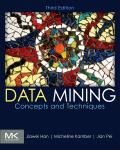
The single most widely adopted textbook in the field; it systematically covers every major data mining task with clear explanations and concrete examples, making it the ideal anchor for an intermediate learner building a unified mental model.
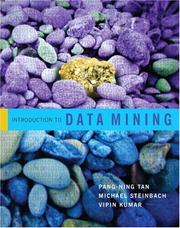
Read immediately after Han to reinforce the same concepts with a different pedagogical lens — Tan's treatment of evaluation, overfitting, and model selection is especially thorough and prepares the reader for deeper algorithmic study.
Algorithms & Pattern Discovery
IntermediateDevelop hands-on algorithmic fluency in the techniques that power data mining — decision trees, SVMs, ensemble methods, frequent itemsets, and association rules — with enough mathematical detail to implement and tune them.
▸ Study plan for this stage
Pace: 8–10 weeks, ~40–50 pages/day (mix of dense theory and worked examples)
- Decision trees: splitting criteria (Gini, entropy), pruning, bias-variance tradeoff, and handling overfitting
- Support Vector Machines: margin maximization, kernel trick, soft margins, and geometric intuition behind classification
- Ensemble methods: bagging, boosting (AdaBoost), random forests, and why combining weak learners reduces variance
- Frequent itemsets and association rules: Apriori algorithm, support/confidence/lift metrics, and market-basket analysis
- Regularization and model selection: cross-validation, L1/L2 penalties, and tuning hyperparameters for real datasets
- Scalability constraints: why algorithms must be adapted for massive datasets, distributed computing basics, and MapReduce patterns
- Mathematical foundations: loss functions, gradient descent, convex optimization, and computational complexity analysis
- How do decision trees decide where to split, and why does pruning prevent overfitting?
- Explain the kernel trick in SVMs: why does it allow non-linear classification without explicitly computing high-dimensional features?
- Why do ensemble methods like boosting and random forests reduce variance, and when should you use each?
- What are support, confidence, and lift in association rules, and how does the Apriori algorithm prune the search space?
- How do you select hyperparameters (e.g., regularization strength, tree depth) using cross-validation, and what does the bias-variance tradeoff tell you?
- Why do standard algorithms fail on massive datasets, and what modifications (sampling, hashing, distributed computation) make them scalable?
- Implement a decision tree from scratch (or extend a skeleton): write the splitting logic using Gini/entropy, handle pruning, and test on a small dataset (e.g., Iris or a custom binary classification problem)
- Train SVMs with different kernels (linear, RBF, polynomial) on a 2D or 3D dataset; visualize decision boundaries and experiment with the C parameter to see soft-margin effects
- Build a random forest and an AdaBoost classifier on the same dataset; compare out-of-bag error, feature importance, and learning curves to understand ensemble diversity
- Mine frequent itemsets from a transaction dataset (e.g., grocery purchases or web logs) using Apriori; extract association rules and compute support/confidence/lift for the top rules
- Perform 5-fold cross-validation on a real dataset (e.g., UCI ML repository) for decision trees and SVMs; plot validation curves (train/test error vs. hyperparameter) to identify overfitting
- Implement or adapt an algorithm (e.g., frequent itemset mining or SVM training) to work on a dataset that doesn't fit in memory: use sampling, mini-batches, or a simple distributed approach
Next up: This stage equips you with the algorithmic and mathematical toolkit to recognize which techniques solve which problems; the next stage will focus on real-world deployment challenges—data preprocessing, feature engineering, model evaluation in production, and ethical considerations—where you'll integrate these algorithms into end-to-end pipelines.

Provides the rigorous statistical machinery behind classification, regression, and clustering algorithms; reading it here gives the learner the mathematical depth needed to move beyond black-box usage of mining methods.
Focuses on scalable algorithms for frequent itemsets (A-Priori, PCY), similarity search, and link analysis — essential pattern-discovery techniques that are underserved in the previous books and directly relevant to big data contexts.
Clustering, Anomaly Detection & Unsupervised Methods
IntermediateMaster the unsupervised side of data mining — partitional, hierarchical, and density-based clustering, plus outlier and anomaly detection — and understand how to evaluate results without ground-truth labels.
▸ Study plan for this stage
Pace: 8–10 weeks, ~40–50 pages/day (alternating between Everitt and Aggarwal; ~4 weeks on Cluster Analysis, then ~4–6 weeks on Outlier Analysis)
- Partitional clustering (k-means, k-medoids, PAM) and the optimization of within-cluster homogeneity vs. between-cluster separation
- Hierarchical clustering (agglomerative and divisive methods) and dendrograms as tools for exploring cluster structure at multiple scales
- Density-based clustering (DBSCAN, OPTICS) and their ability to discover arbitrary-shaped clusters and handle noise naturally
- Distance and similarity metrics (Euclidean, Manhattan, correlation, Jaccard) and how metric choice affects clustering outcomes
- Cluster validation without ground truth: internal indices (silhouette, Davies-Bouldin, Calinski-Harabasz) and stability measures
- Anomaly detection frameworks: point anomalies, contextual anomalies, and collective anomalies; statistical, distance-based, density-based, and isolation-based approaches
- Evaluation of anomaly detection: ROC curves, precision-recall trade-offs, and the challenge of rare-event detection with imbalanced data
- Practical considerations: scalability, parameter selection, and interpreting results when true labels are unavailable
- What are the key differences between partitional, hierarchical, and density-based clustering, and when would you choose each approach for a real dataset?
- How do you select an appropriate distance metric for clustering, and how does this choice affect the resulting cluster structure?
- Explain how internal validation indices (silhouette score, Davies-Bouldin index) work and what they reveal about cluster quality without ground-truth labels.
- What is the difference between point anomalies, contextual anomalies, and collective anomalies, and how does each type require different detection strategies?
- Compare distance-based, density-based, and isolation-based anomaly detection methods: what are their strengths, limitations, and computational costs?
- How do you evaluate anomaly detection performance when true anomalies are rare and labels may be incomplete or uncertain?
- Implement k-means from scratch (or using scikit-learn) on a synthetic dataset; experiment with different k values and distance metrics, then compute silhouette scores and Davies-Bouldin indices to compare results.
- Perform hierarchical clustering on the same dataset using both agglomerative (single, complete, average linkage) and divisive approaches; visualize dendrograms and interpret how linkage choice affects the tree structure.
- Apply DBSCAN and OPTICS to a dataset with non-convex clusters and noise; vary epsilon and min_samples parameters and observe how density-based methods handle outliers differently from k-means.
- Use multiple internal validation indices (silhouette, Calinski-Harabasz, Davies-Bouldin) on your clustered data; identify cases where indices disagree and investigate why.
- Implement or apply distance-based anomaly detection (e.g., k-NN distance, Mahalanobis distance) and density-based anomaly detection (e.g., Local Outlier Factor, Isolation Forest) on a dataset with injected anomalies; compare detection rates and false-positive rates.
- On a real-world dataset (e.g., network traffic, sensor data, or credit-card transactions), perform unsupervised anomaly detection without ground truth; document your parameter choices, validation strategy, and interpretation of detected anomalies.
Next up: This stage equips you with the unsupervised techniques and evaluation mindset needed to move into semi-supervised learning, ensemble methods, and real-world applications where labeled data is scarce or expensive—building the foundation for more sophisticated hybrid approaches.
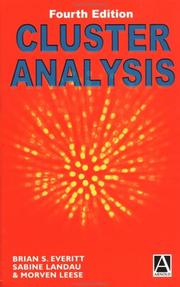
A focused, authoritative treatment of clustering theory and practice — covers k-means, hierarchical methods, mixture models, and validation indices in a way that solidifies the reader's unsupervised learning toolkit.

The definitive reference on anomaly and outlier detection; reading it after clustering is natural because many outlier methods build on density and distance concepts already internalized, and anomaly detection is a critical real-world mining task.
Advanced Topics & Large-Scale Insight
ExpertSynthesize everything into advanced, production-scale data mining — graph mining, text mining, stream mining, and the full pipeline from raw big data to actionable insight — and understand the state of the art.
▸ Study plan for this stage
Pace: 8–10 weeks, ~40–50 pages/day (mix of dense theory and worked examples; allocate extra time for advanced chapters on graph/text/stream mining and probabilistic models)
- Graph mining fundamentals: community detection, link prediction, and graph-based feature extraction for relational data
- Text mining and NLP integration: document representation, topic modeling, sentiment analysis, and semantic similarity at scale
- Stream mining and online learning: handling concept drift, incremental model updates, and real-time anomaly detection
- Probabilistic graphical models: Bayesian networks, Markov random fields, and factor graphs for structured prediction
- Expectation-Maximization (EM) and variational inference: principled approaches to learning with latent variables
- Kernel methods and support vector machines: theoretical foundations and scalability considerations for large datasets
- Deep learning and representation learning: neural networks as feature extractors and end-to-end optimization
- End-to-end production pipelines: data preprocessing, feature engineering, model selection, deployment, and monitoring at scale
- How do you detect communities in large graphs, and what are the trade-offs between modularity-based and spectral approaches?
- Explain the EM algorithm and how it handles missing or latent data; give a concrete example from text mining or clustering.
- What is concept drift in stream mining, and how do you design an online learning system that adapts to non-stationary data?
- Compare kernel methods (SVMs) with deep learning for large-scale classification: when is each approach preferable?
- How would you build an end-to-end text mining pipeline from raw documents to actionable insights, including preprocessing, feature extraction, and model evaluation?
- Describe the role of probabilistic graphical models in structured prediction; how do factor graphs and belief propagation enable efficient inference?
- Implement community detection on a real social network dataset (e.g., Karate club, Zachary's network, or a small subgraph of Twitter/Facebook data) using both modularity optimization and spectral clustering; compare results and runtime.
- Build a topic modeling pipeline using Latent Dirichlet Allocation (LDA) or non-negative matrix factorization on a corpus of news articles or research papers; interpret topics and evaluate coherence.
- Design and implement a stream mining system that detects anomalies in a time-series dataset (e.g., network traffic, sensor data) using online learning; measure detection rate and false-positive rate under concept drift.
- Train an SVM and a deep neural network on a large-scale classification task (e.g., CIFAR-10, ImageNet subset, or a text classification benchmark); compare accuracy, training time, and inference latency.
- Implement the EM algorithm for Gaussian mixture modeling or a hidden Markov model; apply it to a real dataset and visualize convergence and learned parameters.
- Construct a full text mining pipeline: preprocess raw documents (tokenization, stemming, stop-word removal), extract TF-IDF or word embeddings, train a classifier (logistic regression, SVM, or neural network), and evaluate on a held-out test set with precision, recall, and F1-score.
Next up: This stage equips you with the theoretical depth and practical mastery to tackle cutting-edge research problems and production systems; the next stage will likely focus on specialized applications (e.g., recommender systems, fraud detection, healthcare analytics) or emerging paradigms (e.g., federated learning, explainable AI) that build on these foundational advanced techniques.

Aggarwal's graduate-level textbook unifies classical and modern techniques — including graph, text, and stream mining — and serves as an advanced capstone that ties together every prior stage with greater mathematical rigor.
Closes the curriculum by grounding data mining in probabilistic graphical models and Bayesian methods, giving the reader the deepest possible theoretical foundation for designing novel mining algorithms and interpreting complex patterns.
Discussion
Keep reading
Paths that share books, cover the same subject, or open a related topic.