Data mining is an interdisciplinary field, and that is exactly why an unguided reading list overwhelms people. Pick up a pure statistics text too early and you stall on theory; start with algorithms and you miss the why. A deliberate order introduces the core concepts, then the mathematics, then the scale — each when you are ready for it.
The path moves from foundational textbooks to statistical depth, to techniques for massive data, and finally to specialized methods.
The core textbooks
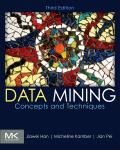
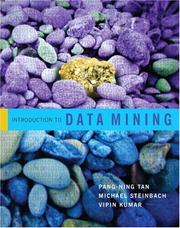
Start with Data mining by Jiawei Han, the standard university text that maps the whole territory — preprocessing, classification, clustering, association rules. Read it alongside Introduction to Data Mining, which covers similar ground with exceptionally clear explanations and worked examples. Between these two, the vocabulary and the major algorithms will click.
The statistical core
Data mining and machine learning blur together, and The Elements of Statistical Learning is the bridge — the rigorous, influential treatment of the statistical methods behind modern prediction. It is demanding, which is why it sits here, after you have the intuition, not before.
Working at scale
Real data is big. Mining of massive datasets teaches the algorithms and tricks — locality-sensitive hashing, streaming, MapReduce-style thinking — that make mining feasible when data will not fit in memory. This is the practical heart of the field for anyone working with genuine volume.
Specialized methods
Finally, go deep on specific problems. Cluster analysis is the thorough treatment of grouping unlabeled data, and Outlier Analysis covers the equally important flip side — finding what does not belong, the basis of fraud and anomaly detection. Charu Aggarwal's Data mining textbook offers a modern, unified overview to consolidate everything, and Pattern Recognition and Machine Learning (Information Science and Statistics) — a landmark text — takes the probabilistic view to its natural conclusion.
These techniques feed directly into fields like recommender systems, so treat this path as the analytical foundation for a whole family of data careers.
Follow the full reading path →
Ready to learn something deeply?
Build a reading path — free