Data warehousing rewards reading order more than almost any technical field, because its core ideas were set down decades ago and everything modern is a variation on them. Learn dimensional modeling and the classic architectures first, and tools like dbt and Snowflake become obvious applications rather than mysteries. Skip the foundations and you will build brittle pipelines you cannot explain.
The arc runs from modeling to architecture to the engineering practices that assemble it all into a working platform.
The foundational models
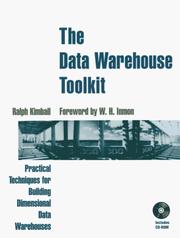
Start with The data warehouse toolkit, the book that made dimensional modeling — facts, dimensions, star schemas — the industry default. It is the single most important text in the field. Then read Building the Data Warehouse to understand the opposing, top-down Inmon philosophy, because knowing both camps is what makes you fluent rather than dogmatic.
Lifecycle and design
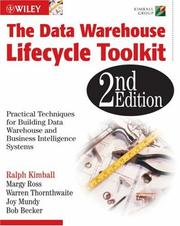
Modeling is only part of the job. The data warehouse lifecycle toolkit covers the full project — requirements, architecture, deployment — so you see how warehouses actually get built and maintained. Agile Data Warehouse Design modernizes the modeling process with collaborative, iterative techniques that fit how teams work today.
Moving the data
A warehouse is only as good as the data flowing into it. The data warehouse ETL toolkit is the classic on extraction, transformation, and loading — the unglamorous plumbing that determines whether your warehouse is trustworthy. Read it before you touch any modern ELT tool.
The modern stack
Finally, connect it all to today. Fundamentals of Data Engineering frames warehousing inside the broader lifecycle of modern data work, and Designing Data-Intensive Applications — a genuinely essential book — explains the distributed-systems principles beneath every scalable data platform. Close with Analytics Engineering with dbt, which shows how the classic modeling ideas get expressed in the tool defining the current era. Read last, it makes dbt feel like a natural conclusion rather than a fad.
Warehousing feeds everything downstream, from data mining to recommender systems, so this foundation pays off across the entire analytics stack.
Follow the full reading path →
Ready to learn something deeply?
Build a reading path — free